
Stargazing Safari in Samburu: Sleeping Under Kenya’s Darkest Skies 🌅
The alarm does not go off at 5 AM. The stars do. Sometime around 2 o’clock in the morning, a band of light so dense it looks solid slides across the sky above your open-air platform, and you understand — properly, physically — that you are looking at the core of the Milky Way galaxy. This is what a samburu stargazing safari delivers that no other Kenya destination can match: a Bortle-1 dark sky where the night itself becomes the wildlife sighting.
Samburu National Reserve sits 350 kilometres north of Nairobi in Kenya’s semi-arid north. It is remote enough that the nearest city glow disappears entirely by 50 kilometres out. On a clear night, the sky above the Ewaso Ng’iro River corridor registers a Bortle Class 1 on the dark-sky scale: the darkest classification possible, shared by fewer than 1% of locations on Earth. Then dawn arrives, and the Special Five — reticulated giraffe, Grevy’s zebra, beisa oryx, Somali ostrich, and gerenuk — step back into frame for morning game drives. No other destination in Kenya offers that 24-hour swing.
Trunktrails Safaris builds bespoke tours and safaris into Samburu precisely because most Kenya safari itineraries skip it. That omission is the opportunity.
Why Samburu Has Kenya’s Darkest Night Skies
Kenya has several candidates for dark-sky status — Laikipia plateau, the Tsavo interior, and the shores of Lake Turkana all receive low light pollution readings. Samburu beats them on three compounding factors.
First, geographic isolation. The reserve is bounded on three sides by community conservancies with no permanent settlements and minimal road infrastructure. There is no town-glow bleeding in from the west or south.
Second, altitude and aridity. Samburu sits at roughly 900 metres, with a dry savanna climate that produces over 250 cloud-free nights per year. Humidity-driven atmospheric haze, which degrades sky quality at coastal Kenya locations, is almost absent here.
Third, camp density. Unlike the Maasai Mara, which has over 150 camps competing for road space and generator light, Samburu hosts fewer than 15 tented camps across the reserve and its surrounding conservancies. Generator curfews at premium properties mean artificial light is extinguished by 10 PM.
The result is a sky that dark-sky advocates and astronomers consistently rank among the top five on the African continent. 🌍
The Bortle Scale and What It Means for Safari Stargazers
The Bortle scale runs from Class 1 (perfect, pristine dark sky) to Class 9 (inner-city sky where only the moon and a handful of the brightest stars are visible). Most safari destinations in East Africa fall between Class 2 and Class 4. The Mara sits around Class 3 in the dry season. Nairobi registers Class 8.
Samburu’s Bortle-1 designation means:
- The Milky Way core is bright enough to cast a faint shadow
- Zodiacal light — a dusty pyramid of sunlight reflected off interplanetary dust — is visible after sunset
- The Andromeda Galaxy (2.5 million light-years away) is visible to the naked eye as a smudge of light
- Limiting magnitude approaches 7.6 — meaning you can see roughly 45,000 stars unaided
For context: from London or New York you can see roughly 200 stars on a clear night. From a Samburu star-bed platform, you can see closer to 3,500 with the naked eye.
The International Dark-Sky Association (darksky.org) documents Class 1 sites globally. Confirmed Class 1 locations in Africa are rare — Namibia’s Namib Desert and Morocco’s southern desert are frequently cited. Northern Kenya, including the Samburu corridor, holds equivalent status.
The Best Samburu Star-Bed Camps for Night-Sky Experiences ✨
Not every camp in Samburu is positioned for serious night-sky viewing. The key requirements are elevated platforms, no perimeter lighting after 10 PM, and positioning away from the kitchen and staff quarters (which use low-wattage generators until midnight). Three camps consistently deliver on all three criteria.
Sarara Camp (Namunyak Wildlife Conservancy)
Sarara sits outside the main reserve, deeper into the Namunyak Conservancy on the edge of the Matthews Range. At 1,200 metres, it catches more altitude-driven atmospheric clarity than valley camps. Its four tree-houses and main open platform have unobstructed 360-degree sky views. Sarara is Samburu’s strongest choice for committed stargazers. The camp runs on solar after dusk with no generator noise. Price tier: ultra-luxury (USD 600-900 per person per night).
Sasaab Lodge (Westgate Community Conservancy)
Sasaab positions itself as the architectural highlight of the region — a Moroccan-influenced lodge on a cliff above the Ewaso Ng’iro. Its infinity pool faces west for sunset, and the elevated cliff location means the flat reserve stretches below you in every direction when you look up. The lodge offers guided star tours with narrative from Samburu guides who know the traditional star-names in the Maa language. Price tier: luxury (USD 400-600 pppn).
Larsen’s Camp (Samburu National Reserve)
Larsen’s is the most established name in Samburu and sits on the river’s edge inside the national reserve. It does not have formal star-bed platforms, but its open-canvas suites allow for full-sky night viewing from your bed. The camp organises optional stargazing sessions with a telescope. Price tier: premium mid-range (USD 250-400 pppn). A stronger value option for first-time Samburu visitors who want both wildlife density and night-sky access.
Stargazing Samburu vs Other Kenya Dark-Sky Destinations
| Location | Bortle Class | Star-Bed Camps | Milky Way Season | Wildlife Density | Access from Nairobi |
|---|---|---|---|---|---|
| Samburu (Namunyak/Westgate) | Class 1 | 3-4 dedicated | Jan-Mar, Jun-Oct | High (Special Five) | 5-hr drive or 45-min flight |
| Laikipia Plateau | Class 2 | 1-2 (limited) | Jun-Oct | High (elephant, lion) | 3.5-hr drive |
| Tsavo West (Ngulia) | Class 2 | None dedicated | Jun-Oct | Moderate | 4-hr drive |
| Amboseli | Class 3 | None dedicated | Jun-Sep | High (elephant) | 3-hr drive |
| Maasai Mara | Class 3 | 2 (seasonal) | Jul-Sep | Very High | 5-hr drive or 45-min flight |
| Lake Turkana (North) | Class 1 | None dedicated | Year-round | Low | 2-day drive or charter |
Samburu wins on the combination of Bortle-1 sky quality, dedicated infrastructure (star-bed platforms with electricity-free nights), and high daytime wildlife density. Turkana has equivalent sky quality but zero safari infrastructure and extreme access difficulty.
Milky Way Season in Kenya: When to Go for the Best Samburu Stargazing Safari
The Milky Way galactic core is not visible year-round. From Kenya (roughly 0-2 degrees north of the equator), the core rises in the east from late January and reaches its highest arc from June through October — the same months that align with Samburu’s long dry season.
The peak window for a Samburu dark-sky safari is June to October:
- Dry season means cloud-free nights (90%+ clear on any given night)
- Wildlife gathers at the Ewaso Ng’iro River, concentrating game drives
- The Milky Way core transits overhead between 9 PM and 2 AM, providing 5+ hours of prime viewing
The secondary window is January to March:
- Short dry spell after the short rains
- Galactic core visible from late January; Orion and Scorpius prominent
- Fewer tourists in camp, more private camp experience
Avoid April and May: the long rains bring cloud cover that can eliminate night-sky viewing for entire weeks.
Moon phase matters more than most people realise. A full moon wipes out faint stars and makes the Milky Way invisible. Plan your Samburu night-sky experience around new moon windows — typically a 5-7 day period each month when the sky is darkest. Trunktrails Safaris builds moon-phase scheduling into every dark-sky itinerary.
Pairing Night-Sky Astronomy with the Samburu Special Five 📸
The logic of a samburu stargazing safari is not just the astronomy. It is the 24-hour experience that no single-focus safari delivers.
Dawn in Samburu arrives around 6:15 AM. An hour before first light, guides move guests off the star-bed platforms into land cruisers. By the time the sun crests the acacia horizon, you are already watching gerenuks stand on hind legs to browse thorns that no other antelope can reach. This is the Samburu Special Five — five species found here and almost nowhere else in Kenya:
- Reticulated giraffe — the most intricately patterned of all giraffe subspecies
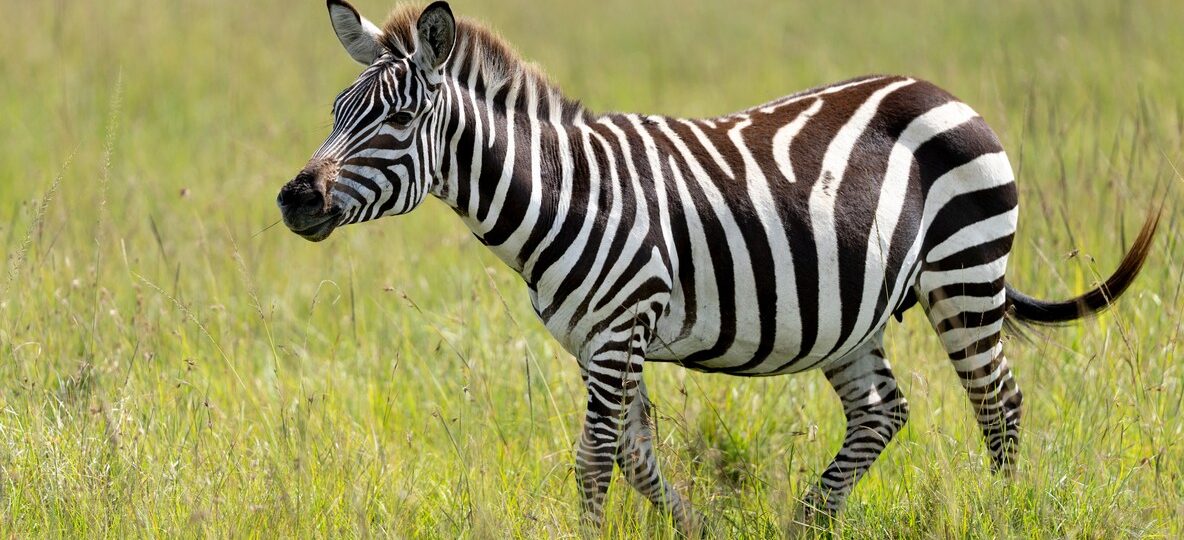
- Grevy’s zebra — the largest wild equid, endangered, with narrow pinstripe markings
- Beisa oryx — a desert-adapted antelope with straight horns that can reach 80 cm
- Somali ostrich — the male has a blue neck (not red) and is technically a different species from the common ostrich
- Gerenuk — the long-necked gazelle, the Samburu signature animal
Add elephant herds crossing the Ewaso Ng’iro, leopards resting in acacia canopies, and lion prides in the lugga beds, and you have a full-spectrum safari that happens to begin the previous evening at 45 million light-years’ distance.
Trunktrails builds tours and safaris that schedule star-bed nights in the middle of a Samburu itinerary, not at the end — so you wake under the Milky Way and then go immediately into your best game drive, carrying the scale of the previous night’s sky into every animal encounter.
Practical Astronomy Tips for Your Samburu Night Under the Stars
A few specifics that make the difference between a good night and an unforgettable one:
Allow 30 minutes for dark adaptation. The human eye takes about 30 minutes in complete darkness before its rod cells reach full sensitivity. Don’t use your phone torch. Ask your camp guide for a red-light torch — red light does not reset dark adaptation.
Learn three or four key formations before you arrive. The Southern Cross is visible from Kenya and is the fastest way to find south. Scorpius is spectacular from the equator in June-October. Orion is prominent from November to March and rises almost directly east.
Bring binoculars, not a telescope. A 10×42 binocular is more practical for sweeping the Milky Way’s star clouds than a narrow-field telescope. Some camps provide telescopes; confirm in advance.
Dress for 15 degrees Celsius. Samburu nights in June-July drop sharply. A merino base layer and down jacket are not optional. Camps provide blankets for star-bed platforms, but add your own layer.
Ask your guide for the Samburu star names. The Samburu people — a Nilotic pastoralist community — have their own star mythology. Sasaab guides in particular offer guided sessions that weave together astronomical science and Samburu oral tradition. It is a layer of the experience that no star chart provides.
The Trunktrails Advantage
Trunktrails Safaris is a Kenyan-owned operator. That distinction matters in a region where most star-bed camps are booked through international luxury travel agencies that have never spent a night in a Samburu lugga.
What we bring to a dark-sky itinerary that international intermediaries cannot:
Moon-phase itinerary engineering. We schedule your Samburu star-bed night to fall on or within three days of a new moon. Most agencies book by availability. We book by the sky.
Camp positioning knowledge. Not all “star-bed” offerings in the region deliver equivalent sky quality. We know which camps run generators until midnight and which switch to silence after sunset. We know which platforms face north and miss the galactic core. That knowledge comes from ground visits, not brochures.
Integrated Special Five strategy. We sequence your game drives so that the most productive big-cat lugga crossings happen on mornings immediately after a star-bed night — when animals are moving at first light and your energy is high from an early alarm rather than a late one.
Local guide relationships. Our guides in Samburu are community members from the Samburu people. They track the Grevy’s zebra family groups, know where the gerenuks feed by season, and can read elephant body language across 400 metres of bush. They also speak the stars in Maa.
Trunktrails Safaris contributes 5% of every booking to wildlife conservation in the communities surrounding the reserves we visit. In Samburu, that supports Grevy’s Zebra Trust anti-poaching patrols and Reteti Elephant Sanctuary community ranger training.
Contact us to design your Samburu stargazing safari:
Further reading
- WhatsApp: +254 113 208888
- Email: info@trunktrailssafaris.com
- Website: https://trunktrailssafaris.com
Frequently Asked Questions About Stargazing Safaris in Samburu
Q: Do I need any astronomy knowledge to enjoy a Samburu stargazing safari? None at all. Your camp guide will orient you to the major formations on arrival. The experience works even if you cannot name a single constellation — the visual impact of a Bortle-1 sky is immediate and requires no prior knowledge. That said, downloading a free star-chart app (Sky Map or Stellarium) before you travel adds an interesting layer.
Q: Is it safe to sleep in an open-air star-bed platform in Samburu? Yes. Star-bed platforms are elevated, fenced at the base, and positioned with camp security perimeters. Your guide will confirm the night’s wildlife activity before you settle in. In over a decade of star-bed operations at Sarara and Sasaab, there have been no guest safety incidents on the platforms. If you are uncomfortable at any point in the night, a guide will escort you to your tent.
Q: What is the best month for a kenya dark sky safari in Samburu? July and August give the best combination of clear skies, peak Milky Way visibility, and dry-season wildlife density. June and September are strong alternatives with fewer tourists. January and February are excellent for the Southern Hemisphere star fields and the second-best dry period.
Q: How much does a Samburu star-bed safari cost? Camp rates range from USD 250 (Larsen’s mid-range option) to USD 900 (Sarara ultra-luxury) per person per night, inclusive of meals, game drives, and star-bed access. A 4-night Samburu itinerary with one star-bed night typically runs USD 1,800-3,500 per person depending on camp tier. Contact Trunktrails Safaris at info@trunktrailssafaris.com or WhatsApp +254 113 208888 for a personalised quote.
Q: Can I combine a Samburu stargazing safari with other Kenya destinations? Absolutely. The most popular combination is Samburu (4 nights) plus Maasai Mara (3 nights) for Great Migration season in July-August, or Samburu (3 nights) plus Laikipia (2 nights) for a northern circuit with different ecosystem contrast. Trunktrails tours and safaris can be designed as multi-destination itineraries with internal flights between reserves.
Q: Does Trunktrails Safaris operate small-group or private tours to Samburu? Both. We offer private custom itineraries (1-8 guests) and occasional small-group departures (maximum 10 guests) to Samburu. Private tours have full flexibility on timing, camp tier, and add-ons like guided astronomy sessions. Reach us at https://trunktrailssafaris.com or WhatsApp +254 113 208888.
The sky above Samburu does not wait for the right moment. It arrives at 8:30 PM, whether you are ready or not, and it asks the same question every clear night: how long has it been since you last felt genuinely small? Book your Samburu stargazing safari with Trunktrails Safaris and let the answer find you at 350 kilometres north of ordinary.
Trunktrails Safaris | WhatsApp +254 113 208888 | info@trunktrailssafaris.com | https://trunktrailssafaris.com
Image credits: Photo by Hugo Sykes on Pexels; Photo by Harvey Sapir on Pexels; Photo by Edgar Okioga on Pexels