
Wildebeest Migration Route: Month-by-Month Map From Serengeti to the Masai Mara
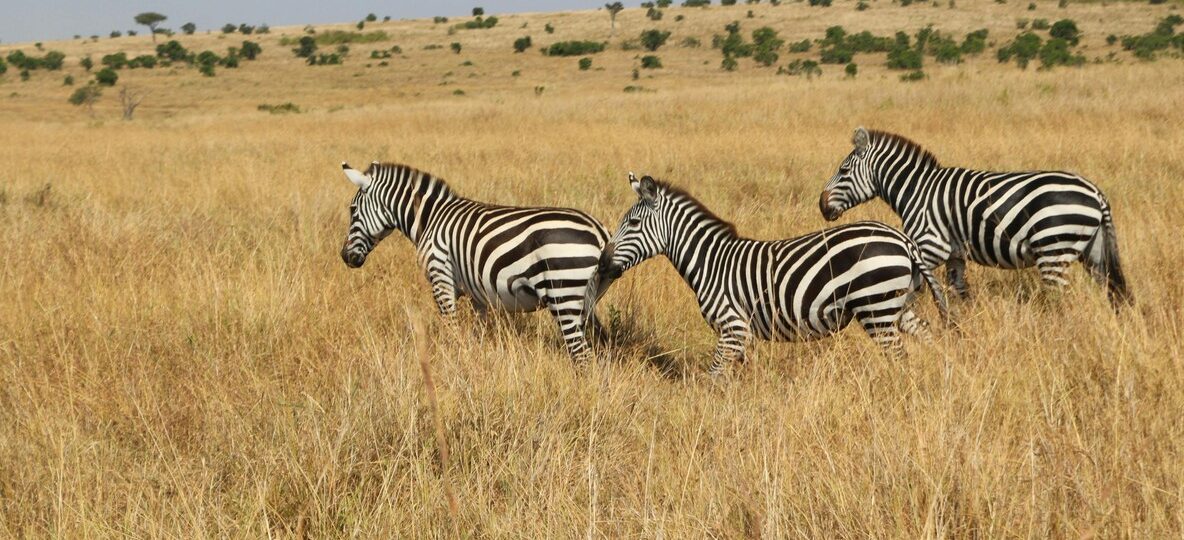
Every year roughly 1.5 million wildebeest, 300,000 zebra and 500,000 Thomson’s gazelle trace a 800-kilometre circuit across the Serengeti-Mara ecosystem. Most safari marketing collapses this into a single headline — “the crossing season” — but the reality is richer and more useful than that. The wildebeest migration route is a continuous loop, and knowing where the herds are in any given month is the difference between watching a river crossing and arriving to find an empty plain.
This guide maps the full circuit from January through December, month by month, so you can match your travel dates to the most rewarding wildlife concentration available. Trunktrails Safaris uses this route map to build itineraries for every month of the year — not just July and August.
What Drives the Migration Route? 🌍
The herds follow short green grass and rainfall, not instinct alone. The Serengeti-Mara ecosystem experiences two rain cycles: the long rains (March to May) and the short rains (November to December). As rain moves north, grass greens up ahead of the herds and browns behind them, pulling the circuit forward.
Three landscape zones define the route:
| Zone | Location | Peak Months |
|---|---|---|
| Southern Serengeti / Ndutu | Tanzania, south of Seronera | December to March |
| Central and Western Serengeti | Tanzania, Grumeti corridor | April to June |
| Masai Mara / Mara Triangle | Kenya, north of Tanzania border | July to October |
Understanding which zone the herds occupy tells you where to position — and which camps to book.
The Full Month-by-Month Migration Map
January and February — Calving Season, Southern Serengeti
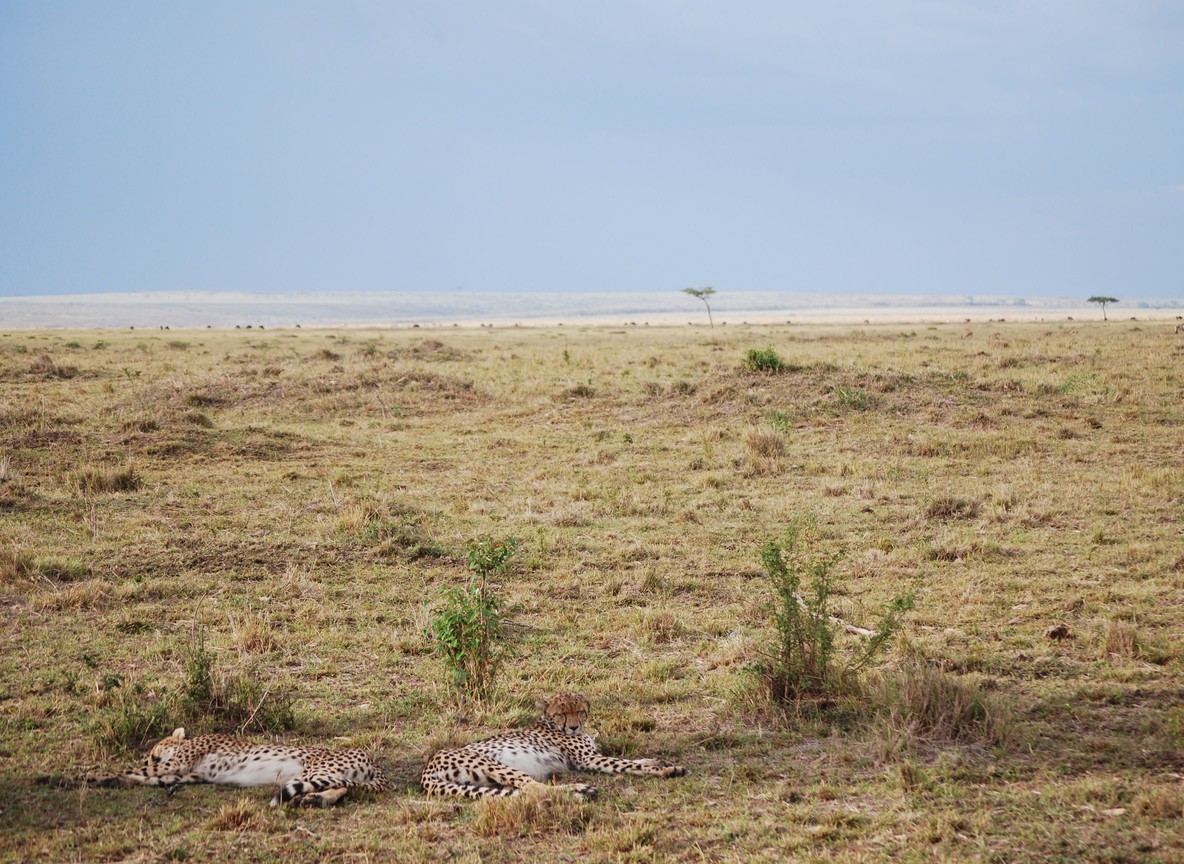
The herds are deep in the short-grass plains of southern Serengeti and Ndutu. January and February are calving months: approximately 8,000 calves drop per day at peak. Predator density explodes around the calving herds — lion prides coordinate ambushes, cheetah mothers bring cubs to hunt, hyena clans run 24-hour patrols.
This is arguably the highest-intensity wildlife experience on the circuit. The Masai Mara is quiet, which means low rates and empty game drive tracks.
March and April — Long Rains, Herds Disperse
Rainfall breaks up the dense southern concentrations. Herds drift north and west through central Serengeti. March and April are the shoulder season for many operators, but the green landscape and low crowds suit photographers and conservation-focused travelers who care less about crossing spectacle and more about behavioural observation.
May and June — Western Corridor, Grumeti River
By May the main column moves through the western Serengeti corridor toward the Grumeti River. The Grumeti crossing is less photographed than the Mara River — smaller herds, fewer vehicles, but equally dramatic crocodile activity. June brings the first herds to the Kenya border.
July to October — Masai Mara, Kenya
This is the window most travelers target. The main herds enter the Masai Mara ecosystem from the south in late June or early July and begin crossing the Mara River from July through October. Peak crossings typically run from mid-July to late September.
The Mara Triangle (managed by the Mara Conservancy) on the western bank holds some of the highest crossing frequency, while the main reserve and private conservancies offer different vehicle density trade-offs.
November and December — Return South, Short Rains
Short rains arrive in November. The herds begin the return journey south, re-entering the Serengeti through the eastern corridors. Crossings still occur in early November, but density falls sharply by mid-month. December returns the circuit to the southern calving grounds.
When Do Wildebeest Cross the Mara River? 🌅
The Mara River crossing is the iconic image of the migration — and the hardest thing to predict with precision. Crossings depend on:
- Herd pressure: The column must build large enough on the Mara’s northern bank before a trigger animal commits.
- Water level: High water after rain delays crossings; dropping levels encourage approach.
- Crocodile activity: Paradoxically, visible crocodile presence near the bank can delay crossings for days.
- Disturbance: Vehicle noise or movement on the bank pushes the lead animals back.
A general probability guide based on years of Trunktrails Safaris field data:
| Stay Length | Probability of Witnessing a Crossing |
|---|---|
| 2 nights | 35-45% |
| 4 nights | 65-75% |
| 6+ nights | 85-90% |
| 10+ nights | 95%+ |
Peak probability window: mid-July to mid-September. The single highest-probability crossing points on the Kenya side are Crossings 4 and 5 on the Mara Triangle bank and the Lookout Hill area in the main reserve.
Great Migration Map: Which Conservancy for Which Month?
For travelers targeting Kenya, the private conservancies surrounding the main reserve extend both the season and the experience:
| Conservancy | Best Migration Months | Vehicle Limit | Key Advantage |
|---|---|---|---|
| Mara Triangle | July to October | Controlled | Highest crossing frequency |
| Mara North | August to October | 4 per sighting | Post-crossing herds, night drives |
| Olare Motorogi | July to September | 4-6 per sighting | one of the highest lion densities in Africa |
| Mara Naboisho | August to October | 24 guests total | Lowest vehicle pressure |
The main Masai Mara National Reserve has no vehicle limits, which means popular crossing points can see 80+ vehicles at peak dates. Conservancy positioning is not a luxury upgrade — it is a fundamental wildlife-quality decision.
Planning the Serengeti-to-Masai-Mara Circuit Together
Some travelers base an itinerary around two legs of the circuit: calving season in Tanzania (January-February) combined with the Kenya crossing season (July-October) in a single trip structure, or as two separate trips.
A combined Serengeti-Masai Mara safari of 10-14 days allows you to witness both ends of the biological cycle — birth and the most dramatic predation event in Africa. Trunktrails Safaris plans cross-border itineraries that sequence Tanzania camps and Kenya conservancies to track the herds across country borders.
What to Expect If You Miss the Crossing Window
If your dates fall outside July-October, the Masai Mara still delivers outstanding wildlife. Resident elephant herds, large lion prides, leopard, cheetah and the Small Five are year-round. The difference is herd density: during the off-crossing months, you will see wildebeest in the Mara — just not in the 50,000-strong columns that generate crossing conditions.
Off-peak advantages are real: lower rates (30-50% less at many camps), fewer vehicles, better predator-prey interaction photographs without competing telephoto lenses at every kill.
The Trunktrails Advantage
Understanding the full migration circuit — not just the July-August highlights — is the foundation of how Trunktrails Safaris positions every itinerary. Our guides know crossing site behaviour from years of field observation. We know which camps have the best morning drive positioning for early crossing window arrival. We know the conservancy gate timings and the Mara River bank approach routes that keep vehicle pressure minimal.
More practically: Trunktrails Safaris books conservancy camps year-round, not just during peak season. If your dates fall in January, we build a calving-season itinerary with the same attention to wildlife quality that a July river crossing itinerary gets. The migration is 12 months long. We plan for all of it.
How to Use This Route Map to Choose Your Travel Dates
- Fix the experience you want: river crossing spectacle, calving drama, predator concentration, or green season photography.
- Match that experience to the zone and month on the map above.
- Allow at least 4 nights in the Mara ecosystem for a realistic crossing probability — 6 nights is the sweet spot.
- Book conservancy camps rather than the main reserve if you are travelling during peak July-September — vehicle limits change the quality of what you witness.
- Contact Trunktrails Safaris early: the best conservancy camps sell out 6-9 months ahead for peak August dates.
The migration does not wait. If you know your target window, the next step is a specific itinerary built around where the herds will be on your dates — not a generic “migration safari” package.
Further reading
- Magical Kenya (Kenya Tourism Board)
- Maasai Mara Wildlife Conservancies Association
- WWF wildlife conservation
More safari planning resources
- Wildebeest migration route map from Valley Safaris
- Mara River crossing guide on Touring Insights
- Great Migration safari collection on FindMySafari
- Best time to visit Kenya month-by-month map from Valley Safaris
Contact Trunktrails Safaris to plan your migration itinerary: WhatsApp: +254 113 208888 Email: info@trunktrailssafaris.com Website: https://trunktrailssafaris.com
| Nairobi-based | Locally owned tours and safaris across Kenya and Tanzania.
Image credits: Photo by Richard Wilson on Pexels; Photo by Mechi Torralva on Pexels; Photo by Lloyd Alozie on Pexels; Photo by MC G’Zay on Pexels; Photo by agastya ambadi on Pexels