Conservation Technology Kenya 2026: How AI, Drones and EarthRanger Are Ending Wildlife Poaching
In 2011, rangers counted 96 elephant poaching incidents in the Masai Mara ecosystem in a single year. Today, that number is zero. 🌍
This is not an accident. It is the result of one of the most sophisticated conservation technology deployments on any continent, built quietly over the past decade by Kenyan rangers, global tech partners, and the communities that live alongside the wildlife. Conservation technology in Kenya has crossed a threshold in 2026. It has moved from promising experiment to operational reality, and the data behind it should matter deeply to every traveler who books a safari here.
This blog is for those travelers. If you choose a destination because your presence should do more than observe, this is what your visit is funding.
EarthRanger AI: The Platform That Changed the Numbers
EarthRanger is an AI-powered operations platform built specifically for protected area management. Think of it as a mission control system for wildlife rangers. Every GPS collar on an elephant, every camera trap on a trail, every ranger patrol unit in the field feeds live data into one dashboard.
The Masai Mara was one of EarthRanger’s earliest East African deployments, and the results are stark. In a Fortune magazine report from May 2026, Vulcan Inc. (the platform’s developer) confirmed that elephant poaching in the Mara ecosystem dropped to zero in the years following full implementation. The platform cross-references animal location data with known poaching hotspots and historical incident patterns, then alerts ranger teams before an intrusion becomes a killing.
This is anti-poaching technology in Africa at its most effective: not reactive law enforcement but predictive field operations.
How Drone Wildlife Monitoring Changed the Game 📸
Before drones, a night patrol in the Mara meant a ranger team on foot or in a single vehicle, covering maybe 10 square kilometres in eight hours. A poaching crew knew this. They knew the gaps.
Drone wildlife monitoring in Kenya has closed those gaps. Conservation units across the Mara, Amboseli, and the northern conservancies now operate fixed-wing and multi-rotor drones on nightly patrol rotations. The most effective carry thermal imaging sensors that detect human body heat against the cool savanna floor long before a poaching team reaches target animals.
The operational protocol is not complicated. A drone operator at a fixed base manages the flight path remotely. An AI layer analyzes the thermal feed in real time, flagging heat signatures that match human movement patterns rather than wildlife. The ranger dispatch team gets a coordinate and a time window. Response times that used to run 40 minutes now run under 8.
That gap of 32 minutes is the difference between a poaching incident and a prevention.
Camera Traps: The Eyes That Never Blink
Camera trap technology for wildlife conservation is not new, but what has changed in Kenya is the scale and the intelligence layer on top of it.
In 2026, the Kenya Wildlife Service operates thousands of camera trap units across its protected estate, linked to AI classification software that can identify individual animals by natural markings: facial wrinkle patterns in elephants, whisker spot patterns in cheetahs, stripe configurations in zebra. This builds population databases that are more accurate than any ground survey. It also catches people.
A camera trap in a poaching corridor does not just record the incident. Linked to EarthRanger, it triggers an alert before the animal is harmed. Facial recognition layers (used on human subjects with the same legal frameworks as law enforcement CCTV) have increased successful prosecutions in poaching cases by helping rangers identify repeat offenders in the system.
For wildlife conservation safari travelers, this infrastructure is invisible. You will not see the cameras. But the elephant you photograph tomorrow morning is alive partly because a camera trap saw something on a trail last night.
Solio Ranch: What Zero Poaching Looks Like for Rhinos
Solio Ranch in Laikipia has been a white rhino sanctuary since the 1970s. It is also one of the clearest case studies in what conservation technology delivers when deployed comprehensively.
Since 2023, Solio Ranch has recorded zero rhino poaching incidents. The sanctuary combines ranger GPS tracking (all field staff carry units that update to a central dashboard every 60 seconds), perimeter camera trap coverage, drone overflight on irregular schedules (irregular is deliberate, because predictable patrols create predictable gaps), and EarthRanger integration.
The result is not just a clean record. It is breeding confidence. Solio has supplied rhino to reintroduction programs across Kenya and Southern Africa, with 2024 transfers to Lewa Wildlife Conservancy expanding the national population. Conservation technology here is not preserving a static number. It is growing one.
Kenya Wildlife Service and the 2024-2028 Strategic Plan
Kenya Wildlife Service published its 2024-2028 strategic plan with a clear technology mandate. Anti-poaching technology in Africa has historically been funded by conservation NGOs and private foundations. The KWS plan moves technology investment into the core operational budget for the first time.
Key commitments include:
- National expansion of EarthRanger to all 23 KWS-managed parks and reserves by 2027
- Integration of community conservancy technology networks into the KWS operations dashboard
- A ranger training curriculum that covers drone operation, AI platform management, and digital evidence collection
- Public-private data sharing agreements with platforms like Wildlife Insights (Google) and SMART (Spatial Monitoring and Reporting Tool)
The policy signal matters as much as the numbers. Kenya is betting its wildlife future on technology, and backing that bet with institutional reform.
The Human Layer: Rangers and Community Conservancies
Technology does not replace rangers. It makes rangers more effective. 🦁
A common misreading of conservation technology in Kenya is that it automates field work. It does not. What EarthRanger, drones, and camera traps do is remove the information disadvantage that rangers have always faced against organized poaching networks. Poachers have historically known more about ranger movements than rangers knew about theirs.
Technology inverts that asymmetry.
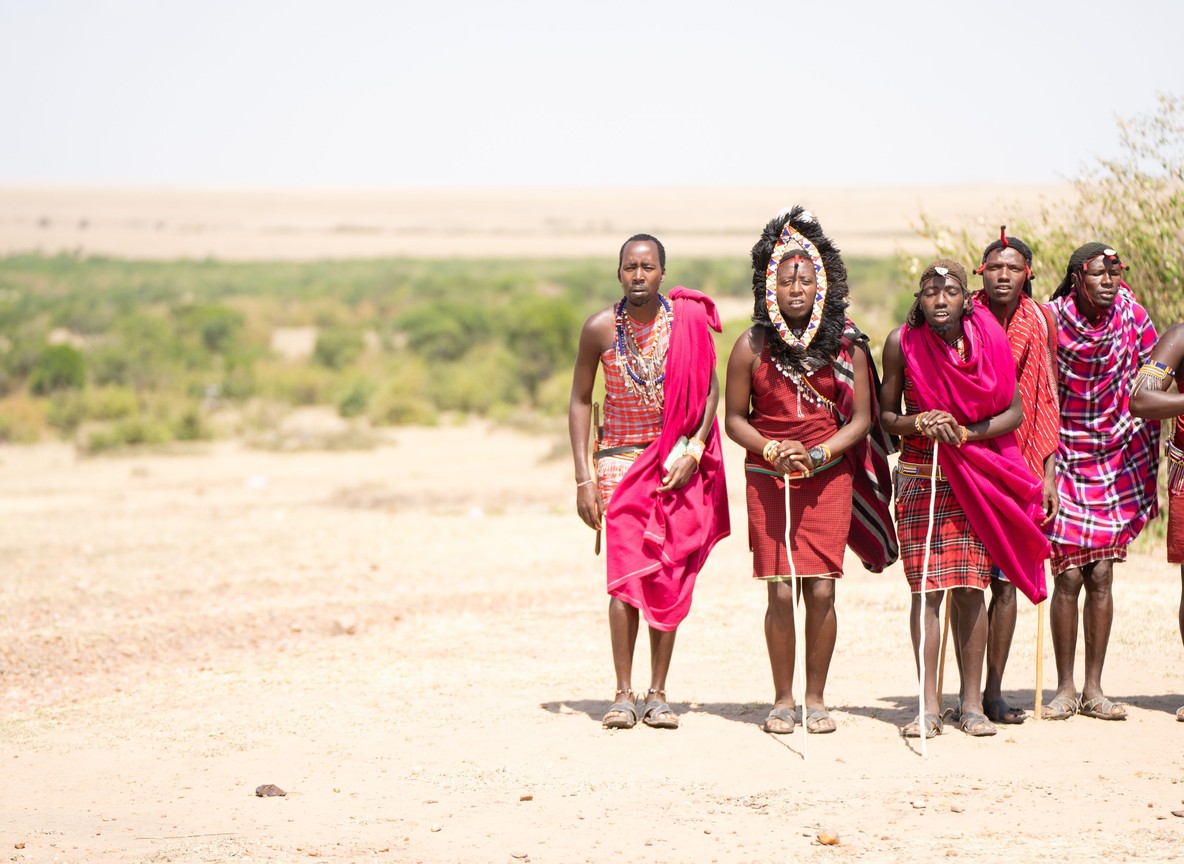
Community conservancies in the Mara ecosystem (Olare Motorogi, Ol Kinyei, Mara Naboisho, and others) have taken this further by integrating community wildlife scouts into the EarthRanger network. Local scouts, drawn from Maasai communities that share land with wildlife, report sightings, incidents, and movements via mobile app. Their local knowledge feeds the AI layer. The AI layer makes their local knowledge more actionable.
This is the model that WEF and conservation technology analysts identified in 2026 as the most replicable: technology as a multiplier for human expertise, not a replacement for it.
Why Your Safari Booking Is Part This System
Conservation technology costs money. EarthRanger licensing, drone equipment and maintenance, camera trap networks, ranger training, data infrastructure: none of this runs on goodwill. It runs on the conservation fees embedded in safari economics.
When you book a safari with Trunktrails Safaris and choose a conservancy-based camp or a KWS park within our itineraries, a portion of every daily fee goes directly to conservation operations. This is not a donation. It is the funding mechanism the entire system runs on.
Our tours and safaris are specifically designed to include access to the conservancies and parks where this technology is most active. We work with camps and conservancy partners whose lodge fees directly fund the ranger units that operate the platforms you have just read about.
Trunktrails Safaris also supports community conservancy programs in the Mara ecosystem, where every conservation-focused traveler we bring adds directly to the community wildlife fund pool that pays for local scouts and community-based monitoring.
The Trunktrails Advantage
Trunktrails Safaris is a Kenyan-owned operator. We know this landscape from the inside, not from a brochure.
Our conservation-focused tours and safaris go further than standard wildlife viewing. We offer:
| What We Provide | What It Means for You |
|---|---|
| Conservancy-based camp access | Your fees fund the tech and ranger units directly |
| Ranger briefings on active operations | Hear from the teams using EarthRanger in the field |
| Camera trap and tracking site visits | See the technology in situ on specialist itineraries |
| Community scout engagement | Meet the local experts whose knowledge feeds the AI |
| Conservation fee transparency | We show you exactly where your park fees go |
We also connect guests with conservation researchers and KWS field teams on specialist wildlife conservation safari itineraries, where the focus is as much on the science of protection as it is on the animals themselves.
This is what it means to travel as a conservation participant, not just a conservation spectator. ✨
What Is Happening in 2026: The Milestones
Three numbers define Kenya’s conservation technology moment in 2026:
- Zero: Elephant poaching incidents in the Mara ecosystem under active EarthRanger monitoring
- Zero: Rhino poaching at Solio Ranch since 2023 under the full tech-integrated protection model
- 96 to 0: The trajectory of Mara elephant poaching incidents from 2011’s peak to today
These are not projections. They are operational outcomes from conservation technology that has been running, iterating, and improving for over a decade.
Kenya is proving something the global conservation community has argued about for years: technology works, but only when deployed at scale, integrated with community systems, and funded through sustainable tourism economics.
Your safari is part of that proof.
Plan Your Conservation Safari with Trunktrails Safaris
If you want your time in Kenya to count toward outcomes you can measure, our team will design an itinerary that puts you inside the story, not just watching it.
Contact Trunktrails Safaris today:
Further reading
- WhatsApp: +254 113 208888
- Email: info@trunktrailssafaris.com
- Website: trunktrailssafaris.com
Our conservation-focused tours and safaris fill quickly between July and October, the high season when wildlife concentrations are highest and ranger operations are most active. Reach out now to secure your dates with Trunktrails Safaris.
The animals are here. The technology is working. The question is when you will come and see it for yourself.
Image credits: Photo by Sachin Saini on Pexels; Photo by Shakir Mohamed on Pexels; Photo by Wladimir Kühne on Pexels; Photo by Twilight Kenya on Pexels; Photo by Abdallah Mallya on Pexels