
Lewa Wildlife Conservancy: Where Safari Funds Kenya’s Rhino Recovery
In the foothills of Mount Kenya, across 25,000 acres of Laikipia Plateau, sits one of the most closely watched conservation landscapes on the planet. Lewa Wildlife Conservancy is not simply a safari destination. It is the place where Kenya proved that private land, community cooperation, and rigorous wildlife management can reverse a species decline that once looked irreversible. For the traveller who measures a trip not only by what they see but by what their visit funds, this is where a safari becomes something else entirely.
This guide covers what makes the lewa wildlife conservancy worth choosing in 2026, what the new LiNK veterinary laboratory means for the rhino recovery programme, and how Trunktrails Safaris can get you inside one of Kenya’s most tightly managed wildlife estates.
What Is Lewa Wildlife Conservancy?
Lewa covers 25,000 acres on the Laikipia Plateau in northern Kenya, sitting at 1,700 metres above sea level in the rain shadow of Mount Kenya’s northern slopes. The altitude keeps temperatures moderate: 15 to 28 degrees Celsius for most of the year, with light rainfall in April and November. This is not the open savanna of the Mara. The terrain mixes highland grassland, dense acacia woodland, riverine forest, and rocky ridgelines that photograph completely differently from anything in southern Kenya.
Formally gazetted as a conservancy in 1995, Lewa grew out of the Craig family’s Ngare Ndare cattle ranch, which was progressively converted from livestock to wildlife through the 1980s. The conservancy is managed by the Lewa Wildlife Conservancy trust, a Kenyan non-profit registered under Kenyan law. Every bed-night sold at camps inside the fence contributes directly to wildlife operations.
The conservancy is a UNESCO World Heritage Site, inscribed as part of the Mount Kenya World Heritage Site and its buffer zone. That status is not cosmetic. It brings international monitoring obligations and locks in the land-use designation permanently. No future administration can convert it to agriculture or extraction without violating international treaty obligations.
The Black Rhino Sanctuary at the Heart of Lewa
Lewa holds the largest single population of black rhinos in Kenya. When conservation work began in earnest in the early 1990s, fewer than 400 black rhinos remained in the entire country. Poaching had destroyed populations that once ranged across northern and central Kenya. Lewa responded by building a sanctuary with electric perimeter fencing, 24-hour ranger patrols, and a real-time tracking system using VHF and GPS collars on every animal.
The result: Lewa today holds over 200 black and white rhinos combined, including a black rhino population that has grown steadily despite regional poaching pressure. The conservancy has also served as a source population for reintroduction programmes at Borana, Ol Pejeta, Sera, and several other sites. Black rhinos translocated from Lewa have founded or bolstered populations across Kenya.
The lewa rhino sanctuary operates inside the wider conservancy as a zone of heightened security and monitoring. Guided game drives into rhino territory are structured to minimise disturbance while maximising sighting probability. Rangers log every rhino sighting and submit reports to the Kenya Wildlife Service twice daily.
Before a rhino drive, Lewa rangers deliver one of the most detailed wildlife briefings available anywhere in Kenya. You will leave knowing the individual animals by name, understanding the poaching threat gradient, and grasping exactly how your bed-night fee funds the patrol structure that keeps these animals alive.
Lewa’s UNESCO World Heritage Status: What It Means for Visitors
The inscription of lewa conservancy kenya as part of the Mount Kenya UNESCO World Heritage Site matters for three reasons that any conservation traveller should understand.
First, it anchors the landscape permanently. Land inside a UNESCO buffer zone cannot be legally converted without Kenya violating its treaty commitments. The 25,000 acres you walk across in 2026 will still be wildlife land when you bring your children back in 2040.
Second, it creates a legal framework for cooperation with the Ngare Ndare Forest Reserve to the north, forming a movement corridor for elephants, lions, and buffalo to pass between Lewa and the montane forest at altitude. The conservancy does not patrol a closed box. It manages a functioning ecological network.
Third, it creates a conservation credentialing layer that camp operators, donors, and government partners all recognise. When Lewa says it is holding a population in trust for Kenya, the UNESCO designation is the legal and reputational architecture that makes that claim durable.
The LiNK Veterinary Lab: Lewa’s 2026 Conservation Milestone
In June 2026, under newly appointed CEO Rob Macaire, Lewa Wildlife Conservancy opened a dedicated veterinary laboratory as part of the Laikipia in Northern Kenya (LiNK) project. The lab supports wildlife health monitoring across the Laikipia Plateau, not just inside Lewa’s fence. It conducts pathogen screening, disease surveillance, and reproductive health assessments for rhinos, elephants, wild dogs, and other species across the broader landscape.
This is a structural upgrade to the conservation model. Previously, samples collected at Lewa had to be transported to Nairobi for laboratory analysis, adding 24 to 48 hours to diagnostic timelines during disease events. The on-site lab cuts that window to hours and allows veterinary staff to respond to health crises across the corridor in real time.
For the conservation traveller booking a 2026 or 2027 visit, this is concrete evidence that Lewa is not coasting on past reputation. The LiNK vet lab is a measurable institutional investment in long-term wildlife health. The conservancy is hiring, building, and expanding its scientific capacity at exactly the moment when some other African conservation sites are contracting.
Big Five and Beyond: Wildlife You Can Expect at Lewa 🦁
The Big Five are all present at lewa wildlife conservancy. Lions are found in stable prides across the grassland zones. Leopards use the rocky ridgelines and riverine thicket and are regularly photographed on night drives. Buffalo move through the acacia woodland in herds exceeding 200 animals. Elephants cross in and out of the conservancy using the Ngare Ndare corridor, often in groups of 30 to 50. The rhino population gives Lewa one of the highest rhino-density sightings-per-drive ratios of any game area in East Africa.
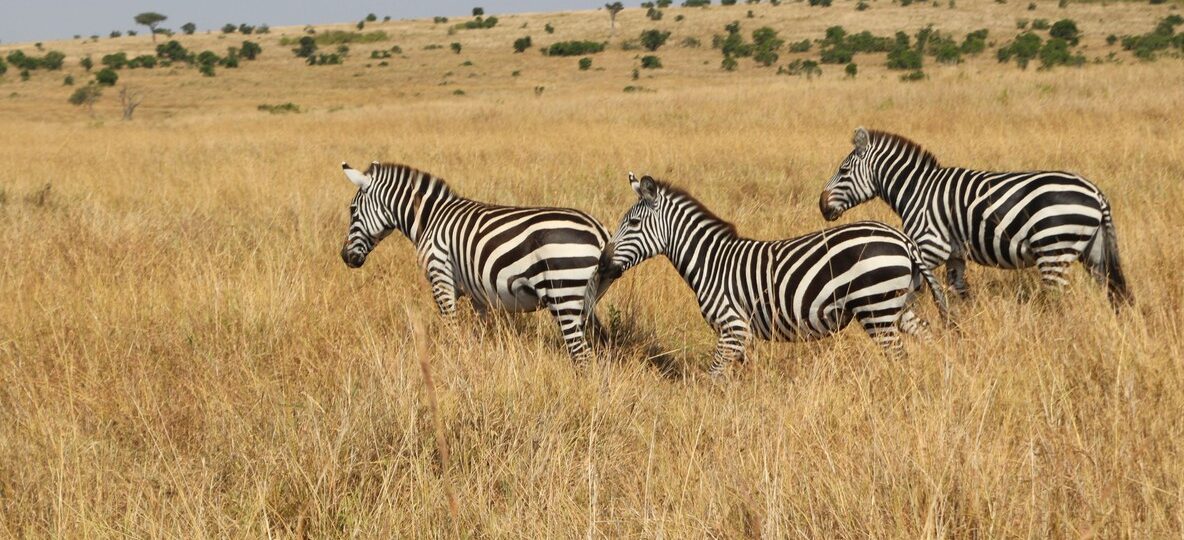
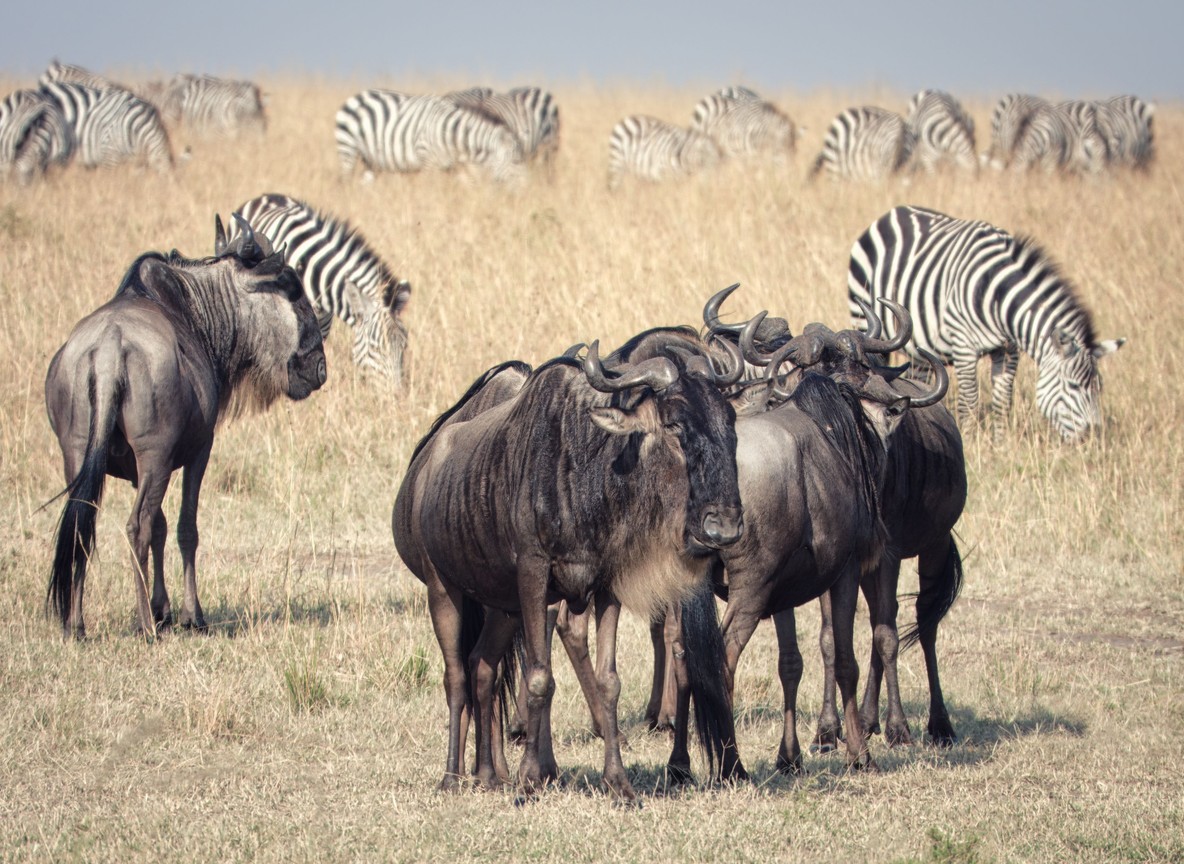
Beyond the Big Five, Lewa holds Grevy’s zebra, a species classified as endangered and absent from the Masai Mara and Amboseli. It holds reticulated giraffe, native to northern Kenya and visually distinct from the Masai giraffe found in the south. Wild dogs have been reintroduced and are breeding. Oribi, beisa oryx, gerenuk, and Somali ostrich are all present; species that define the northern Kenya biome and are simply unavailable in the southern circuit parks.
The photographic conditions at Lewa reward a longer stay. Highland light is cooler and cleaner than the heat haze of the Mara in July and August. Lower visitor numbers mean no sharing sightings with 30 vehicles. Early morning drives catch mist rolling across the plateau before it burns off by 9 a.m., producing images in a register that looks nothing like a standard Kenya safari photograph.
Where to Stay: Camps Inside Lewa Wildlife Conservancy
Four camps operate inside the conservancy fence:
| Camp | Style | Capacity | Key Differentiator |
|---|---|---|---|
| Lewa Safari Camp | Classic tented | 12 guests | Elewana Collection; dedicated rhino tracking |
| Lewa Wilderness | Family farm | 16 guests | Craig family owned; original Lewa ethos |
| Lewa House | Exclusive-use house | 16 guests | Full conservancy buy-out option |
| Sirikoi | Owner-run luxury | 10 guests | Guide-intensive; co-owned by guides |
All four pay a per-bed-night conservation levy that funds the ranger patrol structure. The conservancy fee is separate from the camp rate and is built into every booking without exception.
The lewa safari camp, operated under Elewana, offers dedicated rhino tracking with a ranger guide trained specifically for close-approach protocol. Lewa Wilderness, still run by the Craig family, retains the feel of a working Kenyan highland farm that happens to sit inside a world-class wildlife estate. Sirikoi runs close to a 1:1 guide-per-guest ratio on peak drives.
For groups, Lewa House allows a full conservancy buy-out: your party has the estate exclusively, with private game drives and no other guests. Trunktrails Safaris recommends this option for families and small groups who want conservancy access without the shared-lodge dynamic.
The Northern Grazing Ranch Corridor: Scale Beyond the Fence
The 25,000 acres inside Lewa’s fence is only part of the operational landscape. The conservancy manages the Northern Grazing Ranch, a contiguous area to the north that extends the effective range for large mammals substantially. This corridor connects Lewa to Borana Conservancy to the south and the Ngare Ndare Forest to the north.
The result is a wildlife movement network of roughly 100,000 acres across which rhinos, elephants, and large predators move without the hard constraint of a fence. Lewa’s patrol and monitoring structure extends across this corridor, not just within its gazetted boundary. Rangers track collared animals in real time as they cross between properties.
This corridor architecture is the reason Lewa’s rhino population has been able to grow rather than hit a density ceiling. The conservancy is not managing a closed population in a finite box. It is managing a metapopulation across an ecological network, applying the same population management logic that wildlife biologists use when designing national park systems.
Community Programs: Why Lewa Matters to Local People
Any conservation operation that does not address the economic interests of surrounding communities is running a defended island. Lewa built community engagement into its operational model as a functional part of the security architecture, not as a marketing layer.
Lewa supports more than 40 schools across adjacent community zones, a health outreach programme that has provided healthcare access to over 75,000 people in Laikipia, and a water programme that has constructed boreholes and pipeline infrastructure for pastoral families. The conservancy employs over 700 people, the majority drawn from communities adjacent to the fence, with structured career pathways for senior rangers, head guides, and veterinary assistants.
The practical security outcome: a community that earns from the conservancy does not provide cover for poachers. Lewa’s intelligence network for poaching threats runs through community informants who have a direct financial stake in the rhinos staying alive. 🌍
The Trunktrails Advantage: Conservation Briefings and Partner Access
Trunktrails Safaris has a working relationship with lewa conservancy kenya that goes beyond standard agent access. When you book a lewa safari through Trunktrails, your arrival includes a structured conservation briefing delivered by a Lewa conservation officer. This covers the current rhino population status, the active threats and how the patrol structure addresses them, and the specific ways your stay is contributing to the recovery programme.
This briefing is not available to walk-in guests or travellers who book direct through online aggregators. It is an access layer that Trunktrails Safaris negotiates with the conservancy on behalf of clients who want their visit to mean something beyond the game drive.
Trunktrails Safaris is a operator with deep knowledge of northern Kenya circuits combining Lewa with Samburu, Matthews Range, Laikipia, and the Ol Pejeta-Borana arc. Our tours and safaris are designed for the traveller who wants to understand what they are seeing and why it matters. Every Trunktrails tours and safaris booking to a conservancy destination includes species briefing notes, ranger contact access, and post-trip reporting on the conservation metrics your visit contributed to.
Trunktrails Safaris also handles the logistics that derail independent bookings: community levies, park fees, flight coordination from Nairobi’s Wilson Airport to Lewa Downs airstrip, and the permit structures that apply to photography inside rhino territory.
How to Book a Lewa Conservation Safari with Trunktrails Safaris 📸
The best time to visit lewa wildlife conservancy is July to October for dry-season game viewing, and January to February for the short dry season. Both windows deliver open grassland, concentrated wildlife at water sources, and the cooler highland temperatures that make Lewa distinctive from the main Mara circuit.
A standard Lewa itinerary runs 3 to 5 nights. Trunktrails Safaris recommends pairing Lewa with 2 nights at Samburu National Reserve to the east, or 2 nights at Borana for a Laikipia conservation focus. Seven nights covers both Lewa and Samburu comprehensively, with one full day allocated to a rhino tracking session.
The lewa wilderness and lewa safari camp options both require advance booking. Peak season inventory at Lewa sells out months ahead, particularly for clients combining with Mara season in August.
Trunktrails tours and safaris handles everything from a single booking point. Contact Micah directly to begin the conversation. 🐘
Ready to book your Lewa conservation safari? Contact Trunktrails Safaris now and ask for the conservation briefing package:
Further reading
More safari planning resources
- Ol Pejeta and Sweetwaters safari package from Valley Safaris
- Best time to visit Kenya on Touring Insights
- Big Five safari collection on FindMySafari
- Kenya tour packages from Valley Safaris
- WhatsApp / Call: +254 113 208888
- Email: info@trunktrailssafaris.com
- Website: https://trunktrailssafaris.com
Do not wait until July. Lewa camp inventory moves faster than the Mara in peak season, and the camps operating inside the conservancy have limited beds by design. Your rhino sighting, your conservation briefing, and your contribution to Kenya’s black rhino recovery are waiting on the plateau above Mount Kenya. Reach out to Trunktrails Safaris today and let’s build the itinerary.
Image credits: Photo by Richard Wilson on Pexels; Photo by Jos van Ouwerkerk on Pexels; Photo by Fali Poncha on Pexels; Photo by Lloyd Alozie on Pexels; Photo by MC G’Zay on Pexels

