Best Kenya Safari for Photographers: Camps, Vehicles and Seasons for Serious Shooters
📸 The best kenya safari for photographers is not the most famous camp or the highest-priced package. It is the right combination of vehicle configuration, conservancy access rules, and camp positioning relative to the wildlife corridors you want to work. A photographer in the wrong camp with the wrong vehicle will produce worse results than one in the right setup at a less famous location. Trunktrails Safaris has put photographers in both situations. This guide tells you exactly what to look for before you book — camps, vehicles, seasons, and the questions that separate a photo safari from a regular safari with a camera.
Why Camp and Vehicle Choice Changes Everything
The equation is simple. Position determines everything. In fact, position is determined by your camp’s location relative to wildlife corridors, your vehicle’s profile relative to eye level, and your operator’s willingness to stay with a subject when other vehicles leave.
A photo safari kenya framing starts long before you arrive at the airstrip. The Mara North Conservancy gives you exclusive vehicle access. The National Reserve gives you shared roads with 30 other vehicles. Both have lions. Only one lets you hold position without a vehicle wall of minibuses closing in.
At Trunktrails Safaris, we see this play out on every photography-focused booking. Photographers who brief us on their primary subjects — whether that is big cats in action, intimate elephant behavioral sequences, or Mara River crossings — get camp placements and guide briefings built around those objectives. That is the foundation of the best kenya safari for photographers.
What Makes a Camp Right for Photography?
Not every luxury camp is a good photography camp. In contrast, the camps that consistently produce results share four specific traits. These are the criteria that actually matter:
- Proximity to high-density wildlife corridors. Camp position inside or immediately adjacent to a private conservancy means you are in the action within minutes of leaving, not driving 45 minutes to the sighting.
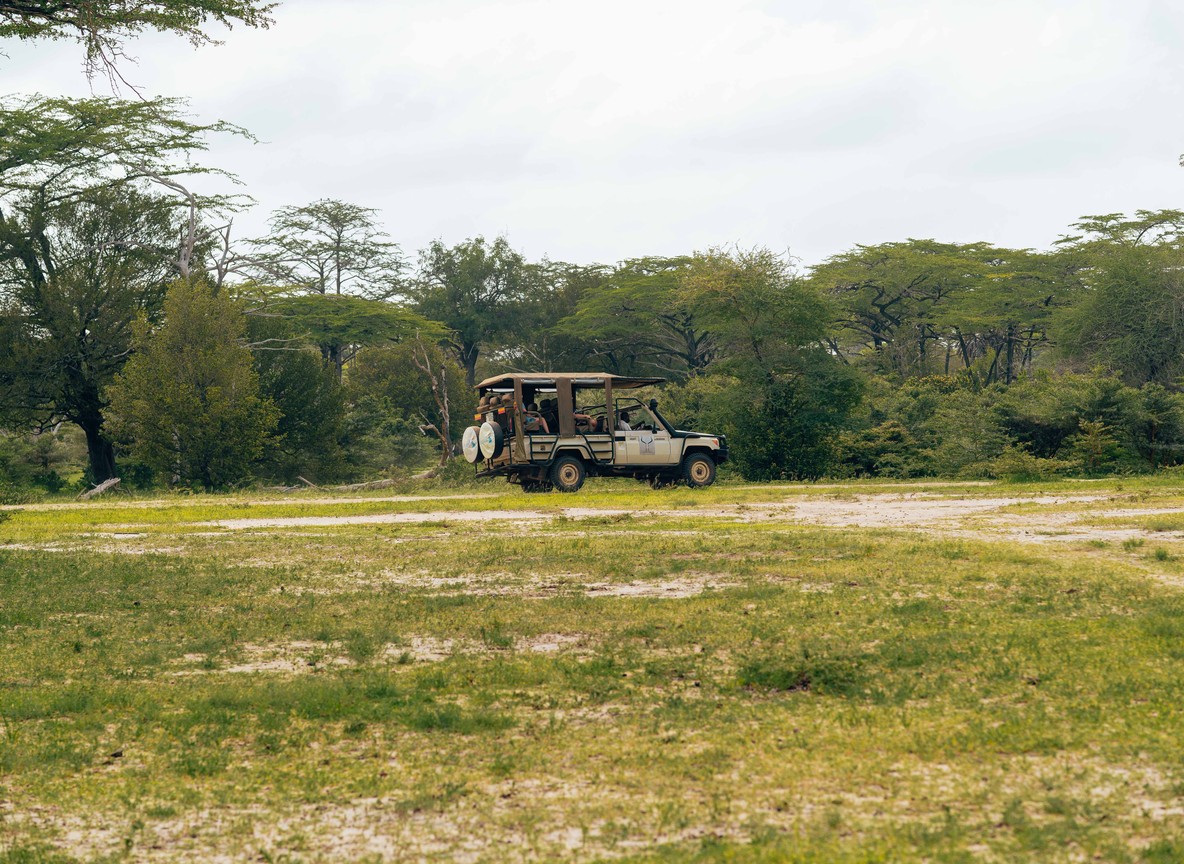
- Vehicles with open sides and low profiles. This is non-negotiable. A closed minibus or a standard pop-top at full height puts glass, body panels, or roof structure between your lens and the subject. An open-sided 4×4 at a low seating profile shoots at near-eye-level with large mammals.
- Access to pre-dawn departures before 6 AM. Camps inside private conservancies are not bound by Kenya Wildlife Service gate hours. They can put you on a subject at first light, before the reserve crowds arrive.
- Photo hide availability. Fixed waterhole hides or ground-level hides eliminate vehicle silhouette and engine noise. They change the game for intimate behavioral work.
| Criterion | What It Enables Photographically |
|---|---|
| Wildlife corridor proximity | More time on subjects, less drive time |
| Open-sided low vehicle | Eye-level angles, full f-stop flexibility, no door obstruction |
| Pre-dawn departures | First light access, empty sightings, dramatic skies |
| Photo hides | Ground-level perspective, extended waits without disturbing subjects |
Open-Sided and Low-Profile Vehicles — Why They Matter
For any open sided vehicle safari, the technical advantages compound quickly. Here, specifically, is what changes when you move from a standard pop-top to a purpose-configured open 4×4:
Shooting angles. A low vehicle profile means your lens points horizontally at large mammals rather than angling down. This matters enormously for lions resting in short grass and cheetahs on termite mounds.
Lens clearance. Side doors, door frames, and roof pillars disappear. You can swing a 500mm or 600mm prime across a full 180-degree arc without hitting bodywork.
Beanbag mounting. Beanbag ledges on the door rail or window frame are standard on purpose-built photo vehicles. They damp vibration from the engine, stabilize long glass during panning sequences, and free your hands for tracking AF adjustments without worrying about mirror shake.
Dust exposure. Open-sided vehicles do expose your gear to more dust on dry-season tracks. Experienced photographers manage this with lens cloths and body covers. It is a trade-off most serious shooters make without hesitation — and it is part of what makes an open vehicle the right choice for the best kenya safari for photographers.
| Vehicle Type | Shooting Angle | Beanbag Ledge | Lens Clearance | Dust Exposure |
|---|---|---|---|---|
| Open-sided 4×4 | Eye-level | Yes (door rail) | Full 180 degrees | Higher |
| Standard pop-top | Slightly elevated | Roof only | Limited by pillars | Moderate |
| Closed minibus | Elevated and angled down | None | Window-restricted | Low |
Top Photography-Focused Camps in Kenya
These five kenya safari photography camps earn their place based on photographic merit, not general TripAdvisor scores. 🦁
Kicheche Bush Camp (Mara North Conservancy) runs a maximum of three vehicles per camp, all open-sided. Conservancy rules limit the total vehicle count at any sighting. The camp sits inside Mara North, giving pre-dawn access and the ability to hold position on a subject after other vehicles cycle out. See Kicheche Bush Camp for full details on their photography-specific vehicle configuration.
Porini Mara Camp (Ol Kinyei Conservancy) operates open 4×4 vehicles exclusively and draws on a conservancy with some of the lowest vehicle density in the wider Mara ecosystem. Ol Kinyei shares a border with the National Reserve but has its own access roads. See Porini Mara Camp for conservancy exclusivity details.
Angama Mara sits 500 feet above the Mara valley on the Great Rift Valley escarpment. The elevated position creates a unique aerial perspective for wide-landscape compositions and gives first light earlier than valley-floor camps. It runs open-sided vehicles and offers a full-day drive option for photographers who want extended time on a subject.
Ol Pejeta Conservancy (Central Kenya) is the primary destination for rhino photography in Kenya. The conservancy maintains both black and white rhino populations and offers private hide access near watering points. It also has the Sweetwaters Chimpanzee Sanctuary for primate work. Vehicle access rules inside Ol Pejeta are more flexible than in national parks.
Saruni Mara (Mara North Conservancy) runs an exclusive-use conservancy model with strictly limited vehicle numbers. Like Kicheche, it benefits from Mara North’s low-density rules. Saruni’s guides have a strong track record of locating leopards — useful for anyone targeting the photographing leopards in Kenya portfolio shots.
| Camp | Location | Vehicle Type | Photo Hide | Group Size | Best For |
|---|---|---|---|---|---|
| Kicheche Bush Camp | Mara North | Open-sided 4×4 | No (conservancy access) | Max 3 vehicles | Big cats, early departures |
| Porini Mara Camp | Ol Kinyei | Open-sided 4×4 | No (conservancy access) | Very small | Low-density sightings, leopard |
| Angama Mara | Mara escarpment | Open-sided 4×4 | No | Standard | Landscape-wildlife composites |
| Ol Pejeta | Laikipia | Mixed | Yes (waterhole) | Varies | Rhino, private hides |
| Saruni Mara | Mara North | Open-sided 4×4 | No (conservancy access) | Exclusive | Leopard, exclusive access |
Photo Hides and Exclusive Access — What to Ask Before You Book
Any camp can market itself as photography-friendly. However, the best kenya safari for photographers comes down to the answers to a specific set of operational questions. Before you book, ask these:
- Do your vehicles have a beanbag ledge on the door rail? Not just the roof hatch — the door rail. This is the position that gives you the low-profile, stabilized shot on a sleeping lion at 200 metres.
- Can we stay at a sighting after other vehicles leave? In the National Reserve, this is limited by rangers and competing vehicles. In a private conservancy, a good guide will hold position until the light or the subject moves.
- Can we depart before 6 AM? The answer tells you immediately whether you are inside a conservancy or bound by park gate hours.
- Is there a fixed waterhole hide on the property? If yes, ask whether it is a permanent blind or a moveable vehicle. Permanent hides change the dynamic entirely — subjects habituate to the structure, not the smell of passengers.
- What is your maximum vehicle count at a sighting? Three or fewer is the standard for serious photo operations. More than five vehicles and burst depth becomes irrelevant — you are shooting ears and tails.
Best Season for the Best Kenya Safari for Photographers
The standard safari season advice does not map cleanly onto photographic objectives. As a result, many photographers end up in the wrong season for their primary subject. Here is how the two main seasons actually break down for the best time for wildlife photography kenya: 🌅
Dry season (July to October) concentrates wildlife around water sources and thins the vegetation. Subjects are predictable and positions are repeatable. The trade-off is midday light that blows out highlights and flattens texture on tawny coats. You are working early and late sessions, resting midday. The Great Migration river crossings peak in July to September and deliver the kind of burst-depth sequences that fill cards fast.
Green season (November to April), however, gets underplayed by every operator except the ones who actually photograph. Vegetation is lush, which creates natural framing for portraits. The cloud cover diffuses light through much of the day, giving you a larger usable shooting window. Vehicle density drops significantly. Big cats are actively rearing cubs in January to March, which means behavioral sequences — nursing, play, teaching hunts. The birding is exceptional. For cheetah in Masai Mara cub sequences specifically, February to March is the calendar target.
| Season | Light Quality | Subject Density | Vegetation | Crowd Level | Best For |
|---|---|---|---|---|---|
| Dry (Jul-Oct) | Harsh midday, golden early/late | High (water-concentrated) | Sparse | Peak | Migration crossings, action, burst sequences |
| Green (Nov-Apr) | Diffused, extended window | Moderate | Lush | Low | Cub sequences, portraits, birds, intimate behavior |
The Trunktrails Advantage
Trunktrails Safaris is native Kenyan-owned, which means our conservancy relationships are direct. Specifically, when we place a photographer in Mara North or Ol Kinyei, we are drawing on years of working relationships with camp managers and senior guides — not routing a booking through a London or Nairobi agency that calls the same camp you could call yourself.
For kenya photo safari tours specifically, that matters in three ways:
Vehicle configuration. We confirm open-sided vehicle availability before any booking is confirmed — not after you arrive at camp. If a camp’s photo vehicle is booked by another group, we know in advance and find an alternative.
Guide briefing. We brief your guide on your primary subjects before you land. A guide who knows you are targeting a specific cheetah family or a resident leopard behaves differently from one expecting a generalist game drive. Our guides across the tours and safaris we operate have a strong track record of holding position on subjects and reading animal behavior for the next likely action.
Conservancy access. Our partnerships with private conservancies in Mara North, Ol Kinyei, and Naboisho give our photo tours and safaris access to low-density game viewing that National Reserve bookings cannot match. Unlimited drives, no park gate curfews, vehicle-at-the-subject as long as the light holds.
Dedicated photo guide option. For photographers who want a second set of eyes specifically for spotting and behavioral reading, Trunktrails Safaris can arrange a dedicated photo guide alongside your regular guide — available on request for multi-day bookings.
For more on positioning and technique once you are in the field, our masai mara wildlife photography guide covers everything from river crossing positions to photographing leopards in Kenya in the forest fringe.
Conservation commitment: 5% of every Trunktrails Safaris booking goes directly to wildlife conservation. No middlemen. ✨
FAQ
What type of vehicle is best for wildlife photography in Kenya? The best kenya safari for photographers starts with the right vehicle. An open-sided 4×4 with a low side profile and a beanbag ledge on the door rail is the standard. The low profile gives eye-level angles on large mammals. The open sides eliminate door-frame obstruction across the full shooting arc. The beanbag ledge stabilizes long glass without relying on a tripod, which is impractical inside a moving vehicle. Avoid closed minibuses and standard pop-tops for serious photo work — the elevated and angled-down position costs you dramatically on lion and cheetah portraits.
Which Kenya conservancies allow unlimited photo drives? Private conservancies — Mara North, Ol Kinyei, and Naboisho — all allow unlimited drives without National Reserve gate-hour restrictions. These conservancies also cap the number of vehicles at any single sighting, which directly affects your ability to work a subject without crowd pressure. The National Reserve (Masai Mara Game Reserve) enforces gate hours and does not limit vehicle numbers at sightings, which creates a different kind of working environment. For a full breakdown of conservancy access rules, the Kenya Wildlife Service publishes current park and reserve regulations. For dedicated photo safari kenya itineraries, conservancy placement is the single most important logistical decision.
When is the best time for wildlife photography in Kenya? It depends on your primary subject. For migration river crossing sequences and maximum subject density, July to October is the target. For cub behavioral sequences, diffused portrait light, and low vehicle counts, November to April outperforms the dry season on most photographic objectives. Magical Kenya maintains a useful seasonal wildlife calendar that maps subject availability month by month. Many serious shooters combine both: a green-season Mara North stay in February for cub work, and a dry-season Mara River conservancy placement in August for crossing sequences.
Plan Your Photography Safari with Trunktrails Safaris
Peak season (July to October) books out 6 to 8 months ahead. If you are targeting Migration crossings or specific conservancy camps, the window is now.
Tell us your primary subjects, your gear configuration, and how many days you have. Trunktrails Safaris will build an itinerary around photographic objectives — not just a lodge wishlist. Our photo tours and safaris are designed around what you want to shoot, not what is easiest to fill.
Further reading
📞 WhatsApp: +254 113 208888 📧 Email: info@trunktrailssafaris.com 🌍 Website: trunktrailssafaris.com ✅ | Native Kenyan-owned | No middlemen | 5% to conservation
Image credits: Photo by Anil Sharma on Pexels; Photo by Keegan Checks on Pexels; Photo by Hugo Sykes on Pexels; Photo by Balazs Simon on Pexels; Photo by Clare on Pexels