
Is Kenya Safe for Solo Female Travelers? A Practical Kenya Safari Solo Female Safety Guide 🌍
You have done your research. You know roughly what you want: a week in the Masai Mara, maybe a few nights near Amboseli with Kilimanjaro as your backdrop. What you need now is a straight answer on kenya safari solo female safety, not reassurance wrapped in vague language. This guide gives you the data, the specific camp-vetting criteria, the transfer protocol, and the exact questions to ask any operator before you hand over a deposit.
No fluff. Let’s get into it.
The Honest Answer: Is Kenya Safe for Solo Female Travelers?
Yes, with important context. The safari circuit and national parks are substantially safer than Kenya’s urban centers. Nairobi’s central business district and some residential areas carry genuine risk that the UK Foreign, Commonwealth and Development Office (FCDO) acknowledges in its Kenya travel advisory. The Masai Mara, Amboseli, Tsavo, and the private conservancies around them operate in an entirely different risk environment. Professionally run camps with 24-hour security, licensed guides, and structured group game drives offer solo women a controlled, well-supported experience that is hard to replicate anywhere else in the world.
The distinction matters: “Kenya” is not one safety rating. Nairobi city center at night is one reality. A licensed tented camp inside Ol Pejeta Conservancy is another. In fact, the gap between urban and safari-circuit risk is one of the most misunderstood aspects of kenya safari solo female safety planning.
How the Safari Circuit Differs from Urban Kenya
Solo travel Kenya safety depends almost entirely on which part of Kenya you are in. Understanding this geography is the first practical step.
Safari circuit and conservancies:
- Game reserves and national parks are fenced or naturally bounded ecosystems
- Access is controlled through a limited number of entry gates
- Camps have perimeter security; wildlife protocol means guests move with guides at all times
- Your day is structured: early morning drive, bush breakfast, afternoon drive, sundowner, dinner
- Fellow guests and camp staff are consistently present
Nairobi city center:
- The FCDO advises against walking in Nairobi’s CBD after dark
- Public transport (matatus) carries meaningful risk for solo travelers unfamiliar with routes
- Certain neighborhoods have higher petty crime and opportunistic theft rates
- This is manageable with the right transport and accommodation choices, but it requires deliberate planning
The practical upshot: Most well-planned safari tours and safaris route guests through Nairobi only for airport transfers, handled by a licensed driver. You should not need to navigate the city alone. A reputable operator books you a day room or airport hotel if you have a long transit, and your driver meets you at arrivals.
What to Look for in a Safe Safari Camp for Solo Women
This is where most safety guides fall short: they tell you to “choose a reputable camp” without telling you what that means in practice. Here are the specific criteria for safe safari camps for solo women in Kenya.
Ask these questions before booking:
| Criteria | What to ask | Why it matters |
|---|---|---|
| Room security | Does each tent or room have an individual lock and a security light? | Prevents unauthorized access; ensures you control your space |
| Bathroom access | Is the bathroom en-suite or shared with other guests? | En-suite means you never cross open ground at night |
| Staff presence | Is there 24-hour security patrol and a night guard? | Standard at mid-range and above camps; not always at budget lodges |
| Female guide option | Can I request a female guide for game drives? | Preference, not requirement — worth asking |
| Staff vetting | Are guides and camp staff background-checked? | Ask for KWS-licensed guides (Kenya Wildlife Service) |
| Guest ratio | What is the usual guest-to-staff ratio? | Smaller camps (8-12 guests) often feel safer and more personal |
| Emergency protocols | What is the communication protocol if I need help during the night? | You want a clear answer: radio, intercom, or a named contact |
| Medevac access | Is the camp within 45 minutes of an airstrip? | Relevant for medical emergencies, not security per se |
Mid-range and luxury camps on the safari circuit meet most of these criteria as standard. Budget camping sites and some lower-grade guesthouses outside park boundaries do not. This is a case where spending slightly more directly improves your safety margin.
Getting There and Around Safely: Transfers and Transport
Solo female traveler Africa safety frequently breaks down at the transport stage, not inside the parks. This is where an operator’s protocols matter most.
Airport arrivals: Jomo Kenyatta International Airport (Nairobi) is manageable if your pickup is pre-arranged. Avoid unofficial taxi touts inside the terminal. A licensed operator provides a named driver with a physical sign, a vehicle registration number sent in advance, and a WhatsApp confirmation when you land. If any of those three elements are missing, do not get into the vehicle.
Ground transfers: Matatus (minibus taxis) are cheap and widely used by Kenyans. They are not the right choice for solo women unfamiliar with Nairobi routes, especially at night. Licensed safari vehicles with named drivers are the correct option for all legs of a safari trip.
Domestic flights vs. road transfers: The Masai Mara is a 5-6 hour road transfer from Nairobi or a 45-minute domestic flight to Keekorok or Ol Kiombo airstrips. The flight is significantly safer, eliminates road fatigue, and removes you from the ground-level risks of the highway. If budget allows, fly. Trunktrails Safaris builds domestic flight options into solo tours and safaris for clients who prefer it.
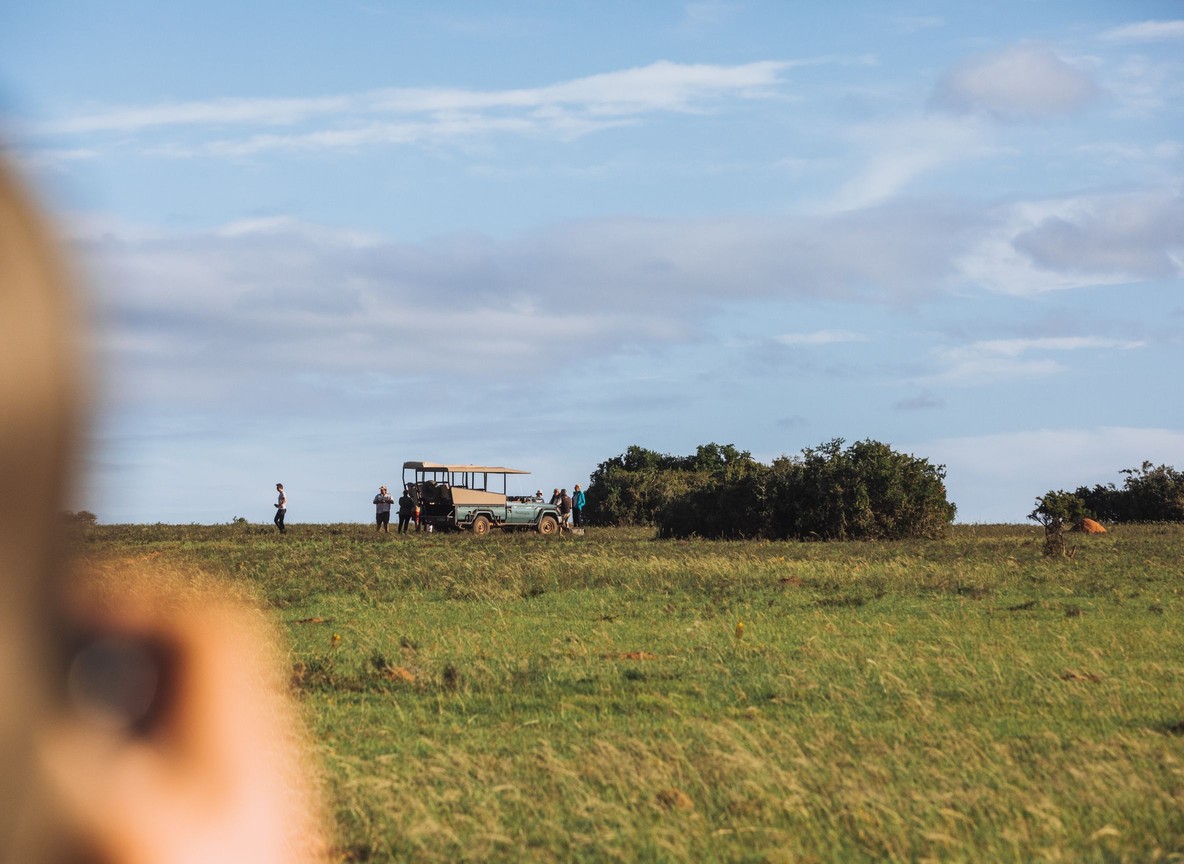
Within the parks: You move in a licensed safari vehicle with a KWS-licensed guide. You do not walk unaccompanied outside camp boundaries. This wildlife safety protocol applies to everyone, and it happens to significantly reduce solo security risk as well.
Kenya Safari Solo Female Safety Tips: A Practical Checklist
A practical checklist for solo female safari Kenya trips, ordered by timing.
Before you travel:
- Check the current FCDO Kenya travel advisory at gov.uk/foreign-travel-advice/kenya — updated regularly, specific by region
- Purchase travel insurance that includes medical evacuation (medevac). Standard travel policies often exclude this. World Nomads and SafetyWing both offer medevac cover
- Share your full itinerary (camp names, dates, your operator’s WhatsApp number) with someone at home. Update them at each camp change
- Buy a Safaricom SIM card at the airport on arrival for mobile data coverage across the safari circuit
On arrival:
- Confirm your driver’s identity against the details sent by your operator before entering any vehicle
- Keep your accommodation details and your operator’s emergency number in your phone offline (screenshots, not just an app)
- Register with your country’s embassy in Nairobi (most offer a free online traveler registration service)
At camp:
- Ask the camp manager on arrival what the night protocol is: who to contact, which radio channel, how to signal if you need assistance
- Wildlife protocol means no solo walks outside the camp perimeter — this is the rule for everyone and it works in your favor
- Trust your instincts. If a camp feels under-staffed or disorganized on arrival, you have every right to raise it with your operator immediately
If something feels wrong:
- Contact your operator directly via WhatsApp — a good operator responds within minutes, not hours
- Every KWS-licensed camp has a Kenya Wildlife Service ranger station nearby. Rangers are reachable through camp management
- For genuine emergencies: Kenya Police emergency line is 999 or 112
The Trunktrails Advantage: Solo Female Travel Done Right
Trunktrails Safaris is a native Kenyan-owned operator, with specific protocols built for solo female clients. These are the concrete procedures, not marketing claims. ✨
Pre-trip:
- Every solo female booking receives a pre-trip safety briefing by WhatsApp or email: named driver details, vehicle registration, camp emergency contacts, and SIM card guidance
- Camp selection is done on your behalf using the vetting criteria listed above. Trunktrails Safaris does not recommend camps that use shared bathrooms or lack 24-hour security
Transfers:
- All airport pickups use licensed drivers employed or contracted directly by Trunktrails Safaris — no third-party taxi apps
- Driver’s name, photo, and vehicle registration number are sent to you 24 hours before every transfer
- A WhatsApp check-in is triggered at each major transit point: airport arrival, camp arrival, departure morning
At camp:
- Female guide availability: Trunktrails Safaris can request a female KWS-licensed guide for your game drives on the Masai Mara circuit. Availability varies by camp and season — confirm at booking
- Camp staff at all properties recommended by Trunktrails Safaris hold current KWS certification
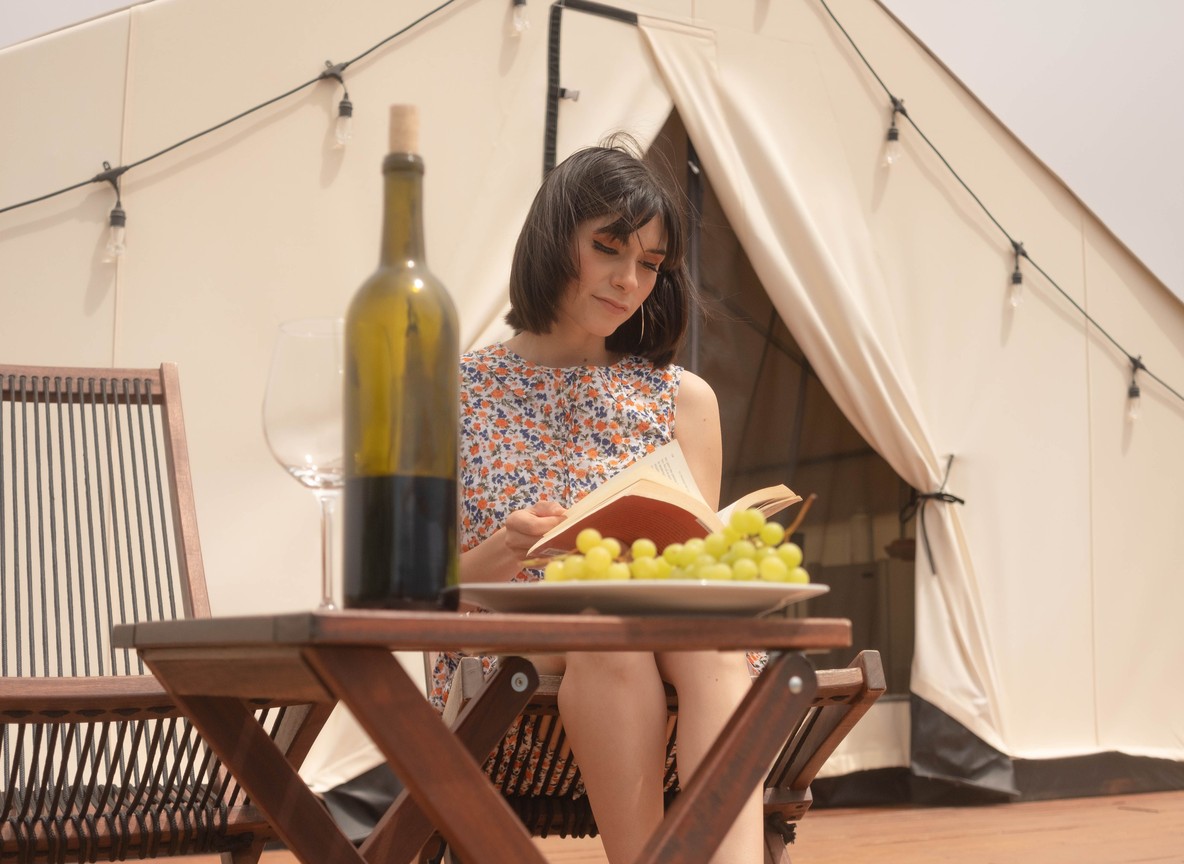
- All solo female itineraries include mid-range or above accommodation as standard, with en-suite bathrooms and individual room security
Itinerary design:
- Trunktrails Safaris designs solo tours and safaris with no unnecessary dead time in urban areas. If a Nairobi overnight is unavoidable due to flight schedules, a specific pre-vetted hotel with airport-proximity and in-house security is booked
5% of every Trunktrails Safaris booking goes directly to wildlife conservation. You travel safely. The ecosystem benefits. 🐘
Real Questions Solo Women Ask Before Booking
Can I safari alone in Kenya? Yes. Many women do, every year. The safari circuit is designed around guided, structured experiences — you are never navigating alone in the bush. The key is choosing a licensed operator who handles transfers and camp selection. Solo does not mean unsupported.
What is the safest park for a solo female traveler? The Masai Mara and Amboseli are the most visited and have the highest concentration of well-managed, licensed camps. Additionally, private conservancies bordering the Masai Mara (Naboisho, Olare Motorogi, Mara North) offer even smaller guest numbers and stronger security infrastructure. See our guide to the best Masai Mara safari lodges for specific camp recommendations.
Is Nairobi safe for a solo female traveler? Parts of Nairobi are fine during daylight hours with normal precautions: Westlands, Karen, and the areas around major hotels. However, the CBD and River Road at night are not recommended. Most safari itineraries minimize Nairobi time to airport transfers only. If you have a day in Nairobi, the Karen Blixen Museum, Giraffe Centre, and David Sheldrick Wildlife Trust are all safe, popular day trip options.
Do I need to book with an operator, or can I go independently? You can self-drive to some parks, but this is not advisable for a first Kenya safari and carries additional logistics challenges. For solo female travelers, a licensed operator covers transfers, camp logistics, and has a duty-of-care obligation. The cost difference between independent and guided tours and safaris is smaller than most people expect.
Before you travel, check the Kenya visa and entry requirements and review our solo female safari planning guide for the full itinerary companion to this post.
Book Your Solo Safari With Confidence 🌅
You have done the research. You have the checklist. The next step is a conversation with an operator who will answer your specific questions directly, not with a brochure.
When you contact Trunktrails Safaris, here is what happens: a real team member (not a bot) responds within hours. You tell them your dates, your preferred parks, and any safety concerns. They send back a draft itinerary with named camps, driver protocols, and pricing. You ask every question on your list. Nothing moves forward until you are satisfied.
Trunktrails Safaris is, native Kenyan-owned, and has designed solo tours and safaris for women from across the world. Kenya safari solo female safety is not an add-on for us — it is built into every itinerary from the start.
Get in touch:
Further reading
📞 WhatsApp: +254 113 208888 📧 Email: info@trunktrailssafaris.com 🌍 Website: https://trunktrailssafaris.com | Native Kenyan-Owned | 5% of every booking funds wildlife conservation
Image credits: Photo by Nirav Shah on Pexels; Photo by Rachel Claire on Pexels; Photo by Los Muertos Crew on Pexels; Photo by Mr Sketch on Pexels; Photo by Altezza Travel on Pexels