Ol Kinyei Conservancy: Where the Masai Mara Has One of Africa’s Highest Lion Densities
Stand on the open plains of Ol Kinyei Conservancy at first light, and the silence hits you before anything else. No minibus engines. No other vehicles on the horizon. Then the grass shifts, thirty metres ahead, and a lioness locks eyes with you. Behind her: three more adults, two half-grown cubs, the whole pride stretched out in the early warmth like they own the world. They do.
This 18,700-acre stretch of Maasai-owned land southeast of the Masai Mara National Reserve holds a distinction that stops wildlife researchers mid-sentence: one of the highest recorded lion densities in Africa. Confirmed in peer-reviewed research by the Mara Lion Project (Oxford University, 2016), the data on Ol Kinyei and the surrounding Mara conservancies is published and verifiable. For wildlife photographers and conservation-focused travellers, it changes what a Kenyan safari looks and feels like.
Why Ol Kinyei Has One of Africa’s Highest Lion Densities 🦁
The numbers are striking. Approximately eight resident prides live within Ol Kinyei’s 18,700 acres. Researchers have identified more than 60 individual lions by whisker-spot mapping. That concentration does not happen by accident.
Three factors converge here:
- Prey density. The conservancy’s grasslands hold year-round populations of zebra, topi, impala, wildebeest, and buffalo. Lions do not need to range far.
- No off-road harassment. Because Ol Kinyei strictly limits total guests and bans day visitors entirely, predators are not pushed off kills by vehicle pressure.
- Community-led land use. The Maasai landowners, working with Gamewatchers Safaris under the Porini brand, have converted former pastoral land to low-impact wildlife conservancy. No livestock compete for grazing. No farming fragments corridors.
The result is a masai mara lion conservancy model that conservation biologists point to when discussing coexistence between communities and large predators.
The Big Cat Story: Lions, Leopards and Cheetah in Ol Kinyei
Ol Kinyei’s resident big cat population covers all three of East Africa’s major felids, which is rare in a single conservancy of this size.
Lions. Eight prides with known territories across the conservancy. With very few game-drive vehicles operating at any time, sightings are intimate. Guides know individual lions by name and history.
Leopard. The riverine thickets along Ol Kinyei’s drainage lines hold multiple resident leopards. Because night drives are permitted (unlike in the main Mara reserve), evening game drives regularly pick up leopard activity: hunts, tree-cached kills, territorial scent-marking.
Cheetah. The open grassland corridors in the north of the conservancy suit cheetah hunting behaviour. Sightings are less guaranteed than lions, but when conditions are right, you watch full hunts unfold without another vehicle in frame.
The ol kinyei wildlife portfolio extends further: spotted hyena clans, serval cats in the long grass, black-backed jackal pairs, and bat-eared foxes near the kopje outcrops.
Wildlife Beyond Big Cats: What Else Roams Ol Kinyei
The conservancy’s prey base is what sustains that extraordinary ol kinyei lion density. Herds of plains zebra and topi are permanent residents. Eland, the largest antelope in Africa, move through in small groups. Impala are abundant. Buffalo bulls rest in the shade of the lugga thickets.
Birdlife is exceptional for photographers who work at ground level. Secretarybird pairs stalk grasshoppers across the plains. Martial eagle and African hawk-eagle hunt from the woodland edges. Lilac-breasted rollers perch on dead snags at shooting-light hours.
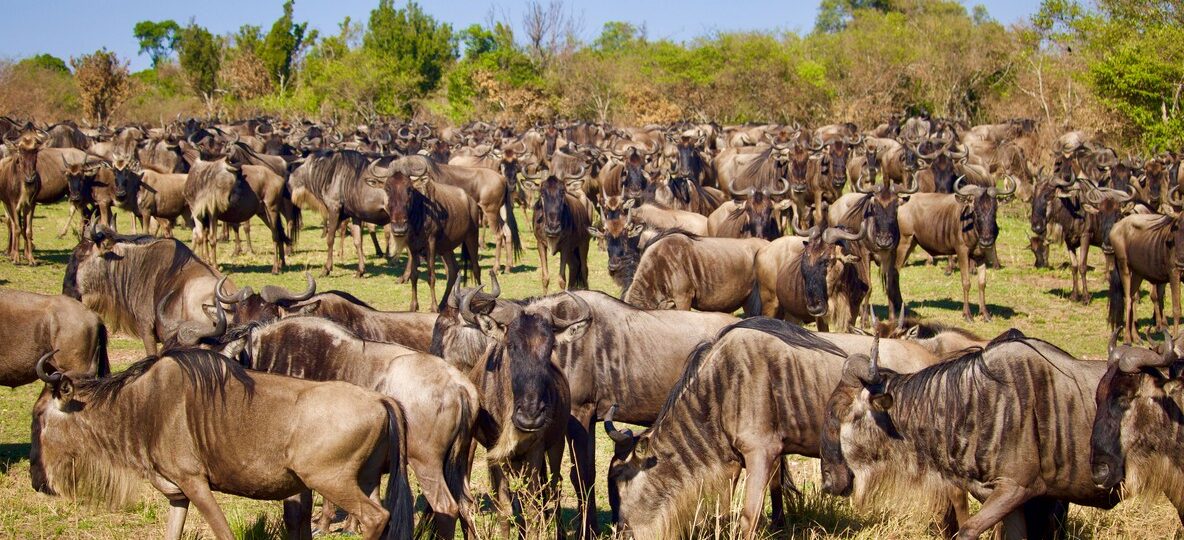
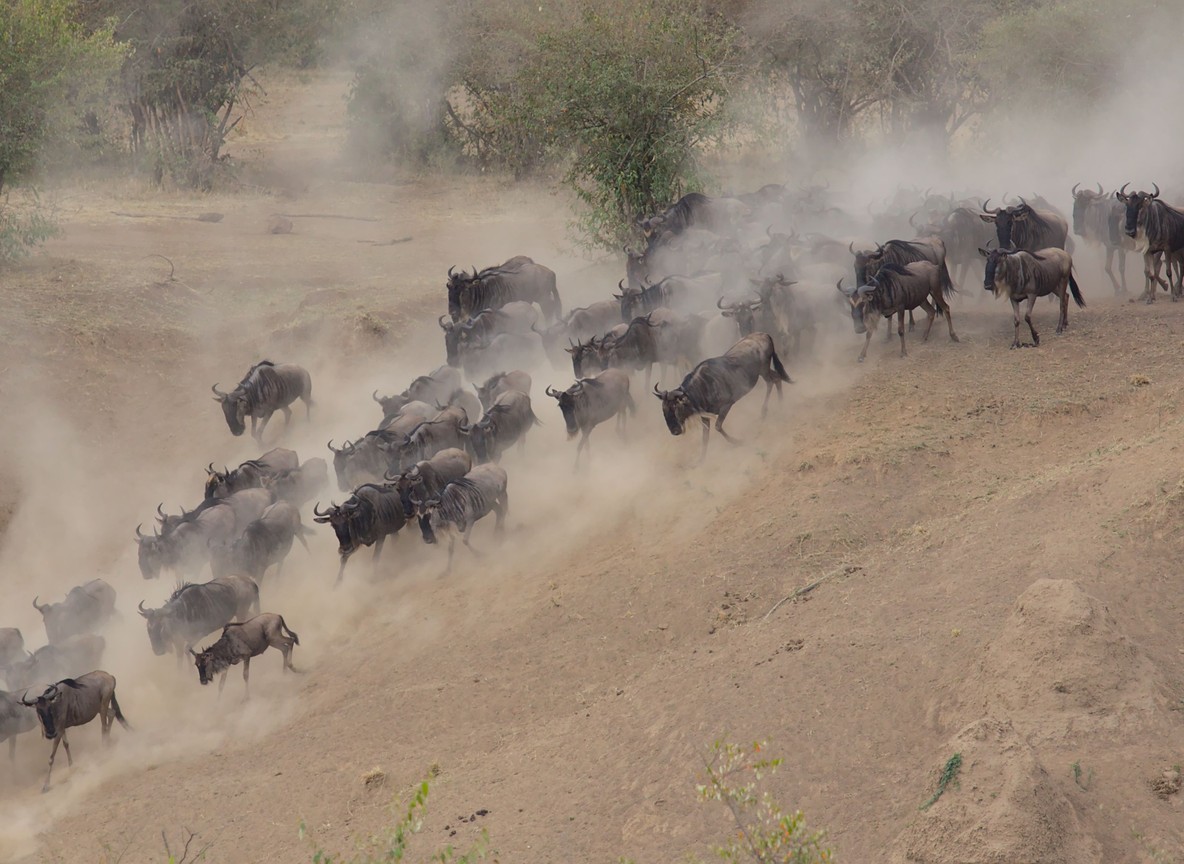
The wildebeest migration passes through Ol Kinyei between July and October as the herds push southeast from the Mara Triangle. This window combines resident big cat populations with the spectacle of mass movement: predator concentrations during the migration peak are extraordinary. Pride hunts on moving wildebeest columns happen with regularity, and the exclusivity of the conservancy means your guide can position you correctly without competing for space.
Photography Conditions: Why Ol Kinyei Is a Photographer’s Dream 📸
Private conservancy access rules rewrite the photography equation.
- Off-road driving is permitted throughout the conservancy. Guides position vehicles at ground level beside kills, in front of approaching lions, alongside cheetah during pre-hunt stalks.
- Night drives are legal and run every evening. Nocturnal species, leopard activity, hyena den behaviour, and aardvark sightings in the spotlight are all accessible.
- Walking safaris put you at eye level with the landscape and create compositions impossible from a vehicle.
- Strict guest limits mean you are never in a multi-vehicle scrum at a lion kill. Guides communicate by radio and ensure that priority sightings get quiet, unhurried time.
Dawn light on the Mara escarpment behind open plains, with lions in the foreground, is the frame that defines ol kinyei masai mara photography. With the right guide and the right morning, you get it. This is where the tours and safaris Trunktrails Safaris designs for wildlife photographers differ from a standard national reserve itinerary.
Ol Kinyei vs Olare Motorogi: How the Two Conservancies Compare
Both conservancies adjoin the Masai Mara National Reserve, and both offer private game-drive access. They attract the same audience. But they are different animals.
| Feature | Ol Kinyei | Olare Motorogi | Main Mara Reserve |
|---|---|---|---|
| Size | ~18,700 acres | ~33,000 acres | ~373,000 acres (1,510 km2) |
| Total guest limit | ~24 | ~150+ | Unlimited |
| Lion density | One of the highest recorded in Africa | High | High but vehicle pressure |
| Night drives | Yes | Yes | No |
| Walking safaris | Yes | Yes | No (outside camps) |
| Day visitors | Not permitted | Some permitted | Open access |
| Migration access | July-Oct corridor | Full migration front | Full migration |
| Community model | Direct to Maasai landowners | Maasai conservancy | KWS-managed |
| Price tier | Mid-range-premium | Premium-luxury | Budget-luxury range |
Olare Motorogi covers more ground and offers more camp choices. Ol Kinyei offers a more intimate experience and has the documented lion density advantage. For photographers who want controlled, uncrowded access to big cats, Ol Kinyei is the stronger choice. For travellers who want full migration spectacle across a large landscape with more accommodation options, Olare Motorogi delivers. Trunktrails Safaris designs masai mara private conservancy safari itineraries that sometimes combine both, especially on 7-10 day programmes.
When to Visit Ol Kinyei: Migration, Big Cats and the Best Months
Ol Kinyei is a year-round destination because resident predators do not migrate. But different windows offer different experiences.
July to October is the headline period. The wildebeest migration pushes into the Mara ecosystem, and Ol Kinyei sits on one of the main movement corridors. Lion prides hunt moving herds. The grass is shorter post-rains, which improves visibility. This is peak season and the camp fills early.
November to June delivers the conservancy almost to yourself. Vegetation is greener after the rains. Cub cohorts born after the migration rut are visible in the prides. Photographic light in the morning can be exceptional when cloud cover diffuses the sun. This is when tours and safaris with Trunktrails Safaris cost less and feel even more private.
January and February are dry, warm, and excellent for predator sightings as animals concentrate around water sources.
Where to Stay: Porini Ol Kinyei Camp and Accommodation Options
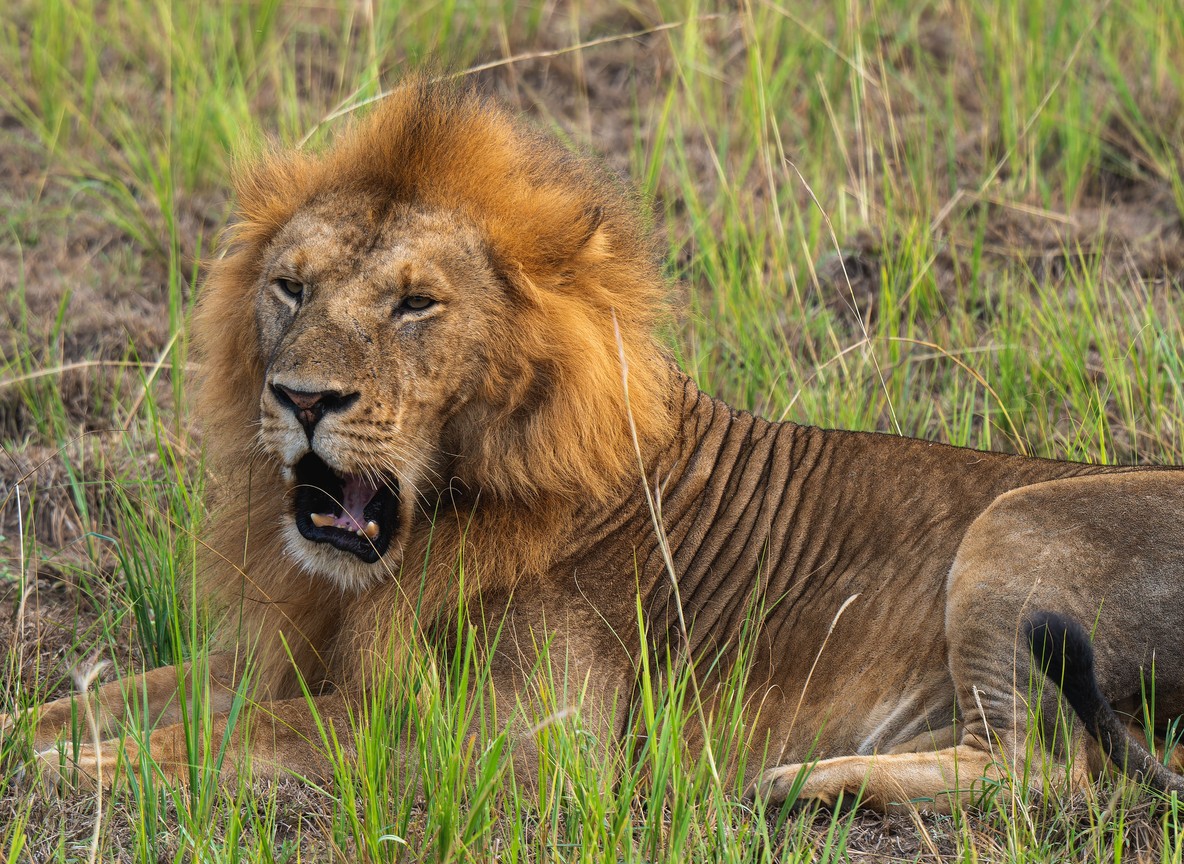
Porini Ol Kinyei Camp is the primary accommodation inside the conservancy, operating under a deliberately small-footprint model on full board. Solar power, canvas walls, outdoor bucket showers, lantern light. It is not a luxury lodge and does not try to be. The focus is entirely on what happens outside the tent.
Key logistics:
- Access: Fly from Wilson Airport in Nairobi to Ol Kiombo airstrip (approximately 45 minutes). A 20-minute drive brings you to camp.
- Capacity: A strict guest limit is maintained across the conservancy. Day visitors are not permitted.
- Activities included: Morning and evening game drives, walking safaris, cultural Maasai visits, night drives.
- Community revenue: A direct proportion of every booking goes to the Maasai landowner families whose agreement makes the conservancy viable.
Trunktrails Safaris can combine a Porini Ol Kinyei Camp stay with Amboseli, Tsavo, or a Nairobi city night before your Wilson Airport departure, building a complete Kenya itinerary around your wildlife photography priorities. 🌍
The Trunktrails Advantage
Trunktrails Safaris is a native Kenyan-owned operator. When you book tours and safaris with us, you work directly with people who know Ol Kinyei not from a brochure but from the red murram roads, the specific prides, the light at each airstrip hour.
Here is what that means in practice:
- Tailor-made itineraries built around your photography objectives, fitness level, and season. We pair Ol Kinyei with the right complementary destinations for your specific travel window.
- All budgets welcomed. From simple Porini tented camp stays to premium lodge combinations, Trunktrails Safaris structures itineraries that match what you actually want to spend.
- No middlemen. You speak directly with our team, not a call centre in another country. Changes, questions, and logistics adjustments happen fast.
- 24/7 support. Our team is reachable throughout your safari. If a night drive is cancelled by weather or a walking route needs to change, we handle it in real time.
- Conservation commitment. A portion of every Trunktrails booking goes directly into wildlife conservation programmes. When you travel with us to Ol Kinyei, you are funding the community model that makes high lion density possible.
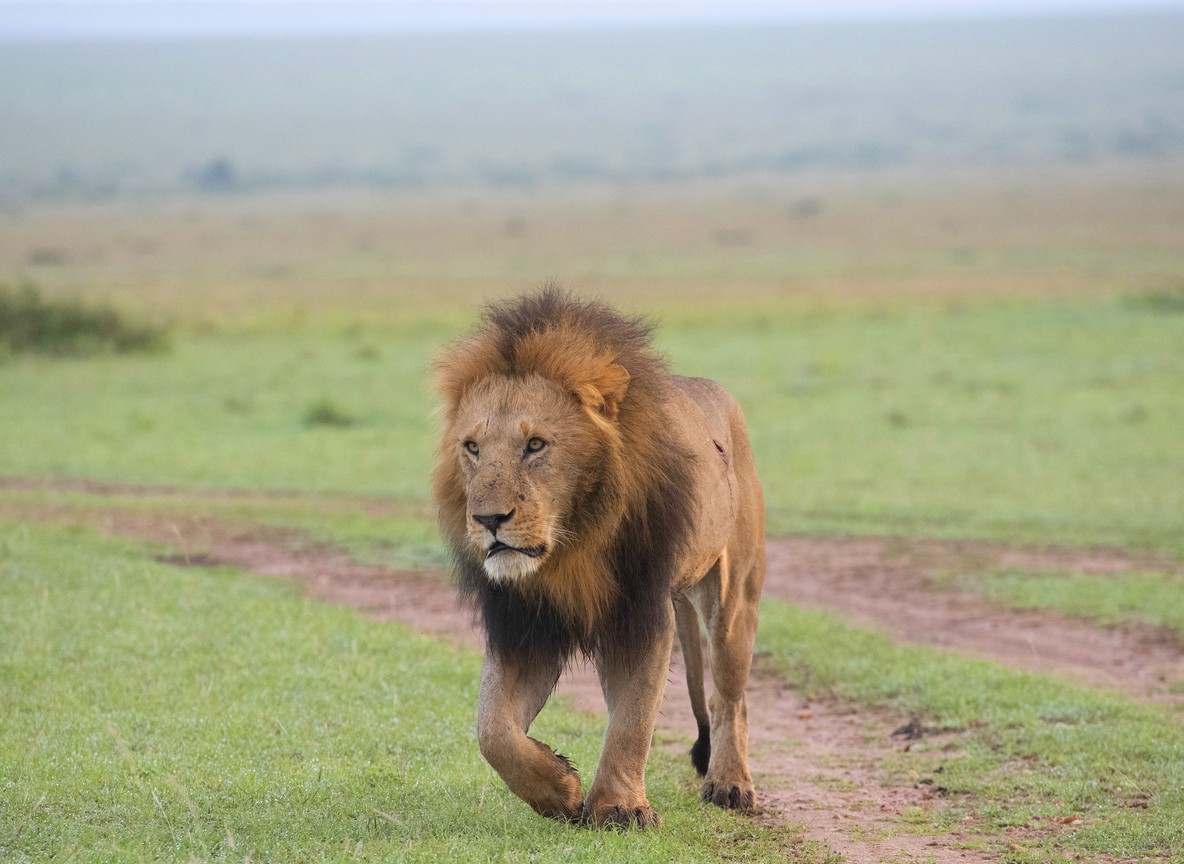
The camp fire is out. The conservancy is quiet except for distant hyena contact calls carrying across the plain. Tomorrow, before sunrise, your guide will be at your tent. Two lions crossed the lugga at dusk, and one of them is the pride male with the split left ear who was seen earlier with a carcass. First light. No other vehicles. Your lens already knows where to point.
That is what Ol Kinyei conservancy feels like from the inside. Book it before you overthink it.
Further reading
More safari planning resources
- Wildebeest migration route map from Valley Safaris
- Big Five safari parks guide on Touring Insights
- Great Migration safari collection on FindMySafari
- Mara River crossing guide on Touring Insights
Ready to plan your Ol Kinyei conservancy safari?
Contact Trunktrails Safaris directly and we will build your itinerary around the season, your photography goals, and your timeline.
📞 WhatsApp: +254 113 208888 📧 Email: info@trunktrailssafaris.com 🌍 Website: https://trunktrailssafaris.com Native Kenyan-Owned | Locally led, conservation-committed