
Night Game Drive Kenya: After-Dark Wildlife in Private Conservancies 🌍
The spotlight cuts a narrow corridor through the dark. A pair of amber eyes hang in the beam, blinking once, then vanishing into the acacia scrub. You have just found a leopard on a night game drive in Kenya, and the bush around you is very much awake. This is the hour that day-tripping visitors never get to see. Trunktrails Safaris builds Kenya night safari itineraries that put you out after sunset in the conservancies where after-dark driving is not only allowed but done with genuine care for the animals. The key word is conservancies, because the rules are not the same everywhere.
Can You Do Night Drives in the Masai Mara?
This is the most common question, and the honest answer matters for your planning.
Inside the Masai Mara National Reserve, Kenya Wildlife Service rules restrict vehicle movement to daylight hours, roughly 6 am to 6 pm. The same restriction applies across all national parks and national reserves in Kenya, including Amboseli National Park, Tsavo East, Tsavo West, and Lake Nakuru. These protected areas operate under a single framework: no night driving, no exceptions for private guides.
The rule exists for good reasons. Limiting vehicle pressure after dark gives animals space to move, hunt, and rest without the compounding stress of traffic.
Private conservancies, however, operate under their own management frameworks. They set their own activity schedules, and the best ones have built structured night drive programmes with conservation protocols built in. This distinction between a national reserve and a private conservancy is the single most important thing to understand before you book a Kenya night safari.
Where Can You Do Night Game Drives in Kenya?
The strongest concentration of conservancies offering night drives is in two regions: the Greater Mara ecosystem and the Laikipia Plateau.
Greater Mara Conservancies
Three conservancies on the northern and eastern edges of the Mara ecosystem are standouts for night game drives in Kenya.
Olare Motorogi Conservancy covers roughly 33,000 acres of open plains and riverine forest. Vehicle numbers per sighting are capped, and that cap applies at night too. The combination of low density and high predator numbers makes it one of the most productive after-dark destinations in East Africa.
Mara Naboisho Conservancy is community-owned by Maasai landowners and is one of the largest private conservancies in the Mara, at 50,000 acres. Night drives here regularly produce leopard, serval, spotted hyena hunting runs, and genet.
Ol Kinyei Conservancy is smaller and quieter than its neighbours. Its compactness means guides cover ground efficiently, and sightings tend to be unhurried.
Laikipia Plateau
Laikipia hosts some of Kenya’s most ecologically diverse private land. Ol Pejeta Conservancy, Lewa Wildlife Conservancy, Loisaba Conservancy, and Borana Ranch all run structured night drives. The drier, more open terrain here favours bat-eared fox, aardwolf, and occasionally aardvark.
Amboseli Periphery
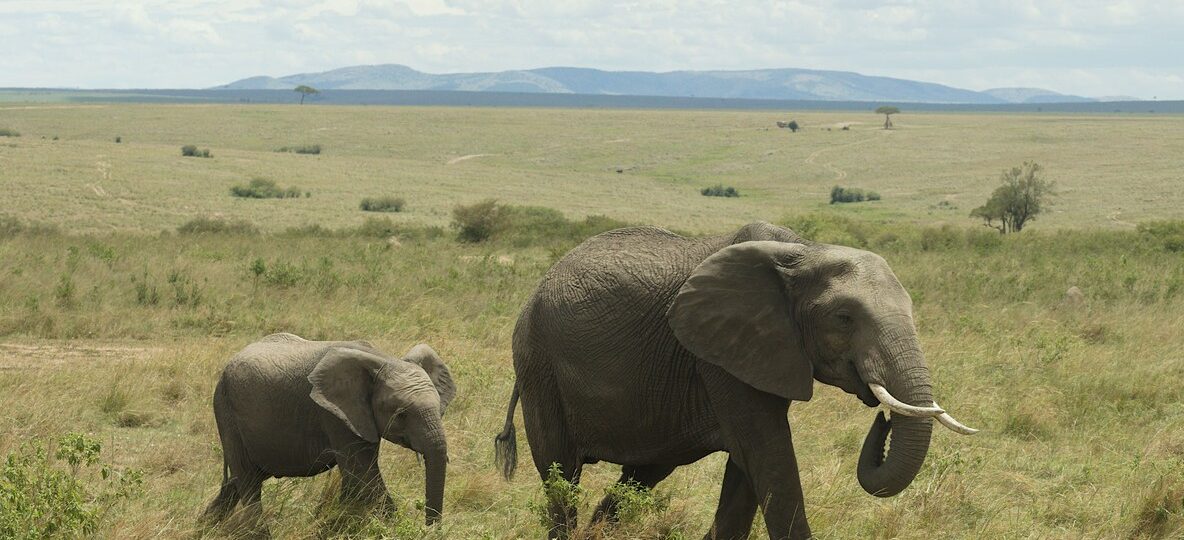
Selenkay Conservancy, northeast of Amboseli National Park, offers night drives set against the Kilimanjaro skyline on clear evenings. Elephant activity after dark is common, and the game corridors between Selenkay and the park boundary carry a wide range of species.
| Conservancy | Region | Night Drives | Signature Nocturnal Species |
|---|---|---|---|
| Olare Motorogi | Greater Mara | Yes | Leopard, serval, genet |
| Mara Naboisho | Greater Mara | Yes | Leopard, spotted hyena, civet |
| Ol Kinyei | Greater Mara | Yes | Serval, bat-eared fox, mongoose |
| Ol Pejeta | Laikipia | Yes | Aardvark, aardwolf, porcupine |
| Lewa | Laikipia | Yes | Black rhino at water, bat-eared fox |
| Loisaba | Laikipia | Yes | Leopard, genet, bushbaby |
| Borana | Laikipia | Yes | Aardwolf, springhare, caracal |
| Selenkay | Amboseli area | Yes | Elephant, serval, spotted hyena |
What Animals Come Out at Night on Safari? 🐆
Africa’s diurnal rhythm shifts dramatically at sunset. Species that stay hidden through the heat of the day become active, vocal, and visible.
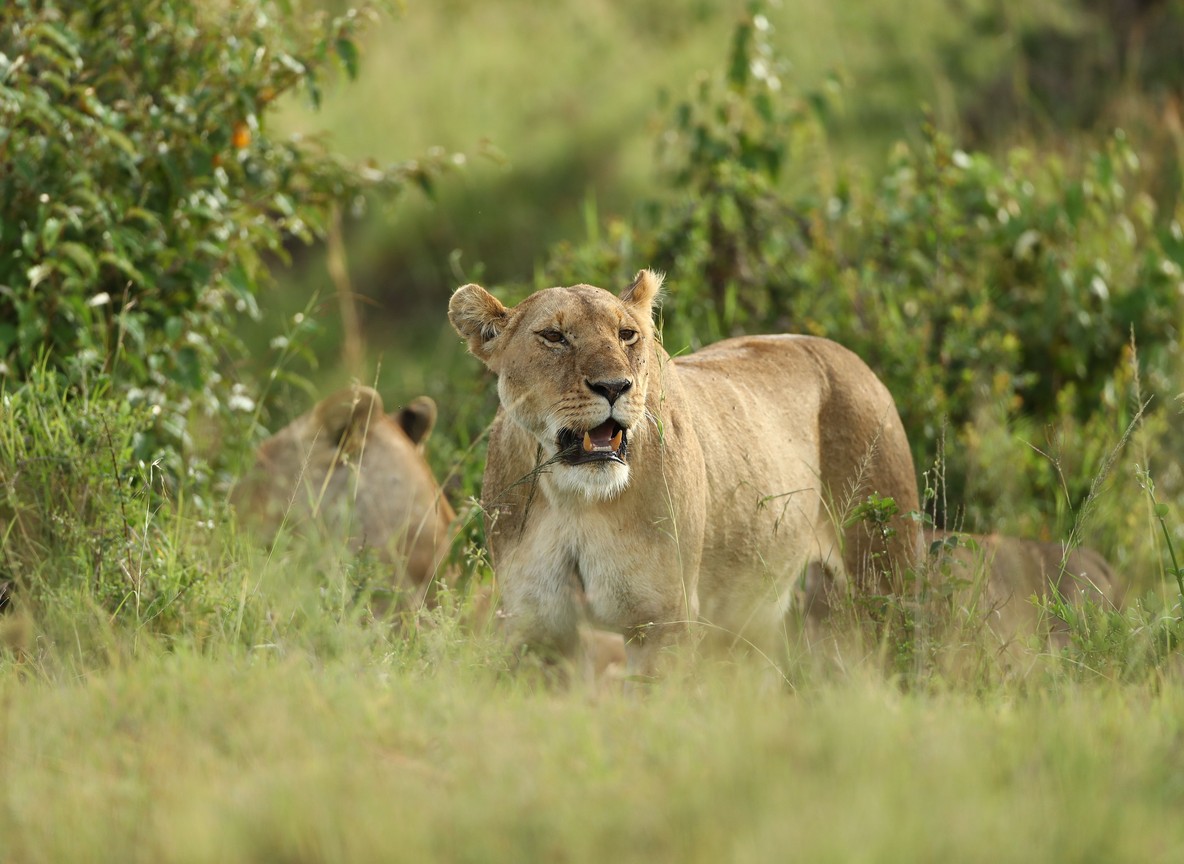
Cats and carnivores are the headline act. Leopards are almost entirely nocturnal hunters. A spotlight catch on a leopard dragging prey up a tree is one of the rarest and most rewarding sightings in Kenya. Servals, the long-legged specialist hunters of tall grass, are far more reliably seen at night than by day. Lions extend their hunting windows into the early dark, particularly in cool months. The spotted hyena transitions from a scavenger image to an efficient pack hunter once the sun drops.
Smaller carnivores that almost never show during daylight hours include the African civet, the genet (both large-spotted and common), the white-tailed mongoose, and the zorilla. These animals spend the day in dense cover or burrows and emerge only after dark.
Specialist feeders add ecological depth. The aardwolf is a nocturnal insectivorous hyaenid that feeds almost exclusively on termites. It looks like a small striped hyena and is regularly misidentified. The aardvark is a genuine rarity; sightings at termite mounds in Laikipia are documented but remain exceptional.
Other species that are reliably seen include the springhare (which moves like a miniature kangaroo), the bushbaby or galago (listen for its cry before the spotlight finds it), the porcupine (unmistakable at any light level), and the bat-eared fox foraging for dung beetles and harvester termites.
The night sky adds another layer. Away from any light pollution, the Milky Way fills the sky above you in the open vehicle.
How Does a Night Game Drive Work?
Most lodges and camps in night-drive conservancies run departures between 6:30 pm and 8 pm, after dinner or over a packed sundowner. Drives last between 90 minutes and three hours.
The vehicle is a standard open 4×4. A trained spotter, usually seated on a raised platform at the front, operates the main spotlight. Some operations use a red or amber filter on the beam to reduce the retinal stress on animals, particularly cats and smaller species with highly reflective eyes. The approach to sightings is slower and quieter than a daytime drive.
Dress for cold. Even at the equator, temperatures in the Mara or on the Laikipia Plateau can drop to 8-12°C after midnight, and wind chill on a moving vehicle amplifies that. A thermal layer, fleece, and a buff or neck warmer are not optional for comfort.
Communication between guide and spotter happens in low voices or hand signals near sensitive sightings. Well-run operations enforce a single-vehicle rule at night sightings, which removes the scramble that sometimes affects daytime leopard or cheetah encounters.
What Are the Best Night Safari Conservancies in Kenya?
For sheer predator density and guide quality, the Greater Mara conservancies are the gold standard for a night game drive in Kenya. Olare Motorogi and Mara Naboisho consistently deliver the most dramatic sightings, and both have strict vehicle limits that prevent the crowding that undermines the experience elsewhere.
Laikipia is the better choice if your priority is rare species diversity. The chance of aardwolf, bat-eared fox, and aardvark in one night is higher on the plateau than almost anywhere in the Mara. Lewa and Borana also offer black rhino in open terrain, an animal that is impossible to see at night in national parks.
If you want to combine a classic Amboseli elephant experience with after-dark driving, Selenkay provides a practical base for both.
What Is the Best Time for a Night Safari? 🌅
Night game drives in Kenya are available year-round, but two windows offer distinct advantages.
The dry seasons (July to October and January to February) concentrate animals around water sources, making movements predictable. Grass is shorter, which improves visibility in the spotlight beam. Night temperatures are cooler, which increases animal activity in the first two to three hours after sunset.
The wet or shoulder seasons (November to December and March to June) bring lush vegetation, which suits ambush hunters like leopard and serval. These months also coincide with calving in the Mara ecosystem, which draws high predator activity at all hours. Guides with strong bush knowledge often prefer this window for nocturnal drives precisely because of the hunting pressure.
For photography specifically, the dry-season months of July through October give the clearest air and best spotlight penetration through dry grass.
Can You Photograph Wildlife on a Night Game Drive? 📸
Night game drive photography is genuinely difficult. Go for the experience first, and treat images as a bonus.
Spotlights produce harsh, directional light. Camera sensors need high ISO (typically ISO 3200 to 12800), fast lenses (f/1.8 to f/2.8), and image stabilisation. Results are often grainy with smaller, fast-moving animals. Leopard and lion hold still longer and make the best subjects.
The experience of watching a spotted hyena begin a hunting run in a red spotlight, or hearing a lion pride coordinate before a charge, is not diminished by a blurry photograph. Plan to put the camera down for part of every drive.
The Trunktrails Advantage
Trunktrails Safaris is a Kenyan-owned tour operator with ground-level relationships in every conservancy listed above. That means direct access to the best guides rather than a pooled allocation, and honest advice on which camps are running genuine low-vehicle-number night drive programmes versus those where conservation talk outpaces conservation practice.
Every Trunktrails Safaris booking to a night safari conservancy directs 5% of the trip cost to community conservation funds in that ecosystem. For tours and safaris that include Laikipia, a portion goes to the Laikipia Wildlife Forum’s predator coexistence programme.
Itineraries are built to every budget. A five-night Greater Mara safari with two night drives works at a mid-range tented camp in Naboisho or a premium lodge in Olare Motorogi. The wildlife and the guides are drawn from the same conservancy pool regardless of which camp you choose.
For tours and safaris in Kenya that take the nocturnal half of the ecosystem seriously, Trunktrails Safaris offers 24/7 direct support from Nairobi. No call centres, no third-party agents, and no vague answers about what is actually allowed after dark.
Further reading
Ready to plan your Kenya night game drive?
Tell us which conservancy ecosystem interests you most (Greater Mara, Laikipia, or Amboseli periphery), your travel window, and your group size. Trunktrails Safaris will match you to the right camp, the right guide, and the right season for the nocturnal species on your list. For tours and safaris that start after sunset, reach us on WhatsApp at +254 113 208888 or email info@trunktrailssafaris.com. The animals do not wait. ✨

