
Masai Mara Cheetah: How to Find and Photograph Africa’s Most Elegant Hunter
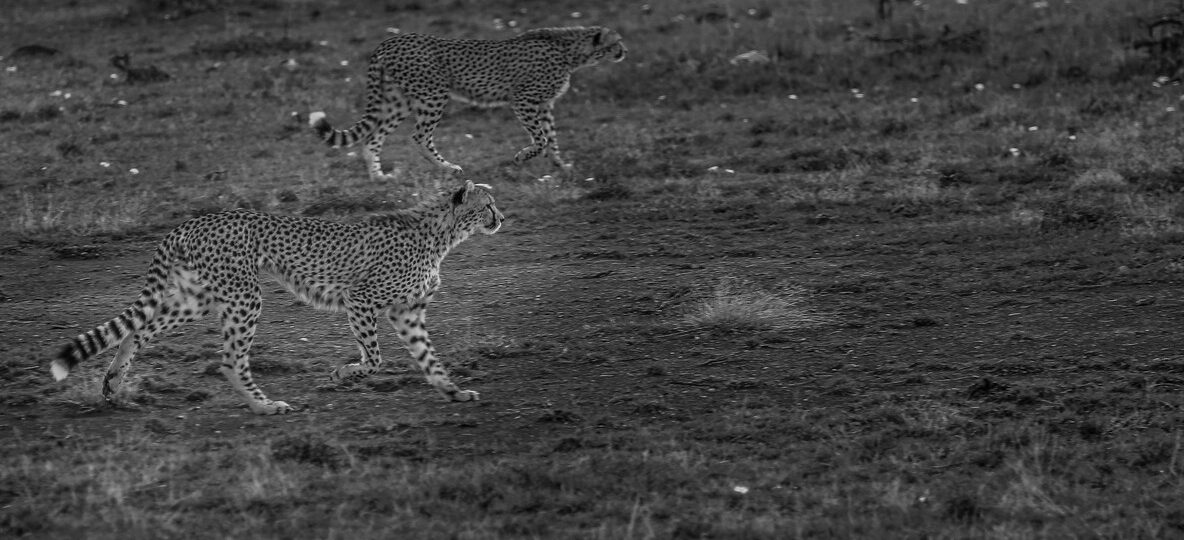
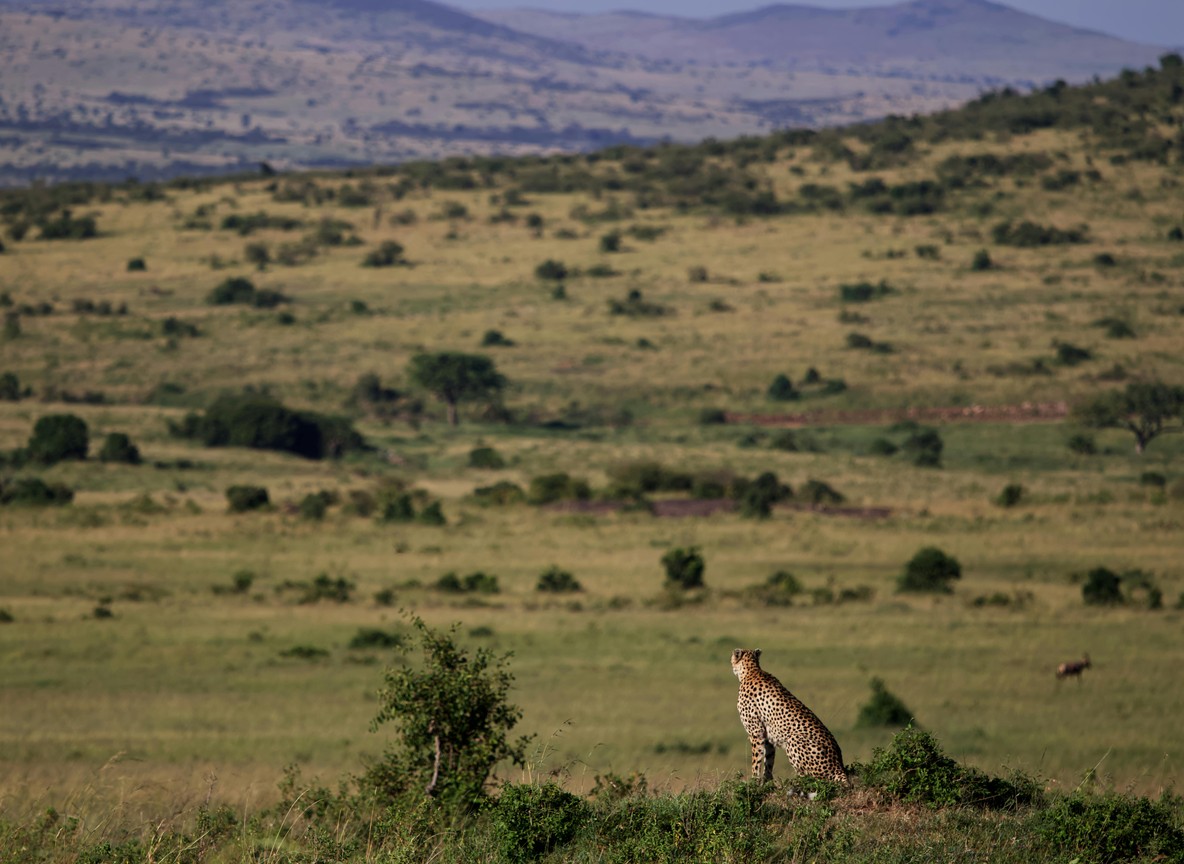
📸 The first thing you notice is the posture. A cheetah on a termite mound in the Mara plains does not scan the grass with the same heavy confidence as a lion. It is taut, forward-leaning, head moving in small precise arcs like a radar dish. Everything about the animal communicates readiness — the deep chest, the flexible spine, the semi-retractable claws designed for grip rather than grappling. This is the fastest land animal on earth, and it looks like it.
The masai mara cheetah population is one of the most studied and best-documented in Africa. Radio-collared individuals, known coalitions, and habituated family groups mean that with the right guide and the right timing, you can spend an hour watching a mother teach her cubs to hunt — not a glimpse from a vehicle column, but a sustained, intimate encounter that changes how you understand predator ecology.
At Trunktrails Safaris, our predator-focused tours and safaris itineraries are built around exactly this kind of access. This guide tells you where to go, when to go, and how to position yourself for the best cheetah photography and wildlife observation in Africa.
Why the Masai Mara Is Africa’s Best Cheetah Destination
The Masai Mara ecosystem supports one of Africa’s healthiest cheetah populations. The reasons are interconnected:
Open topography: The Mara’s short-grass plains, broken by occasional kopjes and termite mounds, create perfect cheetah habitat. Unlike the dense bush of Laikipia or the riverine forest of Samburu, the Mara’s visual openness means you can spot a cheetah from a kilometre away and track it across the plain.
Prey density: The resident wildlife in the Mara — topi, Thomson’s gazelle, impala, and Grant’s gazelle — provides year-round hunting opportunities. During the migration (July to October), the arrival of the wildebeest and zebra herds temporarily suppresses cheetah success rates (too many lions and hyenas competing for kills) but the resident prey base sustains populations through all seasons.
Research programme: The Mara Predator Conservation Programme has tracked individual cheetahs by name and collar number for over a decade. Their data feeds into global cheetah population assessments. Guides who work with the programme know individual animals, their territories, and their current behaviour patterns.
Private conservancy access: The 15 or so private conservancies bordering the national reserve — including Olare Motorogi, Ol Kinyei, Mara North, Naboisho, and Lemek — have vehicle limits and permit off-road driving. This combination transforms a cheetah sighting from a parking-lot experience (common in the main reserve where 6-20 vehicles mob every sighting) into a private encounter.
Where to Find Cheetah in the Masai Mara
The Private Conservancies: Prime Cheetah Country
The olare motorogi cheetah population is the one most consistently accessible to guided safari guests. Olare Motorogi Conservancy covers ~33,000-35,000 acres immediately north of the national reserve and is managed with strict vehicle limits — a maximum of three vehicles per sighting, by agreement between the camps.
Known cheetah territories in the conservancy zone:
- Olare Motorogi and Ol Kinyei: The flat plains south of the Mara River in these conservancies are classic cheetah territory. The Tano Bora — a five-male coalition that became one of the most famous cheetah groups in Africa — operated in this zone for years. Coalitions of male cheetahs are unusual (most males are solitary or form pairs) and exceptionally photogenic.
- Mara North Conservancy: The more open sections of Mara North, particularly around the Mara River tributaries, hold resident cheetah families. The combination of open plain and scattered acacia provides hunting cover and observation points.
- Naboisho Conservancy: Thirteen thousand five hundred acres with strict vehicle limits and strong guides. Cheetah are resident and habituated to vehicles in the conservancy areas.
In the National Reserve
Cheetah are present in the national reserve but the viewing experience is different. In peak season (July to October), popular sighting areas include:
- Musiara marsh edges — between the marsh and the lugga systems to the north
- Rongai and Topi Plain — the southeastern section of the reserve with good cheetah territory
- Paradise Plain — the central plain area regularly produces both lion and cheetah sightings
The main reserve challenge is vehicle pressure. A cheetah with cubs will be surrounded by 15 or more vehicles within minutes of the first radio call. Ethical operators observe the Kenya Wildlife Service vehicle limits and maintain distance. Not all do.
Cheetah Behaviour and Hunting: What to Watch For
Understanding cheetah behaviour turns a sighting from passive observation into active engagement. Here is what to look for:
Hunting sequence:
- Scan — the cheetah climbs to the highest point available (termite mound, rock, fallen log) and scans for potential prey. This is the most photogenic phase.
- Stalk — once a target is identified, the cheetah begins a slow approach, using grass cover and stopping when the prey looks up. Stalks can last 20-40 minutes.
- Sprint — the final burst covers up to 500 metres at speeds reaching 112 km/h. The sprint is short; cheetahs exhaust quickly and must rest for 30 minutes after a high-speed run.
- Suffocation — the kill is made by gripping the prey’s throat. Cheetahs cannot afford to fight; any injury compromises their ability to hunt.
- Feeding and cooling — cheetahs eat quickly, before lions or hyenas steal the kill. They pant heavily after the sprint. This is another prime photography window.
Coalition behaviour: Male cheetah coalition masai mara groups are among the most fascinating social dynamics in African predator ecology. Two or three males (often brothers) will cooperate on hunts, taking larger prey than a single cheetah could manage. The Tano Bora took wildebeest calves as a regular target — prey almost double the size of what a solitary cheetah would attempt.
Photography Tips for Masai Mara Cheetah
Cheetah are among the most rewarding wildlife photography subjects, and the Mara’s open terrain is among the best places to photograph them. Key technical and positioning notes:
| Situation | Recommended Settings | Notes |
|---|---|---|
| Cheetah on termite mound, soft light | f/5.6, 1/500s, ISO 400 | Maximise background separation |
| Sprint (if you are fortunate enough) | f/4, 1/2000s, ISO 800-1600 | Pre-focus on the target animal before run begins |
| Post-hunt panting in grass | f/2.8-f/4, 1/250s, ISO 400 | Low angle to isolate subject from grass |
| Mother with cubs | f/4-f/5.6, 1/500s | Multiple subjects; use burst mode |
| Evening light on the plain | f/4, 1/250s, ISO 800 | Golden hour adds warmth and depth |
Vehicle positioning: With a trained guide and a conservancy permit for off-road driving, you can position your vehicle at the cheetah’s eye level, off the track, with the optimal light angle. This makes the difference between a record shot and a frame-quality image.
Patience is the key variable. Experienced guides who know individual cheetahs will wait out a two-hour scan-and-stalk sequence without moving. Do not push for a different sighting if the cheetah is actively hunting. The patience is almost always rewarded.
Best Time to See Cheetah in the Masai Mara
Cheetah are resident year-round in the Mara ecosystem. Season affects the quality of the encounter more than the likelihood of seeing them.
January to March (dry season, low season): Arguably the best time for cheetah specifically. Grass is shorter after the November-December rains have dried out. Prey is more visible. Vehicle numbers are at their annual low. The combination of habituated cheetahs, open terrain, and minimal vehicle pressure makes this the ideal window for serious wildlife photography.
July to October (migration season): The wildebeest migration brings peak visitor numbers. Cheetah are still present and active but encounters can be compromised by vehicle pressure in the main reserve. In the conservancies, experience is protected by vehicle limits.
April to June (long rains): The long rains bring tall grass, which reduces cheetah sighting distances but makes for atmospheric, green-season photography. Cheetah with young cubs are often seen in this period — the heavy grass provides cover for dependent offspring.
Our kenya cheetah safari guide covers the broader Kenya cheetah habitat including Amboseli and Laikipia in addition to the Mara.
The Conservation Context: Cheetah Under Pressure
Africa’s cheetah population stands at approximately 7,000 individuals, down from an estimated 100,000 a century ago. Kenya holds a significant portion of the East African cheetah population, and the Mara ecosystem is one of the priority conservation zones.
Threats to kenya cheetah safari populations include:
- Human-wildlife conflict: Farmers bordering conservancies trap or poison cheetahs in response to livestock predation. Community-based conservation programmes that compensate farmers for livestock losses are the most effective intervention.
- Loss of open habitat: Cheetahs need large, open territories. Land subdivision and fence construction fragment habitats.
- Cub trafficking: Cheetahs are the most trafficked big cat globally, with cubs taken for the illegal pet trade in the Gulf states. The Mara Predator Conservation Programme monitors known female cheetahs and their litters.
Trunktrails Safaris directs 5% of every booking to wildlife conservation, including projects supporting the Mara Predator Conservation Programme’s monitoring work and community livestock compensation schemes.
The Trunktrails Advantage: Cheetah-Focused Safari Design
A predator-focused safari in the Mara requires specific guide expertise and specific camp positioning. Not all camps and guides are equal when it comes to cheetah.
At Trunktrails Safaris, we route cheetah-focused guests to camps in olare motorogi and Ol Kinyei specifically because those conservancies have the best cheetah tracking guides and the vehicle limits that protect the quality of the encounter. Camps like Porini Ol Kinyei, Mara Naboisho, and Kicheche camps in these conservancies have guides with Mara Predator Programme relationships and multi-year knowledge of resident cheetah individuals.
What we build for a cheetah-focused itinerary:
- Conservancy camp placement — never the main reserve for a serious cheetah trip
- Extended game drives — 6-7 hours in the field, not the standard 3-hour format
- Early departure — cheetahs hunt at first light and late afternoon; we are in the field at both
- Guide briefing — your guide will have current information on individual cheetah locations before you leave camp
- Photography vehicle options — low-sided pop-top vehicles for optimal camera angles
Our olare motorogi conservancy guide covers the full conservancy experience and the lion density context that makes this area remarkable beyond just cheetah.
For those combining cheetah with the full conservancy wildlife experience, our mara north conservancy guide covers the northern conservancy zone.
Further reading
More safari planning resources
- Interactive Maasai Mara map from Valley Safaris
- Maasai Mara National Reserve guide on Touring Insights
- Masai Mara destination guide on FindMySafari
- Best time to visit Kenya month-by-month map from Valley Safaris
Ready to Plan Your Masai Mara Cheetah Safari with Trunktrails Safaris?
🦁 The Tano Bora coalition spent years in Olare Motorogi and Ol Kinyei. Their hunting runs became some of the most viewed wildlife video footage in the world. But the footage was shot at 6 AM, at eye level, from a single vehicle, with a guide who had tracked these animals for three years. That context is not incidental. It is the entire experience.
At Trunktrails Safaris, we design every tours and safaris itinerary around what you actually want to see and how you want to experience it. If the cheetah is your primary subject, tell us, and we will build the itinerary from there.
📞 WhatsApp: +254 113 208888 📧 Email: info@trunktrailssafaris.com 🌐 Website: https://trunktrailssafaris.com
Image credits: Photo by Twilight Kenya on Pexels; Photo by Image Noise on Pexels; Photo by Clarissa Schwarz on Pexels; Photo by Deb Wendel on Pexels; Photo by Magda Ehlers on Pexels

