
Tsavo Conservation Education Program Gets a Solar-Powered Boost
A new tsavo conservation education program just switched on 21 solar-powered computers inside a single classroom, and that classroom might do more for the region’s wildlife than another decade of anti-poaching patrols alone. On June 30, 2026, the African Wildlife Foundation (AWF) and the Wildlife Clubs of Kenya (WCK) opened a solar-powered ICT lab at Kongoni Comprehensive School in Taita Taveta County, right inside the Tsavo Landscape. Trunktrails Safaris has watched this project develop for months, because it changes who gets to tell Tsavo’s conservation story next.
For travelers booking tours and safaris into Tsavo National Park, this is not a side note. It is a preview of the guides, rangers, and researchers your children’s generation will meet on future game drives. 🌍
What Is the New Solar-Powered ICT Lab at Kongoni School?
The lab gives Kongoni Comprehensive School 21 desktop computers and internet connectivity, all powered by solar panels installed on-site. That detail matters more than it sounds. Much of the Tsavo Landscape sits far from a reliable national grid, so a solar-powered setup means students can log on during the day without waiting on unpredictable power lines.
The facility was built as part of the Young Conservation Heroes project, a partnership between AWF and WCK. Funding came in part from American philanthropists Bob and Emmy King, who have long supported education initiatives across East Africa. Kongoni School was named one of two Centers of Excellence in the program, chosen to receive full infrastructural and technical support so it can act as a learning hub for neighboring schools too.
Who Is Behind the Tsavo Conservation Education Program?
Three organizations carried this project from idea to opened classroom. AWF supplied technical and strategic backing. Wildlife Clubs of Kenya, the country’s longest-running youth conservation network, handled the education curriculum and school relationships. Community & Wildlife Conservation (CWC) contributed additional support on the ground in Taita Taveta County.
This is not a one-off donation. It sits inside a four-year conservation education project that AWF and WCK launched together in the Tsavo Landscape, designed to build lasting digital and ecological literacy rather than a single feel-good headline. Trunktrails Safaris follows partnerships like this closely, because they tell us which conservation claims in Tsavo are backed by real, sustained investment.
How Many Schools Does the Tsavo Conservation Program Reach?
The Kongoni lab is one classroom, but the program behind it is not small. The Young Conservation Heroes initiative is working with 137 schools across the Tsavo Landscape, teaching students conservation knowledge and digital skills alongside their standard curriculum. Two schools, including Kongoni, were selected as Centers of Excellence, meaning they receive deeper infrastructure investment and serve as training hubs for the other 135.
That scale is the real story here. A single ICT lab is a nice photo. A 137-school network stretching across Taita Taveta County is a workforce pipeline for the guides, rangers, and researchers who will manage Tsavo for the next generation.
Why Does Digital Learning Matter for Wildlife Conservation in Tsavo?
Tsavo’s conservation challenges, from human-wildlife conflict to poaching pressure on its famous super tusker elephants, increasingly rely on data. Rangers use GPS collar tracking, camera trap networks, and satellite imagery to monitor wildlife movement across a landscape too vast to patrol on foot alone. Students who grow up fluent in these same digital tools are the ones most likely to fill research and ranger roles later.
Internet connectivity also opens a door that used to be closed to rural Taita Taveta schools: access to conservation science from beyond Kenya’s borders, shared directly with students living next to the very ecosystem they are studying. For a region that borders one of Africa’s largest protected areas, that access is overdue.
Wildlife researchers already lean on citizen data from communities living around Tsavo, from reporting elephant movement near farms to flagging injured animals along the Nairobi-Mombasa highway corridor that cuts through the park’s northern boundary. Students trained on the Kongoni lab’s computers will be better equipped to log that kind of field data accurately, which matters for a landscape as large and hard to monitor as Tsavo.
What Makes Kongoni School a Center of Excellence?
Kongoni Comprehensive School sits in the Tsavo Landscape in Taita Taveta County, close enough to the park boundary that human-wildlife conflict is part of daily life for its students’ families. Being named a Center of Excellence means the school now anchors a wider support network, hosting training sessions and equipment access for neighboring institutions that cannot yet fund their own labs.
For local families, that status brings something more immediate too: it puts world-class digital infrastructure inside a community that rarely sees this kind of investment, without requiring a move to Nairobi or Mombasa.
How Can Travelers See Tsavo’s Conservation Work Firsthand?
Guests on Trunktrails Safaris tours and safaris in Tsavo East National Park often ask what happens beyond the game drive. Community-linked projects like this one are part of the answer. Our guides can build in a stop at a community conservation initiative or a conversation with a local ranger about programs like the Young Conservation Heroes project, giving travelers a fuller picture of who protects Tsavo’s wildlife between safaris.
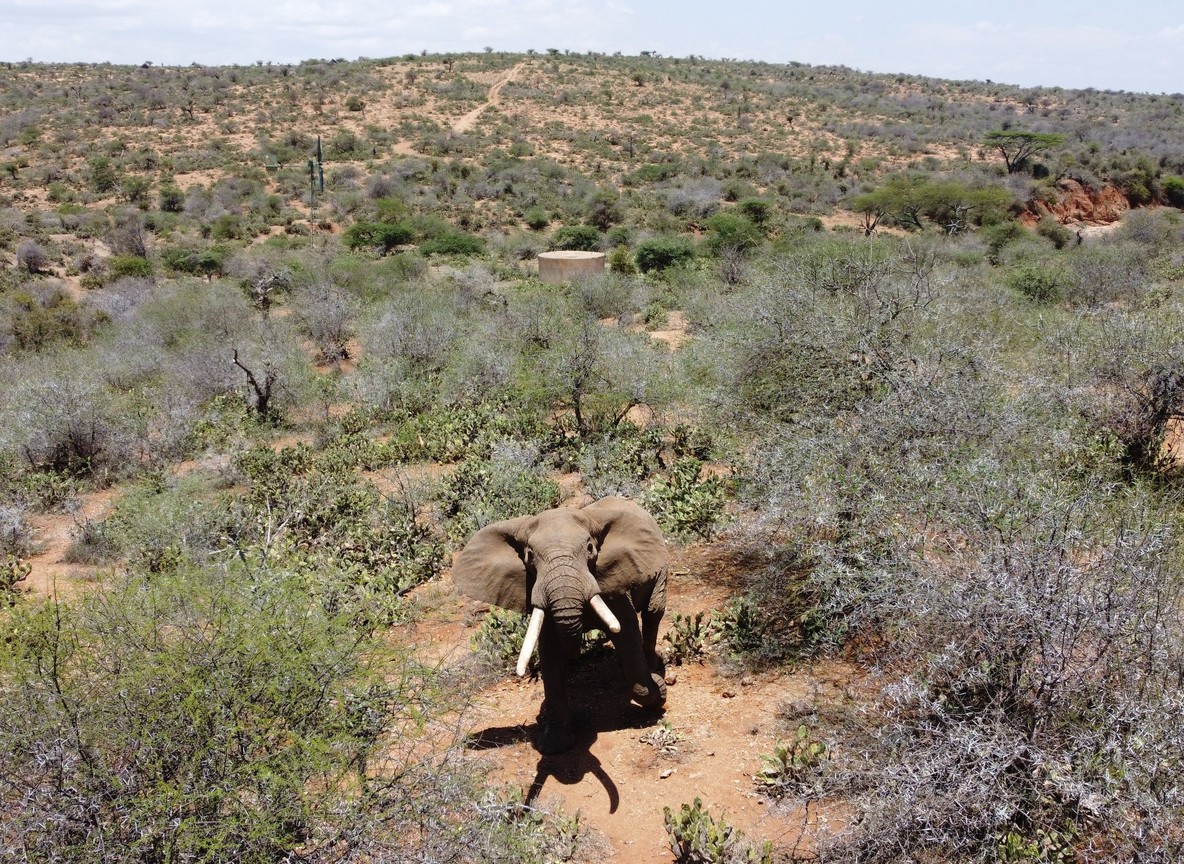
This pairs naturally with tracking Tsavo’s famous super tusker elephants, since the rangers and researchers who monitor those bulls are exactly the kind of career path this education program is building toward.
Where you stay shapes how close you get to this story. Lodges like Ashnil Aruba Lodge near Tsavo East’s Aruba Dam, Satao Camp along the Voi River, and Kilaguni Serena Safari Lodge in Tsavo West all sit inside communities connected to the wider Tsavo Landscape network these schools serve. Ask your guide about visiting a local school or conservation office during a rest day. Most camps can arrange it with advance notice.
What Should You Know Before Visiting Tsavo National Park?
Tsavo is Kenya’s largest protected area by a wide margin, split into two parks that many first-time visitors do not realize are separately gated. Here is how the numbers break down for trip planning.
| Detail | Tsavo East | Tsavo West |
|---|---|---|
| Park size | ~13,747 km² | ~7,065 km² |
| Nearest main gate | Voi Gate | Mtito Andei Gate |
| Distance from Nairobi | ~330 km via Voi Gate | ~230 km via Mtito Andei Gate |
| Drive time from Nairobi | ~5-6 hours | ~4-5 hours |
| Non-resident entry fee (indicative, 2026) | ~$80 per adult/24 hrs | ~$80 per adult/24 hrs |
| Payment method | Cashless only (KWS eCitizen KWSPay) | Cashless only (KWS eCitizen KWSPay) |
| Combined Tsavo Conservation Area | ~22,000 km² (both parks together) |
Indicative figures. KWS gate fees change periodically, so always confirm current rates on the KWS eCitizen portal before travel, and pay in advance since Tsavo’s gates accept no cash.
For lodging near the action, the best time to visit Tsavo shapes which side of the park makes sense for your dates, and our Tsavo safari packages can route you through community-linked stops like Kongoni School’s home region if you want to combine wildlife viewing with a firsthand look at Tsavo’s conservation education work.
The Trunktrails Advantage
Trunktrails Safaris is a native Kenyan-owned operator, and stories like the Kongoni School ICT lab are exactly why that ownership matters. We are not reading about Taita Taveta County from an overseas office. We work with guides who grew up in these communities and understand what a solar-powered classroom means for a family living next to Tsavo’s boundary.
Here is what booking with us gets you:
- Tailor-made Tsavo itineraries built around your budget, from short Voi-gate day trips to full 8-10 day tours and safaris across both parks
- 24/7 direct support from our own team, with no agency middlemen slowing down changes to your plan
- 5% of every booking goes directly to wildlife conservation efforts in the regions we operate, including the Tsavo Landscape
- Honest, first-hand local knowledge from Kenyan guides who can connect you to real community and conservation stories, not staged photo stops
- A team that treats conservation education projects like this one as part of the trip narrative, not an afterthought
A Conservation Story Worth Following
The tsavo conservation education program at Kongoni School is small in square footage and large in intent. Twenty-one computers will not save Tsavo’s elephants on their own, but the students who use them might be the rangers, researchers, and guides who do. That is the kind of long-game conservation story Trunktrails Safaris wants every guest walking into Tsavo National Park to understand. 🐘
Ready to See Tsavo’s Conservation Work for Yourself?
Trunktrails Safaris can build a Tsavo itinerary that pairs classic game drives with a real look at the community conservation projects shaping this landscape’s future.
At Trunktrails Safaris, we design every safari around your dates, budget, and what matters most to you. No cookie-cutter packages. Just a direct line to a team that knows Kenya from the inside out.
Further reading
More safari planning resources
- Map of Tsavo from Valley Safaris
- Tsavo complete guide on Touring Insights
- Tsavo destination guide on FindMySafari
- Kenya national parks map from Valley Safaris
📞 WhatsApp: +254 113 208888 📧 Email: info@trunktrailssafaris.com 🌐 Website: https://trunktrailssafaris.com