Shompole Lodge Kenya: Great Plains Returns to the Nguruman Escarpment and the Wild Rift Valley
There is a point in the Nguruman Escarpment where the land drops away and the Great Rift Valley opens below you in volcanic greys and flamingo pink. You are standing at the edge of something genuinely old, looking at a landscape that was never built for tourists and has never quite adjusted to their presence. This is where Shompole Lodge Kenya sits, and it is where Great Plains Conservation has chosen to return for mid-2026. 🌍
Southern Kenya, south of Lake Magadi, well past the range of the standard itinerary. The Nguruman Escarpment wall rises behind the camp. The alkaline Magadi basin lies ahead. In between, a private concession managed by the Shompole Community Trust holds only eight tents and no ambition to be anything other than exactly what it is.
For the traveler who has done the Mara three times and needs something that asks more of them, Shompole Lodge Kenya is the answer that has been waiting.
Where Is Shompole Lodge Kenya?
Shompole Lodge Kenya sits inside the Shompole Group Ranch, a community-owned conservancy in Kajiado County, roughly 160 kilometres south of Nairobi. The nearest reference point is Lake Magadi, the soda lake famous for its flamingo populations and alkaline waters. Shompole lies south of Magadi, between the escarpment wall and the flood plains of the Ewaso Ng’iro South river system.
The terrain is defined by the Nguruman Escarpment, the dramatic western wall of the southern Rift Valley. The escarpment creates a micro-climate distinct from both the highland forests above and the open plains below, supporting riverine forest, acacia thicket, and seasonal wetlands along its base.
Flying in from Nairobi takes 35 to 40 minutes. The airstrip is private. The approach gives you the full Rift Valley panorama from the air. You land and the experience begins.
Great Plains Conservation Kenya and the Shompole Reopening
Great Plains Conservation is one of the most respected conservation operators on the continent. Founded by Dereck and Beverly Joubert, the company has built its model around placing high-value, low-volume camps inside community land with a direct revenue-sharing structure that makes wildlife worth more alive than any alternative land use.
The Shompole Lodge Kenya reopening in mid-2026 follows a period of significant camp rebuilding and community consultation. Great Plains is returning to Shompole not simply with a refurbished product but with a deepened conservation framework: updated revenue agreements with the Shompole Community Trust, an expanded anti-poaching collaboration, and tents that are physically lighter on the land than their predecessors.
What this means for the guest is access to a rift valley safari kenya experience that very few operators can offer: a private concession where the wildlife exists because the community decides it should, and where the camp’s presence is tied directly to that decision.
| Feature | Shompole Lodge Kenya |
|---|---|
| Tents | 8 (maximum 16 guests) |
| Location | Nguruman Escarpment, Kajiado County |
| Operator | Great Plains Conservation |
| Land ownership | Shompole Community Trust |
| Terrain | Volcanic plains, escarpment forest, Rift Valley |
| Nearest lake | Lake Magadi (flamingo habitat) |
| Flight from Nairobi | 35-40 minutes |
| Season | Open year-round; best Nov-Mar and Jun-Oct |
The Eight-Tent Exclusive Kenya Safari Lodge Model
Eight tents is the deliberate ceiling at Shompole, and it is not a marketing claim. It is the direct expression of a conservation philosophy that understands what happens when guest numbers exceed an ecosystem’s capacity to absorb the presence.
At maximum, sixteen guests share approximately 15,000 acres. The guide-to-guest ratio is high. The vehicle exclusivity is real. When you are on a game drive, there are no other vehicles from other camps because there are no other camps. This is what exclusive kenya safari lodge actually means when the word is used accurately.
The tents have been rebuilt to sit lighter on the landscape: natural materials, open-plan designs that frame the escarpment wall from the bed, and outdoor bathing spaces that use the terrain. There is no pool. There is a river, and the river is better.
Nguruman Escarpment Kenya: The Terrain That Changes Everything
The nguruman escarpment kenya forms the defining backdrop of Shompole and shapes everything about what you see here.
The escarpment is the ancient fault wall where the African continent began pulling itself apart. The rock is dark basalt, layered and fractured. The forest that clings to the lower slopes is riverine, dense with fig trees and fever acacias, completely different in character from the open savanna most Kenya safari narratives focus on. Leopard use the escarpment forest. Elephants move through it at dusk on routes that predate any human presence in the valley.
Below the escarpment, the terrain opens into volcanic plains where lion territories overlap with zebra populations moving in from the Amboseli corridor. Gerenuk, the long-necked antelope rarely seen in the Mara, browse the acacia thickets in numbers.
A Shompole game drive crosses multiple vegetation zones in a single morning. The guide is reading topography, soil type, and light simultaneously.
The Shompole Community Trust: Why This Matters for Travelers Who Care
The Shompole Group Ranch covers over 100,000 acres of community land owned by Maasai families. The Shompole Community Trust was established to manage the conservancy on behalf of those landowners, and the revenue model built with Great Plains Conservation is the mechanism through which wildlife is given a financial value that the community controls.
Each bed night at this luxury kenya safari camp generates a land lease payment, employment for community members as guides, rangers, and camp staff, and a conservation levy that funds the anti-poaching unit operating across the concession.
This is not a charitable add-on. It is the structural reason the wildlife exists at Shompole at all. The alternative land use in this area is pastoralism, and the pressure on wildlife habitat is real. Staying at Shompole is a direct choice that funds the continued existence of the habitat you have come to see.
Lake Magadi and the Flamingo Pink Lakes of the Rift Valley
No rift valley safari kenya experience in this area is complete without Lake Magadi. The lake sits north of Shompole: a shallow, intensely alkaline soda lake where the water surface shifts between white mineral crust and vivid pink depending on the density of lesser flamingos at any given time. In peak season, flamingo numbers at Magadi can run into the hundreds of thousands. 📸
Shompole Lodge Kenya guests can arrange visits to the Magadi shoreline as part of the off-road itinerary. Great Plains guides plan the approach to coincide with the best light. Beyond flamingos, Magadi supports a specialist birdlist that includes Kittlitz’s plover, chestnut-banded plover, and African oystercatcher along the soda flats. For the wildlife-focused traveler, this half-day addition changes the entire character of a Shompole stay.
Wildlife at Shompole: What You Actually See
The Shompole concession sits in a wildlife corridor linking the Amboseli ecosystem in the east to Tanzania’s Natron basin in the south. This corridor status means the wildlife is genuinely migratory and seasonal, not resident in fixed territories the way game in a small fenced reserve tends to behave.
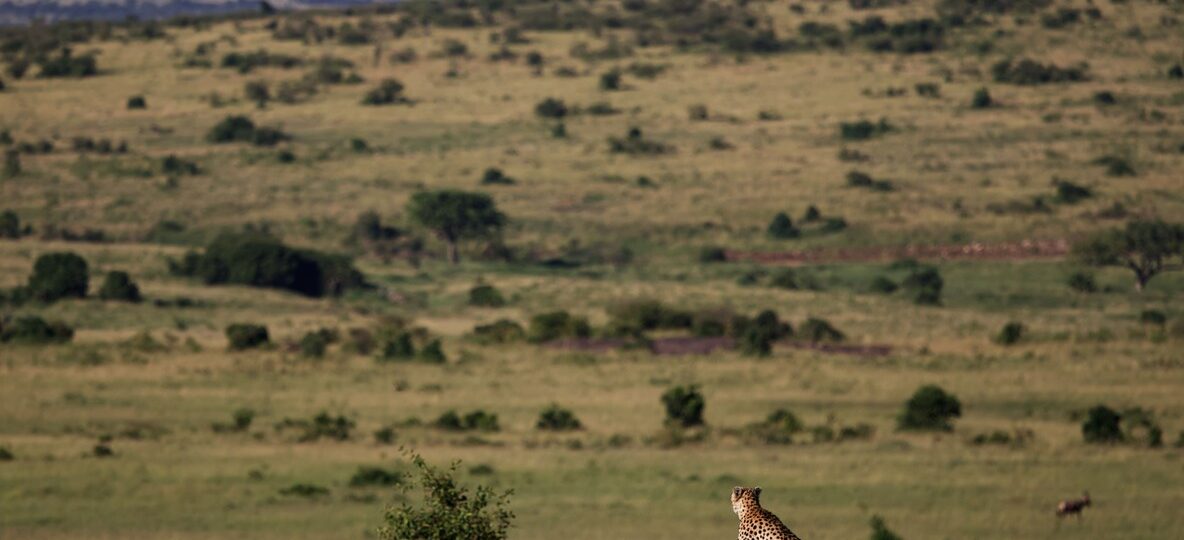
Big cats are present year-round. Lion prides have been tracked by community rangers for decades. The escarpment forest holds leopard, with sightings most reliable in the early morning when they move between the forest margin and riverine thickets. Cheetah use the open volcanic plains southeast of the camp.
Large herbivores include Masai giraffe, zebra, buffalo, and elephant. The gerenuk populations here are among the most reliably viewable in Kenya, because the scrub acacia is correct habitat and low visitor pressure means the animals are not habituated to stress. 🦒
Hippo occupy the permanent pools along the Ewaso Ng’iro South river adjacent to camp. In the dry season, the river becomes a focal point for species concentration and provides game viewing from camp without a vehicle.
The Trunktrails Advantage at Shompole
Trunktrails Safaris works across southern Kenya’s private conservancy network, and Shompole is one of the properties we track closely. When a camp of this calibre with this operator reopens, we are already in conversation about how to integrate it into the itineraries that make sense for the travelers we work with. 🦁
What we know about Shompole Lodge Kenya is that it works best as a standalone destination of three to four nights, or as a pairing with Ol Donyo Lodge in the Chyulu Hills or with a northern Mara conservancy camp for travelers who want both the dry volcanic south and the green Mara grasslands in a single Kenya trip.
We also know that Shompole fills quickly when Great Plains opens a new season. Eight tents with no expansion plans and a conservation mandate that keeps guest numbers fixed means availability is genuinely constrained. This is not a sales tactic. It is the arithmetic of eight rooms.
Trunktrails Safaris handles all aspects of your Shompole itinerary: flight logistics from Wilson Airport, Shompole concession permits, community trust levies, and the extended ground planning that makes tours and safaris at this level work. We are based in Kenya. We know the airstrips, the guides, and the seasonal patterns that affect what you see.
If you are planning the kind of Kenya tour that sits outside the standard brochure, our tours and safaris team is the right starting point.
When to Visit Shompole Lodge Kenya
Shompole runs two distinct seasons. The dry season (June to October) concentrates wildlife around permanent water and produces consistent, often spectacular game viewing along the river. The escarpment is at its most dramatic in golden afternoon light. Pairing Shompole with a Mara camp during July to September gives you two ecosystems at their peak in a single Kenya trip.
The green season (November to March) transforms the alkaline plains with a flush of new growth. Flamingo numbers at Lake Magadi peak during this window. Birdlife is at its most diverse, and big cat visibility can actually improve as the shorter grass opens sightlines across the volcanic flats.
April to May is the long rains. Road access can be difficult and Great Plains manages the camp schedule accordingly.
Plan Your Shompole Safari With Trunktrails Safaris
Shompole Lodge Kenya is not a property that rewards casual inquiry. Great Plains Conservation manages a short calendar for a small camp, and bookings for peak months secure well in advance.
Trunktrails Safaris is available to help you plan a Shompole trip now. Contact us through any of the channels below to start a conversation about your Kenya rift valley safari, the right pairing itineraries, and what availability looks like for your travel dates:
Further reading
WhatsApp: +254 113 208888 Email: info@trunktrailssafaris.com Website: https://trunktrailssafaris.com
Our tours and safaris team responds to all inquiries within 24 hours. For immediate planning conversations, WhatsApp is the fastest route.
Shompole is where the Rift Valley shows you what it looked like before anyone arrived to name it. Trunktrails Safaris is how you get there with everything arranged before you land. ✨