Amboseli Birds in Wet Season vs Dry Season
Amboseli birds in wet season vs dry season is a useful birding comparison because the park changes noticeably across the year. Birding is good in both seasons, but the experience is not the same. Wet months bring greener wetland activity, migrants, and breeding color. Dry months bring easier access, cleaner logistics, and a stronger mixed birding-plus-mammal safari.
Amboseli.org says the park has recorded 425+ bird species and identifies November to April as the best time for birding thanks to migratory species, breeding plumage, and active wetlands. The same seasonal guidance describes June to October as the best overall period for wildlife viewing, with easier access and stronger visibility across the park.
That gives the core comparison immediately. Wet season is richer for birding depth. Dry season is easier for all-round safari structure.
The Short Answer
Choose the wet season if you care most about:
- species variety
- migratory birds
- breeding plumage
- greener wetland life
Choose the dry season if you care most about:
- easy access
- cleaner logistics
- combining birding with strong mammal viewing
- drier, more comfortable game-drive conditions
For specialist birders, wet season often wins. For mixed-interest travellers, dry season can still be very strong.
Why Wet Season Birding Is So Good
Wet and greener months usually win on bird richness because:
- wetlands feel more active
- migrants are present
- breeding displays and plumage can be better
- the whole ecosystem feels more alive at a smaller scale
Amboseli.org explicitly points to November to April as the top birding period for exactly these reasons.
This is why serious birders often prefer the green-season calendar even if mammal visibility is a little less concentrated.
Why Dry Season Birding Still Works
Dry season birding in Amboseli is often underestimated.
It still works because:
- the park remains bird-rich year round
- swamps continue holding life
- access and road conditions are easier
- many guests appreciate the cleaner rhythm of a dry-season safari
That means dry season may not give the greatest species richness, but it can still give a very satisfying and much easier birding trip.
Wet Season vs Dry Season for Wetland Birds
Wet season usually wins.
Why:
- more water-driven activity
- stronger wetland scenes
- migratory additions
- richer vegetation and breeding behavior
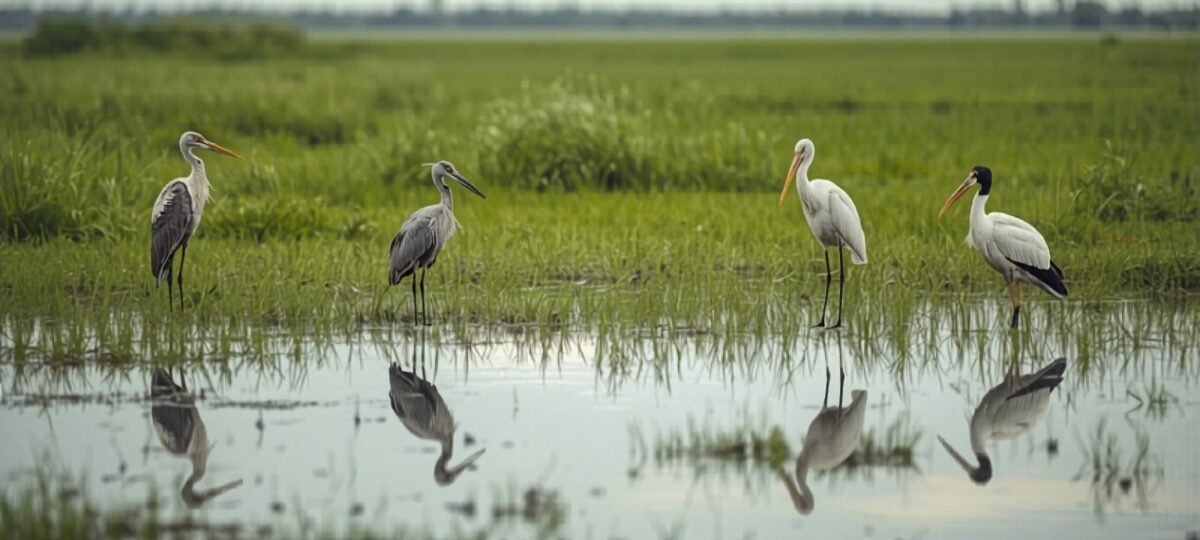
If the guest wants jacanas, herons, pelicans, and waterbird-heavy circuits at their liveliest, the wetter months are especially appealing.
Wet Season vs Dry Season for Raptors and Open-Country Birds
This comparison is more balanced.
Open-country birding can remain strong in the dry season because:
- visibility is cleaner
- the plains are easier to scan
- general safari driving is simpler
Wet season can still add richness, but the dry months often make it easier to read the landscape.
This is one reason casual birders sometimes enjoy dry-season birding more than they expected.
Wet Season vs Dry Season for Bird Photography
Wet season is better for:
- greener backgrounds
- breeding plumage
- richer wetland scenes
- more lush ecological storytelling
Dry season is better for:
- easier driving
- clean light and simpler compositions
- combining birds with elephants and big mammals in the same safari flow
That means the best season depends on the photographer’s preferred style:
- ecological richness
- or cleaner mixed-wildlife storytelling
Wet Season vs Dry Season for First-Time Birders
Dry season can actually be easier for beginners.
Why:
- logistics are simpler
- general game-drive structure is easier to follow
- birding can be combined with stronger mammal payoff
Wet season is still richer for dedicated birders, but beginners often appreciate the lower-friction version of the safari first.
Which Season Is Better for Mixed Birding and Mammal Safaris-
Usually the dry season.
Why:
- mammal visibility improves
- elephants and buffalo remain strong around wetland areas
- game drives are easier to structure
- the safari works well even if the group has mixed interests
This is one reason Trunktrails Safaris often uses dry months for couples or families where only one person is strongly bird-focused.
Which Season Is Better for Dedicated Birders-
Usually the wet season.
Why:
- the species richness feels fuller
- migrants and breeding color add value
- birdlife can become the emotional center of the safari rather than a secondary benefit
That is why dedicated birders often choose the season differently from general safari guests.
Which Season Is Better for Access and Comfort?
Dry season wins.
Why:
- roads are easier
- dust may increase, but mud decreases
- game-drive timing is easier to keep consistent
This matters because the best birding season on paper is not always the best travel season for every guest.
Which Season Is Better for First-Time Birders?
For first-time birders, dry season can be the easier introduction because the safari structure is simpler and the guest still gets strong wildlife value beyond birds. Wet season is often richer, but it asks for a little more tolerance for variable conditions and a more bird-first mindset.
Quick Comparison: Amboseli Birds in Wet Season vs Dry Season
| Factor | Wet Season | Dry Season |
|---|---|---|
| Species richness | Stronger | Moderate |
| Migrants and breeding plumage | Stronger | Weaker |
| Easy access and road comfort | Moderate | Stronger |
| Bird-plus-mammal safari balance | Moderate | Stronger |
| Wetland activity | Stronger | Strong |
| Best for specialist birders | Stronger | Moderate |
Amboseli Birding by Season, in Numbers
Amboseli logs over 400 bird species. The wet months (November and March to May) bring migrants and flood Lake Amboseli for flamingos; the dry months concentrate residents around the Kilimanjaro-fed swamps such as Enkongo Narok.
| Factor | Wet (Nov, Mar-May) | Dry (Jun-Oct, Jan-Feb) |
|---|---|---|
| Total species active | Highest (migrants in) | High (residents) |
| Migratory birds | Present | Mostly gone |
| Flamingos on Lake Amboseli | Likely when flooded | Unlikely (dry bed) |
| Photography light | Dramatic, variable | Clear and steady |
| Crowds | Fewer | More |
For a birding-led trip, aim November to April. If you want strong birding alongside classic big game and clear Kilimanjaro views, the dry season swamps still deliver.
The Trunktrails View
At Trunktrails Safaris, we usually recommend:
- wet season for serious birders
- dry season for mixed-interest wildlife travellers
That is the cleanest and most useful way to make the comparison practical.
Final Decision Rule
Choose wet season if birds are the main reason for the trip.
Choose dry season if birds matter, but you still want a broad classic Amboseli safari built around comfort, access, and stronger mammal structure.
Further reading
Ready to Plan Your Kenya Safari? Talk to Trunktrails Safaris
Trunktrails Safaris designs tailor-made tours and safaris for every traveller and every budget. If you are deciding between wet-season and dry-season birding in Amboseli, we can match the right months and safari structure to the kind of birdlife experience you want most.
WhatsApp: +254 113 208888 Email: info@trunktrailssafaris.com Website: https://trunktrailssafaris.com