2 Nights vs 3 Nights in Amboseli: Which Safari Length Wins-
2 nights vs 3 nights in Amboseli is one of the highest-value itinerary questions because trip length affects everything: the transfer pressure, how many dawns you get, how realistic Kilimanjaro expectations should be, and whether the safari feels efficient or rushed.
Amboseli is compact enough that both trip lengths can work. That is the good news. The more important news is that they do not deliver the same kind of safari. Two nights can give a very good highlights trip. Three nights gives more margin, more calm, and more chance for the park’s signature moments to actually happen on your schedule instead of by luck.
At Trunktrails Safaris, we sell both. We just do not pretend they are equal.
The Short Answer
Choose 2 nights if:
- the safari is part of a larger Kenya circuit
- you want a focused elephant-and-scenery stop
- budget or time is limited
- you are happy with a sharper pace
Choose 3 nights if:
- Amboseli is a headline destination
- Kilimanjaro views matter a lot
- you want more room for weather and light
- you prefer tours and safaris with breathing room
That is the quick version. Here is the deeper planning logic.
What a 2-Night Amboseli Safari Really Means
A typical 2-night Amboseli safari usually works like this:
- Day 1: transfer from Nairobi or arrival by air, then an afternoon game drive
- Day 2: full safari day with morning and afternoon drives
- Day 3: final morning activity or breakfast, then departure
This is efficient. It is not lazy travel.
The strengths of 2 nights:
- fits short schedules
- works well in multi-park tours and safaris
- gives enough time for elephants, swamps, and a serious feel for the park
- often delivers very good value if the transfer plan is right
The limits of 2 nights:
- fewer dawns for Kilimanjaro
- less margin if one drive is weather-softened
- road transfers take up a larger share of the trip if you are not flying
What a 3-Night Amboseli Safari Gives You
A 3-night safari creates more than one extra bed night. It changes the whole mood of the trip.
Typical 3-night structure:
- Day 1: arrival and possible afternoon activity
- Day 2: full safari day
- Day 3: second full safari day or slower mixed day
- Day 4: departure
What that extra night changes:
- another sunrise for mountain views
- more room for wildlife timing
- better pace for families and photographers
- less pressure on the transfer day
This is why 3 nights often feels like the “proper” Amboseli stay for travellers who want to experience the park rather than just tick it off.
Kilimanjaro Views: This Is Where 3 Nights Pulls Ahead
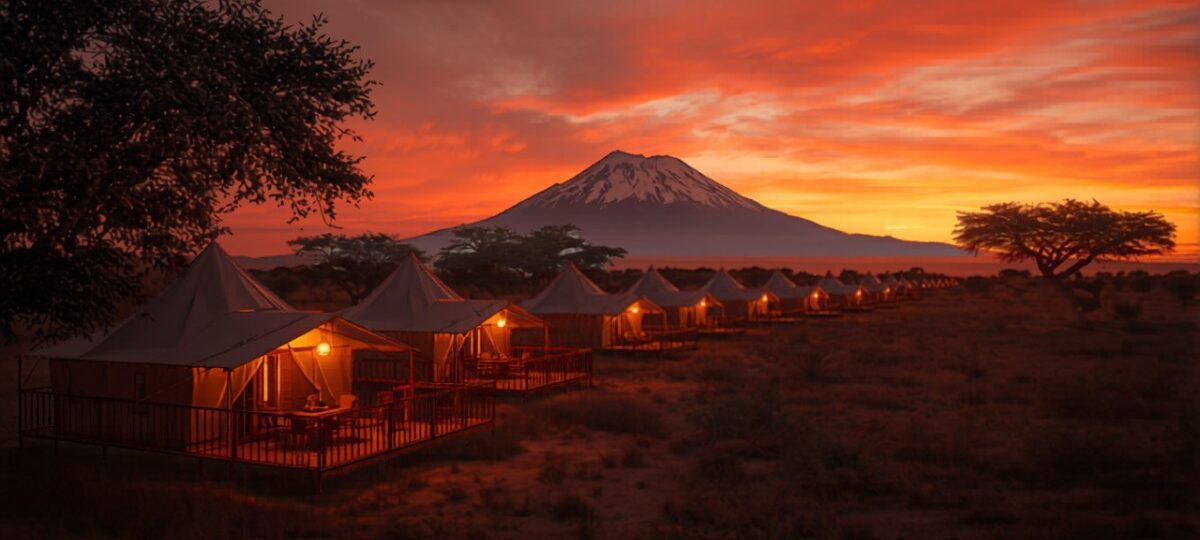
Amboseli’s most famous visual reward is the mountain. The problem is that Kilimanjaro always responds best to repeated early-morning chances, not a single lucky outing.
That means:
- 2 nights can work
- 3 nights gives you more margin
If the mountain matters deeply, Trunktrails Safaris usually prefers 3 nights. One extra sunrise can completely change the photo outcome and the emotional memory of the trip.
Elephant Viewing: Is 2 Nights Enough-
For elephants alone, 2 nights is often enough to feel satisfied.
Amboseli is one of the easier parks to recommend for shorter elephant-focused safaris because:
- elephant sightings are a core strength
- the park is not huge in the way some other systems are
- the wetlands and open plains can make game drives productive quickly
So if the traveller’s main goal is:
- seeing elephants well
- getting a strong first Amboseli experience
- fitting the park into a broader trip
then 2 nights can work very well.
Which Trip Length Works Better for Road Safaris-
This is important.
If you are driving from Nairobi, 3 nights often gives better overall balance because the road transfer no longer dominates the feel of the trip. On 2 nights, the drive can still work, but it takes a bigger bite out of the safari’s emotional energy.
Road safari rule of thumb:
- 2 nights: works, but keep expectations realistic
- 3 nights: better value from the park once you arrive
That is why Trunktrails Safaris often likes 2-night road tours and safaris only when the client is comfortable with a sharper pace.
Which Trip Length Works Better for Fly-In Safaris-
Flying strengthens the case for 2 nights because it removes much of the transfer fatigue.
For a fly-in Amboseli safari:
- 2 nights can feel premium and efficient
- 3 nights can feel wonderfully relaxed
So the real answer is:
- road safari often strengthens the case for 3 nights
- fly-in safari often strengthens the case for 2 nights
Families, Couples, and Photographers
Best for Families
Usually 3 nights.
Why:
- children and parents both benefit from a slower pace
- there is less pressure to maximize every drive
- lodge downtime becomes easier to include
Best for Couples on a Short Trip
Often 2 nights, especially if flying.
Why:
- it can feel elegant and efficient
- the trip does not have to use too many days
- it works well as a short romantic safari add-on
Best for Photographers
Usually 3 nights.
Why:
- more dawn attempts
- more light variation
- more room to chase mountain moments without panic
Is 3 Nights Too Much in Amboseli-
No, not for most travellers who genuinely care about the park.
Three nights is not excessive if the guest wants:
- elephants and repeated game drives
- a strong chance of mountain visibility
- a less rushed lodge experience
- room to absorb weather changes
Four or more nights becomes more niche unless photography, birding, or a slower luxury rhythm is central. But 3 nights is well within the practical sweet spot.
Is 2 Nights Too Short-
No, as long as the traveller understands that it is a highlights format.
Two nights are strong when:
- the itinerary is broader than Amboseli alone
- the guest values efficiency
- the trip is by air or well-managed by road
Two nights become weak when:
- the guest expects endless flexibility
- the mountain is the main dream
- the transfer plan is poor
That is not a problem with Amboseli. It is a problem with expectation-setting.
Quick Comparison: 2 Nights vs 3 Nights in Amboseli
| Factor | 2 Nights | 3 Nights |
|---|---|---|
| Best for short schedules | Excellent | Good |
| Best for mountain margin | Moderate | Strong |
| Best for road safaris | Good | Excellent |
| Best for fly-in escapes | Excellent | Excellent |
| Best for relaxed pace | Moderate | Strong |
| Best for photographers | Good | Excellent |
The Real Numbers: 2 Nights vs 3 Nights
Amboseli sits about 240 km south of Nairobi (a 4 to 4.5 hour drive via Emali and Meshanani Gate, or a 45-minute fly-in). It is a Kenya Wildlife Service premium park at about USD 90 per non-resident adult per 24 hours, so a third night adds one more park-fee day on top of the lodge.
| Factor | 2 Nights (road) | 3 Nights (road) |
|---|---|---|
| Round-trip drive time | ~9 hrs | ~9 hrs |
| Full days in the park | 1 | 2 |
| Game-drive sessions | 3 to 4 | 5 to 6 |
| Dawn chances for Kilimanjaro | 2 | 3 |
| Park fees pp (~$90/day) | ~$180 | ~$270 |
| Indicative land cost (mid-range, pp) | ~$500 to $900 | ~$750 to $1,300 |
The third night buys a second full day and an extra Kilimanjaro dawn for roughly $250 to $400 more per person. That is the strongest upgrade for photographers and for anyone arriving by road.
The Trunktrails View
At Trunktrails Safaris, we usually recommend:
- 2 nights for efficient highlights safaris
- 3 nights for travellers who want Amboseli to breathe
If the safari is road-based and Amboseli is a key stop, we tend to lean toward 3 nights.
If the safari is fly-in and the guest wants a short luxury break, 2 nights can be perfect.
That is the practical answer. Both work. One is just more compressed, and the other is more forgiving.
Final Decision Rule
Choose 2 nights if Amboseli is part of a broader trip.
Choose 3 nights if Amboseli is one of the reasons you are coming to Kenya in the first place.
That rule solves most itinerary decisions surprisingly well.
Further reading
Ready to Plan Your Kenya Safari- Talk to Trunktrails Safaris
Trunktrails Safaris designs tailor-made tours and safaris for every traveller and every budget. If you are deciding between 2 nights and 3 nights in Amboseli, we can match the right trip length to your transfer style, budget, and actual safari priorities instead of forcing a generic package.
WhatsApp: +254 113 208888 Email: info@trunktrailssafaris.com Website: https://trunktrailssafaris.com