Big Five in Kenya: Where to See All Five on One Safari 🦁
The Big Five — lion, leopard, elephant, buffalo, and rhino — is the most famous shorthand in African safari travel. The term originated with big-game hunters who rated these animals as the most dangerous to pursue on foot. Today it describes the wildlife goal of the vast majority of safari travelers: see all five in a single trip.
Kenya is one of the few countries where a single, well-planned safari itinerary makes all five genuinely achievable. Understanding which parks hold which species, and which parks offer realistic sightings versus wishful-thinking encounters, is the difference between a memorable trip and an itinerary built on false promises.
This guide covers exactly where to find each of the Big Five in Kenya, which parks offer the best chances across the full set, and how Trunktrails Safaris puts together big five safari kenya itineraries that are honest about probabilities.
The Big Five in Kenya: Where Each Species Lives
Lion
Kenya has an estimated 2,500-3,000 lions — one of the largest national populations on the continent. The best areas:
Masai Mara: The highest density. The Mara has resident prides that are habituated to vehicles and regularly sighted. The Marsh Pride, the Offbeat Pride, and the Ridge Pride are among the most consistently tracked. August (migration) brings peak lion visibility as the cats follow the wildebeest.
Amboseli: Smaller resident prides. Less predictable than the Mara but sightings are routine. The flat open terrain makes tracking from a vehicle practical.
Tsavo East/West: Lions are present but the dense bush makes sightings less reliable. Tsavo’s maneless Tsavo lions (males in this area carry reduced manes compared to Mara males — a documented local variation) are notable but require patience to find.
Samburu: Good lion presence along the Ewaso Nyiro River corridor. Often seen in larger groups than in the south.
Likelihood of sighting per day: Mara (high), Amboseli (moderate), Tsavo (moderate, less reliable), Samburu (moderate-high in river areas).
Leopard
Leopard are the most challenging Big Five member to sight reliably anywhere in Africa. They are nocturnal, solitary, and actively avoid detection. Kenya’s leopard population exists across most parks but sightings are inconsistent.
Best leopard areas in Kenya:
Masai Mara conservancies: The kopjes (granite outcrops) in Naboisho, Olare Motorogi, and Mara North hold resident leopards that are semi-habituated in areas with low vehicle pressure. Dawn drives are the best window.
Laikipia: Several conservancies report good leopard sightings, particularly along the rocky escarpments and river courses.
Tsavo East: The Lugard’s Falls rocky terrain and Ndololo area have resident leopards. Sightings are infrequent but genuine when they occur.
Lake Nakuru: Nakuru’s fenced ecosystem has a healthy resident leopard population that may be spotted on rocky hillsides and around the Makalia Falls area.
Likelihood of sighting: Honest assessment — leopard sightings on any given day across Kenya are 30-40% probability on good tracking drives. A four-night stay in the Mara with morning and afternoon drives gives a 75-80% probability of at least one sighting. No operator can guarantee leopard.
Elephant
Kenya has approximately 36,000 elephants — a recovered population from the poaching crisis lows of the 1980s. Elephants are achievable in virtually every major park.
Amboseli: The best elephant park in Kenya by a wide margin. Amboseli’s studied elephant population includes matriarchs whose family histories span generations. The Amboseli Trust for Elephants has documented every elephant family; your guide can identify individuals by ear. Herds of 50-100 are regular.
Tsavo East/West: Tsavo has the largest elephant population in any single ecosystem in Kenya. The red elephants (iron-rich dust coats their skin) are visually distinctive. Tsavo elephants are less habituated than Amboseli elephants and tend to approach vehicles less closely.
Masai Mara: Elephants are present but in smaller numbers than Amboseli or Tsavo. Usually encountered along river corridors.
Samburu: Elephant herds in the Ewaso Nyiro riverine forest are a signature Samburu experience.
Likelihood of sighting: Amboseli (virtually certain on any day), Tsavo (high), Mara (moderate-high), Samburu (high in river areas).
Buffalo
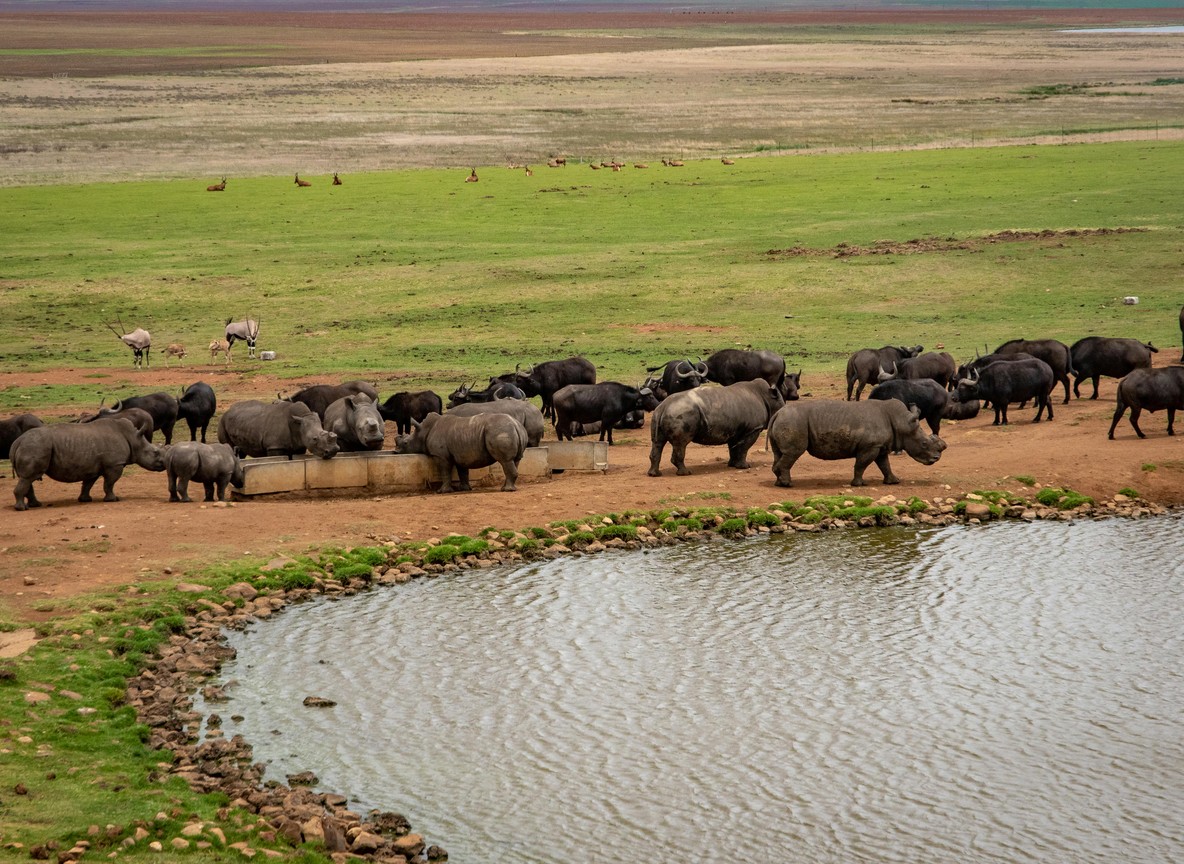
African buffalo are the most numerous Big Five member in Kenya. They are herd animals, frequently encountered in herds of 100 to 500, and are present across nearly every park.
Best areas: Masai Mara (huge herds in August), Tsavo East (large herds along river systems), Lake Nakuru (conspicuous in open terrain), Mara North Conservancy (daily sightings in season).
Likelihood of sighting: High to very high in every major park. Buffalo sightings are rarely the challenge; the photography challenge is finding smaller groups rather than the dense, dust-kicking mass of a large herd.
Note: Buffalo are considered by many guides to be the most dangerous Big Five member. A lone old bull (called a “dagga boy,” from the mud wallowing) encountered at close range on foot is significantly more dangerous than lions in most circumstances. Vehicle-based encounters are very safe.
Rhino
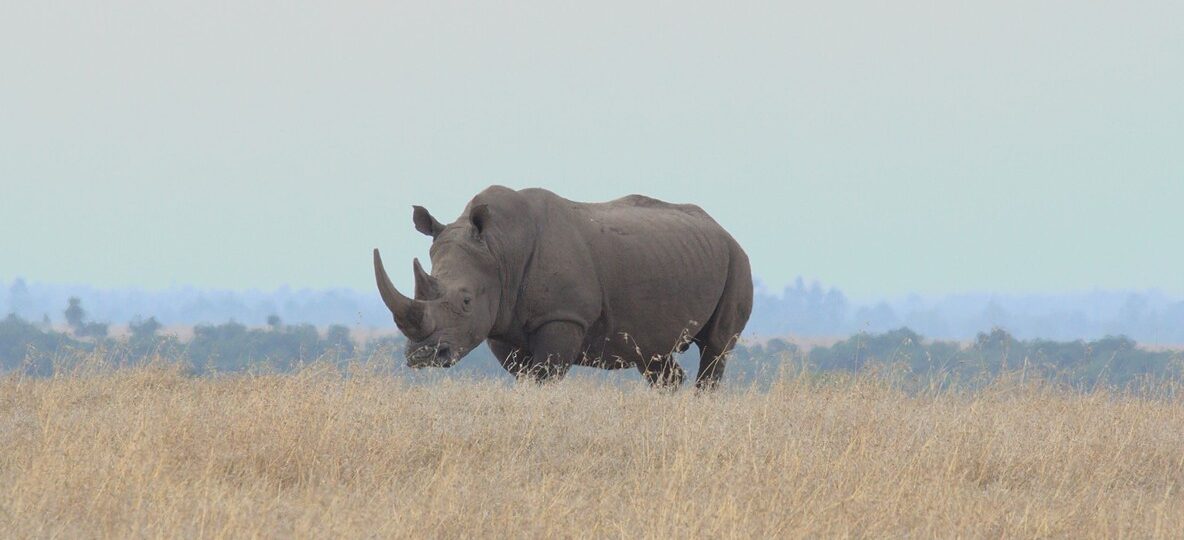
Rhino are the rarest Big Five member in Kenya and the most often missing from generic itineraries. Kenya has both black rhino (critically endangered) and white rhino (near-threatened), with combined populations around 1,000-1,100 animals.
Best rhino areas:
Lake Nakuru National Park: The highest probability of rhino sighting in Kenya. Both black and white rhino within a fenced 188km2 park. White rhino are commonly seen on roadsides. Black rhino require more searching but are present.
Ol Pejeta Conservancy: Famous for the last two northern white rhinos (non-viable for breeding) but has significant populations of southern white rhino and black rhino. Self-drive is not permitted; guided visits only. Not a traditional national park but accessible from Nanyuki.
Lewa Wildlife Conservancy: One of Kenya’s most successful rhino conservation programs. Both species resident. Walking rhino encounters (guided) are possible.
Masai Mara: Rhino were extirpated from the Mara by poaching in the 1980s and have been slowly reintroduced in limited areas. Sightings are not reliable for the standard tourist circuit.
Likelihood of sighting: Lake Nakuru (high for white rhino), Ol Pejeta (high for both, guided), Lewa (moderate-high), Masai Mara (low-moderate).
Comparing Kenya’s Big Five Parks: An Honest Assessment
| Park | Lion | Leopard | Elephant | Buffalo | Rhino | Overall Big Five |
|---|---|---|---|---|---|---|
| Masai Mara | Excellent | Good | Moderate | Excellent | Poor | 4 out of 5 easy |
| Amboseli | Good | Poor | Excellent | Good | Poor | 3 out of 5 easy |
| Lake Nakuru | Good | Moderate | Occasional | Good | Good | 4 out of 5 moderate |
| Tsavo East | Moderate | Moderate | Excellent | Good | Poor | 4 out of 5 moderate |
| Ol Pejeta | Good | Moderate | Good | Good | Excellent | All 5 achievable |
| Samburu | Good | Moderate | Good | Moderate | Rare | 4 out of 5 |
The honest Big Five single-trip answer: The Masai Mara plus Lake Nakuru circuit gives the highest overall probability of all five in one trip. Nakuru handles the rhino and adds leopard probability. Mara handles lion, buffalo, and leopard. Elephant is the one species that the Mara underdelivers on relative to Amboseli or Tsavo.
For a complete big five experience with strong probabilities across all five: Amboseli (elephant, lion) + Lake Nakuru (rhino, leopard, buffalo) + Masai Mara (lion, leopard, buffalo) over 7-9 nights.
The Trunktrails Advantage for Big Five Safari Kenya 🐆
Trunktrails Safaris is a Kenya tours and safaris company. We have been planning big five itineraries for years and we are honest about probabilities rather than promising encounters we cannot guarantee.
Our big five approach:
We tell you the truth about rhino. Rhino require specific parks, specific routes, and guides who know the tracking areas. A generic Mara-only itinerary will likely not deliver rhino. We build in Nakuru or Ol Pejeta specifically to address this.
We use guide radio networks. Our Mara guides use the conservancy radio network to track predator movements. When another guide has a leopard sighting at 6am, we redirect within 10 minutes. This network is not available to self-drive visitors.
We give you realistic day-by-day probabilities for your specific itinerary before you depart, so your expectations match what the parks can realistically deliver.
Our Kenya tours and safaris for the Big Five typically run 7-9 nights covering two to three parks. The most popular structure: 2 nights Amboseli + 2 nights Lake Nakuru + 3 nights Masai Mara conservancy.
Start Planning Your Kenya Big Five Safari
See all five on one trip. Trunktrails Safaris tours and safaris builds Kenya itineraries designed around genuine big five probability, not hopeful brochure language.
Contact Micah to plan your Kenya Big Five safari:
Further reading
More safari planning resources
- Map of Tsavo from Valley Safaris
- Big Five safari parks guide on Touring Insights
- Big Five safari collection on FindMySafari
- Tsavo complete guide on Touring Insights
WhatsApp: +254 113 208888 Email: info@trunktrailssafaris.com Website: https://trunktrailssafaris.com
| Kenyan-Owned and Operated
Share your travel dates, number of nights, and budget range. We will send you a park-by-park big five itinerary with honest species probability assessments within 24 hours.