
Watamu Snorkeling: Marine Park, Sea Turtles and Kenya’s Best Kept Coastal Secret
🌅 The green turtle surfaces two metres from the boat and regards you with an eye that is ancient and completely indifferent to your presence. She has been nesting on this beach for years. The water is clear enough to follow her down as she dives — clear enough to see the coral garden below, the butterfly fish and parrotfish and a moray eel reversing into a crevice — before she disappears into the deeper blue at the reef edge.
Watamu is not Diani. It does not have Diani’s volume of beach hotels, its roster of watersports operators, or its infrastructure for groups. What it has instead is a smaller, more intimate beach town with some of the best marine wildlife in East Africa and a reef that has benefited enormously from its long-term protected status.
Watamu snorkeling at its best is a peak sensory experience: warm water, high visibility, a coral reef in genuine health, and three species of marine turtle that nest on the beach and feed in the bay. For couples who want their coast extension to feel like a private discovery rather than a beach resort package, Watamu delivers something Diani simply cannot.
At Trunktrails Safaris, we include Watamu in honeymoon itineraries and bush-and-beach combinations specifically for guests who want the ocean element of their Kenya trip to carry the same quality as the safari component. Our tours and safaris coastal packages treat the reef as seriously as the plains.
Watamu Marine National Park: Kenya’s Oldest Protected Reef
Watamu Marine National Park was established in 1968, making it one of Kenya’s earliest marine protected areas and one of Africa’s longest-running reef conservation programmes. Its age matters. Fifty years of protection has allowed the coral to recover from bleaching events and fishing pressure in ways that younger protected areas have not yet achieved.
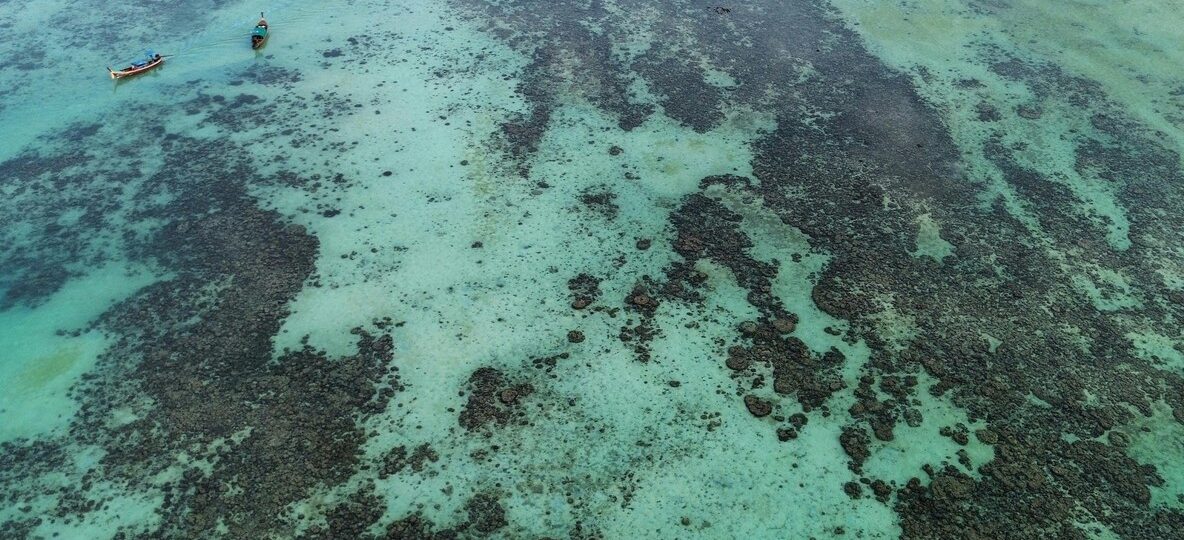
The park covers approximately 10 square kilometres of coral reef and seagrass beds. The shallow inner reef — typically 2-8 metres — is ideal for watamu snorkeling with no diving experience required. The outer reef wall drops to 15-30 metres and is the domain of certified divers.
What the protection has achieved:
- Coral cover significantly higher than comparable unprotected sections of the Kenya coast
- Fish biomass that creates the density and diversity necessary for a genuinely spectacular snorkel experience
- Sea turtle nesting — the beach at Watamu is an active green turtle nesting site, with monitoring carried out by the Watamu Turtle Watch programme since 1997
What to See Snorkeling at Watamu
The Coral Gardens
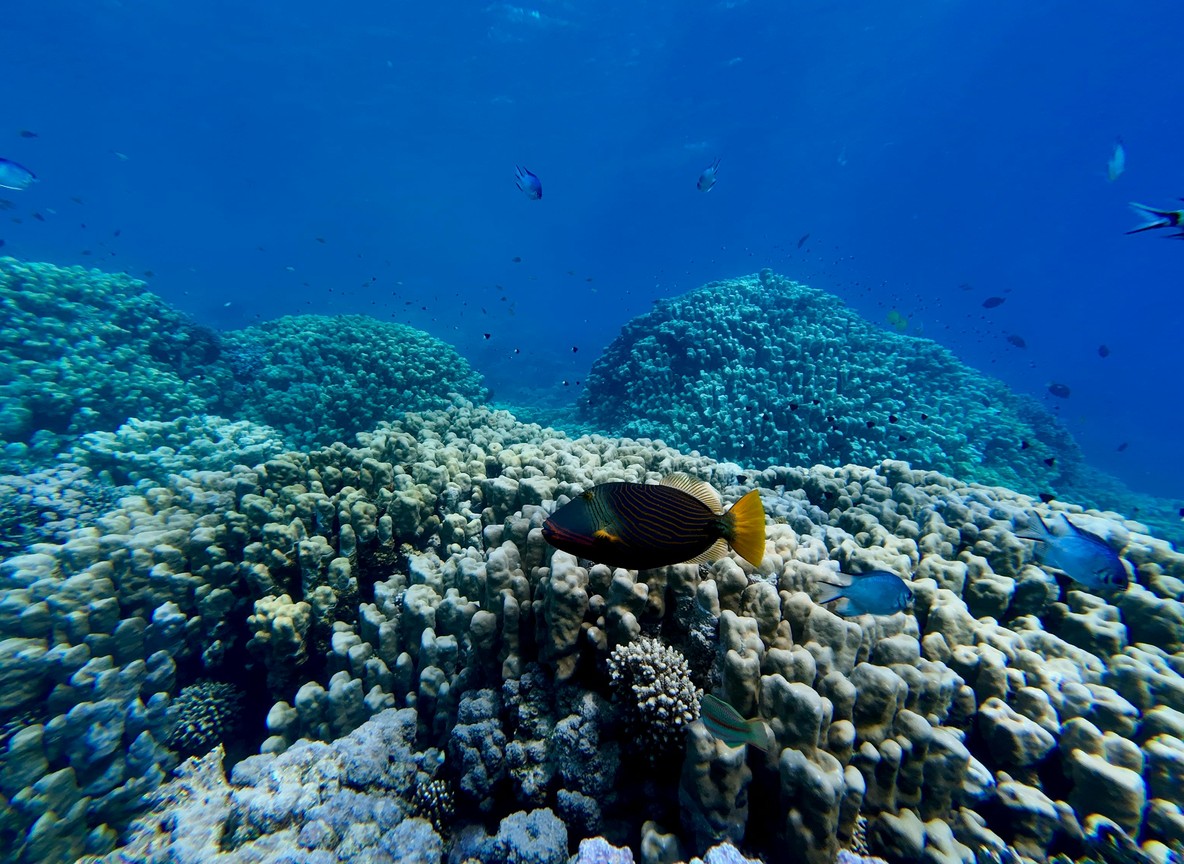
The coral gardens in the shallow inner reef are Watamu’s signature experience. The reef is composed of both hard and soft corals, with prominent table corals, brain corals, and staghorn formations providing structure for a remarkable density of fish.
Regular species include:
- Moorish idol — the ornate, black-white-and-yellow fish that most people recognise from reef aquarium imagery
- Parrotfish (several species) — nibbling coral and clouds of blue, green, and yellow through the water
- Butterflyfish (at least 8 species) — the reef’s most photogenic residents
- Triggerfish — the titan triggerfish in particular (large and territorial during nesting season)
- Moray eel — the giant moray is common in the crevices; harmless if not provoked
- Hawksbill and green turtles — feeding on the seagrass beds and sheltering under coral heads
Sea Turtles: The Headline Species
Three turtle species are recorded at Watamu: green turtle (most common), hawksbill turtle, and olive ridley turtle. The green turtle nests on Watamu’s beach between June and October. Females come ashore at night to lay eggs, and hatchings occur approximately 60 days later.
Watamu Turtle Watch operates a nest protection programme and conducts guided morning walks during nesting season to show guests fresh nesting evidence and, when timing aligns, actual hatchlings emerging. This is one of the most moving natural history experiences on the Kenya coast.
For snorkeling, watamu sea turtles kenya encounters are year-round in the marine park. The seagrass beds inside the reef lagoon are active turtle feeding grounds, and early morning snorkels when boat traffic is minimal give the best chance of a sustained encounter.
Whale Sharks: The Annual Aggregation
Between October and February, juvenile whale sharks aggregate in Watamu’s offshore waters. The reasons for this aggregation are not fully understood but are thought to be related to seasonal planktonic productivity.
The Watamu whale shark encounters are predominantly surface-level — the animals feeding at or near the surface on plankton blooms. Snorkelers (no scuba required) can enter the water with the sharks under the guidance of a qualified ocean guide. Individual sharks are matched against a global database of flank spot patterns by the Africa Whale Shark Network.
Season: October-February. Peak November-December.
Best Snorkeling Sites at Watamu
| Site | Depth | Best For | Access |
|---|---|---|---|
| Coral Garden | 3-8m | Beginners; turtle feeding | Direct from beach |
| The Amphitheatre | 5-12m | Intermediate; coral diversity | Short boat ride |
| South Reef | 8-20m | Advanced; fish density | Boat trip |
| Whale Shark Zone | Surface | Whale shark season only | Offshore boat |
| Blue Lagoon | 2-5m | Families; calm water | Lagoon access |
The coral garden inside the lagoon is the starting point for any snorkeling visit. The water is calm (protected by the outer reef), the depth is manageable for non-swimmers with a flotation aid, and the coral quality is genuinely impressive. Most guests who have never snorkeled before find this site transforms their perception of what the ocean holds.
Beyond Snorkeling: What Else to Do at Watamu
Gedi Ruins: Five kilometres inland from Watamu, the Gedi Ruins are a medieval Swahili city abandoned in the forest and partially excavated. Our Gedi Ruins guide covers the site’s extraordinary history and the golden-rumped elephant shrews that live among the walls.
Arabuko-Sokoke Forest: Adjacent to the Gedi Ruins, the Arabuko-Sokoke Forest is one of East Africa’s most important coastal forest biodiversity hotspots. Guided bird walks are the primary activity. Our Arabuko-Sokoke forest guide covers the endemic species.
Mida Creek: A tidal mangrove creek system behind Watamu beach, accessible by kayak or canoe. The mangroves are a nursery habitat for reef fish and a feeding ground for waders. Crab plovers, flamingos, and spoonbills feed in the creek in season. Sunrise kayaking in Mida Creek is one of the most peaceful experiences on the Kenya coast.
Glass-bottom boat trips: For guests who want the reef view without getting wet, glass-bottom boat tours run from Watamu beach in the morning when the water is calmest and clarity is highest.
Where to Stay in Watamu
Watamu’s accommodation is smaller-scale and more character-driven than Diani’s. This is the feature, not the limitation.
Hemingways Watamu: The original Watamu luxury address, on the beach at the southern end of the bay. Well-run, well-positioned, historically associated with the marlin fishing crowd but with excellent snorkeling access.
Turtle Bay Beach Club: All-inclusive on the beach, family and couples mixed. The most developed resort in Watamu with consistent water sports service.
Ocean Sports Resort: Older property with loyal repeat clientele. Strong diving and deep-sea fishing orientation.
Mwamba Field Study Centre (A Rocha): For travellers with a specific interest in conservation and marine science, this Christian conservation organisation’s facility offers accommodation with direct involvement in turtle monitoring and reef research. Not luxury, but extraordinarily meaningful.
For couples who want seclusion, the small boutique properties at the southern end of Watamu Bay, set back from the main beach, offer privacy that the larger resorts cannot match.
Best Time to Snorkel at Watamu
| Period | Visibility | Sea State | Sea Turtle | Whale Shark |
|---|---|---|---|---|
| Jan-Mar | High | Calm | Feeding | Peak (Nov-Feb) |
| Apr-May | Lower (long rains) | Variable | Feeding | Rare |
| Jun-Aug | Good | Some swell | Nesting + feeding | Absent |
| Sep-Oct | High | Calm | Nesting + feeding | Arriving |
| Nov-Dec | High | Very calm | Feeding | Peak |
The two premium snorkeling windows are January-March and September-October. November-December adds the whale shark aggregation to what is already a high-visibility reef season — making it arguably the single best month of the year for a Watamu marine experience.
Getting to Watamu
From Mombasa: 2 hours north on the A7 coast road. Regular matatu service and taxis from Mombasa. Most resorts provide transfers.
From Nairobi: Fly to Moi International Airport Mombasa or directly to Malindi Airport (MYD). Malindi is 20 km north of Watamu — a 25-minute taxi.
From Diani Beach: 2.5-3 hours north on the coast road, crossing the Kilindini Channel by ferry. A day trip is possible but a night or two in Watamu is a much better format.
The Trunktrails Advantage
At Trunktrails Safaris, our coastal itineraries treat the reef with the same seriousness as the savannah. We know which guides in Watamu understand the tidal patterns that affect turtle feeding times, which snorkel sites are producing the best visibility in the current season, and when the whale shark aggregation is building offshore.
For honeymooners planning a bush-and-beach combination:
- Safari + Watamu marine: We design both elements as one seamless itinerary with no handoffs
- Accommodation matching: We select the property that fits your privacy and budget requirements
- Turtle Watch connection: We coordinate your visit with the Watamu Turtle Watch programme so the conservation element is real, not decorative
- Timing advice: We match your Watamu dates to the optimal reef or whale shark window
- 5% of every booking supports marine conservation, including coral reef monitoring and turtle nesting protection
- and native Kenyan-owned
Further reading
More safari planning resources
- Best time to visit Kenya month-by-month map from Valley Safaris
- Best time to visit Kenya on Touring Insights
- Diani Beach guide on FindMySafari
- Kenya tour packages from Valley Safaris
Ready to Plan Your Watamu Ocean Safari with Trunktrails Safaris?
✨ The reef at Watamu is not a backdrop. It is a living system that rewards the traveller who looks carefully — the turtle in the seagrass, the octopus changing colour on the coral head, the whale shark circling slowly through the plankton bloom. It is an ocean safari with the same quality of encounter that your land safari gives you, in a different element.
At Trunktrails Safaris, we design every tours and safaris package around what the traveller actually wants to experience. If the ocean is where you want to spend the second half of your Kenya trip, tell us, and we will make it exceptional.
📞 WhatsApp: +254 113 208888 📧 Email: info@trunktrailssafaris.com 🌐 Website: https://trunktrailssafaris.com
Image credits: Photo by mirthe diender on Pexels; Photo by Philippe WEICKMANN on Pexels; Photo by Erik Karits on Pexels; Photo by Alina Dmytrenko on Pexels; Photo by Emilio Sánchez Hernández on Pexels