
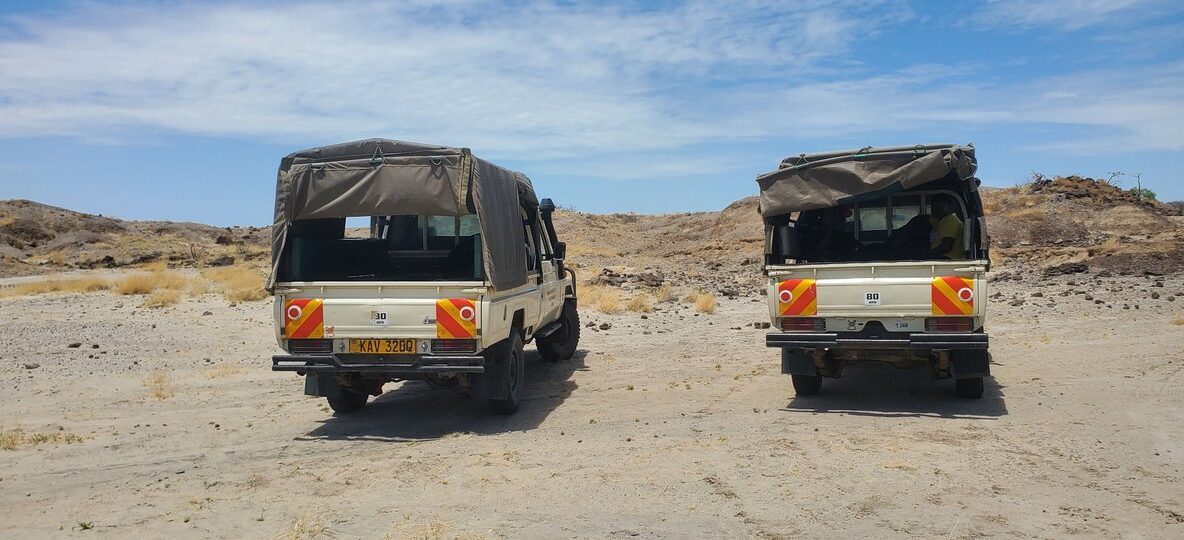
Shaba National Reserve Kenya: Joy Adamson Country and the Road Less Driven
🦁 Joy Adamson came to Shaba in 1977 to rehabilitate Penny the leopard. She found a landscape she described as the most dramatic in all of northern Kenya — a wilderness of black volcanic rock, clear springs, doum palm groves, and the Ewaso Nyiro River winding through terrain that felt, she wrote, more like the surface of another planet than anywhere she had lived in fifty years of African life.
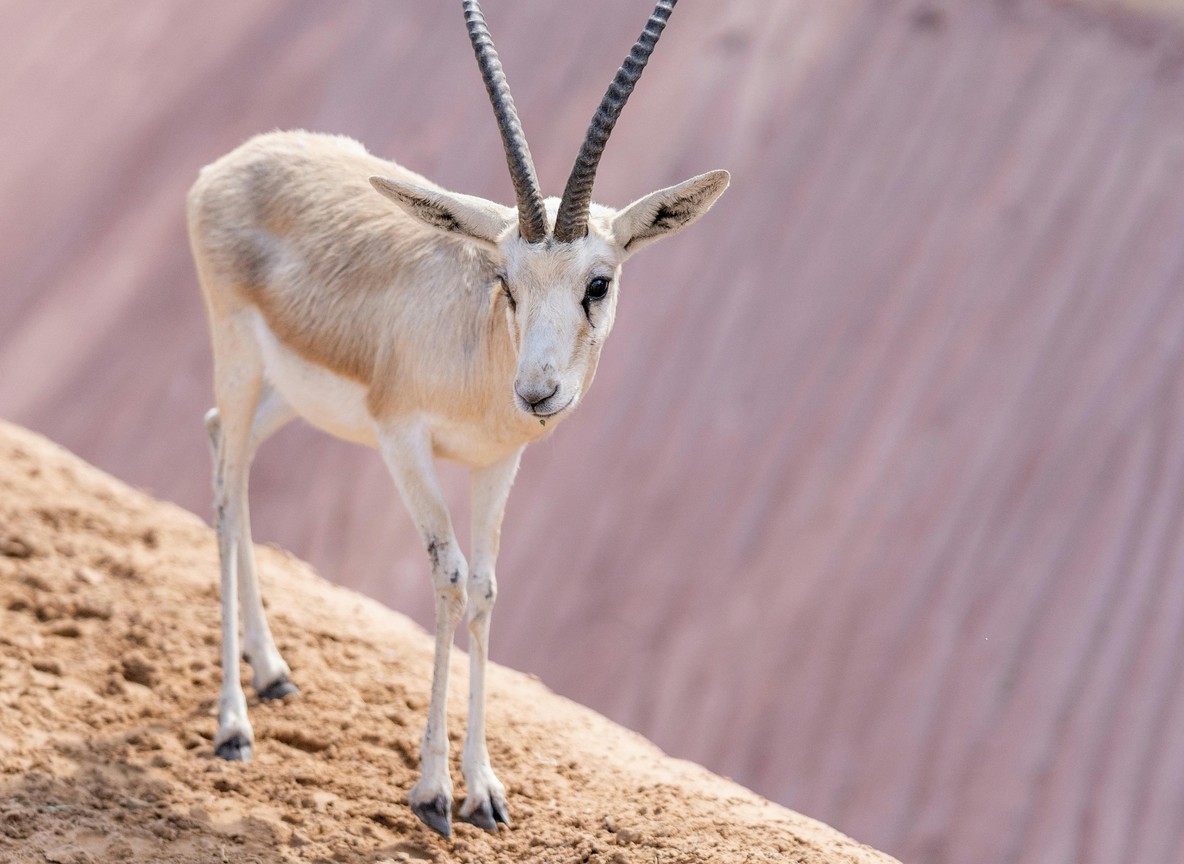
She was right about the drama.
Shaba National Reserve sits immediately east of Samburu in Kenya’s Northern Frontier District, covering 239 square kilometres of what geologists call volcanic terrain: black lava flows, rocky outcrops, and the distinctive kopjes that rise from the plains like the remains of something ancient and broken. The landscape looks different from Samburu’s gallery forest and open plains, and the wildlife encounter here is different too — quieter, more private, more likely to be just you and the oryx and the dry wind off the lava fields.
At Trunktrails Safaris, Shaba is our recommendation for tours and safaris guests who have already done the standard northern Kenya circuit and want to go deeper — or for travellers on a first visit who want to start with the road less driven.
What Is Shaba National Reserve?
Shaba National Reserve was gazetted in 1974 and covers 239 square kilometres on the southeastern end of the Samburu-Buffalo Springs-Shaba tri-reserve complex. It sits east of Samburu National Reserve and south of Buffalo Springs National Reserve, with the Ewaso Nyiro River forming its northern boundary.
The distinguishing features of Shaba:
Volcanic geology: The reserve sits on ancient lava flows from the dormant volcanoes further north. The black basalt rock fields are a striking visual feature and create a habitat that differs markedly from Samburu’s sandy soils. The kopjes (rocky outcrops) that punctuate the landscape are prime leopard and klipspringer territory.
The springs: Several natural springs rise within Shaba, fed by the volcanic aquifer. These create permanent water sources that sustain wildlife through the driest months and explain why Joy Adamson chose this particular location for her base camp. The spring vegetation — permanent greenery in an otherwise arid landscape — draws wildlife and is one of the most productive observation points in the reserve.
Vehicle numbers: Shaba receives a fraction of Samburu’s visitor numbers. This is partly because Samburu is better known, and partly because the internal road network in Shaba is less developed. The result is that in Shaba, you will routinely have major wildlife sightings entirely to yourself.
Joy Adamson’s Legacy in Shaba
Joy Adamson is best known for “Born Free,” her account of raising the lioness Elsa and returning her to the wild in the 1950s. But it was in Shaba that she spent the last years of her life and where she died in 1980.
Adamson came to Shaba to work with Penny the leopard, a cheetah rehabilitation project, and several other animal subjects for her books. Her camp at Shaba — a simple, functional base that she maintained with characteristic intensity — became the setting for “Queen of Shaba,” her account of the Penny project.
The circumstances of her death remain officially unsolved. She was found dead near her camp on January 3, 1980, and the initial investigation concluded she had been killed by a lion. Later evidence pointed to murder by a dismissed camp worker. The case was never fully resolved.
For travellers with an interest in this history, the landscape around Joy’s Camp (the property now operating on the approximate site of her original base) carries a particular resonance. A walk in the reserve with a knowledgeable guide who knows this history is a different experience from a standard game drive.
Joy’s Camp is the only permanent camp in Shaba and is named for this heritage. Staying there places you in a direct line of continuity with one of East Africa’s most extraordinary characters.
Wildlife in Shaba: The Special Five and Beyond
Shaba holds the same northern species as Samburu — the shaba national reserve environment is part of the same ecosystem — but the encounter quality differs significantly.
The Special Five in Shaba:
| Species | Status | Shaba Notes |
|---|---|---|
| Grevy’s Zebra | Endangered | Small bands in rocky terrain; less visible than in Samburu |
| Reticulated Giraffe | Near Threatened | Present throughout; the volcanic backdrop creates exceptional photography conditions |
| Gerenuk | Least Concern | Very common in the acacia-commiphora thickets |
| Beisa Oryx | Least Concern | Large herds on the open volcanic plains; reliable sightings |
| Somali Ostrich | Vulnerable | Present; smaller numbers than in Samburu |
Predators:
- Lion: Shaba’s lion prides are less habituated than Samburu’s (fewer vehicles means less conditioning to human presence) but the sightings are arguably more authentic for it
- Leopard: The kopjes are prime leopard territory. Shaba has a higher leopard encounter rate relative to visitor numbers than Samburu. Dawn and dusk drives along the rocky outcrops are the best strategy.
- Cheetah: Present but uncommon; the volcanic terrain is less open than typical cheetah habitat
Other species:
- Crocodile in the Ewaso Nyiro sections — the river has a healthy population
- Hippo in the deeper river pools
- Dwarf mongoose colonies in the kopjes — entertaining and approachable
- Ground squirrel colonies on the lava plains
- Vulturine guineafowl — spectacular; common near the springs
Joy’s Camp: The Only Place to Stay in Shaba
Joy’s Camp (operated by Sanctuary Retreats / Elewana) is the sole permanent accommodation within Shaba National Reserve, and it is the heritage connection that gives the camp its character and its name.
Camp features:
- 10 luxury tents set on a hillside with views over the Ewaso Nyiro and the plains below
- Pool — important at this latitude; midday temperatures in Shaba regularly reach 36-38 degrees
- The camp maintains archival material relating to Joy Adamson’s presence in Shaba
- Bush breakfast and sundowner options in the reserve
- Night game drives (Shaba’s lesser-known benefit over Samburu)
Rates: Approximately $700-$900 PPPN (all-inclusive including game drives; 2026 indicative figures).
The camp’s position on the hillside above the river gives it a commanding view that Samburu’s flat-ground camps cannot match. The sundowner from the camp’s upper terrace — across the Ewaso Nyiro and the volcanic plains — is consistently described by guests as the best in northern Kenya.
Shaba vs Samburu: Which Should You Choose?
For the traveller who wants to go deeper, the ideal answer is both. But if you can only choose one, here is the comparison:
| Factor | Shaba | Samburu |
|---|---|---|
| Vehicle pressure | Very low | Moderate to high |
| Landscape | Dramatic volcanic | Open savannah/riverine |
| Night drives | Yes | Yes |
| Walking safari | Limited | Yes (with specific camps) |
| Leopard encounters | Higher per-visitor rate | Lower per-visitor rate |
| Camp options | 1 (Joy’s Camp) | 8+ properties |
| Access difficulty | Slightly harder | Easy |
| Heritage interest | Joy Adamson direct | Minimal |
If solitude and the volcanic landscape are your priorities, choose Shaba. If you want the widest range of camp options and the most complete wildlife programme (including walking safaris), choose Samburu. The best northern Kenya itinerary includes both.
Our Samburu game reserve guide covers the Samburu side of this comparison in depth.
Combining Shaba with the Northern Kenya Circuit
Shaba fits naturally into a northern Kenya safari circuit as a two-night add-on before or after Samburu. The most common formats:
Samburu (3 nights) + Shaba (2 nights): The standard northern circuit plus Shaba extension. Fly Nairobi to Samburu, drive east to Shaba. Fly out of Samburu/Shaba back to Nairobi.
Shaba (2 nights) + Samburu (2 nights) + Lake Turkana (3 nights): The full northern frontier experience. Most guests who do this itinerary rate it as their best Kenya trip. Our 7-day northern Kenya safari itinerary uses this framework.
Shaba + Meru National Park: An eastern arc through northern Kenya’s quieter destinations. Shaba east, then drive south to Meru — Kenya’s other wilderness that most guests never reach.
Best Time to Visit Shaba
| Month | Conditions | Notes |
|---|---|---|
| Jan-Mar | Hot, dry | Excellent; wildlife concentrated at Ewaso Nyiro |
| Apr-May | Long rains | Some tracks impassable; very few visitors |
| Jun-Aug | Dry, warm | Best overall; road conditions reliable |
| Sep-Oct | Hot, dry | Good; midday heat intense |
| Nov-Dec | Short rains possible | Still good; occasional afternoon showers |
Like Samburu, shaba safari kenya is best January-March and June-August. The dry season concentrates wildlife at the river and the springs, making encounters predictable.
The major differentiator from Samburu’s season pattern is that Shaba’s more rugged road conditions during the long rains (April-May) make access harder. The river crossings within the reserve can become impassable after heavy rain. June onwards is the safe window for overland access.
The Trunktrails Advantage
Shaba requires a degree of specialist planning that mainstream itineraries do not cover. The camp logistics (there is only one option), the access routes, and the understanding of how Shaba fits into a northern Kenya circuit are not details you find on generic booking platforms.
At Trunktrails Safaris, our northern Kenya tours and safaris team has guided guests through Shaba regularly. We know:
- When the Ewaso Nyiro crossings are passable after rains
- Which sections of the reserve produce the best leopard conditions
- How to brief Joy’s Camp on the heritage aspects a traveller will want to engage with
- How to combine Shaba with Samburu and Lake Turkana without losing a travel day to unnecessary logistics
Conservation contribution: 5% of every booking goes to wildlife projects, including northern Kenya predator monitoring and Grevy’s Zebra Trust community work., native Kenyan-owned.
Further reading
More safari planning resources
- Map of Samburu from Valley Safaris
- Samburu National Reserve guide on Touring Insights
- Samburu destination guide on FindMySafari
- Big Five safari parks guide on Touring Insights
Ready to Plan Your Shaba Safari with Trunktrails Safaris?
📸 The volcanoes that created Shaba’s black plains did their work millions of years ago. The springs that rise from the basalt aquifer have been running since long before Joy Adamson arrived with her notebooks and her leopards. And the landscape she found in 1977 — stark, beautiful, and demanding in equal measure — is essentially unchanged.
This is the northern Kenya that most itineraries do not reach. Trunktrails Safaris can take you there.
At Trunktrails Safaris, we design tours and safaris that make room for Shaba alongside the better-known destinations. Tell us where you want the intensity of your trip to lie, and we will build the route.
📞 WhatsApp: +254 113 208888 📧 Email: info@trunktrailssafaris.com 🌐 Website: https://trunktrailssafaris.com
Image credits: Photo by Henry Sanderson Viyuyi on Pexels; Photo by Denys Gromov on Pexels; Photo by Derek Keats on Pexels; Photo by Ann Perkas on Pexels; Photo by Mehmet Turgut Kirkgoz on Pexels