

Meru National Park: Kenya’s Wildest Quiet Safari for Repeat Visitors
If you have done the Masai Mara, ticked off Amboseli with Kilimanjaro glowing in the background, and spent a morning tracking rhinos at Ol Pejeta, you know the feeling: the parks are as good as you remember, but the vehicle spacing at the top sightings is starting to tell a story about how many people now know about them.
Meru National Park is the answer to that feeling. It is the meru national park safari that experienced Kenya travelers talk about in hushed tones, not because it is a secret, but because most people simply do not think to go. The Masai Mara does the heavy marketing. Meru does not need to.
This blog is written for travelers who already know what a quality safari looks like and are asking what comes next. Meru is what comes next. 🌍
Why Experienced Safari Travelers Choose a Meru National Park Safari
The simple version: a meru national park safari puts you inside the park that has stayed closest to what the Kenyan wilderness looked like before mass tourism reshaped everything else.
At 870 square kilometers, it is not small. It sits in Kenya’s north-central region, east of Mount Kenya, straddling a rainfall gradient that produces genuine habitat diversity within a single park. The western section is greener, fed by rivers and wetland systems. The eastern section shades into semi-arid scrub, which is where the wildlife concentrations are highest.
The result is a park that rewards travelers who understand how ecosystems work. You read the landscape, not just the game-viewing map. You drive through palm-fringed riverine forest and come out into open acacia savanna within ten minutes. The Tana River forms much of the southern and eastern boundary, and the river zones hold wildlife year-round regardless of rainfall.
Visitor numbers are a fraction of Meru’s capacity. On a full day of game drives, you may share the park with fewer than thirty other vehicles. For repeat visitors who have started feeling the crowds at southern Kenya’s flagship parks, that fact alone is worth the detour.
Meru National Park Wildlife: What You Will Actually See
Meru is a Big Five park, and all five are present and finding them takes genuine guiding rather than following the radio chatter.
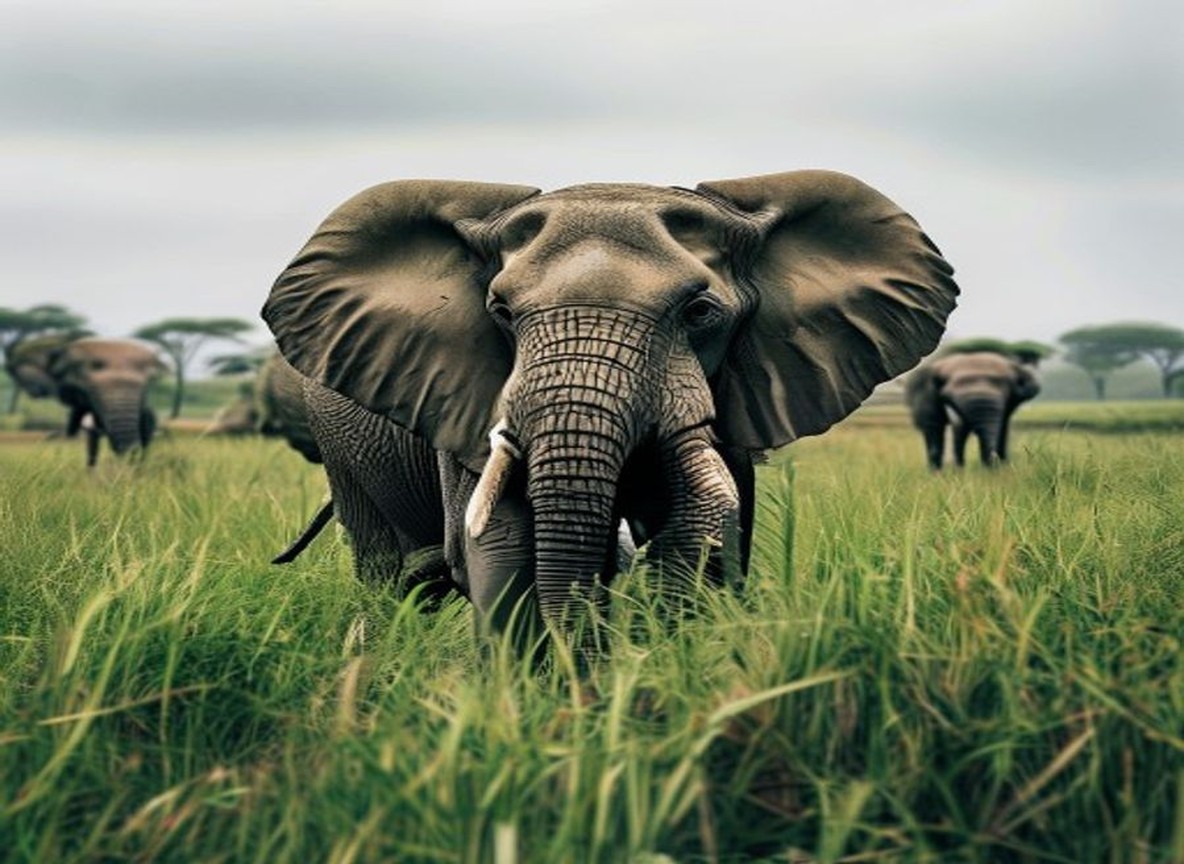
Elephant herds move between the Murera and Rojewero rivers. The Tana corridor supports substantial elephant populations, and the bulls that range across the eastern scrubland are among the largest you will see in northern Kenya.
Buffalo are widespread. The dense riverine thickets along the Tana produce some of the best buffalo sightings in Kenya, particularly in the dry months when herds concentrate around permanent water.
Lion and leopard are present throughout the park. Meru’s lions are notably less habituated to vehicles than their Masai Mara counterparts, which means sightings feel like encounters rather than performances. If you have been on enough safaris to appreciate that distinction, Meru delivers it consistently.
Black rhino are one of Meru’s most significant conservation stories. The park’s black rhino population was poached to extinction in the 1980s and 1990s following the murders of Joy and George Adamson. Reintroduction began in the early 2000s through KWS and Borana Conservancy partnerships, following similar models seen at Ol Pejeta Conservancy. The rhino sanctuary today holds a recovering population in a dedicated fenced area in the northern section of the park. Tracking on foot with a KWS ranger is available by arrangement and is one of the highest-value game activities in Kenya for a traveler who has already done the standard vehicle game drive circuit.
Reticulated giraffe and Grevy’s zebra appear here, not the plains zebra you see in the Mara. Both species are Meru national park wildlife that signal you are genuinely in northern Kenya’s ecosystem, not a southern savanna facsimile. For experienced safari travelers who have built a reasonable species list over multiple trips, adding Grevy’s and reticulated giraffe in a landscape this raw makes a meaningful difference to the trip.
Hippo pools along the Tana River produce reliable sightings, particularly in the mornings. Crocodile are resident and visible in the shallows throughout the day.
Birdlife is exceptional. The Tana River corridor is a productive birding zone, with Pel’s fishing owl present if your guide knows the right riverside trees. 📸
The Adamson Legacy and Born Free: Why This Park Carries Weight
You cannot talk about Meru honestly without talking about Joy and George Adamson.
Joy Adamson raised Elsa, an orphaned lioness, at her camp inside what is now Meru National Park. Elsa the lioness became the subject of “Born Free” in 1960, which became one of the most widely read wildlife books of the twentieth century and a film that introduced a generation of travelers to Kenya.
George Adamson continued his rehabilitation work for lions in Kenya’s north for decades after Joy’s death, until he was murdered by poachers at Kora National Reserve in 1989. Joy had been killed by a former employee at Meru in 1980.
Their work at Meru is the founding narrative of wildlife rehabilitation in East Africa. Elsa’s grave is within the park boundaries. Adamson’s Falls on the Tana River, a rarely-visited stretch of rapids named for their connection to this history, sits within the park’s eastern reaches and represents one of the most under-documented natural features in Kenya’s national park system.
For repeat visitors who want a safari that carries intellectual and historical weight alongside the game viewing, this narrative context makes Meru qualitatively different from parks that lack it.
Meru National Park Safari Accommodation: Camps Worth Knowing
Meru’s accommodation options are deliberately limited. That is a feature, not a shortcoming.
| Camp | Style | Price Tier | Best For |
|---|---|---|---|
| Elsa’s Kopje | Luxury tented on kopje outcrop | Premium ($$$) | Total wilderness immersion, privacy, travelers |
| Rhino River Camp | Riverside tented camp | Mid-to-premium ($$-$$$) | Wildlife-focused, rhino tracking base |
| Meru Mulika Lodge | Classic Kenya national park lodge | Mid-range ($$) | Budget-flexible repeat visitors |
| Leopard Rock Lodge | Small lodge on Murera River | Mid-range ($$) | River wildlife, quiet circuit |
Elsa’s Kopje is the standout choice for the experienced traveler. It sits on a rocky outcrop above the Mughwango Hill, at altitude above the surrounding scrub, with a panoramic view that is architecturally and atmospherically distinct from anything in the southern parks. Service is intimate. The guiding is genuinely excellent. The camp’s name is a direct connection to the Adamson legacy, and it wears that connection honestly.
Rhino River Camp is the choice if you are combining the general game drive circuit with the rhino tracking program in the sanctuary. The camp’s positioning on the Rojewero River produces consistent hippo and elephant sightings from the camp itself.
No camp in a meru national park safari will produce a traffic jam of vehicles outside your tent at sunrise. That is the point.
Best Time to Visit for a Meru National Park Safari
Meru sits in Kenya’s north-central zone and receives more rainfall than the southern parks. That matters for planning.
| Season | Months | Conditions | Recommendation |
|---|---|---|---|
| Dry (Primary) | July to October | Excellent tracks, concentrated wildlife at water, low grass | Best game viewing, best for rhino tracking |
| Short dry | January to February | Good tracks, resident wildlife strong | Solid alternative, less visitors |
| Long rains | March to May | Some tracks difficult, lush green, fewer visitors | Birding excellent, game viewing patchy |
| Short rains | November to December | Generally passable, some flooding near rivers | Manageable with right operator |
July to October is the clear primary window, confirmed by Kenya Wildlife Service seasonal guidance. The Tana River systems maintain water through even the driest months, so wildlife does not disperse. Grass height drops, visibility improves, and the rhino sanctuary tracks are accessible throughout.
January and February work well as a secondary window. Crowds are minimal even by Meru standards. The short dry period produces reliable game viewing without the elevated July-October rates.
The long rains (March to May) require careful operator communication. On a meru national park safari in this period, tracks in the wetter sections can close or degrade significantly during peak rainfall. A good guide will reroute to the eastern semi-arid sections, which receive less rain and maintain accessibility. If your operator is not specific about wet-season routing in Meru, ask directly before booking.
Getting to Meru National Park for Your Safari
Two practical options:
Road: Nairobi to Meru National Park is approximately 350 kilometers via the A2 highway through Nanyuki. Drive time is 4.5 to 6 hours depending on traffic and road conditions north of Nanyuki. The Murera Gate, which is the main entry point, is accessible by 4×4 with no extreme terrain requirements on the approach road.
Charter flight: Wilson Airport (Nairobi) to Meru’s airstrip is a 45-minute charter flight. Airstrip transfers are available through most camps. For travelers combining Meru with a Samburu or Laikipia leg, the charter option eliminates what would otherwise be a long road day.
Trunktrails Safaris handles both logistics and can package road-transfer safari combinations that include Meru alongside Samburu National Reserve or the Mount Kenya region as a 7-10 day northern Kenya circuit.
The Trunktrails Advantage at Meru
Most Kenya safari operators do not have strong ground experience in Meru. The park’s lower visitor volumes mean fewer operators have invested in building guide teams and supplier relationships there. That gap matters for the traveler who wants the park done properly.
Trunktrails Safaris has direct relationships with Meru-experienced KWS rangers for the rhino tracking program and local guide networks who know the Tana River system, the seasonal bird roosts, and the specific routes that produce consistent results in the park’s distinct habitat zones. Our tours and safaris in Meru are built around what the park actually delivers, not a copy of a Masai Mara itinerary repositioned for a different map.
For experienced safari travelers who have done the main Kenya circuit and want a park that still feels genuinely wild, Meru is the honest recommendation. 🦁
Frequently Asked Questions
Is Meru National Park worth visiting if I have already done the Masai Mara and Amboseli? Yes, and specifically because you have done them. Meru is structurally different from Kenya’s flagship parks: smaller visitor volumes, northern ecosystem species, the Adamson conservation history, and a wildlife experience that has not been formatted for mass tourism. The park rewards exactly the kind of traveler who already knows how to read a landscape.
Further reading
More safari planning resources
- Kenya national parks map from Valley Safaris
- Big Five safari parks guide on Touring Insights
- Big Five safari collection on FindMySafari
- Nairobi to Maasai Mara route guide from Valley Safaris
Can I see the Big Five in Meru National Park? All five are present. Elephant, buffalo, lion, leopard, and black rhino are all resident. Rhino tracking on foot in the sanctuary requires advance arrangement through your operator and Kenya Wildlife Service. Contact Trunktrails Safaris at info@trunktrailssafaris.com or via WhatsApp at +254 113 208888 to confirm availability before your travel dates.
What makes Meru different from Samburu National Reserve? Both are northern Kenya parks with ecosystem overlap. Samburu is more accessible and has a stronger track record for the Special Five (reticulated giraffe, Grevy’s zebra, gerenuk, Beisa oryx, Somali ostrich). Meru has the Tana River system, the Adamson history, black rhino, and a quieter overall experience. For the serious repeat visitor, the two parks work extremely well as a combined northern Kenya circuit.
Is Meru National Park suitable for self-drive? Self-drive is permitted with a 4×4, but the park is large, the tracks are not always clearly marked, and some sections require route knowledge to navigate effectively in wet conditions. A guided safari produces significantly better game viewing outcomes in Meru than self-drive, particularly for rhino tracking.
How long should I spend in Meru National Park? A minimum of three nights allows you to cover the main habitat zones and arrange one rhino tracking activity. Four to five nights is the comfortable pace for a thorough meru national park safari. The park does not reward rushing.
Book Your Meru Safari With Trunktrails Safaris
Meru National Park is the kind of destination that changes how you think about Kenya’s wildlife. It is not the obvious choice. It is the right one for travelers who know what a quality tours and safaris experience looks like.
Trunktrails Safaris is a Kenya safari operator with deep experience across Kenya’s northern circuit, including Meru, Samburu, Laikipia, and the Mount Kenya region. Our Kenya tours and safaris are designed for travelers who have already done the main circuit and want a guide who can take them further.
Contact us to start planning your Meru national park safari:
WhatsApp: +254 113 208888 Email: info@trunktrailssafaris.com Website: https://trunktrailssafaris.com
Meru fills up in July to October. The traveler who plans in February gets the camp and the dates they want. The one who waits until June does not. 🌅

