Arabuko-Sokoke Forest: Kenya’s Coastal Forest Safari 📸
At the northern end of Kenya’s coast, between Malindi and Watamu, a strip of indigenous coastal forest has been here since before the current human civilisation of the East African coast began. Arabuko-Sokoke is Kenya’s largest remaining coastal forest — roughly 420 square kilometres of mixed forest types running behind the beach dunes — and it is one of the most biodiverse ecosystems on the continent.
Most Kenya safari travelers never visit Arabuko-Sokoke. They come for the Masai Mara, Amboseli, and Tsavo and they miss a forest that holds species found nowhere else on earth. This guide from Trunktrails Safaris is for the travelers who want to know what Kenya’s coast actually contains beyond the beach.
What Makes Arabuko-Sokoke Unique in Kenya’s Safari Landscape
Arabuko-Sokoke is not like any other Kenya safari destination. There are no big cat drives, no open plains, no vehicle convoys following wildebeest. The safari here is forest-based: walking trails, birding guides, and encounters with creatures that are genuinely rare and frequently bizarre.
Three things make Arabuko-Sokoke stand apart:
Globally threatened coastal forest ecosystem. The East African coastal forests are one of the world’s recognized biodiversity hotspots. Arabuko-Sokoke is the largest fragment of this system still standing. It has survived because of a combination of Kenya Forest Service management, community partnership programs, and international conservation funding (BirdLife International, RSPB, and others have been involved since the 1990s).
Exceptional bird endemism. Of Kenya’s 1,100+ bird species, Arabuko-Sokoke holds 11 globally threatened species, including 6 found nowhere else in the world. This is not a marginal point for serious birders — it is the reason specialists fly to Kenya specifically for this forest.
The golden-rumped elephant shrew. Rhynchocyon chrysopygus — a species found only in this forest. It is not actually a shrew; it is more closely related to elephants than to any true shrew. The size of a small rabbit, it moves through the leaf litter at improbable speed and the flicker of that golden rump patch as it rounds a tree is one of the most unusual wildlife moments available anywhere in Kenya.
The Birds of Arabuko-Sokoke Forest
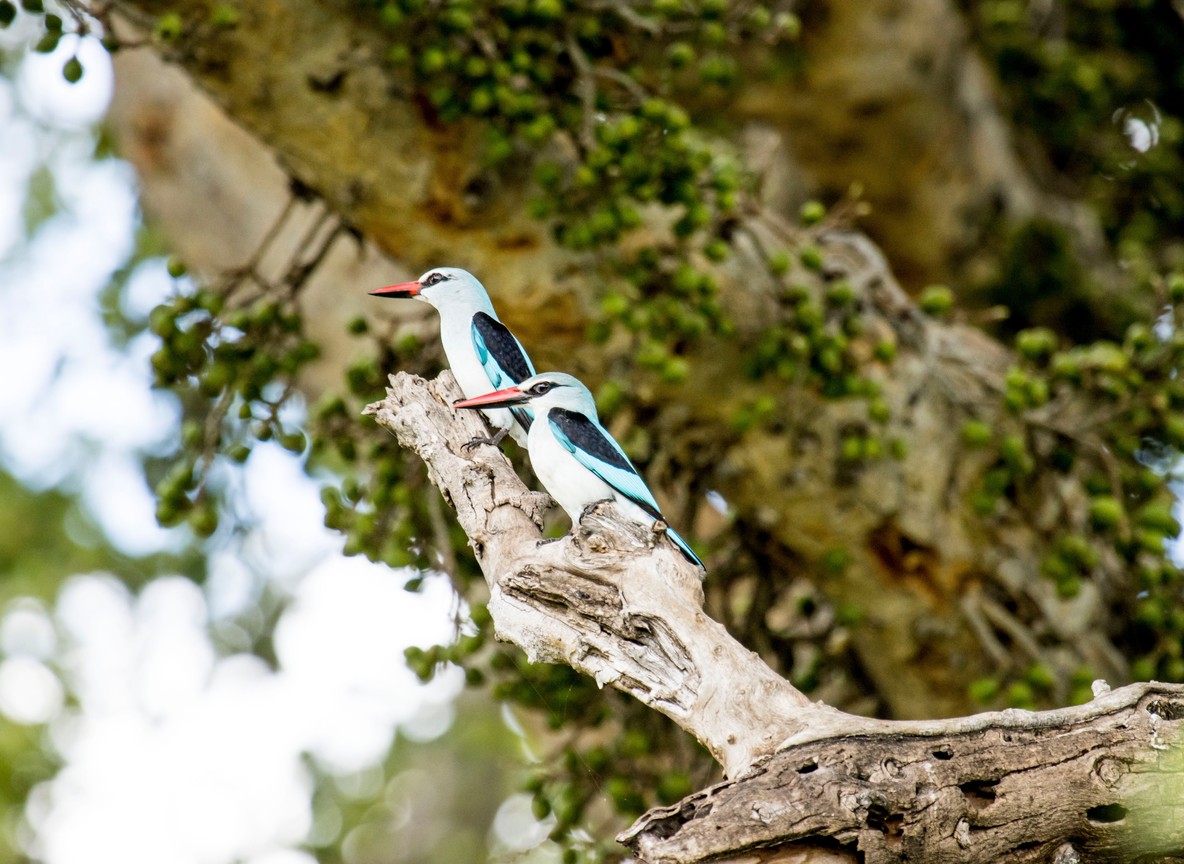
Serious birders come to Arabuko-Sokoke for the Sokoke scops owl, the Sokoke pipit, the Clarke’s weaver, the Amani sunbird, and the east coast akalat. For non-specialist birders, the forest still delivers remarkable encounters with species that have no equivalent in the national parks.
The most frequently sighted species on guided forest walks:
| Species | Status | Notes |
|---|---|---|
| Sokoke scops owl | Endangered | Nocturnal; found in Brachystegia zone; dawn and dusk walks |
| Clarke’s weaver | Vulnerable | Found only in Arabuko-Sokoke; active at tree canopy level |
| Sokoke pipit | Vulnerable | Ground forager; open forest floor in mixed forest zone |
| Fischer’s turaco | Least concern locally | Vivid violet-green; distinctive loud call |
| East coast akalat | Near threatened | Skulking; low dense forest floor |
| Amani sunbird | Endangered | Canopy nectar feeder; Brachystegia zone |
| Spotted ground thrush | Vulnerable | Leaf litter forager; Feb-Apr only (breeding season) |
For serious birders: Arrange a specialist birding guide in advance through the Forest Department or a local birding guide service. The forest opens at 6am and the first two hours are by far the best. Dawn entry from Gede Gate or Mida Creek Gate gives you the owls at dusk/dawn transition.
Mammals of Arabuko-Sokoke
Beyond the elephant shrew, Arabuko-Sokoke’s mammal community includes:
Forest elephants: A small resident population of approximately 200-250 elephants moves between Arabuko-Sokoke and the surrounding landscape. These are smaller and more secretive than the open-plain elephants of Amboseli or Tsavo. Encounters on forest walks are possible but unpredictable; your guide will read the trail for fresh sign before entering known elephant zones.
Aders’ duiker: A tiny antelope (roughly the size of a hare) found only in the coastal forests of Kenya and Zanzibar. Arabuko-Sokoke is one of the only mainland sites for this species. Encounters are rare but the forest guide network tracks their usual areas.
Yellow-rumped elephant shrew: The smaller cousin of the golden-rumped elephant shrew, also present in the forest though less spectacular. Both species are diurnal, which makes daytime walks productive.
Banded mongoose: Common in the drier mixed forest sections near the forest edges.
The Three Forest Zones of Arabuko-Sokoke
The forest has three distinct vegetation types that each hold different wildlife communities:
Brachystegia zone (Miombo woodland): The northern section. Open canopy, grass understory. Best area for Sokoke pipit and Sokoke scops owl. Walking here feels more like savannah forest than dense jungle.
Mixed forest zone: The central and most extensive zone. Dense canopy, multi-layered understory, significant shade. This is elephant shrew habitat and the core zone for most of the globally threatened birds.
Cynometra forest: The densest section, particularly in the southern area near Mida Creek. Extremely high canopy, dark interior, specific bird community. Clarke’s weaver is found most reliably here.
Different zones require different entry gates. A full Arabuko-Sokoke forest day ideally covers at least two zones. This is why a full day with a knowledgeable local guide is significantly more productive than a self-guided visit.
Combining Arabuko-Sokoke with Kenya’s Coast
Arabuko-Sokoke sits adjacent to Watamu Marine National Park, Malindi, and the northern Kenya coast. It pairs naturally with a coastal component for travelers doing a safari-and-beach itinerary in northern Kenya.
A northern coast addition to a Kenya safari tour might look like:
- 3-4 nights Samburu or Laikipia (northern circuit)
- Transfer to Malindi/Watamu coast (flight from Nanyuki to Malindi, 1 hour, or road via Meru/Tana River corridor)
- 1 full day Arabuko-Sokoke with specialist guide
- 2-3 nights Watamu beach (snorkeling, Watamu Marine Park, dhow trips)
Alternatively, Arabuko-Sokoke can be added to the end of a standard southern circuit: Mara + Amboseli + Diani Beach, then transfer north to Watamu for the forest day before flying home from Malindi.
Practical Visiting Information
Entry: Kenya Forest Service manages the forest. Entry fee for non-residents is KES 1,000-1,500 per person per day (confirm current rates at the gate or with Kenya Forest Service Kilifi County office). Vehicle entry fee applies for the internal forest roads.
Best months: October to April for migratory birds; June to August for resident species, drier forest floors, and forest elephant visibility. The golden-rumped elephant shrew is present year-round.
Guides: Local community forest guides are available at the main gates (Gede, Mida Creek, and Arabuko). For specialist birding, pre-arrange a guide through the Forest Department or a Watamu-based birding outfitter. Cost: KES 1,500-3,000 per day for a forest guide, depending on experience level.
What to bring: Binoculars (essential), field guide (Birds of Kenya and Tanzania, Stevenson and Fanshawe, is standard), camera with telephoto, insect repellent, long sleeves for forest walking, water.
Physical requirements: Forest trails are flat to gently undulating. There is no climbing. The surface is leaf litter and compacted earth. Accessible for most fitness levels; proper closed-toe shoes recommended.
The Trunktrails Advantage for Coastal Forest Safari 🦒
Trunktrails Safaris is a Kenya tours and safaris company. Our network extends to the Kenya coast and we can build itineraries that incorporate Arabuko-Sokoke as either a primary destination or a day-visit addition to a broader coastal or northern Kenya circuit.
For wildlife and conservation enthusiasts, Arabuko-Sokoke is one of the most intellectually satisfying days you will spend in Kenya. The species you see here are found nowhere else. The conservation story — how a small strip of coastal forest was protected against agricultural encroachment through community partnerships — is one of Kenya’s more important wildlife success stories. Our Trunktrails Safaris guides who work the northern circuit can brief you on the conservation context before arrival.
Trunktrails Safaris can arrange:
- Pre-booked specialist birding guide at Arabuko-Sokoke gates
- Full day vs half day itinerary options
- Watamu or Malindi accommodation for the coastal forest segment
- Combined Samburu/Laikipia + Arabuko-Sokoke + Watamu itinerary
Kenya tours and safaris that combine the savannah parks with Arabuko-Sokoke give wildlife-focused travelers one of the most biodiverse Trunktrails Safaris itineraries available.
Plan Your Arabuko-Sokoke Forest Visit
Arabuko-Sokoke is one of Kenya’s least-visited and most rewarding destinations. Trunktrails Safaris builds Kenya tours and safaris that incorporate it for travelers who want more than the standard park circuit.
Contact Micah to include Arabuko-Sokoke in your Kenya itinerary:
Further reading
More safari planning resources
- Kenya tour packages from Valley Safaris
- Amboseli National Park guide on Touring Insights
- Diani Beach guide on FindMySafari
- Big Five safari collection on FindMySafari
WhatsApp: +254 113 208888 Email: info@trunktrailssafaris.com Website: https://trunktrailssafaris.com
| Kenyan-Owned and Operated
Share your travel dates, whether you are a birder or general wildlife traveler, and what else your Kenya itinerary includes. We will design a coastal forest addition that fits your schedule and interests within 24 hours.