
Masai Mara in September: What to Expect and How to Make the Most of It
September is the month most experienced safari travelers point to when asked the single best time to visit the Masai Mara. The Great Migration is fully established in Kenya. The wildebeest have been crossing the Mara River since July. In September the crossings become more frequent, the herds denser, and the predator activity at its highest pitch of the year.
September is also the month when “I want to see the migration” stops being a general desire and becomes a logistical commitment — rooms fill 6-12 months ahead, prices are at their annual peak, and first-timers who did not plan early find themselves watching the crossing from the wrong side of the river in a shared vehicle. This guide is designed to help you plan properly. 🦁
Is September the Best Month to Visit the Masai Mara?
The honest answer is that July, August, and September all have strong claims. The crossings are active across all three months, and predator sightings are excellent throughout. What distinguishes September specifically:
The herds are at their deepest penetration into Kenya. By September the wildebeest have been in the Mara ecosystem for two months. The grasses that were tall and green in July are grazed shorter, making wildlife easier to spot. Predators have had two months to establish territories in the best hunting corridors.
Crossing frequency peaks. The Mara River crossing calendar is never predictable — wildebeest are famously reluctant about committing to the water and can queue for hours before retreating. But September historically produces high crossing frequency because the herds are concentrated near the river on both sides.
Weather is dry and predictable. September is deep in the dry season. Rain is rare. Dust levels rise on well-traveled tracks. Temperature in the daytime reaches 28-30 degrees Celsius and drops to 14-16 degrees overnight — ideal for comfortable game drives. Morning drives require a warm layer; afternoon drives are warm enough for short sleeves.
The Mara Triangle (west bank) is outstanding in September. The Mara Conservancy-managed Mara Triangle tends to peak slightly later in the season than the main reserve (Narok County side). September is when the Triangle is at its very best — drier grasses, more accessible wildlife, and, for those staying at camps on the west bank, the advantage of watching herds queue at the crossing from the Kenya side looking toward Tanzania.
September Weather in the Masai Mara
| Factor | Typical September Conditions |
|---|---|
| Daytime temperature | 26-30 degrees Celsius |
| Night temperature | 12-16 degrees Celsius |
| Rainfall | Minimal (0-20mm monthly average) |
| Cloud cover | Mostly clear with some atmospheric haze |
| Dust | Moderate on main tracks |
| Sunrise | Approximately 6:25 AM |
| Sunset | Approximately 6:30 PM |
| Humidity | Low |
What to wear: Layer system works best. A fleece or light down jacket for the 6 AM game drive start. By 9 AM it warms quickly. By afternoon, lightweight clothing. Dust in September means a light scarf or buff is useful on open-vehicle game drives to manage track dust.
The Great Migration in September: What You Will See
By September, the Great Migration has been in Kenya for 6-8 weeks. The main herds — 1.5 million wildebeest, roughly 200,000 zebra, and hundreds of thousands of Thomson’s gazelle — have distributed across the Mara ecosystem including the surrounding conservancies.
River crossings: The Mara River crossings at the Sand River and Main Mara River continue through September and typically into October, depending on annual variation. In years with good grass cover on the Tanzania side, some herds begin filtering south in late September. In dry years, crossing activity extends well into October.
The crossing experience in September comes with two important caveats:
- Timing is never guaranteed. Even in peak season, you can spend a morning at a crossing point with the herds queuing and not crossing. Your guide reads the herd behaviour — if they turn away from the bank, you move. Good guides do not sit for hours hoping. They position, observe, and redirect.
- Location is everything. Camps on or near the Mara River (in the main reserve) or in the Mara Triangle (west bank) are better positioned for crossing sightings than camps in the Olare Motorogi or Mara Naboisho conservancies, which are further from the main crossing points. This does not mean the conservancies are inferior — they have better lion and leopard density — but if river crossings are your primary September objective, proximity to the river matters.
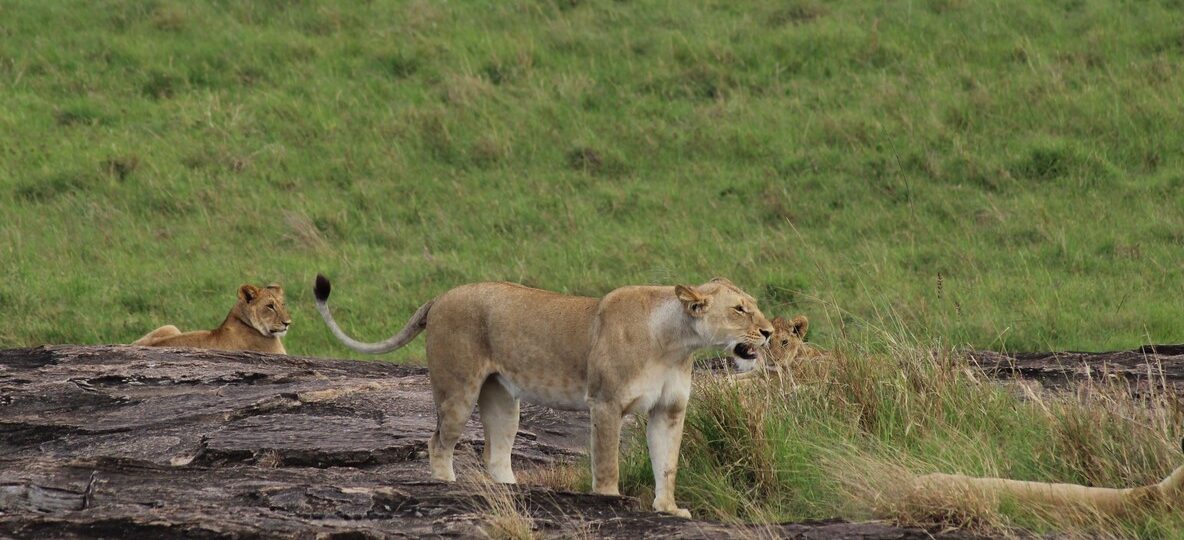
Predator activity: September is when the cats are at their most active and most visible. The lion prides in Olare Motorogi and Ol Kinyei have been hunting for two months in peak conditions. Leopard sightings in the Mara are year-round but September combines good visibility (shorter grass) with high game density. Cheetah coalitions are often found on the open plains east of the river. 🐆
Resident wildlife beyond the migration: Elephant herds, buffalo, giraffe, zebra, hyena, jackal, and the full suite of smaller mammals are all present in September. The migration is the headline, but the Mara’s resident wildlife population means the park is outstanding even on days when the herds are elsewhere.
September in the Mara: Conservancy vs Main Reserve
This is the most practically important decision for a September Masai Mara trip.
| Factor | Main Reserve (Narok County) | Private Conservancy |
|---|---|---|
| Park fee | USD 200/day from Jul 2026 | Included in camp fee |
| Vehicle density at sightings | High (no vehicle limits) | Low (8-24 vehicle max, many 4-6) |
| Night game drives | Not permitted | Permitted |
| Walking safaris | Not permitted | Permitted at most |
| Proximity to crossings | Within park boundary | Varies (Mara North is closest) |
| Camp exclusivity | Shared use | High |
| Season pricing | Peaks August-September | Same |
Recommendation for September: A split stay works well if time allows. Three nights in a conservancy (Olare Motorogi, Mara Naboisho, or Mara North) plus two nights near the river (either main reserve camp or Mara Triangle camp) gives you both exceptional big cat sightings and good crossing access.
If you can only choose one, the conservancies offer the better overall experience for most travelers — but position your camp choice based on your priorities. Trunktrails Safaris knows which specific camps have had the most reliable crossing viewpoints in recent seasons.
Crowds in September: What to Realistically Expect
September is peak season. Visitor numbers in the Masai Mara’s main reserve are at their annual high. At known crossing points (Serena crossing, Sandy crossing, Main crossing), vehicle congregations can exceed 50-80 vehicles at major events.
This is the experience you see in the crowded safari videos online, and it is a real concern for quality-conscious travelers. The mitigation strategies:
- Stay in a private conservancy. Vehicle limits (typically 6-8 per sighting in the premium conservancies) make a profound difference to the experience.
- Arrive early. The 6 AM game drive start puts you at crossing points before day visitors from Nairobi arrive.
- Trust your guide’s patience. Good guides do not go to the most crowded crossing point at the busiest hour. They read herd movement and anticipate less-crowded crossing windows.
- Accept that a crossing sighting involves vehicles. Even the most private conservancy experience during migration season involves some vehicle presence at the river. The question is whether it is 8 vehicles or 80.
Where to Stay in September: Camp Recommendations
For crossing access:
- Mara River Tented Camp (main reserve, west bank) — closest camp to the main crossings
- Governors’ Camp (main reserve, Mara River) — well-positioned, established reputation
- Rekero Camp (main reserve, Talek River confluence) — excellent proximity, good guides
For wildlife quality and exclusivity:
- Kicheche Bush Camp (Olare Motorogi) — Trunktrails Safaris’ most consistent recommendation for September
- Porini Mara Camp (Ol Kinyei) — highest lion density conservancy, night drives included
- Mara Naboisho Tented Camp (Naboisho) — strict 24-guest limit, superb leopard sightings
For the Mara Triangle:
- Mara Serena Safari Lodge — large property, well-positioned on triangle topography
- Angama Mara — cliff-top luxury, dramatic views over the Triangle
Booking September Masai Mara: What You Need to Know
How far ahead: Book 6-12 months ahead. October of the previous year is not too early for premium camps in September. The best conservancy camps — particularly for private tents — are gone well before that.
Group dynamics: If travelling as a couple or with one other couple, conservancy camps that allocate a dedicated vehicle to your group are ideal. Four people in a private vehicle with a guide who knows your preferences produces an infinitely better experience than sharing with strangers.
Duration: Three nights is the minimum meaningful stay. Five nights is better. If the crossings are slow when you arrive, you want enough days to catch them when they happen.
Trunktrails Safaris September note: We monitor camp availability and crossing conditions on a near-daily basis during peak season. When you book through us, we position your camp within the Mara ecosystem based on where the herds currently are — not based on which camp has the best marketing.
The Trunktrails Advantage: Knowing the Mara in September
The Masai Mara in September is extraordinary. It is also the easiest time to have an ordinary experience if your camp is wrong, your vehicle is shared, or your guide is covering multiple groups simultaneously.
Trunktrails Safaris has been running tours and safaris in the Mara ecosystem across all seasons for years. In September we place clients in camps whose guides we know by name, whose vehicle-to-guest ratios we have verified, and whose relationship with the herds has been built over years of observation. This is not a booking service. It is operational knowledge.
We are Nairobi-based,, and Kenyan-owned. ✨
Book Your September Masai Mara Safari
September fills fast. If your dates are set, start now.
Contact Trunktrails Safaris:
Further reading
More safari planning resources
- Best time to visit Kenya month-by-month map from Valley Safaris
- Mara River crossing guide on Touring Insights
- Great Migration safari collection on FindMySafari
- Wildebeest migration route map from Valley Safaris
- WhatsApp: +254 113 208888
- Email: info@trunktrailssafaris.com
- Website: trunktrailssafaris.com
- | Nairobi-Based | Kenyan-Owned