Masai Mara Lion Cubs: Where to Watch New Prides Raise Their Young
Nothing stops a game drive like a lion cub. One moment you are scanning the golden grass for movement; the next, a pair of amber eyes blinks back at you from beneath an acacia. The Masai Mara lion cubs you will find in the Greater Mara ecosystem are among the most studied and most reliably visible in Africa, and the private conservancies around the national reserve are where the real encounters happen: small vehicle numbers, night drives, and guides who know individual prides by name. 🦁
At Trunktrails Safaris, our guides have spent years taking wildlife enthusiasts to the precise spots where lion families choose to den, nurse, and teach their cubs to stalk. This guide breaks down the best locations, the right seasons, and what you need to know before booking a dedicated lion safari in Kenya.
Why Are the Masai Mara Lion Cubs So Different from Any Other Destination?
The Greater Mara ecosystem supports an estimated 850 to 900 lions, a density of around 17 animals per 100 km², which is one of the highest concentrations remaining anywhere in Africa. Lions here raise cubs communally. A single pride ranges from 5 to 40 individuals, with multiple lionesses often synchronising births so cubs nurse and grow up together.
Cubs arrive weighing less than two kilograms, coated in spotted fur that fades by age two. For the first six to eight weeks, mothers keep them hidden in dense thickets and rocky outcrops. By month three, they begin shadowing hunts. By 18 months, young males are testing their manes and sparring with siblings. Watching that full arc of development is one of the most complete wildlife experiences Kenya tours and safaris can offer, and the Mara is the single best place on Earth to see it in full.
The Marsh Pride, made famous by the BBC’s Big Cat Diary, has roamed the Bila Shaka Lugga drainage for more than three decades. The Paradise Pride patrols the open plains near Talek River. Both prides regularly raise cubs inside the national reserve. In the private conservancies to the north, east, and west, sightings are consistently more intimate because vehicle numbers are capped and off-road driving is permitted.
For a deeper look at resident lion families across the ecosystem, see our guide to lion prides in the Masai Mara.
Which Conservancies Give You the Best Lion Cub Sightings?
The private conservancies bordering Masai Mara National Reserve each offer different terrain, vehicle limits, and price points. Here is a direct comparison of the top zones for pride-watching:
| Location | Size | Vehicle Limit at Sighting | Night Drives | Indicative Camp Rate (per person/night) | Best For |
|---|---|---|---|---|---|
| Mara North Conservancy | 312 km² | 3 to 4 | Yes | From $420 | Dense bush terrain, night drives |
| Mara Naboisho Conservancy | 200 km² | 3 | Yes | From $390 | Photography, lowest visitor numbers |
| Olare Motorogi Conservancy | 133 km² | 2 to 3 | Yes | From $480 | Most intimate encounters |
| Mara Triangle | 510 km² | Managed, higher | No | From $320 | River zones plus lion territory |
| Main Reserve (MMNR) | 1,510 km² | Unlimited (peak season busy) | No | From $200 | Broad all-round access |
All rates are indicative. Confirm current pricing with Trunktrails Safaris before booking.
Conservancy fees of $90 to $150 per person per night are charged in addition to camp rates. That money goes directly to the Maasai landowners who have chosen to keep their land as wildlife habitat rather than convert it to agriculture. The lion population grows here precisely because of that model.
Nairobi to the Mara by road covers approximately 300 km and takes five to six hours via the B3 highway through Narok. By air from Wilson Airport the flight is 45 minutes on Safarilink or AirKenya. Airstrips serving the conservancies include Ol Kiombo (main reserve), Olare Orok (Olare Motorogi), and Kichwa Tembo (Mara North).
How Does Mara North Conservancy Compare for Watching Pride Life?
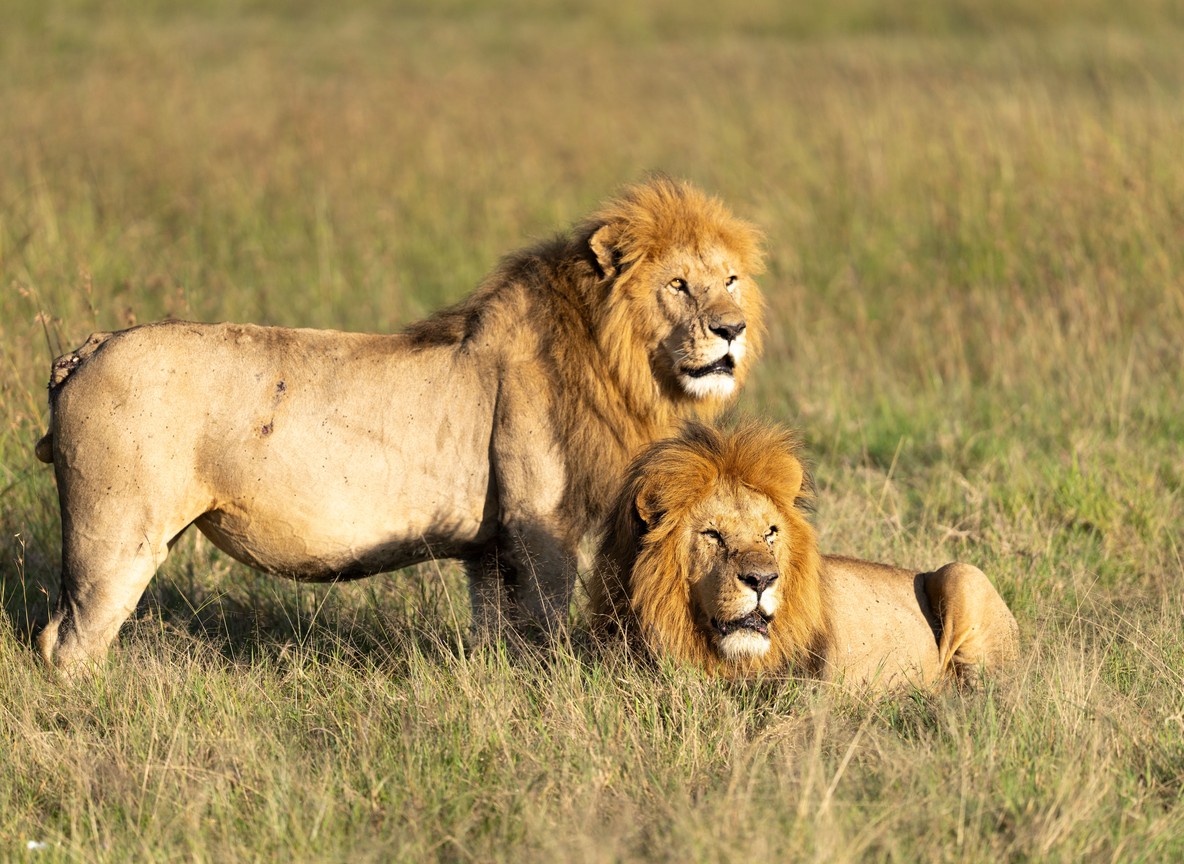
Mara North Conservancy covers 312 km² of riverine forest, open grassland, and rocky terrain along the northern bank of the Mara River. That mix of dense acacia and open plains is perfect denning habitat: thick enough for a lioness to hide newborns from hyenas and leopards, open enough for you to follow the pride once cubs emerge.
Vehicle caps mean three or four vehicles maximum at any sighting. You can sit quietly for 30 to 60 minutes watching cubs wrestle, nurse, or practice their first stalks without a procession of minibuses arriving. Night drives add an entirely different dimension. Sub-adults make their first independent hunts after dark, and following that in real time, with the eyes of young lions catching your spotlight and the grass trembling before a sprint, is a highlight of any big-cat safari.
Karen Blixen Camp, Kicheche Mara Camp, Kandili Camp, and Richards River Camp all operate in this conservancy. Their guides track resident prides by radio-collar data and years of personal knowledge. The drive from Kichwa Tembo airstrip to most camps takes under 20 minutes, so your game drive hours are not eaten by transit.
What Makes Naboisho Conservancy So Good for Lion Cub Photography?
Mara Naboisho Conservancy stretches across 200 km² and is managed by a coalition of 14 camps and lodges under a shared conservancy fee system. The result is the lowest visitor density in the Greater Mara. On a clear morning you may be the only vehicle watching a lioness move her cubs from one kopje to the next. 📸
The open, rolling plains carry excellent early-morning light: warm, low, and perfectly angled for wildlife photography. Lionesses favour the rocky outcrops and termite mounds as sentinel posts, and those elevated positions frame naturally against the sky. Kicheche Valley Camp, Eagle View Camp, and Basecamp Wilderness Naboisho all have guides experienced in tracking individual prides by spoor and through long-running research partnerships.
One resident family, referred to by local guides as the Enkiama Pride, has raised successive litters near the Enkiama Hill thickets. Your guide will know their current denning location from the morning before you arrive.
For a full breakdown of accommodation options across the Greater Mara, see our list of the best Masai Mara safari lodges.
When Is the Best Time to See Lion Cubs in the Masai Mara?
Lions breed year-round, so there is no single cub season. Two windows consistently give the highest probability of finding active cubs:
July to October (Long Dry Season)
Vegetation is short, which makes cubs visible from a distance. The Great Migration is in full swing, prey is abundant, and well-fed lionesses produce milk reliably. Cubs born in late April or May are three to six months old by July, meaning they are mobile enough to follow the pride but still small and playful enough to be magnetic. This is the peak wildlife viewing window for all Kenya tours and safaris.
January to March (Short Dry Season)
After the short rains, the landscape opens again. Pride territories contract around permanent water, so families gather in predictable locations. Visitor numbers are lower than the July to October peak, and conservancy camps are often 30 to 40% cheaper. Cubs born in October or November will be in that three to five month sweet spot.
Avoid April to June and November to December if your priority is cub sightings. Long grass and heavy vegetation make finding denning females much harder. Read the full seasonal breakdown in our best time to visit Masai Mara guide.
How Many Lions Live in the Greater Mara Ecosystem?
The Greater Mara Ecosystem covers approximately 6,000 km² when the national reserve and all private conservancies are included. The Mara Predator Conservation Programme has monitored the lion population continuously since 2012. Current estimates put the count at 850 to 900 individuals.
For scale: the Serengeti-Mara ecosystem as a whole holds around 3,000 lions. The Kenyan side of the border accounts for nearly a third of that total, concentrated in a fraction of the overall area. That density is the core reason wildlife enthusiasts and wildlife photographers choose Kenya lion tours and safaris over any other destination on the continent.
Individual pride territories range from 20 km² to 150 km² depending on prey density and competition from neighbouring prides. Cubs born on the boundary between two territories sometimes switch allegiances as they mature, which is why longer stays of five or more nights reveal far more about pride social structure than a quick two-night visit ever can.
What Should You Know Before Photographing Lion Cubs Ethically?
The qualities that make Masai Mara lion cubs such compelling photographic subjects, small size, playful behaviour, and natural curiosity about vehicles, also make them vulnerable to disturbance. These principles protect the cubs and protect your experience:
- Keep a 10-metre minimum distance. Never ask your driver to edge forward if the mother’s head comes up.
- Switch the engine off. An idling engine is a constant low-level stressor for nursing females. Silence settles the pride.
- Limit your time at the sighting. After 20 to 30 minutes at an active den, consider giving way to other vehicles waiting.
- No flash photography, ever. Direct flash harms cub vision and disrupts the pride’s natural twilight behaviour.
- Follow your guide. If the guide says back off, back off. Stressed mothers move den sites within hours, pulling cubs out of sight for days.
Trunktrails Safaris guides operate under strict ethical codes aligned with Kenya Wildlife Service visitor regulations. Our team will decline any approach that crosses those boundaries, and they will explain exactly why so you understand what you are protecting.
What Is the Trunktrails Advantage for a Masai Mara Lion Safari?
Trunktrails Safaris is a native Kenyan-owned operator built by people who grew up reading the Mara. That matters when your goal is watching lion cubs. We know which prides are denning now, which conservancies are reporting active litters this season, and which guides have been tracking the same families for years.
Here is what sets Trunktrails Safaris apart from booking platforms and overseas agencies:
- Conservancy access: We book inside Mara North, Naboisho, and Olare Motorogi, giving you night drives, off-road access, and private sightings that the main reserve cannot offer.
- Tailor-made itineraries: Every trip is designed around your photography goals, budget, and travel dates. No fixed group departures. No cookie-cutter packages.
- Direct operator support: You reach us on WhatsApp 24/7. When the pride moves, we update your guide in real time.
- Conservation contribution: 5% of every booking goes to Mara-based wildlife conservation programmes, including lion monitoring work in the conservancies.
- Honest local expertise: We will tell you when conditions are not ideal and advise you to wait. A remarkable sighting matters more to us than a quick booking. ✨
Our team can arrange fly-in packages from Wilson Airport, multi-night stays across two or three conservancies for maximum pride coverage, and in-camp briefings with researchers currently working in the ecosystem.
Ready to Watch Masai Mara Lion Cubs with Trunktrails Safaris?
You know which conservancies hold the best prides. You know when to go and what to bring. The only decision left is when to book, and the best days fill up months ahead in the July to October window.
Tell us your travel dates and your photography goals. We will put together a lion-focused itinerary that positions you exactly where the cubs are, with the guides who know them by sight.
Further reading
More safari planning resources
- Interactive Maasai Mara map from Valley Safaris
- Big Five safari parks guide on Touring Insights
- Big Five safari collection on FindMySafari
- Maasai Mara National Reserve guide on Touring Insights
📞 WhatsApp: +254 113 208888 📧 Email: info@trunktrailssafaris.com 🌐 Website: https://trunktrailssafaris.com
Your pride is out there right now, raising the next generation on the Mara plains. Let Trunktrails Safaris take you to them.