
Sea Turtles of Watamu Kenya: When to See Them and How to Help Protect the Coast
Every morning along Watamu’s white sand beaches, rangers scan the tide line for something extraordinary. A set of wide flipper tracks pressed into the sand overnight signals that a green sea turtle has come ashore, chosen a spot, and laid her eggs. These are sea turtles watamu kenya moments that stop every witness cold. At Trunktrails Safaris, we think no Kenyan coast visit is complete without understanding these ancient mariners and the people working hard to protect them. This guide covers what species you will see, the best times to visit, where to go, and how your presence can directly support conservation.
Why Watamu Is Kenya’s Sea Turtle Capital
Watamu sits on Kenya’s north coast, about 105 km north of Mombasa and 20 km south of Malindi. The town sits at the edge of Watamu Marine National Park, established in 1968 and covering 10 km2 of protected reef. Adjacent to it is the wider Watamu Marine National Reserve at 32 km2. Together they form one of East Africa’s most biodiverse marine zones.
Sea turtles gather here for three reasons: the warm Indian Ocean current keeps water temperatures between 24 and 29 degrees Celsius year-round, the seagrass beds in Turtle Bay provide rich feeding grounds, and the undisturbed sandy beaches above the tide line offer safe nesting habitat. No other stretch of the Kenyan coast combines all three in the same place. That combination is why Local Ocean Trust (LOT), Kenya’s leading marine turtle research group, has based its headquarters here since 1997.
The Three Sea Turtle Species You Can See
Watamu hosts three species with regularity. Knowing the difference makes spotting more rewarding.
| Species | Scientific Name | Shell Length | Main Season in Watamu | Diet |
|---|---|---|---|---|
| Green Turtle | Chelonia mydas | 90-120 cm | Year-round; nests Oct-Mar | Seagrass, algae |
| Hawksbill Turtle | Eretmochelys imbricata | 60-90 cm | Year-round; nests Nov-Feb | Sponges, soft corals |
| Loggerhead Turtle | Caretta caretta | 85-110 cm | Occasional visitor; rarely nests here | Crabs, molluscs |
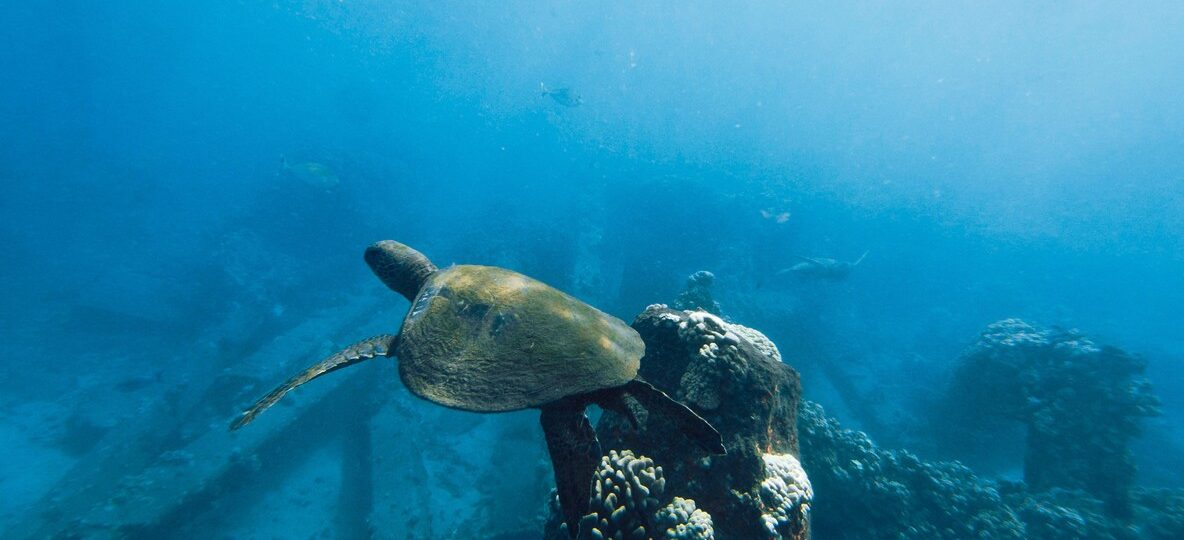
Green turtles are the most common. They gather in large numbers around Turtle Bay, the shallow horseshoe-shaped lagoon at the heart of the marine park. Hawksbill turtles are critically endangered globally but are seen regularly on the reef patches between Watamu and Blue Lagoon. Loggerheads pass through but rarely nest on this coastline.
Watamu Sea Turtle Nesting Season: When to Visit
Understanding the nesting calendar helps you plan around specific wildlife moments.
Nesting season: October through March. Green and hawksbill females come ashore at night, dig a nest chamber about 60 cm deep, and lay between 80 and 150 eggs per clutch. A single female may nest three to five times per season at roughly two-week intervals.
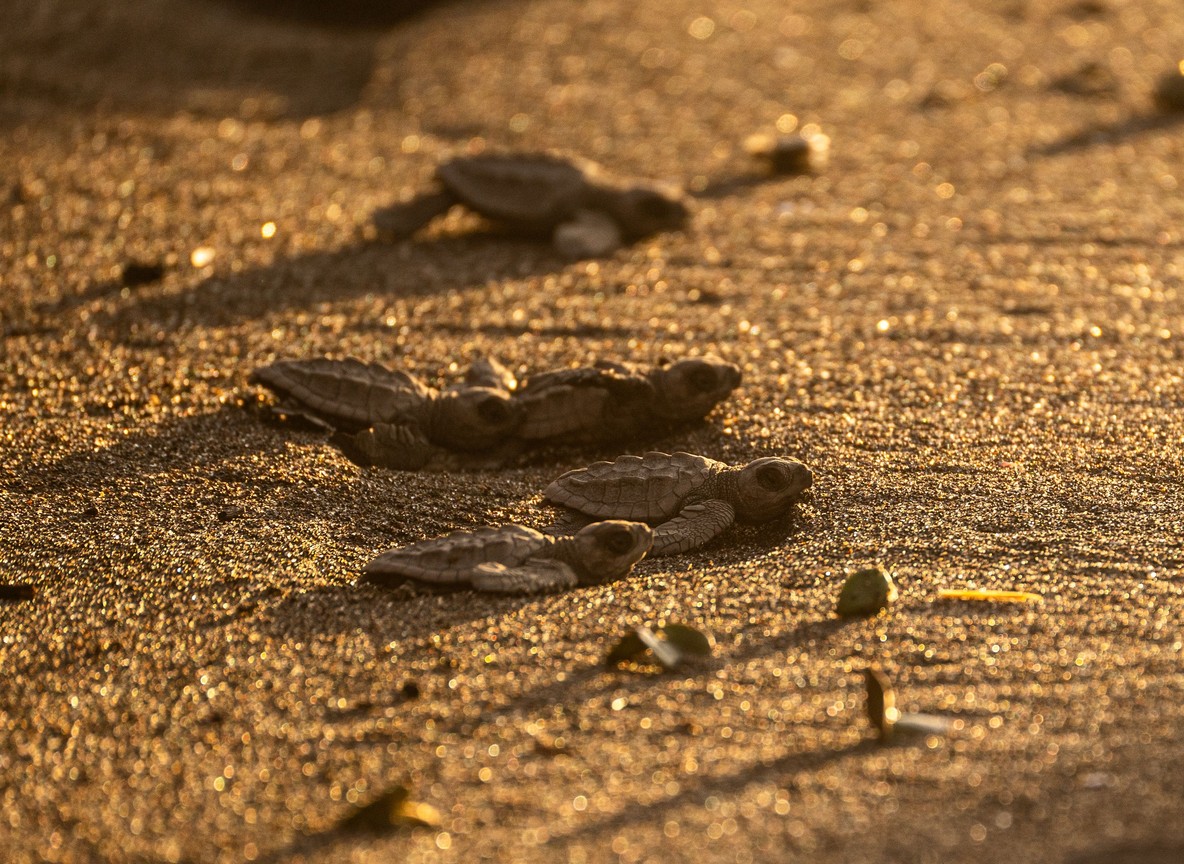
Hatching season: January through May. Incubation takes 50 to 70 days depending on sand temperature. When a clutch hatches, dozens of hatchlings emerge and race toward the water, guided by the moonlight reflected on the ocean’s surface. Watching a hatchling release with Local Ocean Trust is one of the most moving wildlife events on the Kenyan coast.
Non-nesting months (April to September): Turtles are still present in the water throughout the year. Snorkeling and glass-bottom boat trips from Watamu town give reliable encounters with feeding green turtles in the seagrass beds at Turtle Bay. April and May also bring the Southeast monsoon, which makes the sea rougher and beach conditions less ideal. The dry months of June to September are excellent for snorkeling and daytime turtle watching in the water, though beach nesting activity is low.
The short answer for the best time to visit: November to February gives you nesting patrols, hatchling releases, and calm seas for snorkeling, all in one trip.
Where to Go in Watamu to See Sea Turtles
Watamu is a small town and the key sites are close together, which makes a focused two-to-three day visit very practical.
Turtle Bay: The main snorkeling area inside Watamu Marine National Park. Glass-bottom boats depart from Watamu beach daily from 7 AM. Park entry costs USD 15 per adult for non-residents (USD 8 for children, KES 215 for Kenyan citizens). Green turtles feeding on seagrass are almost guaranteed on calm days.
Turtle Bay Beach Club and Hemingways Watamu: Both hotels sit directly on Turtle Bay and arrange guided morning snorkel trips with certified marine guides. Hemingways is a 5-star property with direct beach access; Turtle Bay Beach Club caters to divers and snorkelers with resident instructors.
Local Ocean Trust Turtle Monitoring Base: Located in Watamu village, LOT runs a hatchery and tagging program. Visitors can join a nightly beach patrol from October to March (book 24 hours in advance, small donation requested). You walk with rangers, observe a nesting female if present, and if a nest is hatching you help guide hatchlings to the water.
Mida Creek: Three km south of Watamu town, this mangrove creek is not a turtle site but it is an outstanding birding and kayaking destination. It makes a strong half-day add-on if you are spending two nights in Watamu. The mangroves also serve as nursery habitat for juvenile fish, which in turn support the reef food chain that sustains turtle feeding grounds.
Driving distances and times to Watamu:
| Origin | Distance | Approx Drive Time | Notes |
|---|---|---|---|
| Mombasa | 105 km | 1.5 hours | Via B8 Coastal Highway |
| Malindi | 20 km | 25 minutes | Closest airport (Malindi Airport, MYD) |
| Nairobi | 470 km | 6 hours | Or fly to Malindi (1 hr flight, from ~USD 80) |
| Diani Beach | 130 km | 2 hours | Via Likoni Ferry + B8 |
Sea Turtle Conservation at Watamu: How Your Visit Helps
Kenya’s sea turtle populations face real pressure. Ghost fishing nets entangle turtles offshore. Plastic pollution clogs their digestive systems. Beachfront lighting disorients hatchlings. Climate change shifts sand temperatures, which affects hatchling sex ratios. Against those forces, Watamu hosts some of East Africa’s most effective grassroots conservation.
Local Ocean Trust has tagged over 2,500 individual turtles since 1997, built a database that tracks migration routes across the Indian Ocean, and trained more than 40 local fishers as community rangers. Their data shows green turtle nesting numbers at Watamu have risen by over 30 percent in the last decade, a direct result of nest protection and community buy-in.
You can support this work in practical ways:
- Join a nesting patrol. The small donation covers ranger salaries.
- Remove your own marine debris. LOT also runs monthly beach cleanups open to visitors.
- Choose accommodation that follows the turtle-friendly lighting guidelines. Amber-spectrum lighting near nesting beaches does not disorient hatchlings.
- Never touch or chase turtles in the water. Keep a minimum two-metre distance, let the turtle set the pace of any encounter.
- Report strandings or entanglements. Local Ocean Trust emergency line: +254 722 618 074.
Your choice to visit through responsible tours and safaris operators rather than unguided tours is itself a conservation act. Money from well-managed marine tourism funds local ranger patrols that deter poaching year-round, not just on the days visitors are present.
What a Trunktrails Safaris Watamu Itinerary Looks Like
Trunktrails Safaris designs coast itineraries that pair turtle conservation experiences with the rest of Watamu’s wildlife draw. A typical three-day package from Mombasa covers:
Day 1: Drive or fly to Malindi, transfer to Watamu. Afternoon glass-bottom boat trip in Turtle Bay (turtle sightings almost certain). Check in to selected lodge.
Day 2: Early snorkeling session in the marine park before 8 AM (calmest water, most turtle activity). Afternoon visit to Local Ocean Trust base. Evening beach patrol if nesting season (Oct-Mar) or sunset kayak on Mida Creek in the off-season.
Day 3: Morning birding in Arabuko-Sokoke Forest, one of East Africa’s last intact coastal forests (355 bird species, six globally threatened mammals). Return transfer to Mombasa or Malindi Airport.
Indicative package pricing starts from USD 350 per person for a three-day coast add-on when booked with a main safari. Watamu overnight rates range from budget guesthouses at USD 30-60 per night to Hemingways Watamu at USD 400-700 per night for a superior ocean room.
The Trunktrails Advantage 🌍
Trunktrails Safaris is a native Kenyan-owned operator with deep roots in conservation-led travel. When you book tours and safaris with us, you are not joining a beach package built by a distant travel aggregator. You are working with guides who know which side of Turtle Bay the turtles feed on in July and which lodges actually follow the marine park’s lighting guidelines.
We vet every accommodation and activity partner we recommend for environmental standards. We build in the Local Ocean Trust visit because we believe tours and safaris should add value to the communities and ecosystems that make them possible. Our Watamu itineraries support the LOT ranger salary fund through a direct per-booking contribution, separate from your overall package price. Trunktrails Safaris also offers combined coast-and-savannah itineraries that let you pair a Masai Mara migration safari with a Watamu turtle experience in one trip, giving you two of Kenya’s defining wildlife events without doubling your travel footprint.
Our team speaks Swahili and English and can coordinate with Malindi and Mombasa ground handlers on your behalf. Every tours and safaris booking comes with a 24-hour WhatsApp line, direct to a human who knows your itinerary.
Plan Your Watamu Sea Turtle Trip Today 🐢
Turtle nesting season opens in October and nesting patrols fill up quickly at Local Ocean Trust. The best snorkeling for daytime turtle encounters runs June through September. Whatever month you are reading this, the right time to start planning is now.
Contact Trunktrails Safaris:
Further reading
More safari planning resources
- Best time to visit Kenya month-by-month map from Valley Safaris
- Best time to visit Kenya on Touring Insights
- Diani Beach guide on FindMySafari
- Kenya tour packages from Valley Safaris
WhatsApp: +254 113 208888 Email: info@trunktrailssafaris.com Website: trunktrailssafaris.com
Share your preferred travel window with our team and we will design a Watamu itinerary that puts you on the beach at the right tide, at the right season, with the right guides. These turtles have been returning to Watamu for over 100 million years. Let us help you be there when they do.
Image credits: Photo by Jake Houglum on Pexels; Photo by Diego Girón on Pexels; Photo by Michael Li on Pexels; Photo by Domenico Bertazzo on Pexels; Photo by Sean Thomas on Pexels