
Black Leopard in Kenya: Where to See Laikipia’s Rare Melanistic Cat
In 2019, camera traps set by Will Burrard-Lucas and researchers from the San Diego Zoo confirmed what Laikipia‘s conservancy managers had known for years: a black leopard was living in the hills of central Kenya. The photographs went global. National Geographic ran them. For the first time in nearly a century, a wild melanistic leopard had been documented in Africa with modern photographic proof.
That leopard did not disappear. And Laikipia is still the only place in Africa where a sighting, if you are patient and positioned correctly, is within reach.
Trunktrails Safaris runs tours and safaris into the Laikipia Plateau. This is what we know about Kenya’s black leopard and what it takes to see one.
What Is a Black Leopard?
A black leopard is not a different species. It is a common leopard (Panthera pardus) expressing a genetic variant called melanism, where excess melanin causes the coat to appear nearly black. In direct sunlight, the rosette pattern is still visible. In low light, the animal looks entirely black.
Melanism occurs in roughly 11% of leopards globally. In Africa, melanistic leopards are extremely rare. The peer-reviewed paper published in 2019 in African Journal of Ecology confirmed this individual as the first black leopard photographed in Africa in 100 years of scientific record.
The individual documented in Laikipia is a female. Subsequent sightings suggest she has cubs, which raises the possibility that the gene is being passed into a local population.
Where in Kenya Were Black Leopards Confirmed?
The confirmed sightings happened in and around Lewa Wildlife Conservancy and Ol Pejeta Conservancy in Laikipia County, central Kenya.
Laikipia is a patchwork of private conservancies and ranches sitting at 1,700-2,500m altitude on the northern slopes of Mount Kenya. The terrain is open bush, rocky escarpments, riverine woodland, and highland forest. This varied habitat supports a remarkable density of leopards year-round, and the cooler temperatures favour melanistic individuals in some theories of thermoregulation.
Conservancies in the area where the black leopard’s territory overlaps include:
| Conservancy | Size | Key Habitat |
|---|---|---|
| Lewa Wildlife Conservancy | 25,000 acres | Open grassland, riverine bush |
| Ol Pejeta Conservancy | 90,000 acres | Mixed bush, rhino sanctuary |
| Borana Conservancy | 35,000 acres | Highland bush, rocky hills |
| Loisaba Conservancy | 56,000 acres | Open plains, scrub, river valleys |
Camera traps maintained by researchers and conservancy managers continue to document leopard movements across this ecosystem. No conservancy can guarantee a sighting of the black leopard specifically, but the density of normal leopards across Laikipia is among the highest in Africa. Sightings on every night drive are not unusual.
How Rare Is a Black Leopard Sighting?
Genuinely rare. This is not a wildlife encounter you book into a standard itinerary and expect to tick. The documented female has a large territory. She is nocturnal. She uses rocky terrain that gives her cover from vehicles.
What tips the odds in your favour:
Stay in Laikipia, not the Mara. Black leopards are a Laikipia phenomenon. There is no record of melanistic leopards in the Masai Mara ecosystem or southern Kenya.
Spend multiple nights. The minimum stay for a meaningful chance is four nights in a conservancy within her documented range. Six nights significantly increases probability.
Night drives. Leopards are most active from dusk to midnight and before dawn. A conservancy that permits night game drives with spotlights gives you a far better chance than daytime-only operations.
Work with experienced local guides. Guides who know the terrain and the individual animal’s movement patterns are the difference between an educated search and random luck. Trunktrails Safaris works exclusively with guides who have spent years in Laikipia’s conservancy system.
Camera trap planning. Some conservancy research teams allow accompanying guide-led visits to active camera trap sites as part of the experience. Ask about this when booking.
What a Laikipia Safari Looks Like Beyond the Black Leopard
Even without a melanistic leopard encounter, a Laikipia safari is exceptional. This is the part that surprises first-time visitors who arrive expecting Laikipia to be second-best to the Mara.
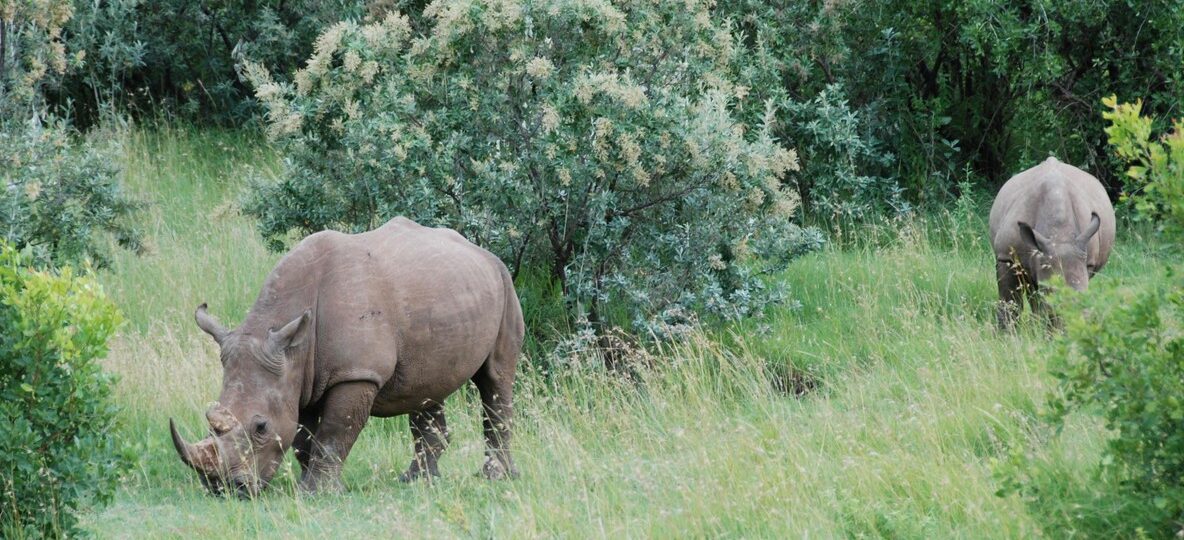
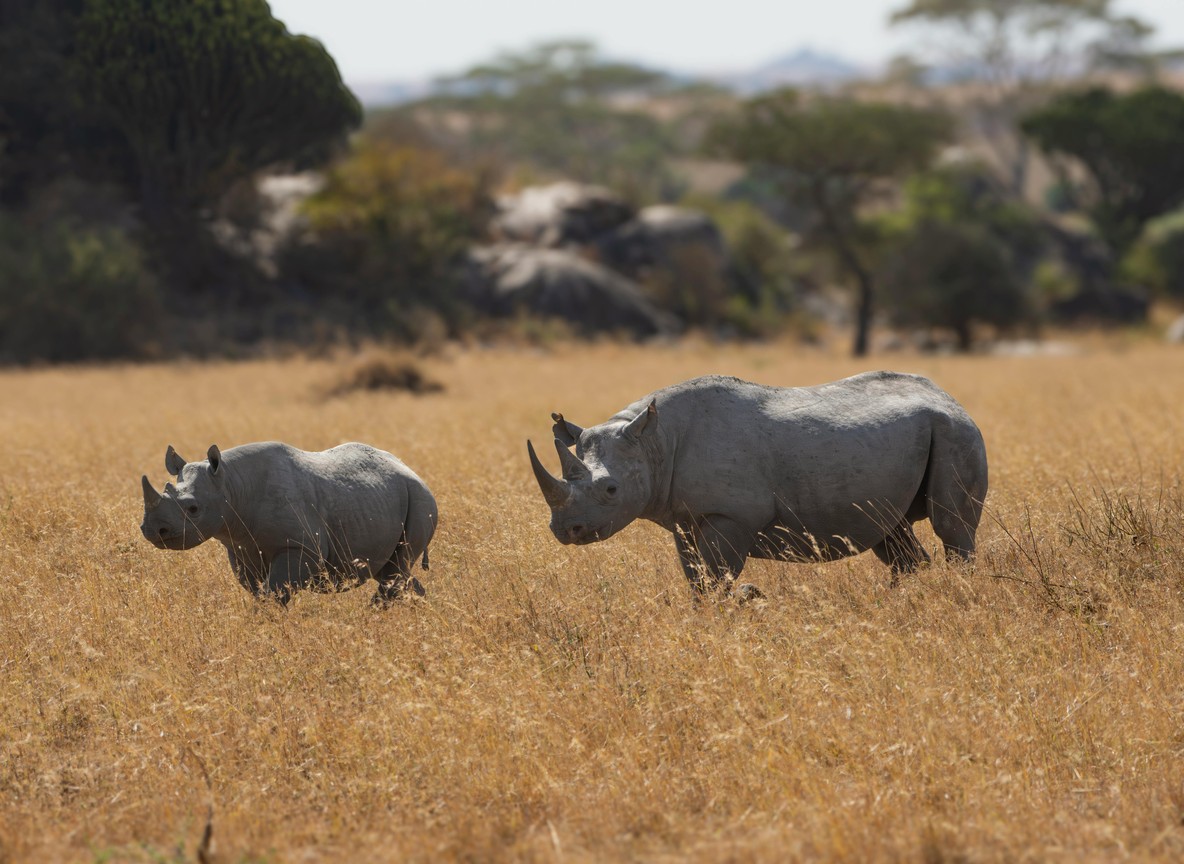
Laikipia holds Kenya’s second-largest black rhino population. At Ol Pejeta alone, you will have close vehicle encounters with both black and white rhinos. The conservancy also holds the world’s last two northern white rhinos, Najin and Fatu.
The predator density is high across the plateau. Lions, cheetahs, wild dogs, hyenas, and standard spotted leopards are all resident. Grevy’s zebra, reticulated giraffe, and elephant herds are visible every day. On the plateau’s northern edge, species mix between Laikipia and Samburu ecosystems, so gerenuk and Beisa oryx appear alongside buffalo and eland.
At altitude, mornings are cool. The light at golden hour hits the rocky escarpments of the Matthews Range in a way that the Mara’s open plains do not produce. Photographers who have worked both regions often prefer Laikipia’s landscape variety for composition.
When to Go for the Best Black Leopard Conditions
The dry seasons concentrate wildlife and improve track conditions:
January to March: Good conditions. Low vegetation. Animals visible. Night temperatures cool but manageable.
June to October: Prime dry season. Dust in late September but visibility is maximum. Night drives productive as leopards are most active in cooler air.
Avoid April and May: Long rains make tracks impassable in parts of Laikipia. Camera trap maintenance drops. Not the ideal window for a leopard-focused trip.
Black Leopard Versus Standard Leopard: What Are You Actually Seeing?
This question comes up from clients who have seen standard spotted leopards at the Masai Mara and want to understand what is different about a melanistic encounter.
The animal is the same species. The melanistic variant means the visible coat pattern is almost entirely black rather than tawny-yellow with dark rosettes. In direct sunlight and with a camera lens with good contrast, you can see the ghost rosettes in the coat. In the shade and in poor light, the animal appears entirely black.
The behaviour is identical. The melanistic female documented at Laikipia hunts, caches kills, and moves territory in exactly the same way as a standard spotted leopard. Her cubs, if they carry the recessive gene, may or may not express the melanistic phenotype.
What makes the sighting different from a standard leopard encounter is the rarity. There is only one confirmed individual in the entire African continent. The photographic record published in 2019 represents 100 years of absence from the scientific documentation. When you see this animal, you are seeing something that your guide – who has worked Kenya for 25 years – may have seen fewer than three times.
The significance is not the visual spectacle. It is the improbability. That is what a serious wildlife observer comes to Laikipia for.
The Science Behind the 2019 Confirmation
The paper published in the African Journal of Ecology (Pilfold et al., 2019) used a series of images taken over several months across multiple camera traps. The research team confirmed the individual identity using rosette pattern analysis in the visible parts of the coat. The animal was cross-referenced with known Laikipia leopard databases.
The publication noted that this was the first confirmed documentation in Africa since a 1909 specimen from Ethiopia. The paper is available in full at the African Journal of Ecology website. It is worth reading before your trip.
The Trunktrails Advantage
Trunktrails Safaris has built Kenya tours and safaris around Laikipia for years. We know which camps in the conservancies permit night drives, which research teams allow camera trap access, and which guides have documented black leopard encounters in recent seasons.
We are not going to promise you a black leopard sighting. No responsible operator does. What we promise is a safari architecture that maximizes your probability: the right conservancy, the right camp, the right guide, the right schedule of morning and night drives. And if you leave without seeing the black one, you will have seen extraordinary wildlife on every single day. That is the Laikipia guarantee.
Planning a Laikipia Itinerary Around the Black Leopard
A Laikipia itinerary built around a black leopard objective typically runs 5-7 nights. The logic: you need enough nights in the right conservancy to give the night drives, morning drives, and walking safaris a realistic number of chances at a sighting.
A practical structure for a black leopard-focused Laikipia circuit with Trunktrails Safaris:
Night 1-2 at Ol Pejeta Conservancy: Black and white rhinos (including the last two northern white rhinos), lions, cheetahs. This orients you to the landscape and the conservancy system before the more intensive black leopard focus begins.
Night 3-6 at Lewa or Borana Conservancy: The area of the confirmed melanistic leopard territory. Four nights provides morning and evening drives on all four days plus two or three night drives depending on conservancy permit. This is your melanistic leopard window.
Night 7 at Loisaba (optional): The Star Beds close the trip with one of Kenya’s most distinctive experiences as a capstone to the Laikipia circuit.
Trunktrails Safaris coordinates all bookings, transfers, and guide assignments across this circuit. The guides at each property are briefed on your priorities before you arrive.
Book a Black Leopard Safari with Trunktrails Safaris
If this is the safari you want to build your trip around, start the conversation now. Trunktrails Safaris will design an itinerary that places you in the best position to encounter Kenya’s most extraordinary cat.
Further reading
More safari planning resources
- Ol Pejeta and Sweetwaters safari package from Valley Safaris
- Big Five safari parks guide on Touring Insights
- Big Five safari collection on FindMySafari
- Kenya tour packages from Valley Safaris
WhatsApp: +254 113 208888 Email: info@trunktrailssafaris.com Website: https://trunktrailssafaris.com
We are and run tours and safaris across all of Kenya’s major conservancies. Our Laikipia tours and safaris are specifically designed around maximum wildlife encounter opportunity, not generic itineraries built for volume. 🐆
Image credits: Photo by Gary M. Cohen on Pexels; Photo by David Paul on Pexels; Photo by Magda Ehlers on Pexels; Photo by Rachel Claire on Pexels; Photo by Charl Durand on Pexels