Where to See Black Rhino in Kenya: Best Parks and Conservancies 🦏
Picking where to see black rhino in Kenya is really a question of matching the right park or conservancy to your route, your budget, and how much time you have. Trunktrails Safaris runs rhino-tracking days into nearly every itinerary we build, and the honest answer is that no single reserve wins for every traveler. A guest flying in for a three-day Nairobi layover needs a completely different plan than a family building a two-week Laikipia and Mara circuit. This guide breaks down the real distances, fees, and sighting odds at each major black rhino site, so you can choose the one that actually fits your trip.
Kenya holds one of the largest black rhino populations left on the planet, recovered from under 300 animals in the 1980s to roughly 1,000 today. Almost every one of those rhinos lives inside a fenced or intensively patrolled sanctuary. That is exactly why choosing the right sanctuary matters more than chasing a lucky sighting on a general game drive.
What Is the Best Park for Seeing Black Rhino in Kenya?
There is no single “best” answer, but Ol Pejeta Conservancy and Lewa Wildlife Conservancy carry the two largest, most reliably monitored black rhino populations in the country. If your priority is proximity to Nairobi and the widest choice of lodges, Ol Pejeta wins. If you want a UNESCO-listed landscape with a strong community conservation story, Lewa is the stronger pick. Lake Nakuru National Park is the best budget-friendly option within easy driving distance of the capital, and Nairobi National Park is unmatched for speed if you only have a few free hours.
Black Rhino Parks and Conservancies: Fast Facts
| Park or Conservancy | Size | Distance From Nairobi | Drive or Flight Time | Entry / Conservation Fee (Indicative, USD) |
|---|---|---|---|---|
| Ol Pejeta Conservancy | 364 km² (90,000 acres) | 200 km via Nanyuki | 3.5-4 hr drive, or 45 min to Nanyuki Airstrip | 90-100 pp/day |
| Lewa Wildlife Conservancy | 250 km² (62,000 acres) | 280 km via Isiolo | 4.5-5 hr drive, or 55 min to Lewa Downs Airstrip | 100-130 pp/day |
| Borana Conservancy | 130 km² (32,000 acres) | 275 km, same route as Lewa | Roughly 5 hr drive, or 55 min flight to Lewa Downs | 90-100 pp/day, indicative |
| Loisaba Conservancy | 230 km² (56,000 acres) | 230 km via Rumuruti | Roughly 5 hr drive, or 55 min to Loisaba Airstrip | 100 pp/night, indicative |
| Segera Conservancy | 202 km² (50,000 acres) | 240 km via Nanyuki | Roughly 5 hr drive, or 50 min to Segera Airstrip | 90-100 pp/day, indicative |
| Lake Nakuru National Park | 188 km², fully fenced | 160 km via the A104 | 3 hr drive | 60 pp, indicative |
| Nairobi National Park | 117 km², fenced on 3 sides | 7 km from the CBD | 20-30 min drive | 52 pp, indicative |
| Aberdare National Park | 766 km² | 150 km via Nyeri | 3 hr drive | 60 pp, indicative |
| Solio Game Reserve (private) | 72 km² | 170 km, near Nyeri | 3 hr drive | 50 pp, indicative |
| Masai Mara (Mara Triangle) | Part of 1,510 km² reserve | 270 km, or fly to Mara airstrips | 5-6 hr drive, or 45 min flight | 80-100 pp/day, indicative |
Fees above are indicative ranges only. They change by season and operator, so always confirm current rates before booking tours and safaris.
Which Conservancy Has the Most Black Rhinos?
Ol Pejeta Conservancy holds more than 140 black rhinos, the single largest population in East Africa, alongside the last two northern white rhinos on Earth, Najin and Fatu. That combination makes it the only place in Kenya where a guest can compare two rhino species and two conservation stories in one morning drive. Ol Pejeta also has the most developed tourism infrastructure of any sanctuary on this list, with multiple lodges and camps inside the fence line, which is why so many of our Laikipia tours and safaris use it as the anchor stop.
Lewa Wildlife Conservancy carries more than 12 percent of Kenya’s entire black rhino population and shares an open fence line with neighboring Borana Conservancy, a merger completed in 2013 that created a joint 93,000-acre rhino landscape. Lewa’s rhino sanctuary model, recognized as part of a UNESCO World Heritage Site, pairs strong sighting odds with a genuine look at community-owned conservation land.
Where Can You See Black Rhino Near Nairobi?
For travelers with limited time, Nairobi National Park is the fastest option in the country. It sits just 7 km from downtown Nairobi and is the only park in the world bordering a capital city, yet it holds a real, breeding black rhino population inside its fence line. Early morning drives before the midday heat produce the best sightings on the open southern plains.
Lake Nakuru National Park is the better choice if you have a full day rather than a few hours. It was one of the first parks in Kenya fully fenced specifically to protect rhino from poaching, and its compact 188 km² size concentrates wildlife so game drives cover less ground between sightings. Nakuru also pairs naturally with a Rift Valley lake circuit, since it sits only 3 hours from Nairobi by road.
Which Laikipia Conservancies Have Black Rhino Besides Ol Pejeta and Lewa?
Three more conservancies now carry black rhino populations as part of the Laikipia rhino sanctuary network, Kenya’s plan to link roughly 840,000 acres of protected land north of Mount Kenya.
- Borana Conservancy shares its fence line with Lewa and offers a quieter, lower-density alternative for guests who still want access to the same rhino population.
- Loisaba Conservancy welcomed black rhinos back in 2018 after a 50-year absence, and reached full Big Five status in 2023.
- Segera Conservancy is the newest addition, receiving 21 eastern black rhinos in a 2025 translocation and now anchoring the corridor plan toward El Karama Ranch.
Guests who want to compare more than one conservancy model on a single trip typically fly between them rather than drive, since Laikipia’s conservancies sit two to three hours apart across rougher tracks.
Can You See Black Rhino in the Masai Mara?
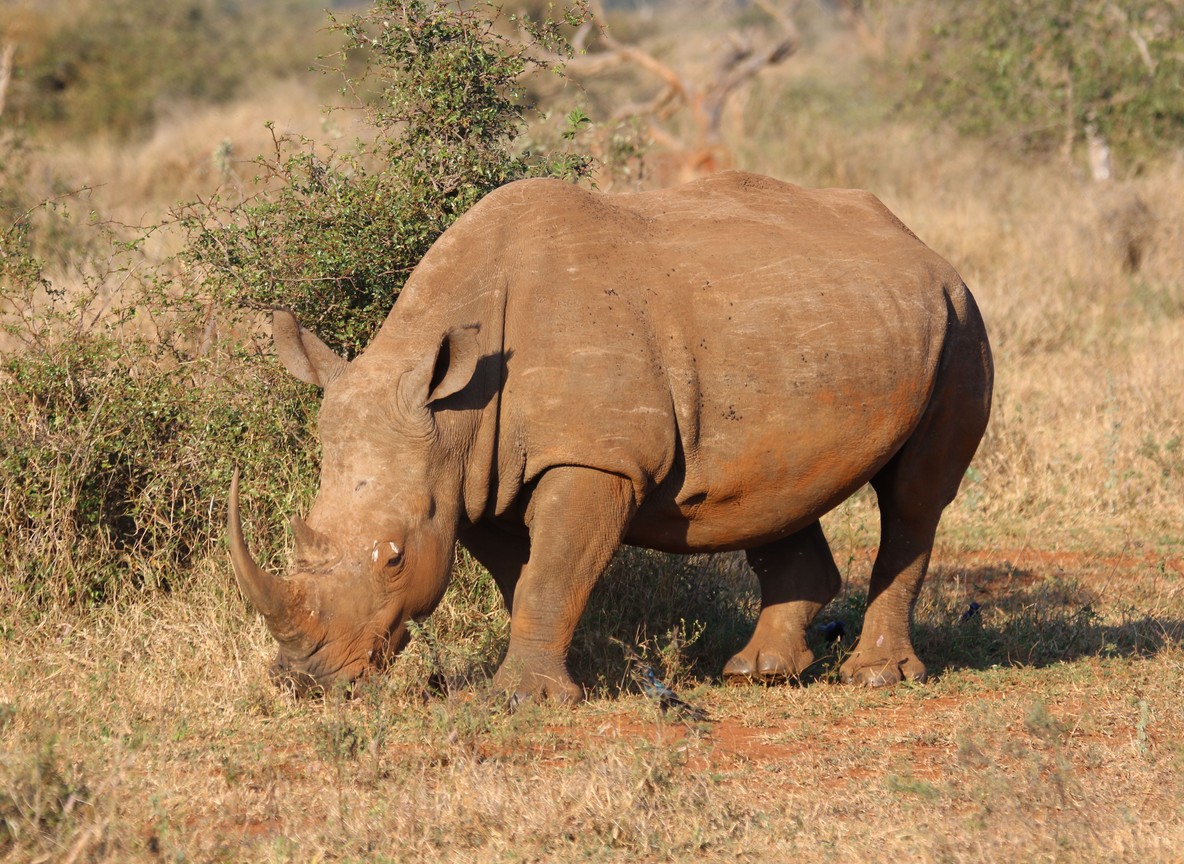
Yes, though sightings are far rarer than at the dedicated sanctuaries above. Black rhinos survive in small numbers inside the Masai Mara National Reserve, concentrated mainly in the Mara Triangle patrolled by the Mara Conservancy. For travelers already building an itinerary around the wildebeest migration, adding a rhino-focused drive with a guide who tracks the resident individuals gives a real, if not guaranteed, shot at completing the traditional Big Five in one reserve.
How Much Does a Black Rhino Safari Cost in Kenya?
Costs break into two parts: the park or conservancy fee, and the lodge rate. Conservation fees at the private Laikipia conservancies run USD 90 to 130 per person per day, while national park entry fees at Nakuru, Nairobi, and Aberdare run USD 50 to 60 per person. Lodge rates vary widely by comfort tier.
| Budget Tier | Indicative Lodge Rate (per person, all-inclusive) | Where It Applies |
|---|---|---|
| Mid-range | USD 250-450 | Lake Nakuru, Aberdare, Solio area lodges |
| Upper mid-range | USD 350-900 | Ol Pejeta camps and lodges |
| Luxury conservancy | USD 500-1,200 | Lewa, Borana, Loisaba, Segera |
Rates above are indicative ranges that shift by season and camp package. Always confirm current pricing before booking.
When Is the Best Time to See Black Rhino in Kenya?
Rhino sightings are strongest during the dry seasons, roughly June through October and again in January and February. Thinner bush cover and concentrated water sources make tracking easier for guides, and rangers who monitor each animal individually typically know a rhino’s last confirmed location before a game drive even starts. Morning drives, generally departing around 6:00 a.m., give the coolest tracking conditions and the best light before rhinos move into shade.
How Do You Plan a Multi-Park Black Rhino Itinerary?
| If You Want. | Best Choice |
|---|---|
| The highest chance of multiple sightings in one drive | Ol Pejeta Conservancy or Solio Game Reserve |
| A fast trip near Nairobi before a flight | Nairobi National Park |
| A UNESCO-listed community conservation story | Lewa Wildlife Conservancy |
| To combine rhino tracking with a Rift Valley lake circuit | Lake Nakuru National Park |
| A quieter, lower-density Laikipia alternative | Borana or Segera Conservancy |
| To see both black rhino and the Great Migration | Masai Mara National Reserve |
Most Trunktrails Safaris guests combine two or three of these stops rather than picking just one. A common routing pairs an Ol Pejeta or Lewa morning with a Laikipia lodge stay, then continues north toward Samburu, or loops back through Lake Nakuru on the way to the Masai Mara.
The Trunktrails Advantage
Trunktrails Safaris is a Kenyan-owned, TRA Licensed tour and safari operator (Licence No. TRA1/22/C01/92750). We do not sell one fixed rhino-tracking route to every guest. We build the itinerary around which sanctuary fits your dates, budget, and the rest of your Kenya trip.
| What We Provide | What It Means for You |
|---|---|
| Local, Kenyan-owned guiding team | Current knowledge of ranger patrol zones and recent sightings |
| Multi-sanctuary itinerary design | Combine Ol Pejeta, Lewa, or Nakuru without wasted driving days |
| Conservation fee transparency | Clear breakdown of what park and conservancy fees fund |
| Small-group game drives | Quieter approaches that improve black rhino sighting odds |
| Direct KWS and conservancy relationships | Faster permits and better-informed rangers on the ground |
| 5% of every booking to conservation | Your trip funds the rangers and fence lines protecting these rhinos |
Every guest who books tours and safaris with Trunktrails Safaris gets a route built around real sighting data, not guesswork. We know which conservancy fits a three-day layover and which one deserves a full week. ✨
Ready to Book Your Black Rhino Safari with Trunktrails Safaris?
Whether you have three days or three weeks, there is a black rhino park or conservancy in Kenya that fits your trip. Tell us your dates and budget, and we will match you to the sanctuary, or combination of sanctuaries, that gives you the best real chance of a sighting.
At Trunktrails Safaris, we design every rhino-tracking safari around your dates, budget, and what matters most to you. No cookie-cutter packages. Just a direct line to a team that knows Kenya from the inside out.
Further reading
More safari planning resources
- Kenya national parks map from SafariPure
- Ol Pejeta and Sweetwaters safari package from Valley Safaris
- Maasai Mara National Reserve guide on Touring Insights
- Big Five safari collection on FindMySafari
📞 WhatsApp: +254 113 208888 📧 Email: info@trunktrailssafaris.com 🌐 Website: https://trunktrailssafaris.com