
The Wildlife You Can See at Masai Mara National Reserve (Beyond the Big Five)
Most first-time visitors plan their trip around one checklist: lion, leopard, elephant, buffalo, rhino. But the wildlife you can see at Masai Mara National Reserve stretches far beyond those five names. This 1,510 square kilometer reserve is one of the richest wildlife-viewing blocks on the continent, and travelers who only chase the Big Five miss most of it. Trunktrails Safaris builds itineraries around the full picture, from cheetah coalitions on open plains to more than 470 recorded bird species. This guide walks through what else you can expect to see.
Beyond the Big Five: Why Masai Mara Offers So Much More
The Big Five term was coined by big-game hunters in the colonial era. It described the five animals most dangerous to track on foot, not the five most interesting to photograph. Masai Mara National Reserve holds all five, but it also holds a far longer list of predators, grazers, and birds that shape the ecosystem just as much. If you plan tours and safaris around the Big Five alone, you will drive past cheetah hunts, hyena clans, and river crossings without slowing down. A better approach treats the Big Five as a starting point, not the destination.
Trunktrails Safaris designs game drives that balance both. Guests get a realistic shot at the marquee sightings, plus time to watch the wider cast of Masai Mara wildlife that most standard itineraries rush past.
Masai Mara Wildlife Facts at a Glance
Here are the numbers that shape what you will actually see and when.
| Fact | Detail |
|---|---|
| Reserve size | Approx. 1,510 km2 |
| Distance from Nairobi | Approx. 270 km by road |
| Drive time from Nairobi | 5-6 hours via Narok town |
| Flight time from Wilson Airport | Approx. 45 minutes to Keekorok, Musiara, or Ol Kiombo airstrips |
| Main gates | Sekenani, Oloolaimutia, Talek, Musiara, Sand River |
| Key river | Mara River, with major crossing points near the Mara Triangle |
| Entry fee (indicative, non-resident) | Roughly USD 80-100 per person per 24 hours |
| Recorded bird species | Over 470 |
| Wildebeest during peak migration | Estimated 1.3-1.5 million |
| Zebra during peak migration | Estimated 200,000-250,000 |
| Best months for migration river crossings | July to October |
Fee and headcount figures are indicative ranges based on published reserve data and county tourism board figures. Confirm exact numbers with Trunktrails Safaris when you book, since they shift with season and policy updates.
Cheetahs, Hyenas, and the Mara’s Other Big Cats
Masai Mara National Reserve holds one of the healthiest cheetah populations left in East Africa. Its open, short-grass plains near Ol Kiombo and the Mara Triangle are some of the best places on earth to watch a hunt unfold in daylight. Unlike leopards, cheetahs hunt by sight in open terrain, which makes them far easier to spot and follow than their more secretive cousins.
Spotted hyenas are just as important to the ecosystem, even though they rarely make anyone’s must-see list before arrival. The Mara supports large hyena clans that hold territory and raise cubs communally. They also compete directly with lions over kills, a rivalry guides can often point out in real time. Serval cats and black-backed jackals round out the smaller predator sightings, particularly at dawn and dusk along the reserve’s drainage lines.
The Wildebeest Migration: More Than Just the Big Cats’ Backdrop
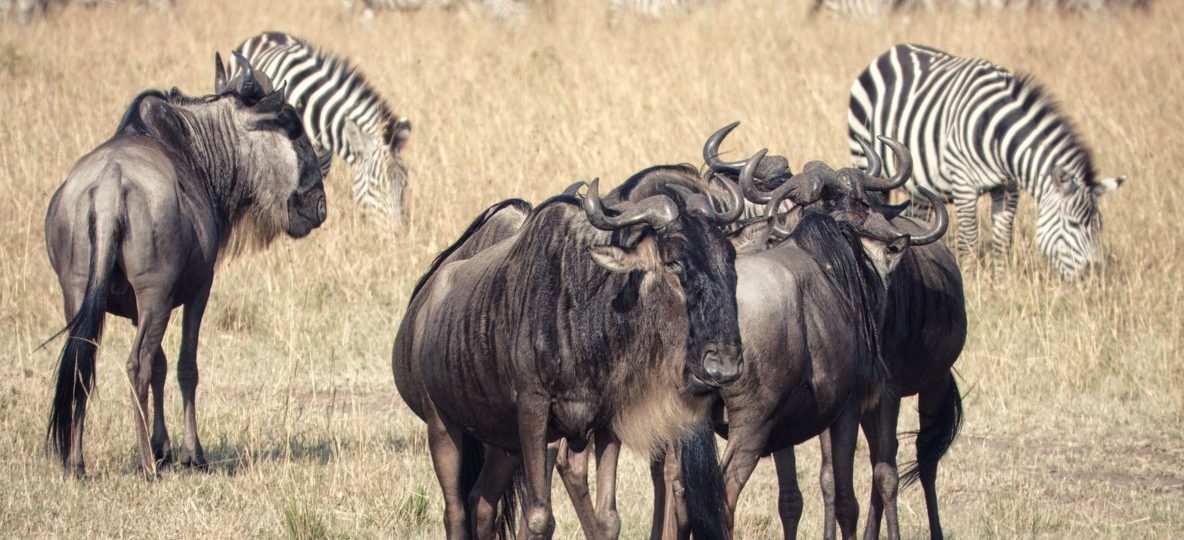
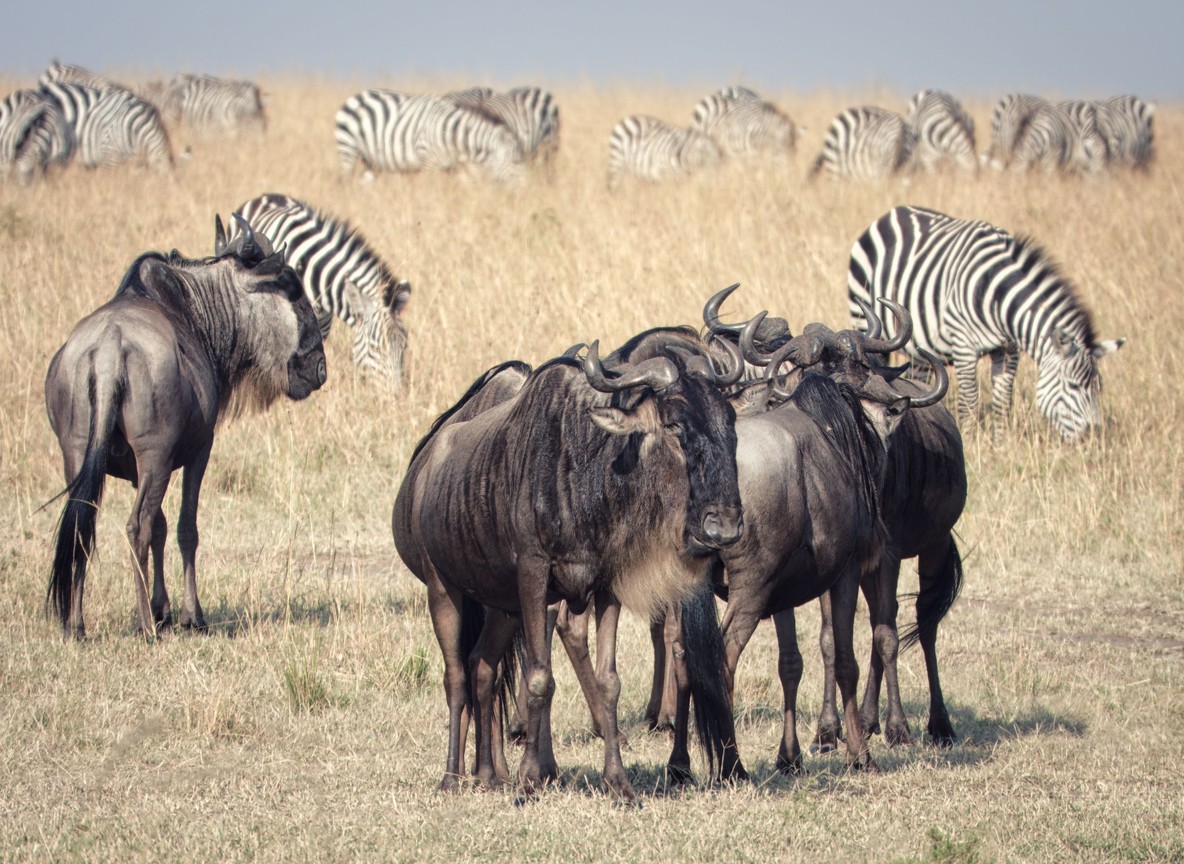
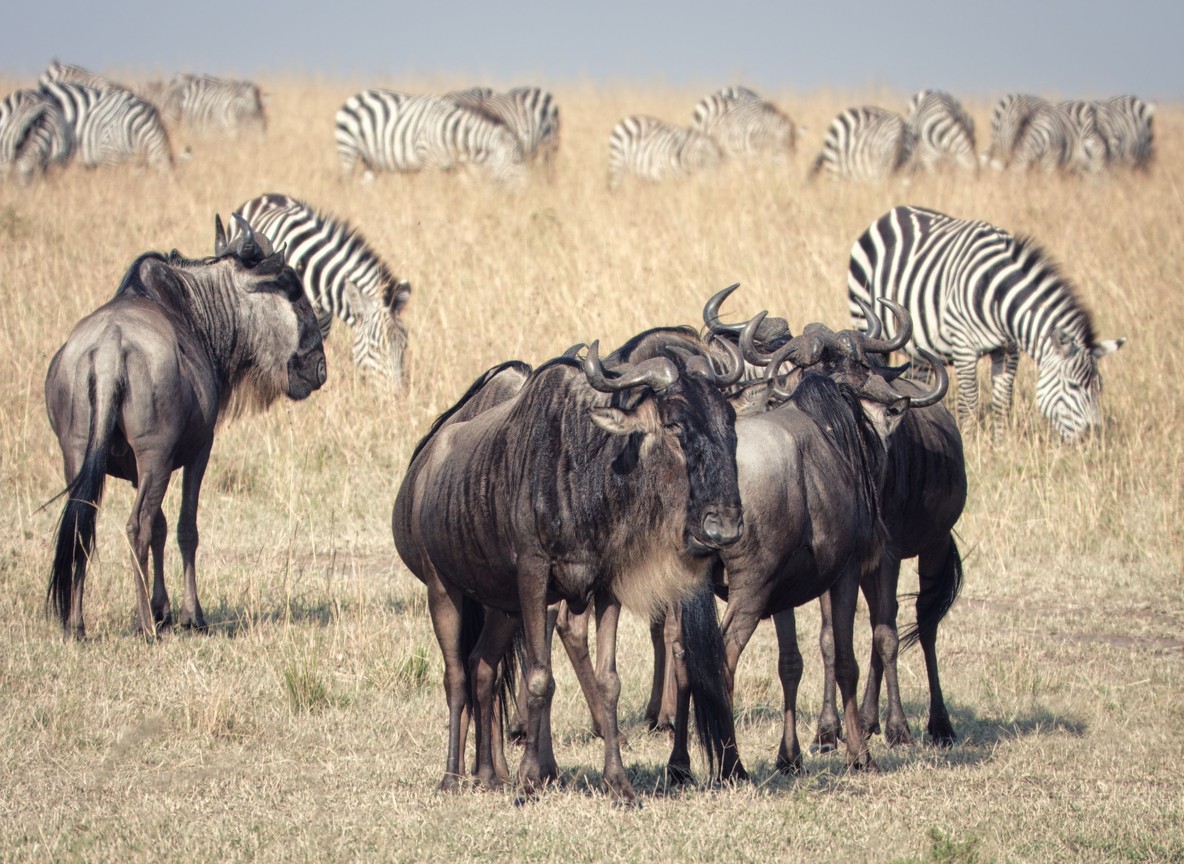
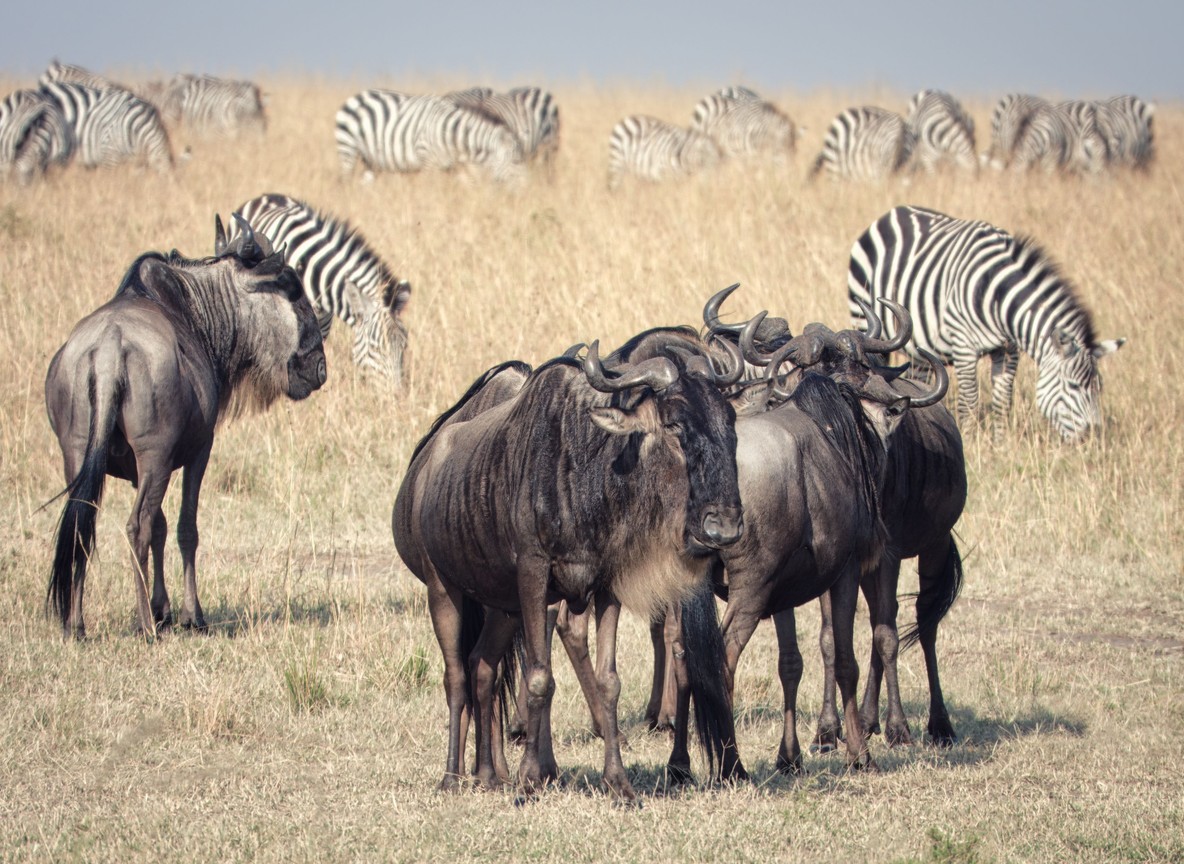
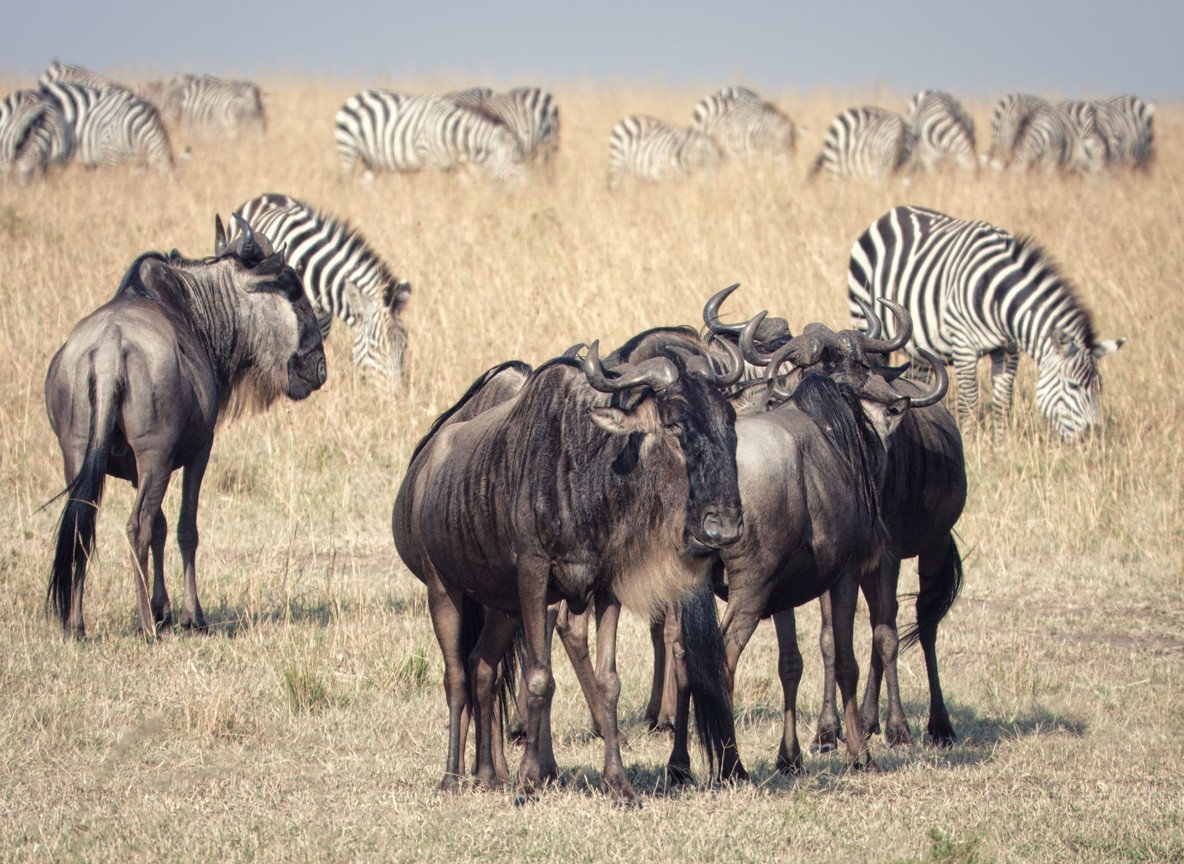
The wildebeest migration through Masai Mara is often described only as a feeding ground for predators. But the wildebeest, zebra, and Thomson’s gazelle that move through in their hundreds of thousands are a spectacle in their own right. Between July and October, herds cross the Mara River from Tanzania’s Serengeti in search of fresh grazing. The sound and scale of a river crossing is something photographs rarely capture accurately.
Plains zebra travel alongside wildebeest for much of the migration. Their sharper eyesight and the wildebeest’s stronger sense of smell make the pairing a genuine survival strategy, not just a coincidence of timing. Watching this movement is one of the clearest examples of why Trunktrails Safaris builds migration-season tours and safaris around flexible daily routing, not a fixed morning and afternoon drive.
Hippo Pools and Crocodiles Along the Mara River
The Mara River itself hosts wildlife that many first-time visitors do not expect. Hippo pools near Mara Serena and along the Talek River stretch hold dozens of hippos at a time, easily visible from raised viewing points. Their grunting calls carry across camp at night, even from a distance. Nile crocodiles line the same river, some reaching over five meters in length, and they play a direct role in the migration’s most dramatic river crossings.
Both species are frequently underestimated as safari sightings because they are stationary and easy to find. But a hippo pool at close range, with calves surfacing between the adults, is one of the more memorable stops on any Masai Mara itinerary.
Giraffe, Antelope, and the Grazing Species You’ll See Every Day
The Masai giraffe is identifiable by its jagged, star-shaped coat patches. It is one of the most reliable sightings in the reserve and browses acacia trees across nearly every zone. Topi, Coke’s hartebeest, impala, Grant’s gazelle, and warthog fill out the grazing community that keeps the grassland ecosystem functioning. They are usually the first animals guests spot within minutes of entering through Sekenani or Talek Gate.
These species rarely get individual attention in trip planning. But they make up the bulk of what you will actually see across a multi-day stay, and they are essential prey species for the predators most travelers come to photograph.
Birdlife in Masai Mara National Reserve
With more than 470 recorded species, birds in Masai Mara National Reserve outnumber every other wildlife category by a wide margin. The secretary bird, with its long legs and habit of stamping snakes to death, is a standout sighting on open plains. Kori bustards, among the heaviest flying birds in the world, share that same terrain. Along the river, look for African fish eagles, saddle-billed storks, and several vulture species that follow predator activity closely.
Birdwatching is often treated as a secondary activity on safari. But a dedicated morning with binoculars can produce more species diversity than an entire big-cat-focused day. Trunktrails Safaris can build birding-heavy routing into any Masai Mara itinerary on request.
Nocturnal and Rarely Seen Wildlife
Night drives are not permitted inside Masai Mara National Reserve itself, but early morning and dusk drives near camp still reveal species most guests never plan for. Bat-eared foxes forage for insects at dawn, aardvarks and aardwolves occasionally surface near termite mounds, and genets and civets are sometimes visible in torchlight around lodge grounds. These sightings are unpredictable by nature, which is part of what makes them worth watching for rather than expecting.
Masai Mara National Reserve vs Nearby Conservancies for Wildlife Viewing
Wildlife density looks different depending on where you base your stay. The table below compares the reserve itself against the private conservancies that border it.
| Factor | Masai Mara National Reserve | Bordering Private Conservancies |
|---|---|---|
| Wildlife density | Very high, especially July-October | High, with lower vehicle numbers per sighting |
| Big cat sightings | Frequent, particularly cheetah and lion | Frequent, strong resident leopard and lion prides |
| Bird diversity | Over 470 species reserve-wide | Comparable, with quieter viewing conditions |
| Night drives | Not permitted | Permitted at most conservancy camps |
| Walking safaris | Not permitted | Permitted at most camps |
| Vehicles per sighting | No enforced cap | Typically capped at 5-6 vehicles |
Figures are indicative and based on published reserve and conservancy guidelines. Trunktrails Safaris can confirm current rules for your specific camp at the time of booking.
The Trunktrails Advantage
Trunktrails Safaris is a Kenyan-owned operator built by guides who grew up navigating the Mara ecosystem, not a foreign agency reselling seats on a shared vehicle. Every Masai Mara itinerary we design factors in what is actually active that week, from cheetah movement patterns to river crossing forecasts.
Our guides carry deep knowledge of bird calls, predator territories, and seasonal grazing shifts that most standard tours and safaris skip entirely. That local insight turns a checklist safari into a trip built around wildlife that is genuinely active during your dates. It is why returning guests keep booking Trunktrails Safaris for their next Kenya trip.
Plan Your Masai Mara Wildlife Safari Today
The wildlife you can see at Masai Mara National Reserve is far bigger than five animal names on a list. The best way to see it properly is with guides who track it daily. Trunktrails Safaris can build your itinerary around cheetah activity, migration timing, or birding depth, whatever matters most to you.
Further reading
More safari planning resources
- Interactive Maasai Mara map from Valley Safaris
- Maasai Mara National Reserve guide on Touring Insights
- Masai Mara destination guide on FindMySafari
- Wildebeest migration route map from Valley Safaris
Message us on WhatsApp at +254 113 208888 or email info@trunktrailssafaris.com to start planning your Masai Mara safari. Let our team put together tours and safaris tailored to the wildlife you actually want to see. 🦁📸