Where to See Lions in Kenya: Best Parks, Conservancies, and Tips for the Big Cats
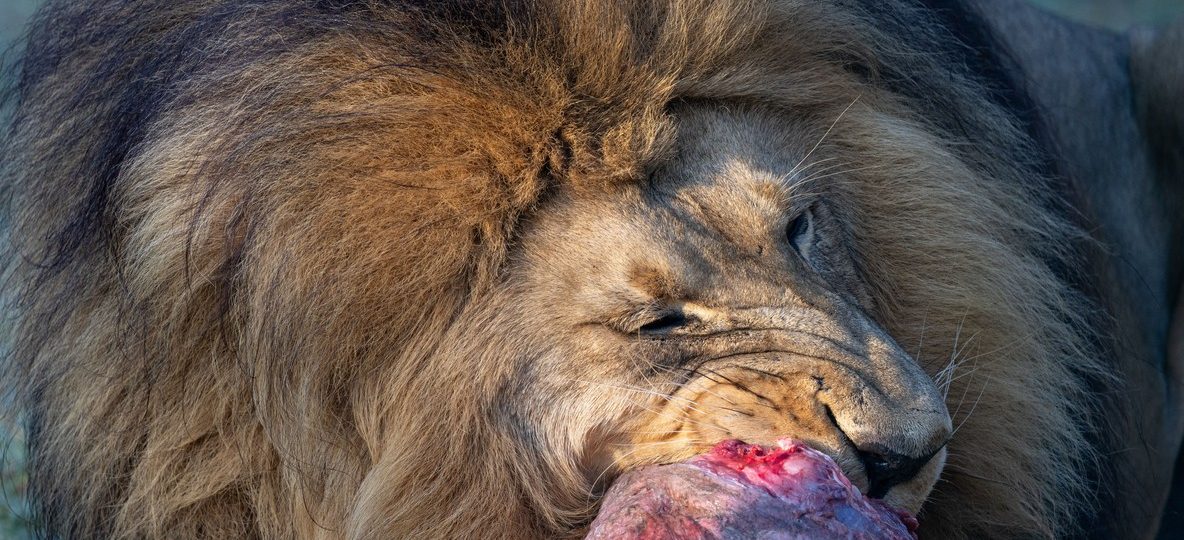
Every safari brochure promises lions, but not every park delivers a sighting. If you are planning a trip and want to know where to see lions in Kenya with real confidence, the answer depends on which park you choose, when you travel, and how your guide reads the terrain. Kenya holds an estimated 2,589 lions according to the 2024 national wildlife census, and they are not spread evenly across the country. 🦁
This guide breaks down the parks and conservancies with the strongest lion densities, what a sighting actually costs in park fees, and the field habits that separate a five-minute glimpse from a full pride encounter. Trunktrails Safaris tours and safaris are built around this exact knowledge, so you spend your game drives where the lions actually are.
Kenya’s Lion Population: The Numbers That Matter
Before booking, it helps to understand the scale. Kenya’s lion population sits at roughly 2,589 individuals across all protected areas, per the 2024 Kenya Wildlife Service census, up from around 2,000 in 2010 thanks to sustained conservancy expansion. The Masai Mara ecosystem alone, including its surrounding conservancies, holds an estimated 420 to 550 lions, the highest density recorded anywhere in Africa at certain times of year.
Lion density is not the same as lion visibility. A reserve can hold many lions in thick bush where they are rarely seen, while a smaller conservancy with open grassland and fewer vehicles can produce more reliable sightings. That distinction drives most of the recommendations below.
Masai Mara National Reserve: Kenya’s Lion Capital
The Masai Mara National Reserve covers 1,510 km2 and is widely regarded as the best place to see lions in Kenya. Its open grassland, combined with the Great Migration’s seasonal prey abundance, supports some of the highest lion densities on the continent. Well-known prides, including the Marsh Pride made famous by BBC’s Big Cat Diary, still hold territory around the Musiara Marsh in the reserve’s northern sector.
Entry to the Masai Mara National Reserve costs USD 100 per adult per day (non-resident rate, 2026), payable at Sekenani Gate, Oloolaimutia Gate, or Talek Gate. The reserve sits roughly 270 km southwest of Nairobi, a 5 to 6 hour drive on the B3/C12 route, or a 45-minute scheduled flight into Musiara, Keekorok, or Ol Kiombo airstrip.
Adjacent private conservancies, including Mara North, Naboisho, and Olare Motorogi, add a further 350,000 acres of lion habitat with lower vehicle density and off-road driving permitted, which improves both sighting quality and photographic conditions.
Amboseli National Park: Lions With Kilimanjaro as a Backdrop
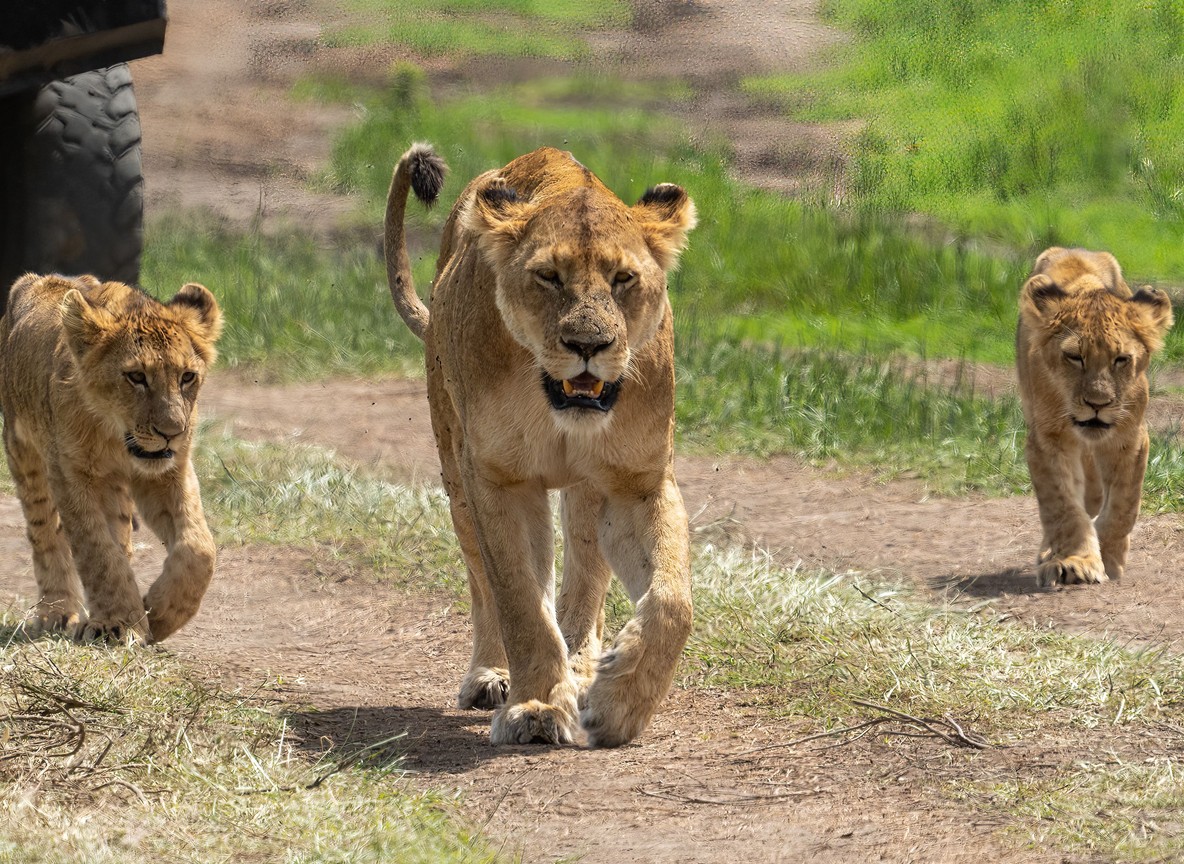
Amboseli National Park covers just 392 km2, making it compact enough to cover thoroughly in two to three game drives. Its lion population is smaller than the Mara’s, estimated at 60 to 80 individuals, but sightings are made memorable by the setting. Prides here hunt against the open pans below Mount Kilimanjaro, and Amboseli’s short grass and minimal cover mean lions are easier to spot from a distance than in denser parks.
Park fees run USD 60 per adult per day (non-resident rate, 2026), and the park is accessed via Meshanani Gate or Kimana Gate, roughly 240 km southeast of Nairobi, a 4 to 5 hour drive, or a 45-minute flight to Amboseli Airport. Lodges such as Ol Tukai Lodge and Kibo Safari Camp sit inside or adjacent to prime lion territory around the Enkongo Narok and Longinye swamps.
Tsavo East and Tsavo West: Kenya’s Largest Lion Range
Tsavo East (13,747 km2) and Tsavo West (9,065 km2) together form the largest protected wildlife area in Kenya, over 22,000 km2 combined. Lion density is lower per square kilometre than the Mara because of the thick red-oat grass and scrub, but the sheer size of the ecosystem supports a substantial resident population, historically famous for the man-eating “Tsavo Man-Eaters” of 1898.
Park entry is USD 52 per adult per day for Tsavo East and USD 52 for Tsavo West (non-resident rate, 2026). Tsavo East is reached via Voi Gate, about 330 km from Nairobi (5 hours by road), while Tsavo West’s Mtito Andei Gate sits directly off the Nairobi-Mombasa highway, roughly 240 km from Nairobi.
Laikipia Plateau and Ol Pejeta Conservancy: Lions Beyond the National Parks
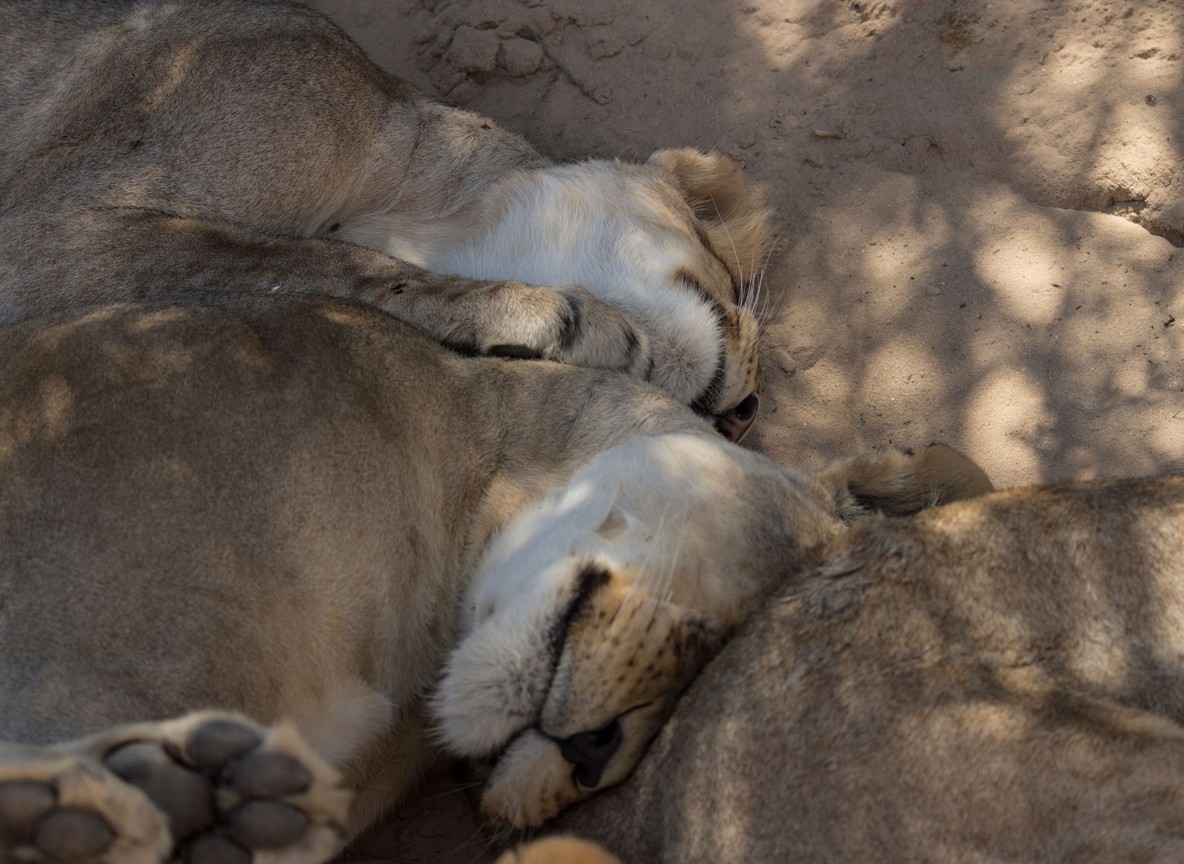
Laikipia’s private conservancy network, anchored by Ol Pejeta Conservancy (364 km2), holds one of Kenya’s fastest-growing lion populations, supported by intensive predator monitoring and low tourist density. Ol Pejeta charges a conservation fee of USD 90 per adult per day (2026 non-resident rate) and sits about 200 km north of Nairobi, a 3.5 to 4 hour drive via Nanyuki.
Because Laikipia operates under a conservancy model rather than a national park, guides here can drive off-road and conduct night game drives, both of which significantly raise the odds of a close lion encounter compared to strict national park rules.
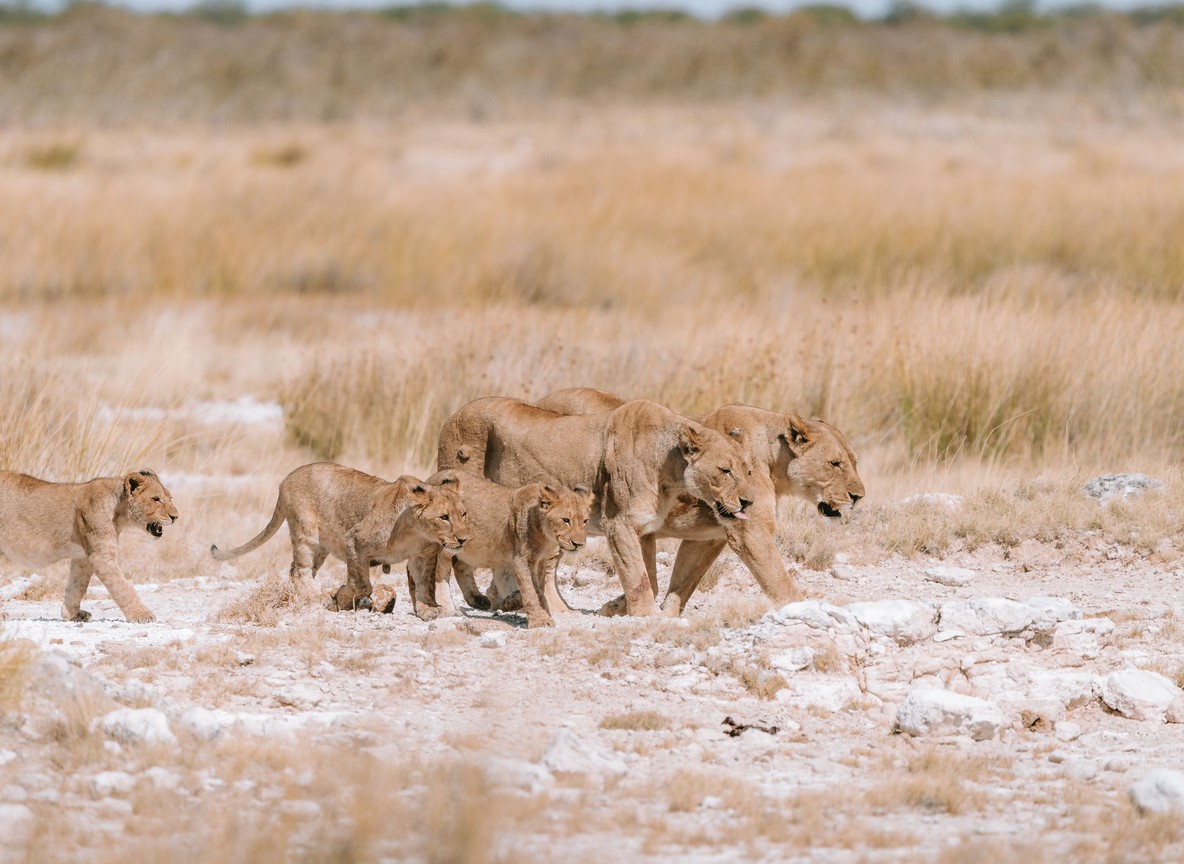
Comparing Kenya’s Top Lion-Viewing Destinations
| Destination | Size | Estimated Lions | Park Fee (Non-Resident, per day) | Distance from Nairobi |
|---|---|---|---|---|
| Masai Mara National Reserve | 1,510 km2 | 420-550 (ecosystem-wide) | USD 100 | 270 km / 5-6 hr drive, 45-min flight |
| Amboseli National Park | 392 km2 | 60-80 | USD 60 | 240 km / 4-5 hr drive, 45-min flight |
| Tsavo East National Park | 13,747 km2 | 200+ (ecosystem-wide) | USD 52 | 330 km / 5 hr drive |
| Tsavo West National Park | 9,065 km2 | Included above | USD 52 | 240 km / 4 hr drive |
| Ol Pejeta Conservancy (Laikipia) | 364 km2 | 60-70 | USD 90 | 200 km / 3.5-4 hr drive |
Fees are indicative 2026 non-resident gate rates and change periodically; always confirm current rates before booking. Conservancy fees are typically bundled into lodge rates rather than paid separately at a gate.
Best Time of Year to See Lions in Kenya
Lions are visible year-round in Kenya, but visibility improves during the dry seasons when vegetation thins and animals concentrate around permanent water. The long dry season runs from June to October, overlapping with the Great Migration in the Masai Mara, when predator activity peaks as wildebeest and zebra herds cross the Mara River. The short dry season from late December to February also offers strong game viewing with fewer crowds than peak migration months.
The long rains (March to May) bring lower visitor numbers and lush scenery, but thicker grass can make spotting resting lions harder, particularly in Tsavo’s denser bush.
Tips for a Successful Lion Safari in Kenya
Book a guide who tracks radio-collared prides. Many conservancies, including the Mara Triangle and Ol Pejeta, monitor known prides daily, and an experienced guide with local radio contact will often know a pride’s approximate location before the vehicle leaves camp.
Go out early and late. Lions are most active in the two hours after sunrise and the two hours before sunset. Midday game drives in hot months usually find lions resting in shade, visible but inactive.
Choose a conservancy for closer access. National reserves such as the Mara restrict vehicles to marked tracks and cap sightings at a set number of vehicles per animal. Private conservancies allow off-road driving and night drives, both of which increase the odds of an active sighting.
Budget for park fees separately from lodge rates. Many quoted safari packages exclude park entry, so confirm whether the USD 52 to 100 daily fees above are already included in your itinerary.
Pack for both dust and cold mornings. Open-vehicle game drives in the Mara or Amboseli start before sunrise, when temperatures can drop to single digits Celsius, then climb quickly once the sun is up. A layered jacket, a scarf against dust, and a beanie make the early drives far more comfortable without adding bulk to your luggage.
Common Questions About Lion Safaris in Kenya
Is it safe to see lions on safari in Kenya? Yes. Sightings happen from closed or open safari vehicles with an experienced guide, and lions generally treat a vehicle as a single large object rather than a threat, so they rarely react to it the way they would to a person on foot.
Do I need to visit more than one park to see lions? No single park is required to see lions in Kenya, but combining two ecosystems, such as the Masai Mara and Amboseli, gives you both grassland pride dynamics and the Kilimanjaro backdrop in one trip, which is a common structure for Trunktrails Safaris tours and safaris built around lion viewing.
How many days should I budget for a lion-focused safari? Three to four days in a single ecosystem, such as the Masai Mara or Laikipia, is usually enough for multiple lion sightings. A seven-day itinerary across two ecosystems raises the odds further and adds habitat variety.
The Trunktrails Advantage
Finding lions in Kenya is not about luck. It is about knowing which conservancy a pride is denning in this month, which gate gets you into position before the morning light peaks, and which guide has the tracking relationships to close the gap between “lions are in this park” and “lions are right here.”
Trunktrails Safaris builds every lion-focused itinerary around three things. Local intelligence: our guides maintain direct contact with conservancy rangers across the Masai Mara, Laikipia, and Amboseli ecosystems, so we know which pride is active before we leave camp. Route sequencing: we schedule game drives around the golden hours when lions hunt and move, not around lodge breakfast times. Fair pricing: our quotes separate park fees from lodge and vehicle costs, so you know exactly what you are paying for before you commit.
Trunktrails Safaris is a Kenyan-owned operator, and our field teams work these landscapes across every season, wet and dry. We know the difference between a Masai Mara pride resting near Musiara Marsh and one that has moved south toward the Sand River. That knowledge is what turns tours and safaris into a real lion sighting instead of an empty grassland and a long drive back. 🌅
Plan Your Lion Safari With Trunktrails Safaris
Kenya’s lions do not wait for a fixed itinerary, and the parks that hold them each demand a different approach, whether that is the Mara’s open plains, Amboseli’s Kilimanjaro backdrop, or Laikipia’s off-road conservancy access. The right combination depends on your travel dates, budget, and how close you want to get.
Reach out to Trunktrails Safaris and tell us when you are traveling. We will map out exactly where to see lions in Kenya during your window, matched to fees, distances, and pride activity that are current, not recycled from an old brochure.
Further reading
More safari planning resources
- Kenya national parks map from Valley Safaris
- Big Five safari parks guide on Touring Insights
- Big Five safari collection on FindMySafari
- Map of Tsavo from Valley Safaris
WhatsApp: +254 113 208888 Email: info@trunktrailssafaris.com Website: trunktrailssafaris.com
Your lion sighting starts with the right gate, the right guide, and the right hour of the day. Trunktrails Safaris gets you to all three.