Underrated Wildlife in the Masai Mara: The Animals Most Visitors Never Notice
Every vehicle in the Masai Mara is searching for the same five animals. Lions, leopards, elephants, buffalo, rhino — the checklist that has driven African safari marketing for 70 years. On a good day in peak season, you can tick all five before lunch. On any day in the Mara, year-round, you are surrounded by wildlife that most guests drive past without slowing down. 📸
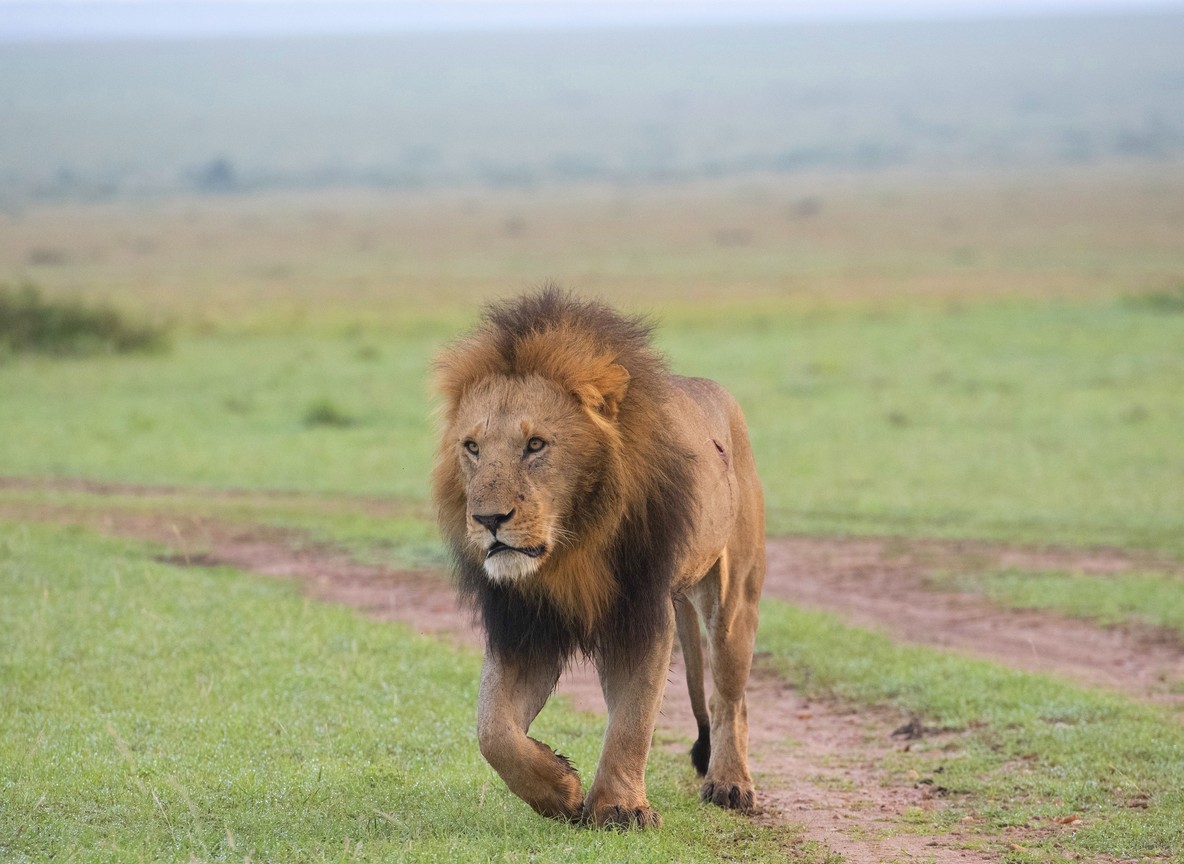
This guide is about that wildlife. The species that reward patience, curiosity, and a guide who understands that a honey badger dragging a monitor lizard out of its hole is, gram for gram, more dramatically interesting than a lion sleeping in a tree 200 metres away. These are the animals that experienced Masai Mara travelers remember years after the big five fade into a general impression of tawny grass and blue sky.
Honey Badger: The Mara’s Most Recklessly Fearless Predator
The honey badger (Mellivora capensis) is the animal most likely to make a veteran guide stop mid-sentence and change direction. The reason is simple: honey badgers do not behave like other animals. They attack buffalo. They walk into lion kills and steal meat. They have been observed driving leopards off carcasses.
In the Masai Mara, honey badgers are more common than most visitors realise, but their crepuscular habits (active dawn and dusk) mean daytime sightings require either luck or a guide who knows individual territories. The riverine corridors along the Talek and Mara rivers are reliable zones.
The honey badger’s physical attributes — loose, incredibly thick skin that allows it to twist and bite despite being held, a reversible anal scent gland that can cause temporary blindness, and a skull density that makes it largely immune to bee stings — make it arguably the most over-engineered small carnivore in Africa. A honey badger encounter in the Mara is almost always dramatic. Bring patience and stay for the whole scene.
Bat-Eared Fox: The Termite-Locating Antenna System
The bat-eared fox (Otocyon megalotis) is immediately recognisable: enormous dish ears that function as directional microphones for locating termites and beetle larvae underground. They are monogamous and found in pairs or small family groups, which makes them one of the Mara’s most photogenic small mammals — two immaculate fox faces peering from a termite mound entrance in golden afternoon light is a legitimately beautiful image.
In the Masai Mara, bat-eared foxes are most reliably found on the open short-grass plains east of the main reserve and in the Mara Triangle’s southern sections. Peak viewing is in the dry season (July-October) when shorter grass makes them easier to spot.
Their insectivorous diet makes them largely unthreatened by large predators, which is reflected in a relaxed, un-hurried quality to their behaviour that makes photography straightforward. A bat-eared fox family playing outside their den at 6:30 AM is one of the Mara’s underrated photographic moments.
Serval: The Tall Legs and the Invisible Jump
The serval (Leptailurus serval) is a medium-sized wild cat found throughout the Mara ecosystem, predominantly in areas with tall grass and wetland margins. At 60-90 cm tall at the shoulder, they are significantly taller than a domestic cat — built for leaping high to pin prey disturbed in long grass.
What most guides know and most guests do not: the serval has the highest kill rate of any cat in Africa. Approximately 50% of hunts end in a catch, compared to 20-25% for lions. A serval hunt — the cat standing completely still, head slightly tilted, ears rotated forward like satellite dishes, then launching 3 metres straight up to pin a rodent invisible in the grass — is one of the Mara’s most technically impressive wildlife performances.
Servals are most reliably found at dawn and dusk. The Ol Kinyei and Olare Motorogi conservancies, with their good cover and wetland areas, have particularly high serval density. Night drives in the Mara Triangle or conservancies regularly produce serval sightings.
Pangolin: The Scale-Armoured Ghost
The pangolin is the most searched-for animal in the Masai Mara that most visitors never see. All eight pangolin species are threatened; the ground pangolin (Smutsia temminckii) found in the Mara ecosystem is classified as Vulnerable. They are nocturnal, solitary, and have evolved to be essentially invisible — rolling into a tight armoured ball when disturbed, relying entirely on their scales for defence.
A pangolin sighting in the Mara is genuinely rare and is celebrated by guides the way most guests celebrate a cheetah. The combination of nocturnal habits, low density, and a tendency to freeze when they sense vehicle approach makes them very difficult to find on day drives.
Night drives in the private conservancies (particularly Olare Motorogi and Mara Naboisho) give you the best chance. Guides who track individual pangolins — which they do in conservancies with low vehicle traffic where individual animals can be monitored — are the difference between a theoretical possibility and an actual sighting.
If a pangolin is at the top of your Masai Mara target list, communicate this directly to Trunktrails Safaris when booking. We will place you in the right conservancy with the right guide.
Aardvark: The Earthmover That Supports an Ecosystem
The aardvark (Orycteropus afer) is the sole living member of the order Tubulidentata — a mammal so evolutionarily isolated that it has no close relatives. Its ecological role in the Mara ecosystem is disproportionate to its visibility: aardvark burrows, once abandoned, become the primary den sites for bat-eared foxes, warthogs, hyenas, mongoose, and a significant number of other species.
Aardvarks are strictly nocturnal and very rarely seen. Night drives in the conservancies occasionally produce encounters. When they do, the animal is typically mid-excavation — using its powerful claws to break into a termite mound at a pace that looks almost absurd, soil flying backwards through its legs.
A night aardvark sighting is considered by experienced guides to be among the more memorable wildlife encounters the Mara produces — less dramatic than a lion kill, but far rarer and far more personally significant.
Banded Mongoose: The Anti-Cobra
Banded mongoose (Mungos mungo) move through the Masai Mara in social groups of 10-30, foraging in constant coordinated motion through grass and around termite mounds. They are common, often overlooked, and genuinely interesting to watch.
What most guides will tell you if asked: banded mongoose groups are immune to cobra venom. They attack cobras cooperatively, taking turns to harry and bite while the snake attempts to defend itself. The snake almost always loses. This is not a rare behaviour — it is a regular part of their foraging repertoire in areas where cobra density is high.
A banded mongoose encounter in the Mara where you stop and watch the group for 20 minutes rather than photographing and moving on reveals a social complexity — sentry rotation, cooperative foraging, play behaviour between juveniles — that makes the group more interesting than almost any solitary predator.
Secretary Bird: The Savanna’s Most Distinctive Raptor
The secretary bird (Sagittarius serpentarius) is unmistakeable: a 1.2-metre-tall raptor with the legs of a crane, the body of an eagle, and a crest of black feathers that trail behind the head like quill pens stuck behind an ear (the source of its name). They walk the Mara grasslands in pairs, covering up to 20 km per day in search of snakes, lizards, and large insects.
The Masai Mara’s short-grass plains on the eastern edges of the ecosystem are the most reliable habitat. The Loita Plains, just east of the main reserve boundary, regularly hold secretary birds. Their snake-killing technique — a series of rapid, precise strikes with the leading edge of their wings — is one of the Mara’s more extraordinary things to witness if timed correctly.
Secretary birds are on the Vulnerable list due to habitat loss and fragmentation. The Mara ecosystem’s open grasslands represent one of their strongest remaining East African populations. 🌍
Spotted Hyena: Better Than Their Reputation
Most guides will tell you that the single biggest misconception about the Masai Mara among first-time visitors is the status of spotted hyena (Crocuta crocuta). Guests routinely dismiss them as scavengers — large, ungainly, opportunistic. The reality is that spotted hyenas are the most successful large predator in Africa. In the Mara, they kill more prey than lions. Lions frequently steal from hyenas, not the other way around.
Spotted hyena clans in the Mara are matriarchal social systems of up to 80 individuals. Females are larger than males and dominant in all social contexts. The clan’s territory management, cooperative hunting strategies, and vocal communication system — which includes the famous whooping call that carries 5 km on a still night — are some of the most complex social behaviours in the Mara ecosystem.
Hyena cubs at a den, at dawn, are one of the Mara’s quietly beautiful sightings. The cubs are born black-furred, with adult colouring developing over 3-4 months. Clan dens in the Olare Motorogi and Ol Kinyei conservancies have been monitored continuously by guides who know individual animals by sight.
Dung Beetle: The Ecosystem Service Provider
Yes, this belongs on the list. The dung beetle’s contribution to the Masai Mara ecosystem is not metaphorical — it is measurable. An estimated 80% of large mammal dung in the Mara ecosystem is buried by dung beetles within 48 hours. This recycling process aerates soil, distributes seeds (particularly of fig trees and grasses), and reduces parasite populations in the dung.
Several hundred dung beetle species are found in the Mara. The roller species — which form a ball from dung and navigate home by the Milky Way, the only insect known to use stellar navigation — can be found at any large mammal defecation site. Any guide who does not explain dung beetles when the vehicle stops at an elephant dropping is leaving something important unsaid.
How to See These Animals: Practical Notes
Night drives: Required for pangolin, aardvark, serval (higher density), and bat-eared fox pups. Only available in private conservancies and the Mara Triangle — not in the main Narok County reserve.
Walking safaris: The best platform for small mammals, insects, birds, and tracking dung beetle navigation. Available at most conservancy camps.
Stillness and patience: Honey badgers, secretary birds, and mongoose behaviour reward extended stops. Communicate to your guide that you want to stay when something interesting is happening, even if it is not a big cat.
Guide briefing: Tell Trunktrails Safaris before your trip which species are priorities. A guide briefed on your interests can redirect game drive routes toward the most productive habitats for specific animals.
The Trunktrails Advantage: Guides Who See the Whole Ecosystem
The standard Masai Mara safari experience is calibrated for the casual visitor who wants big five ticks. Trunktrails Safaris works with guides who see the whole ecosystem — who stop for the honey badger and the dung beetle because they understand that these animals are what make the Mara function.
We run tours and safaris in the Mara ecosystem with guides whose breadth of knowledge extends to small mammals, insects, plant ecology, and the social structures of species most operators treat as backdrop. We are, Nairobi-based, and Kenyan-owned. ✨
Plan a Wildlife-First Masai Mara Safari
If this list excites you more than a checklist of the Big Five, you are the right kind of safari traveler for Trunktrails Safaris.
Contact us to build an itinerary around the Mara’s full wildlife spectrum:
Further reading
More safari planning resources
- Interactive Maasai Mara map from Valley Safaris
- Maasai Mara National Reserve guide on Touring Insights
- Masai Mara destination guide on FindMySafari
- Big Five safari parks guide on Touring Insights
- WhatsApp: +254 113 208888
- Email: info@trunktrailssafaris.com
- Website: trunktrailssafaris.com
- | Nairobi-Based | Kenyan-Owned
Image credits: Photo by Rino Adamo on Pexels; Photo by Marri Shyam on Pexels; Photo by Pixabay on Pexels; Photo by Balazs Simon on Pexels; Photo by Dorian Gayon on Pexels