These options may appear in the same planning conversation, but they do not deliver the same safari. Wildlife style, road time, camp feel, and the kind of stories you bring home all shift with the choice. That is why tsavo east vs tsavo west matters.Trunktrails Safaris helps travellers make this decision every week. We are Nairobi-based and Kenyan-owned. We weigh real drive times, wildlife strengths, camp standards, and what guests actually want from the trip, not brochure shortcuts. That makes the recommendation easier to trust.Here is the honest tsavo east vs tsavo west comparison, the same way we break it down before a safari is booked.
Overview
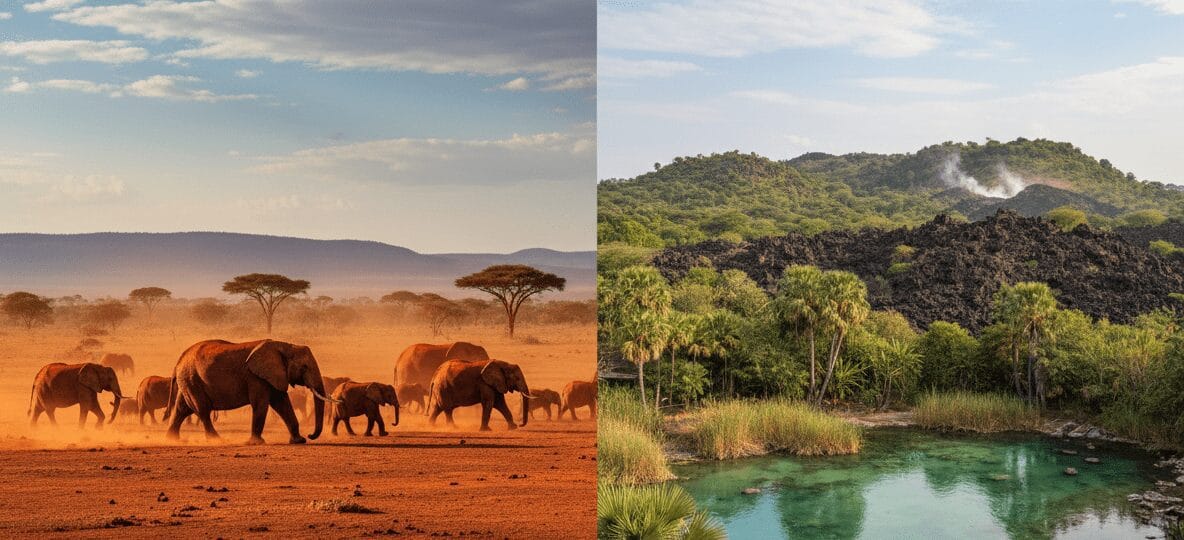
Tsavo East National Park covers approximately 13,747 km2, making it Kenya’s largest national park. It is characterised by flat, semi-arid plains, open scrubland, and the Galana River. The landscape is sparse and dramatic, with the red volcanic soils that give the famous Tsavo elephants their distinctive colour.
Tsavo West National Park covers approximately 9,065 km2. It sits on the western side of the Mombasa highway and has a more varied landscape: volcanic hills, lava flows, wetlands, and the Mzima Springs. Kilimanjaro is visible on clear days from the western section.Both parks are in southeastern Kenya, accessed from Nairobi via the Mombasa highway (approximately 200 to 250 km from Nairobi) or from Mombasa heading inland.
Best Time to Visit Kenya for Safari
Timing Your Visit: Seasons and Safari Highlights
The classic question: when should you go? Kenya’s wildlife calendar is worth planning around, especially if Tsavo East or Tsavo West is on your radar. While Kenya is a year-round destination, a few seasonal details can lift your safari from good to exceptional.- Dry Season (June to October): This is peak safari season. Skies are clear, bush is thinner (making spotting lions, elephants, and cheetahs that much easier), and you’ll see animals crowding around waterholes and rivers like the Galana. Whether you want the red elephants of Tsavo East or the drama of Tsavo West’s lava flows, this is when viewing is at its best.
- Green Season (November to May): Expect short rains from November to December and longer ones in March to May. The parks turn lush and green. There’s excellent birdwatching—especially for migratory species—and newborn animals everywhere. The crowds are fewer, camps can cost less, and the scenery is at its most dramatic. However, some remote tracks can get muddy, and wildlife is sometimes more dispersed.
If your dates are flexible, consider:- July to September: Spectacular wildlife, comfortable temperatures, and dry roads. This overlaps with the Great Migration in the Mara and fits perfectly for Tsavo’s highlights.
- Late December and January: Short rains are tapering off, parks are green, and wildlife is easily visible.
- April and May: The rains are heaviest, but that means wildflowers, dramatic skies, and few tourists—ideal if solitude outweighs certainty of spotting every species.
In short, your best window for classic safari action in Tsavo East and Tsavo West is June through October, but Kenya’s magic works in every month—the experience just changes gears.Wildlife: Tsavo East vs Tsavo West
Tsavo East Wildlife

Tsavo East is famous for its large elephant herds: often numbering in the hundreds: that are coated in the distinctive red volcanic dust of the park’s soils. These red elephants are iconic and a defining Tsavo East experience.The park also supports lion, leopard, cheetah, buffalo, hippo, and Nile crocodile along the Galana River. Gerenuk, lesser kudu, and fringe-eared oryx add species diversity. Rhino are present in specific protected areas. Birdlife is exceptional with over 500 species.The open plains and sparse vegetation of Tsavo East give good visibility for wildlife spotting, though the vastness of the park means sightings can require driving time to locate.
Tsavo West Wildlife
Tsavo West has a slightly higher diversity of habitats: volcanic hills, wetlands, riverine forest, and open savannah: which supports a different mix of wildlife. Black rhino are found in the Ngulia Rhino Sanctuary within Tsavo West, making it one of Kenya’s better parks for rhino viewing. Hippo are abundant at Mzima Springs. Leopard, lion, and cheetah are all present.The varied topography of Tsavo West creates habitat diversity that supports species not as common in Tsavo East’s open plains. Birdwatching is exceptional: Ngulia Lodge is a globally recognised birdwatching site particularly during migration season.
Summary: Wildlife | Feature | Tsavo East | Tsavo West |
| Elephants | Very large herds (red elephants) | Good populations |
| Rhino | Present in protected areas | Ngulia Sanctuary (more reliable) |
| Hippo | Galana River | Mzima Springs (very good) |
| Lion/Leopard/Cheetah | Present | Present |
| Gerenuk/Lesser Kudu | Yes | Less common |
| Birdlife | Exceptional (500+ species) | Exceptional (Ngulia migration site) |
| Habitat diversity | Open semi-arid plains | Varied (hills, wetlands, lava) |
Walking Safaris: Can You Explore Tsavo on Foot?
Yes—walking safaris are possible in both Tsavo East and Tsavo West, but with important caveats and unique appeals in each. In Tsavo West especially, guided bush walks are offered by select camps and conservancy partners. These are typically conducted in safe zones, sometimes along the lava outcrops or near the Chyulu foothills, allowing you to experience the landscape up close: tracking animal footprints, reading signs, and pausing to take in the ancient geology underfoot. Expect professional armed guides (often Kenya Wildlife Service rangers) leading the way.In Tsavo East, opportunities for walking are more limited due to the sheer openness and densities of wildlife, but some lodges arrange short escorted walks along rivers or near camp. These are less about big game and more focused on smaller wildlife, learning about plants, insects, and birdlife—excellent for those looking for an immersive grounding in Tsavo’s vastness and solitude.If you’re set on a classic, multi-hour bush trek with chances of big game encounters, Tsavo is less famous for this than conservancies in Laikipia or the Mara, but the experience is authentic—raw, wide, and steeped in silence. Always check availability with your operator (Trunktrails Safaris can advise), since walking permissions and safety protocols change with seasons and wildlife movements.Scenery and Landscape
Tsavo East is vast, flat, and elemental. The red laterite soils, the sparse acacia scrub, and the enormous skies create a landscape of raw, almost harsh beauty. The Galana River and Lugard’s Falls provide dramatic focal points. The Yatta Plateau: the world’s longest lava flow: runs along the northern section.
Tsavo West is more visually varied. The Chyulu Hills provide a green, forested backdrop. Mzima Springs: where crystal-clear water bubbles from an underground lava system and supports hippo and crocodile: is one of Kenya’s most extraordinary natural features. Volcanic cones and ancient lava flows add geological interest.Travellers who want dramatic open plains choose Tsavo East. Travellers who want more diverse scenery, including hills, springs, and volcanic formations, tend to prefer Tsavo West.
Accessibility
Both parks are accessible from Nairobi via the A109 Mombasa highway. The main gates are approximately:
- Tsavo East (Voi Gate): Around 340 km from Nairobi, approximately four hours by road
- Tsavo West (Mtito Andei Gate): Around 240 km from Nairobi, approximately three hours by road
Tsavo West is slightly closer to Nairobi, making it more commonly included in shorter itineraries from the capital. Both parks are also accessible from Mombasa for travellers combining safari with a coast stay: Tsavo East is closer to Mombasa.Bush flights serve both parks from
Wilson Airport in Nairobi and from Mombasa.
Accommodation
Tsavo East has a moderate range of accommodation including Satao Camp, Ashnil Aruba Lodge, Severin Safari Camp, and Ndololo Camp. Options are primarily mid-range, with a limited ultra-luxury selection.
Tsavo West has Kilaguni Serena Safari Lodge (one of Kenya’s oldest safari lodges, located at a waterhole), Severin Safari Camp, Finch Hattons Luxury Tented Camp (a renowned luxury property), and several mid-range options.Both parks are less developed for tourism than the Masai Mara, which is part of their appeal: quieter, less commercial, and genuinely remote.
Which Should You Choose?
Choose Tsavo East if:- Seeing very large elephant herds: including the famous red elephants: is your priority
- You want the classic open, vast savannah landscape
- You are combining with the Kenya coast from Mombasa
- Birdwatching is a key interest and you want the open-country species
- You want a less-visited park with a strong sense of space and remoteness
Choose Tsavo West if:- Rhino viewing is a priority (Ngulia Sanctuary)
- You want varied scenery including springs, volcanic hills, and Chyulu Hills views
- Mzima Springs is on your list (hippo and crocodile through an underwater viewing window)
- You are heading from Nairobi and want the closer option
- Birdwatching during migration season (October to November) is a specific goal
Combine both: Many Trunktrails Safaris itineraries covering the Tsavo region include both parks in a single circuit: entering Tsavo West from Nairobi and exiting through Tsavo East toward Mombasa or vice versa. The parks share a boundary and flow naturally together.At Trunktrails Safaris,
our tours and safaris team designs Tsavo itineraries as standalone experiences or as part of a broader Kenya circuit combining Tsavo with the Masai Mara or the coast.
Quick Comparison: Tsavo East vs Tsavo West
| Factor | Tsavo East | Tsavo West |
| Size | 13,747 km2 | 9,065 km2 |
| Red elephants | Yes (iconic) | Less prominent |
| Rhino | Protected areas | Ngulia Sanctuary (reliable) |
| Mzima Springs | No | Yes |
| Scenery | Open plains, red soil | Varied: hills, lava, wetlands |
| Distance from Nairobi | ~340 km (4 hrs) | ~240 km (3 hrs) |
| Distance from Mombasa | Closer | Further |
| Crowd levels | Very low | Low |
| Accommodation | Mid-range focused | Mid-range to luxury |
| Best combined with | Mombasa coast, Masai Mara | Nairobi day trip, Tsavo East loop |
Ready to Plan Your Kenya Safari? Talk to Trunktrails Safaris
Trunktrails Safaris designs tailor-made tours and safaris for every traveller and every budget. From green-season adventures to private luxury camps, our tours and safaris are built by a Nairobi-based team that speaks to you directly, not through a call centre. Most WhatsApp enquiries about our Kenya tours and safaris get a reply from Trunktrails Safaris within the hour.
Tailor Your Safari, Your WayWhether you’re dreaming of tracking the red elephants of Tsavo, exploring open savannahs, or combining your safari with a beach escape on Kenya’s coast, our travel specialists are here to craft an experience just for you. Every itinerary is personalized—choose your preferred destinations, pace, accommodation style, and special interests, and we’ll do the rest. Ready to start planning? Reach out to our team and let us know your wishlist. We’ll help you create a Kenya safari that fits your travel style, timeframe, and budget—right down to the last detail.WhatsApp: +254 113 208888Email: info@trunktrailssafaris.comWebsite: https://trunktrailssafaris.com | Native Kenyan Owned | Conservation First | 24/7 Support
Book Your Safari
Contact Trunktrails Safaris today and let us plan your Tsavo safari.
Further reading
More safari planning resources

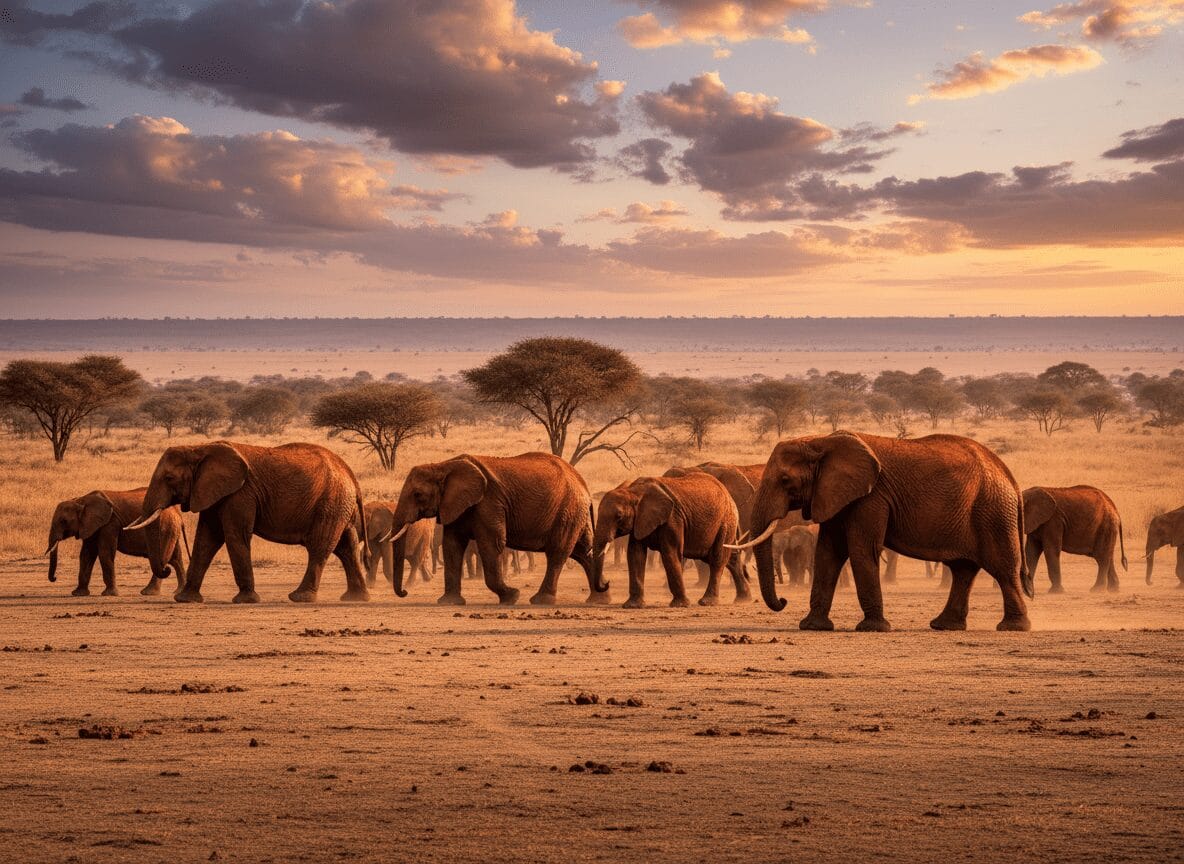 Tsavo East is famous for its large elephant herds: often numbering in the hundreds: that are coated in the distinctive red volcanic dust of the park’s soils. These red elephants are iconic and a defining Tsavo East experience.The park also supports lion, leopard, cheetah, buffalo, hippo, and Nile crocodile along the Galana River. Gerenuk, lesser kudu, and fringe-eared oryx add species diversity. Rhino are present in specific protected areas. Birdlife is exceptional with over 500 species.The open plains and sparse vegetation of Tsavo East give good visibility for wildlife spotting, though the vastness of the park means sightings can require driving time to locate.
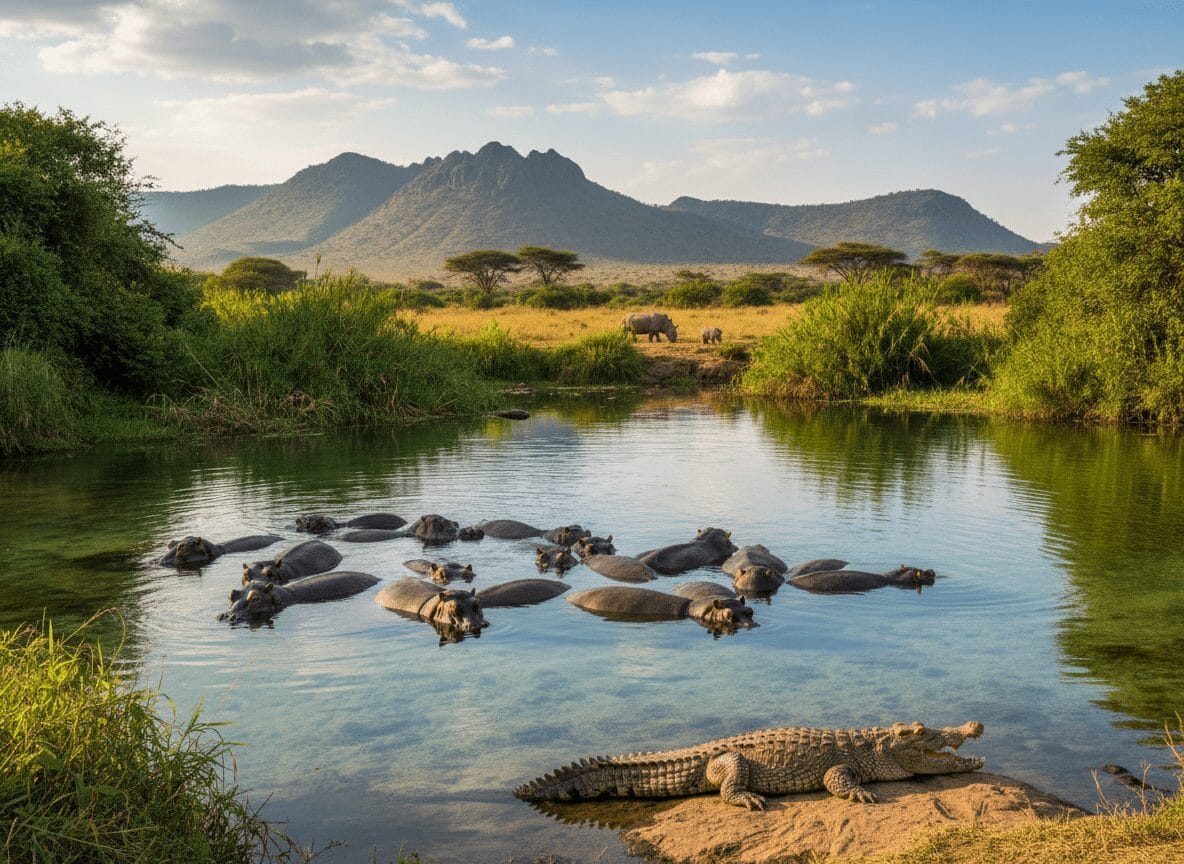 Tsavo West has a slightly higher diversity of habitats: volcanic hills, wetlands, riverine forest, and open savannah: which supports a different mix of wildlife. Black rhino are found in the Ngulia Rhino Sanctuary within Tsavo West, making it one of Kenya’s better parks for rhino viewing. Hippo are abundant at Mzima Springs. Leopard, lion, and cheetah are all present.The varied topography of Tsavo West creates habitat diversity that supports species not as common in Tsavo East’s open plains. Birdwatching is exceptional: Ngulia Lodge is a globally recognised birdwatching site particularly during migration season.Summary: Wildlife
 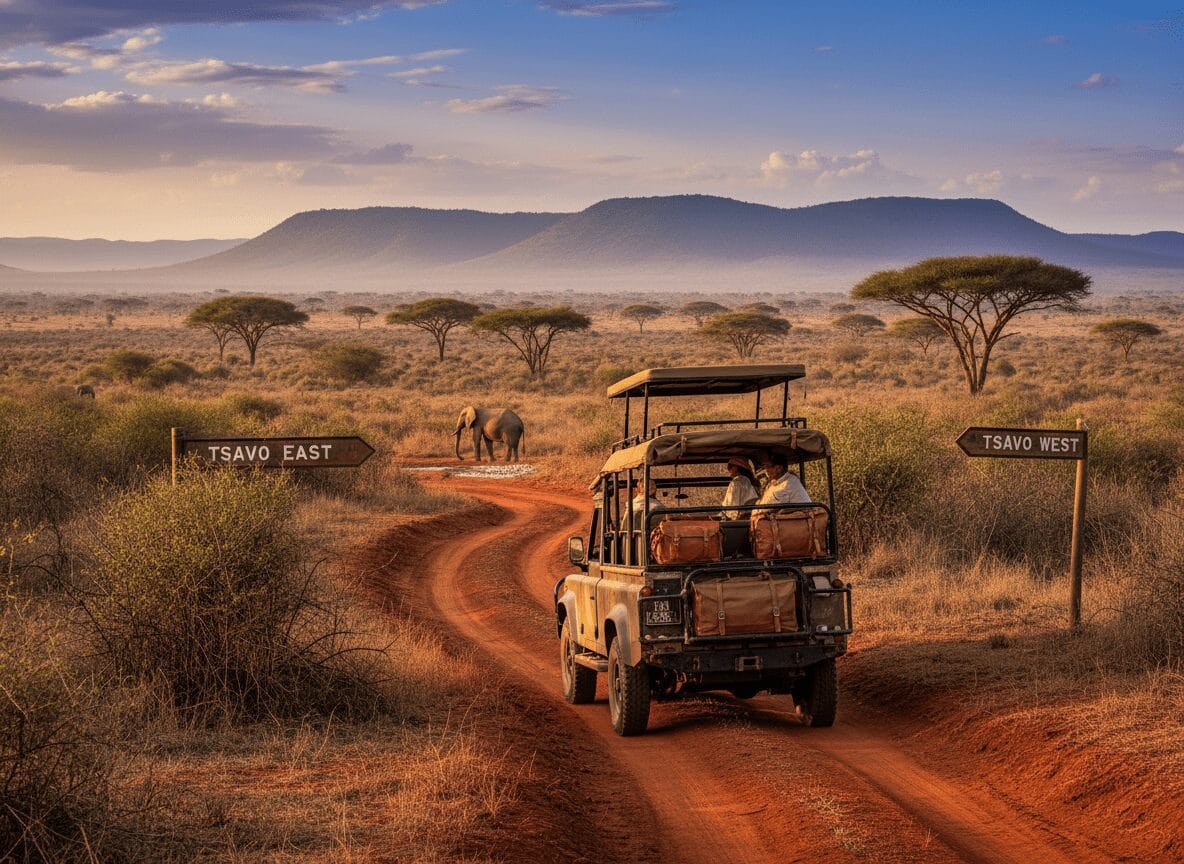 Both parks are accessible from Nairobi via the A109 Mombasa highway. The main gates are approximately: