Walking safari and vehicle safari kenya may happen in the same landscape, but they reward very different kinds of traveller. One favors patience, detail, or specialist interest. The other suits a broader safari rhythm. That is the walking safari vs vehicle safari kenya choice.This is where Trunktrails Safaris helps clients avoid the wrong fit. We are Nairobi-based and Kenyan-owned. Our guides know when a specialist activity genuinely adds depth and when it is just a glossy add-on. That matters if you want the safari to feel right, not merely busy.Here is the honest walking safari vs vehicle safari kenya comparison, with the strengths, limits, and best-fit traveller for each side.
What Is a Vehicle Safari?

A vehicle safari: or game drive: is conducted in a modified 4WD Land Cruiser or Land Rover with a pop-up roof that allows standing and 360-degree views. You travel with a guide/driver who navigates the reserve, uses radio communication to locate wildlife, and narrates what you are seeing.Vehicle safaris allow you to:
- Cover large distances across the reserve in a single drive
- Approach and observe a wide range of species safely
- Photograph wildlife from a stable platform at appropriate distances
- Move quickly between sightings
- Be at eye level with large predators while remaining protected
The vehicle is accepted by wildlife as a neutral object in the environment: lions, cheetah, and elephants routinely allow vehicles within 10 to 20 metres because they associate vehicles with neither predator nor prey.
What Is a Walking Safari?
A walking safari masai mara: more accurately called a guided bush walk: is conducted on foot with an armed, trained guide. In
the Masai Mara National Reserve itself, walking safaris are not permitted. They are available in the private conservancies surrounding the reserve, where different rules apply.
It’s important to note that almost all national parks in Kenya, with the exception of Hells Gate National Park, prohibit walking inside the main park boundaries—including both the Narok county and Mara Conservancy sides of the Masai Mara National Reserve. If you’re envisioning striding through the heart of the Mara alongside wildebeest, official policy says otherwise.However, the experience is absolutely possible—and often richer—in the private conservancies bordering the main reserve. Here, well-planned and professionally supervised walking safaris are allowed, offering the real bush immersion that the main reserve cannot. Even within the core reserve, some camps and lodges offer shorter nature walks—typically just an hour and limited to the immediate vicinity of the property—rather than full walking safaris. This means that for a true walking safari in the Masai Mara ecosystem, your best bet is to book with a conservancy camp or a safari operator who knows how to access these less-regulated, wildlife-rich zones.A walking safari kenya typically involves:
- Groups of two to six guests maximum
- An armed professional guide (Kenya Professional Safari Guides Association trained)
- A focused walk of two to three hours, typically in the morning
- Covering three to eight kilometres on foot through the bush
- Reading tracks, identifying plants and insects, and understanding the ecosystem at ground level
These nature walks are preferably done early mornings or late in the afternoon when the sun is not too hot. Scheduling walks during the cooler parts of the day not only maximises comfort but also aligns with peak wildlife activity, giving you the best chance to witness the bush at its most alive.The walking safari changes your relationship with the bush fundamentally. You are no longer an observer watching from above: you are present in the environment, aware of wind direction, listening to birdsong, reading the ground for signs.
Types of Nature Walks in the Masai Mara Region
There are generally two distinct styles of nature walks available to safari-goers in the Masai Mara region, each suiting a different preference and pace.1. Camp-Based Nature Walks
These gentle walks are conducted within the boundaries of your safari camp. Think of them as guided strolls lasting about 45 minutes to an hour—perfect if you want an easy immersion in the surrounding environment without committing to something strenuous. Expect to pay between $50 and $75 per person. It’s a great way to start your morning or wind down before sundown, all while gleaning insights from your guide about nearby tracks, birds, and plants.2. Extended Bush Walks Outside the Main Reserve
For those keen on a deeper plunge, extended walks take you into the wilds beyond the main reserve boundaries (usually within the adjacent private conservancies). These adventures last between two and three hours, covering 9 to 15 kilometers on foot. Often, a packed breakfast or lunch is part of the outing, and your journey might begin and end with a short game drive to reach the walking area. Prices for these bush excursions generally range from $90 to $150 per person, reflecting the scale and immersive nature of the experience.Both options spotlight a quieter, slower way of experiencing the Masai Mara, guided by experts who reveal the smaller stories hidden in the landscape. Whether you’re curious about spoor in the sand or simply want time away from the hum of an engine, there’s a walk to fit your rhythm. Wildlife on a Walking Safari
The walking safari experience kenya differs from a game drive in how wildlife is encountered, not necessarily how much wildlife is seen.
Large predator avoidance: Walking safaris are not designed to approach lion, elephant, or buffalo. The guide is trained to detect and avoid dangerous animals. If a predator is encountered at close range, the group stops and the guide manages the situation. This is rare, but it is why the guide is armed.
Small wildlife revelation: Walking safaris reveal the wildlife that vehicles drive past without noticing: insects, tracks, pellets, bark markings, dung beetles, hornbills, mongoose, and the smaller mammals and reptiles that are invisible from a vehicle. A walking safari often produces a profound shift in how you perceive the bush.
Tracking: Following lion, elephant, or leopard tracks on foot to establish their movement and position: without necessarily encountering them directly: is one of the most skilled and rewarding elements of the guided walking safari experience.
Wildlife and Habitats on a Walking Safari in the Amboseli Ecosystem
Amboseli’s ecosystem offers one of Kenya’s richest tapestries for a walking safari, blending wide-angle drama and micro-level encounters.Picture the landscape: five distinct habitats stitched together in surprising proximity. You might begin in open plains, distant thunderclouds piling up against a sky-backdrop of Mount Kilimanjaro. Not far off, acacia-dotted woodlands and stubborn thickets of thorn scrub change the rules—here, every step reveals fresh tracks pressed into red dust, scat, or bark scratched by antelope horns.The swamps and marshes at Amboseli’s heart are alive with movement. Hippos surface and sink, eyes just above the green, while elephants—sometimes appearing like grey boulders at first light—trudge in to cool themselves, trunks swinging and mud flung with joy. Big herbivores, especially buffalo and a procession of gazelle and zebra, come and go from the water’s edge, attracting a field guide’s worth of birdlife: fish eagles, herons, and the occasional egret hitching a ride.On foot, smaller dramas unfold. Dung beetles on a mission, mongoose families dashing between burrows, and maybe, if your guide has the eye, masked weaverbirds expertly threading their nests. The bush tells its stories through spoor and subtle signs, shared at a pace that makes you part of the rhythm, not just a spectator.A walking safari in Amboseli is less about ticking off the “Big Five” and more about recalibrating your senses: learning to interpret the brush lizard’s dash, the loud protest of a go-away bird, and the shifting winds that whisper of wildlife just out of sight.Safety
The is walking safari safe kenya question is the first thing most first-time walkers ask. The honest answer is: yes, walking safaris are safe when conducted properly with a trained, armed guide, in an area approved for walking, with appropriate protocols.Key safety elements:
- Armed escort with a professional rifle (usually.458 or.375 calibre)
- Mandatory guide training and certification
- Group size limits (small groups move quietly and are easier to manage)
- Pre-walk briefing on protocols: how to walk, where to step, when to stop, absolute silence requirements
- No walking during dangerous periods: no night walks with large predator presence nearby
Incidents on properly conducted walking safaris in Kenya are extremely rare. The overwhelming majority of guests describe the experience as exhilarating rather than frightening.
Listen to Your Guide
Even though walking safaris are safe, that safety depends on adherence to your guide’s instructions. Guides are intimately familiar with the land and its wildlife; their expertise is your best protection. Always listen closely, follow directions, and keep your voice low—this not only maximizes your safety, but also improves your chances of catching those magical wildlife moments that make these walks unforgettable.By respecting the guide’s lead and keeping group noise to a minimum, you’ll experience the bush as it truly is: quietly thrilling, safe, and utterly authentic.Key Differences: Walking Safari vs Vehicle Safari
| Factor | Walking Safari | Vehicle Safari |
| Coverage area | Small (3 to 8 km per walk) | Large (50 to 100+ km per drive) |
| Large wildlife sightings | Indirect/tracking focus | Direct, close approach |
| Small wildlife and tracking | Exceptional | Limited |
| Physical requirement | Moderate fitness, walking ability | None |
| Sensory immersion | Total: wind, sound, smell, ground | Partial: primarily visual |
| Safety | Yes, with trained armed guide | High: vehicle as protective barrier |
| Duration | 2 to 3 hours | 3 to 5 hours (morning or afternoon) |
| Availability | Private conservancies only | National Reserve and conservancies |
| Children | Age 12+ typically | All ages (depending on camp) |
| Cost | Supplement or included at some conservancy camps | Standard included game drive |
Where Walking Safaris Are Available in Kenya
Walking safaris in the Masai Mara ecosystem are available in the private conservancies: Olare Motorogi, Naboisho, Mara North, Ol Kinyei, and others: but not inside the Masai Mara National Reserve itself (reserve regulations prohibit foot safaris).Other Kenya locations with excellent walking safari offerings:
- Laikipia Plateau (, Borana, Ol Jogi)
This vast and lesser-visited region is one of East Africa’s standout wildlife destinations, prized for its exclusive safari experiences, diverse wildlife, and conservation-centered lodges. Laikipia serves as a stronghold for some of Kenya’s rarest species—here you have the chance to encounter Grevy’s zebra and black rhino, along with dry-country specialists like reticulated giraffe, greater and lesser kudu, gerenuk, and beisa oryx. Walking here isn’t just about wildlife viewing; it’s a chance to immerse yourself in spectacular landscapes and support lodges deeply invested in conservation. The plateau offers scenic trails that wind through dramatic escarpments and rolling savannah, offering a different pace and perspective from the Mara.
- Chyulu Hills (near Tsavo West)
- Lewa Wildlife Conservancy
- Northern Kenya (Samburu area private conservancies)
Walking Safaris in Samburu: What Makes Them Special
Samburu National Reserve offers a walking safari unlike any other, thanks to its striking semi-arid landscapes and resident wildlife found nowhere else in Kenya. The main draw for many is tracking the “Samburu Special Five” on foot—these are the Grevy’s zebra, reticulated giraffe, beisa oryx, long-necked gerenuk, and Somali ostrich. Spotting these rare species is a highlight in itself, and searching for their distinctive tracks and browsing patterns adds an element of real-life detective work to every step.But the magic of Samburu doesn’t stop with wildlife. As dusk falls, the absence of city lights creates extraordinary stargazing opportunities—often with nothing but the sounds of the bush as background music.Adding to the experience are encounters with Samburu pastoralists who live along the reserve’s edge. Many guided walks include a cultural component, where you may visit a local village to learn about traditional dress, herding practices, and the rhythm of life tied to this landscape. It’s common to finish a Samburu walk with a deeper understanding not just of animals and terrain, but also the people who have called this place home for generations.Cultural Encounters on Samburu Walking Safaris
Walking safaris in Samburu often offer more than just wildlife sightings—they can provide a window into the traditional life of the Samburu people themselves. As you explore the landscape on foot, you’ll sometimes have the opportunity to interact with local pastoralists who inhabit the region. These interactions can include:- Learning firsthand about the Samburu’s seminomadic lifestyle and seasonal movements
- Observing daily routines such as livestock herding and traditional beadwork
- Engaging in friendly conversations about their history, customs, and deep connection with the land
- Witnessing demonstrations of skills like fire-making, weapon crafting, or preparing local foods
These exchanges are never intrusive—guides act as facilitators and ensure that visits are respectful and enriching for both guests and hosts. For many, the chance to share a moment with Samburu families, listen to traditional songs, or gain insight into a way of life shaped by the rhythms of the bush becomes a highlight, expanding the walking safari experience beyond nature and into the heart of Kenyan culture.How Local Communities Benefit from Walking Safari Tourism
The private conservancies surrounding the Masai Mara aren’t just about wildlife—they’re also designed to benefit the Maasai communities who own this land. These conservancies operate on a partnership model: local Maasai families lease sections of their land to safari camps and conservation organizations. In return, they receive regular payments, which are distributed fairly among member families.The impact doesn’t stop with lease fees. Income from tourism directly supports local development, funding schools, clinics, clean water initiatives, and other vital services. With community investment at the heart of these projects, there’s a strong incentive for the Maasai to protect the landscapes and wildlife that attract visitors, making conservation profitable—and sustainable—for everyone involved.This model has transformed the walking safari experience into a vehicle for real, grassroots improvement: travelers connect more deeply with the land, while local communities see tangible, long-term gains.Hell’s Gate National Park: Kenya’s Walking Safari Standout
Hell’s Gate National Park stands out as one of the few places in Kenya where you can safely explore dramatic landscapes entirely on foot. Renowned for its towering cliffs, serpentine gorges, volcanic towers, and broad valleys, this park is a geologist’s dream and a photographer’s paradise—all without the rumble of a safari engine.What makes Hell’s Gate especially suited to walking safaris is the absence of large predators, allowing you to roam freely along marked trails. Here, the experience is as much about the scenery as the wildlife. As you hike, you’ll traverse ancient lava flows, stand at the base of sheer rock faces, and wind through deeply cut canyons formed by powerful geothermal activity. The result is a raw, cinematic environment where every bend in the path reveals a new vista—perfect for those seeking a more active and immersive encounter with Kenya’s wilder side.Which Should You Choose?
Choose vehicle safari as your primary activity if:- You want to see as many species as possible across a large area
- Large predator encounters and river crossings are your priority
- You are travelling with children under 12
- Physical fitness or mobility is a consideration
- This is your first safari and you want the maximum wildlife coverage
Add a walking safari if:- You want the full sensory, immersive bush experience alongside game drives
- Tracking, bush craft, and small wildlife interest you as much as big game
- You are staying in a private conservancy where walking is available
- You are a return visitor looking for a deeper layer to the safari experience
The best
Masai Mara itineraries at Trunktrails Safaris combine both: multiple vehicle game drives as the core, with one or two morning bush walks in a conservancy for the immersive ground-level experience.
Sample Safari Itineraries
Whether you’re looking for a classic big game adventure, a deep cultural immersion, or something in between, you’ll find a range of thoughtfully designed Kenya safaris. Here are a few sample journeys to inspire your plans:- Oltyiani Trail – Camping with the Maasai (7 days): Camp beneath the stars in the heart of the Mara, guided by Maasai warriors. Ideal for travellers seeking cultural connection and raw wilderness.
- Unplugged Safari in the Mara (7 days): Disconnect from the digital world and reconnect with nature’s rhythms on this immersive journey. Perfect for those craving both wildlife and tranquility.
- Luxury Safari & Gorilla Encounters (6 days): Combine Kenya’s legendary savannahs with a once-in-a-lifetime trek to see mountain gorillas in Uganda’s Bwindi Impenetrable Forest.
- Migration River Crossings Safari (4 days): Witness the drama of the Great Migration as herds thunder across the Mara River—an unforgettable natural spectacle.
- Affordable Masai Mara All-Inclusive Safari (4 days): Enjoy exceptional wildlife viewing and all the essentials for a classic Mara experience, at a value-friendly price.
- Serengeti & Masai Mara Migration Safari (10 days): Explore two of East Africa’s most iconic parks, following the migration across the Tanzania-Kenya border.
Each safari is crafted to suit different interests, budgets, and travel styles—from grassroots camping to exclusive lodges. No matter which you choose, you’ll experience the best of Kenya’s wild spaces, with opportunities to tailor the adventure to your pace and priorities.Ready to Plan Your Kenya Safari? Talk to Trunktrails Safaris
Trunktrails Safaris designs tailor-made tours and safaris for every traveller and every budget. From green-season adventures to private luxury camps, our tours and safaris are built by a Nairobi-based team that speaks to you directly, not through a call centre. Most WhatsApp enquiries about our Kenya tours and safaris get a reply from Trunktrails Safaris within the hour.WhatsApp: +254 113 208888Email: info@trunktrailssafaris.comWebsite: https://trunktrailssafaris.com | Native Kenyan Owned | Conservation First | 24/7 Support
Book Your Safari
Contact Trunktrails Safaris today and tell us what kind of safari experience you are looking for.
Further reading
More safari planning resources


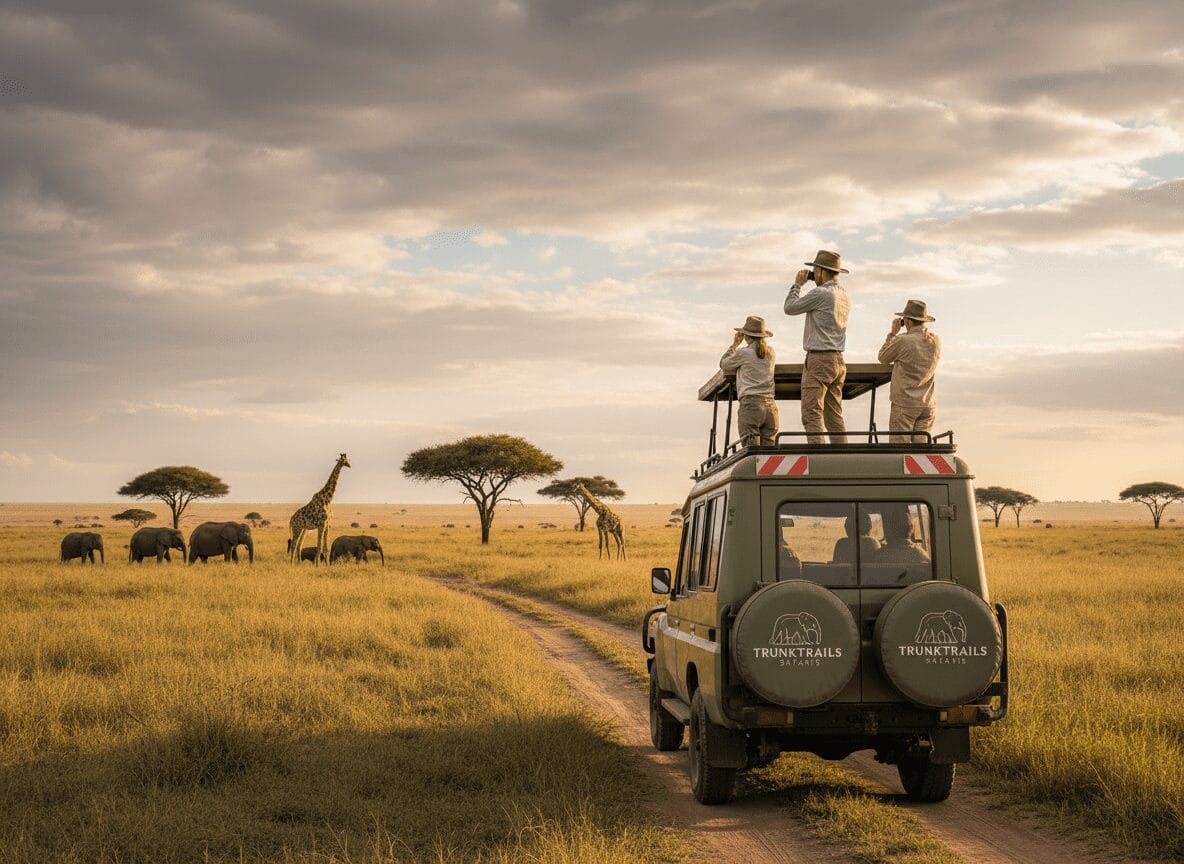 A vehicle safari: or game drive: is conducted in a modified 4WD Land Cruiser or Land Rover with a pop-up roof that allows standing and 360-degree views. You travel with a guide/driver who navigates the reserve, uses radio communication to locate wildlife, and narrates what you are seeing.Vehicle safaris allow you to:
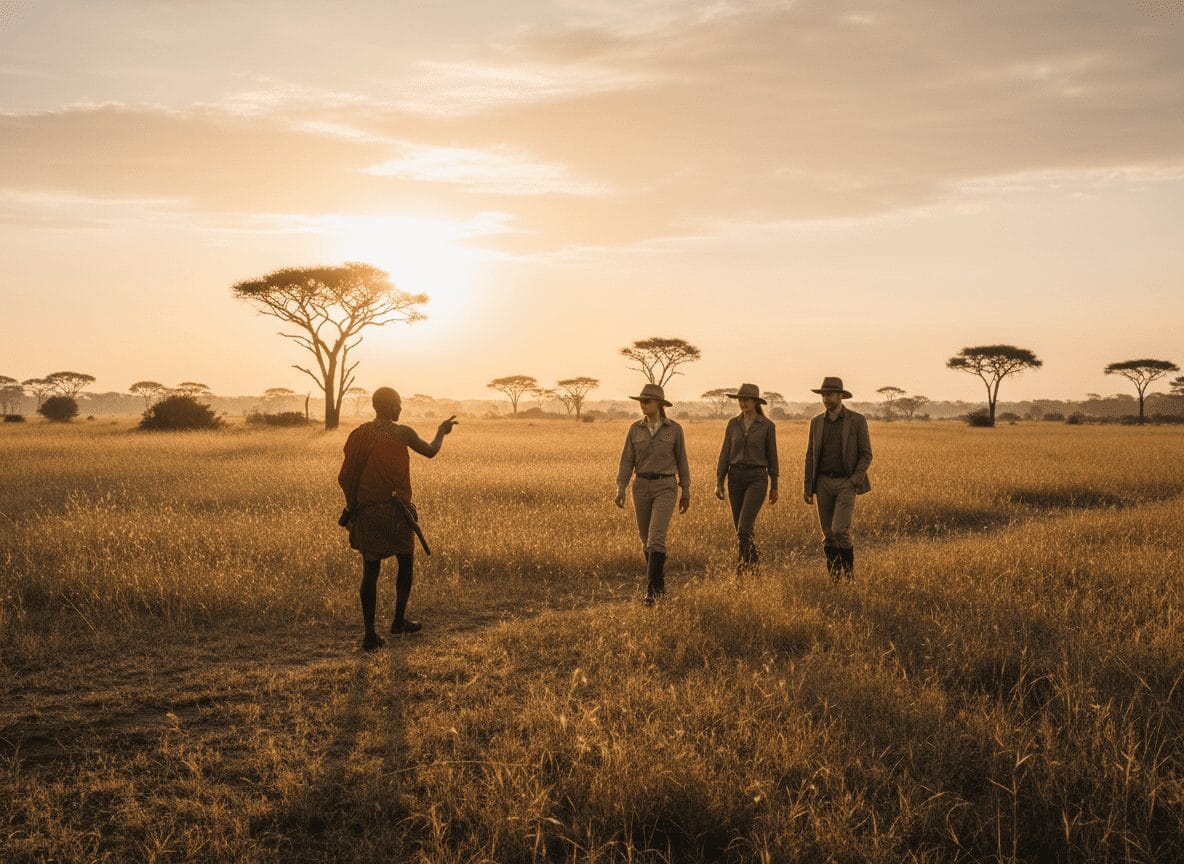 Walking safaris in the Masai Mara ecosystem are available in the private conservancies: Olare Motorogi, Naboisho, Mara North, Ol Kinyei, and others: but not inside the Masai Mara National Reserve itself (reserve regulations prohibit foot safaris).Other Kenya locations with excellent walking safari offerings: