Tented camp and lodge masai mara create very different safari moods. One shapes how you sleep, eat, and hear the bush after dark. The other changes how much privacy, polish, and pace you carry through the trip. That is the tented camp vs lodge masai mara decision.This is the call Trunktrails Safaris helps travellers make every week. We are Nairobi-based and Kenyan-owned. Our team knows which properties still feel right after the marketing photos stop. We match guests to camps that deliver on guiding, location, comfort, and value.Sometimes the better fit is tented camp. Sometimes it is lodge masai mara. Here is the honest tented camp vs lodge masai mara comparison, the way we explain it on a planning call.
Quick Comparison: Tree House Lodge vs Tented Camp
| Factor | Tree House / Elevated Lodge | Ground-Level Tented Camp |
| Elevation | Built into trees or on platforms 5 to 20m above ground | Ground level: canvas walls, wooden decks |
| Wildlife Interaction | Aerial perspective; birds eye view | Eye-level with passing wildlife; animals walk through camp |
| Privacy | High: elevated position above camp activity | High: individual tented enclosures |
| Night Sounds | Canopy sounds: insects, owls, tree frogs | Ground-level sounds: lions, hippos, hyenas nearby |
| Photography | Excellent for overhead wildlife and landscape shots | Excellent for eye-level sightings from tent decks |
| Accessibility | Stairs or ladders required; not suitable for limited mobility | Flat access; suitable for most travelers |
| Weather | Wind exposure at height; cooler at elevation | Ground temperature; hotter in summer midday |
| Bush Immersion | Different: above rather than within | Full immersion: sounds, smells, proximity |
| Availability | Limited: few Kenya properties offer true tree lodges | Very common: most quality Masai Mara camps |
| Best For | Photographers, bird enthusiasts, unique experience seekers | All safari travelers; traditional immersive experience |
How Location and Camp Category Shape Your Safari Experience
Where your camp sits on the map—the heart of the Masai Mara, a private conservancy, or just beyond the reserve boundary—makes a surprising difference to your daily rhythm and overall experience.- Luxury and Upmarket Camps:
Usually, the highest-end camps secure prime positions inside the main reserve or deep within renowned conservancies like Mara North or Olare Motorogi. These locations put you right where the action is at dawn and dusk, with front-row seats to river crossings, predator hotspots, or migration routes. No time lost commuting; you’re in the bush with the first and last light.
- Mid-Range Camps:
These are sprinkled both inside and immediately outside the reserve. Some offer excellent value by nestling in lesser-known but wildlife-rich corners, letting you escape crowds while still offering swift access to game viewing.
- Budget Camps:
Most are located just beyond the park boundary, particularly around Sekenani and Talek gates. You still get full access to all the action—game drives remain inside the reserve—but each excursion starts and ends with a short transfer through entry gates. For some, this means more rigid timings, less flexibility for sunrise and sundowner drives, and returning to camp before the gates close at dusk.
Tip:
If maximizing wildlife time and spontaneous game drives is your priority, location matters as much as the camp style. For ultimate immersion, being inside the reserve or within a reputable conservancy (like those partnered with local communities) often pays off in sheer access and wildlife encounters. If value is king and you’re comfortable with a bit of extra travel each day, the camps outside the boundary can still deliver an incredible Mara experience—just with a slightly different morning and evening routine.Masai Mara Accommodation Pricing: What to Expect
So, how much will that dream stay in the Masai Mara set you back? Prices span a broad spectrum—much like the lodges and camps themselves.Luxury Camps and Lodges
If you’re picturing lantern-lit terraces, wildly attentive service, and a hippo grunting across the river below your deck, expect luxury camps and lodges to start around $500–$700 USD per person per night and climb higher (sometimes well over $1,000) for ultra-private suites and renowned brands like &Beyond, Fairmont, Angama Mara, or Mahali Mzuri. These rates usually cover full board, guided game drives, drinks, and all the creature comforts you didn’t know you’d miss in the bush.Mid-Range and Upper Mid-Range Camps
Not looking to max out the credit card? The Masai Mara’s excellent mid-range and upper mid-range properties typically land between $250 and $500 USD per person per night. Think: solid amenities, great guiding, and a real bush feel—often with extras like swimming pools, proper lounges, and larger family tents. Value here is strong, with many camps located within or just outside the main reserve.Budget Options
Travelers watching their budget can find reliable, no-frills camps starting from about $100–$250 USD per person per night. These budget camps are usually just outside the main gate but still grant good access to the best wildlife spots in the park. You’ll get a comfortable bed, hearty meals, and daily game drives—though expect simpler setups and less polish.Quick tip: Nearly all rates vary by season, with peak months (like the Great Migration) costing the most and April–May (long rains) offering discounts. Always check what’s included—some rates are fully inclusive, while others may leave out park fees or certain activities.Are Private Houses and Home-Style Stays an Option in Masai Mara?
The concept of private houses and home-style accommodations is a newer, relatively rare addition to the Masai Mara safari scene—but it’s gaining traction among travelers who crave exclusivity. These standalone homes or cottages usually accommodate small groups or families seeking a more private, self-contained experience than what typical camps and lodges provide.You won’t find a limitless array of options (nothing like the proliferation of tented camps, for example), but a select handful of properties in and around the Masai Mara offer entire houses for exclusive use. These are often set apart from main lodges, designed for groups looking for personal space, private chefs, and tailored guiding. They’re ideal if you want to control your own safari pace, dine when and where you like, and enjoy the bush mostly to yourself—a popular choice for multi-generational families or close friends traveling together.That said, availability is limited, and rates are usually on the higher end, reflecting the bespoke, private nature of these stays. If a home-away-from-home with full privacy is what you’re after, it’s wise to book well in advance, especially for peak migration months. Private house safari experiences add a unique twist to the Masai Mara adventure—and for many, that extra dose of comfort and seclusion is worth it.Tree House and Elevated Lodge Experiences in Kenya
What Tree Lodge Accommodation Looks Like

True tree lodges in Kenya are relatively rare and highly distinctive. Several properties in the greater Masai Mara ecosystem and in the broader Laikipia and highland areas offer elevated structures built into the canopy or on high rocky outcrops. The Aberdare National Park is famous for its tree hotels: Treetops and The Ark: where guests watch wildlife from elevated platforms above waterhole-lit clearings, a tradition dating back to 1932.In the greater Masai Mara area, a small number of lodges incorporate elevated rooms or viewing platforms that rise above the treeline. These offer:
- Panoramic savannah views: From above the acacia line, sight lines extend to the horizon
- Sunrise and sunset photography: Unobstructed 360-degree light at dawn and dusk
- Aerial wildlife viewing: Elephant herds visible from above; bird migration patterns; the scale of the landscape fully appreciated
- Canopy wildlife: Tree-dwelling species: monkeys, hornbills, nightjars, leopards resting in trees: are encountered differently from above
What the Experience Feels Like
Arriving at an elevated lodge and climbing to your room above the treeline is a distinct experience. The sound profile changes: you hear more wind, more birds, and less of the ground-level animal traffic that passes through a tented camp. At night, the sky is typically more visible, and the sense of floating above the African landscape can feel genuinely otherworldly.The architectural drama of an elevated structure is significant for many travelers. The photographs from a deck 15 meters up, looking out over the Mara plains at dawn, are unlike anything achievable from ground level.
Traditional Ground-Level Tented Camps
What Tented Camp Accommodation Looks Like
The classic Masai Mara safari experience is a luxury tented camp: individual canvas rooms on wooden platforms, positioned along a riverbank or on the plains’ edge, with en-suite bathrooms, a private veranda, and the sounds of the African bush as your constant companion.
These camps tend to be small, boutique-style properties designed to merge seamlessly into their natural surroundings. They operate to the highest eco-friendly standards, reflecting an underlying idea: offer genuine comfort and luxury while remaining as close to nature as possible. This approach recreates the sense of adventure from decades ago, when just a canvas tent separated guests from the elements and the wild animals beyond.The defining quality of a ground-level tented camp is proximity. Animals pass through the camp at night: elephants move between tents, hippos graze the riverbank outside your bathroom, hyenas investigate the kitchen area after dark. You are on the ground. The wildlife is on the ground. The separation between you and the ecosystem is canvas, not timber platforms.
This blend of intimacy and authenticity is what continues to draw travelers to tented camps throughout the Masai Mara.Budget Tented Camps: What to Expect
Budget tented camps have emerged in the Masai Mara to meet the needs of travelers seeking an authentic safari without the premium price tag. These camps usually sit just beyond the official reserve boundaries, often clustered along access roads or in nearby conservancies.A typical budget camp offers:- Simple, comfortable accommodation: Expect basic canvas tents or rustic cabins, sometimes with shared bathroom facilities or simple en-suite setups.
- Essential amenities: Bedding, lighting, and meals are provided, but luxury touches are minimal—think more “classic camping” than “high-style glamping.”
- Lively communal atmosphere: Dining and campfire areas are often shared, giving guests a chance to swap safari stories and advice.
- Wildlife proximity with a buffer: While not located directly inside the main reserve, many camps are still close enough that wildlife sometimes wanders through camp, especially at night. Guided game drives venture daily into the heart of the Masai Mara, with travel time to the park gate part of the daily rhythm.
- Cost-effective adventure: These camps cater especially to younger travelers, solo adventurers, and small groups who value access to the Mara’s wonders over frills.
The trade-off for the budget rate? You’ll typically enter and exit the reserve for each drive, rather than stepping straight from your tent onto the plains. But for many, the chance to experience Africa‘s legendary landscapes up close—without splurging—is a core part of the adventure.What Upper Mid-Range Camps Offer
Upper mid-range camps in the Masai Mara strike a thoughtful balance between comfort and value—without sacrificing the classic safari atmosphere. These camps are typically a little larger than the most exclusive tented hideaways, blending a lodge-like sense of space with the immersive charms of life at ground level.Most feature well-appointed tents or chalets with en-suite bathrooms and elevated attention to guest comfort. Communal areas are inviting and spacious, including comfortable lounges, vibrant dining rooms, and often a swimming pool perfect for a midday reprieve from the equatorial sun. Some camps add a dash of indulgence with purpose-built spas or wellness centers—think post-game-drive massages or yoga with a view of the plains.For those who like to bring a bit of the Mara home, well-stocked gift shops are found at many upper mid-range camps, offering everything from local Maasai beadwork to a forgotten pair of binoculars. Wi-Fi is commonly available in public areas, and families or groups will find larger common spaces ideal for sharing stories from the day’s adventures.You’ll often find these camps right within or adjacent to the main reserve, so the wildlife experience remains front and center—proximity to big game, early morning drives, and the chance to listen to the hippos from your veranda are all part of the package. With a mix of practical amenities and safari essentials, these camps cater to travelers seeking both convenience and authenticity.The Immersion Factor
For most safari travelers, the ground-level tented camp delivers the experience they came for: waking to lion calls at 3am from just across the river, hearing hippos grunt in the channel below your veranda, watching a giraffe browse the acacia ten meters from your tent during morning coffee.This sensory immersion is what the Masai Mara tented camp experience has always been about: not viewing the landscape from a height, but existing within it.
Photography from Ground Level
Ground-level tented camps provide remarkable photography opportunities from tent decks and verandas. Eye-level shots of elephants, giraffe, and birds from your private deck at sunrise are some of the most intimate wildlife photographs possible. The guide vehicle provides elevated windows for game drive photography, while the camp itself offers ground-level encounters throughout the day.
How Wildlife Encounters Differ
| Wildlife Type | Tree Lodge / Elevated | Ground-Level Tented Camp |
| Elephants | Aerial perspective; herd patterns visible | Eye-level; trunk at eye height; intimate |
| Birds | Excellent: canopy level; raptors; migration patterns | Ground birds, water birds, dawn chorus |
| Leopards in trees | Good: eye level or above resting position | Below: looking up at tree-resting cats |
| Lions | Difficult to see detail from height | Eye-level on plains; intimate from vehicle |
| Hippos | Aerial view of pod patterns | Water-surface level; closest possible from bank |
| General wildlife | Landscape scale; herd movements | Detail and behavioral observation |
Accessibility and Comfort Considerations
Tree house and elevated lodges require guests to navigate stairs or ladders. Some properties have steep access routes between the main lodge and individual elevated rooms. This makes them unsuitable for travelers with limited mobility, older guests, or young children.Ground-level tented camps are generally flat-access with boardwalk pathways between structures. Most quality tented camps are fully accessible for a wide range of mobility levels.
Eco-Friendly and Sustainable Practices in Luxury Camps
Sustainability is central to the ethos of many luxury safari camps in the Masai Mara. In keeping with the tradition of minimal-impact travel—canvas tents, open-sided lounges, and riverside camps—today’s lodges have elevated those principles to meet rigorous modern standards.Here’s how top-end camps integrate eco-friendly practices into the guest experience:- Solar Power and Renewable Energy: Many camps rely on solar arrays for electricity, powering guest tents, main areas, and even heating water for showers. Backup generators are used sparingly, often with a focus on minimizing noise pollution and emissions. Tesla Powerwalls and similar battery systems are increasingly common.
- Advanced Waste Management: State-of-the-art waste separation, composting, and “leave no trace” policies are widely practiced. Camps transport non-biodegradable waste out of the reserve to minimize environmental impact.
- Water Conservation: Rainwater harvesting, low-flow fixtures, and graywater recycling systems reduce water consumption. Some camps employ UV water purification to make borehole or river water safely potable.
- Local Sourcing and Community Engagement: Ingredients for meals are often sourced from nearby communities or camp gardens, reducing food miles and supporting local economies. Many camps hire predominantly from nearby villages, bolstering conservation through employment.
- Eco-Friendly Architecture: Structures are designed to blend seamlessly with the landscape and to be fully removable, using timber from certified sustainable forests, natural stone, and recycled materials wherever possible. No concrete foundations—preserving the site for future generations.
- Low-Impact Game Viewing: Camps often adhere to strict wildlife viewing codes, limiting vehicle numbers around sightings and driving only on established tracks to reduce habitat disturbance.
The result is a safari camp experience that honors the spirit of early explorers—light on the land, deeply connected to the ecosystem, and a positive force for conservation and community development.Which Should You Choose?
Choose a Tree House or Elevated Lodge If You:
- Want a unique, architecturally dramatic accommodation experience that stands apart from standard tented camps
- Are a photographer particularly interested in landscape and aerial wildlife perspectives
- Are a bird enthusiast who wants canopy-level access to tree-dwelling species
- Have done multiple ground-level tented camps and want to try something different
- Are visiting the Aberdares specifically for the waterhole tree hotel experience
Choose a Ground-Level Tented Camp If You:
- Want the full, authentic Masai Mara bush immersion experience: animals walking through camp, sounds at night
- Are on your first or second safari and want the classic canvas-and-savannah experience
- Travel with children, older guests, or anyone with mobility considerations
- Want to photograph eye-level wildlife from your tent veranda
- Are staying near the Mara River for wildebeest crossing position
For most Masai Mara safaris, the ground-level tented camp is the definitive and recommended experience. Tree house accommodation adds a unique dimension for return visitors or photographers seeking a different perspective.
Ready to Plan Your Kenya Safari? Talk to Trunktrails Safaris
Trunktrails Safaris designs tailor-made tours and safaris for every traveller and every budget. From green-season adventures to private luxury camps, our tours and safaris are built by a Nairobi-based team that speaks to you directly, not through a call centre. Most WhatsApp enquiries about our Kenya tours and safaris get a reply from Trunktrails Safaris within the hour.WhatsApp: +254 113 208888Email: info@trunktrailssafaris.comWebsite: https://trunktrailssafaris.com | Native Kenyan Owned | Conservation First | 24/7 Support
Book Your Safari
Tell us what kind of stay you are looking for and we will identify the Masai Mara properties that deliver it best.
Further reading
More safari planning resources


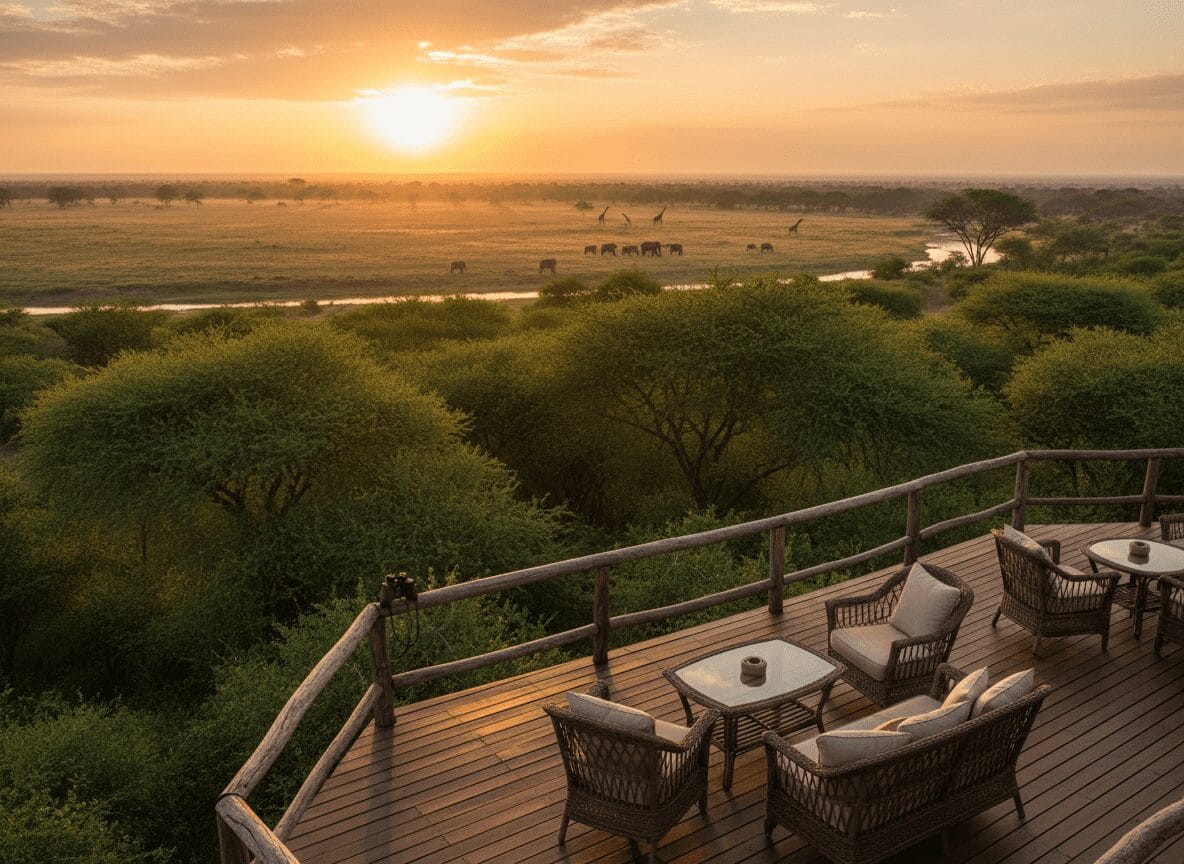 True tree lodges in Kenya are relatively rare and highly distinctive. Several properties in the greater Masai Mara ecosystem and in the broader Laikipia and highland areas offer elevated structures built into the canopy or on high rocky outcrops. The Aberdare National Park is famous for its tree hotels: Treetops and The Ark: where guests watch wildlife from elevated platforms above waterhole-lit clearings, a tradition dating back to 1932.In the greater Masai Mara area, a small number of lodges incorporate elevated rooms or viewing platforms that rise above the treeline. These offer:
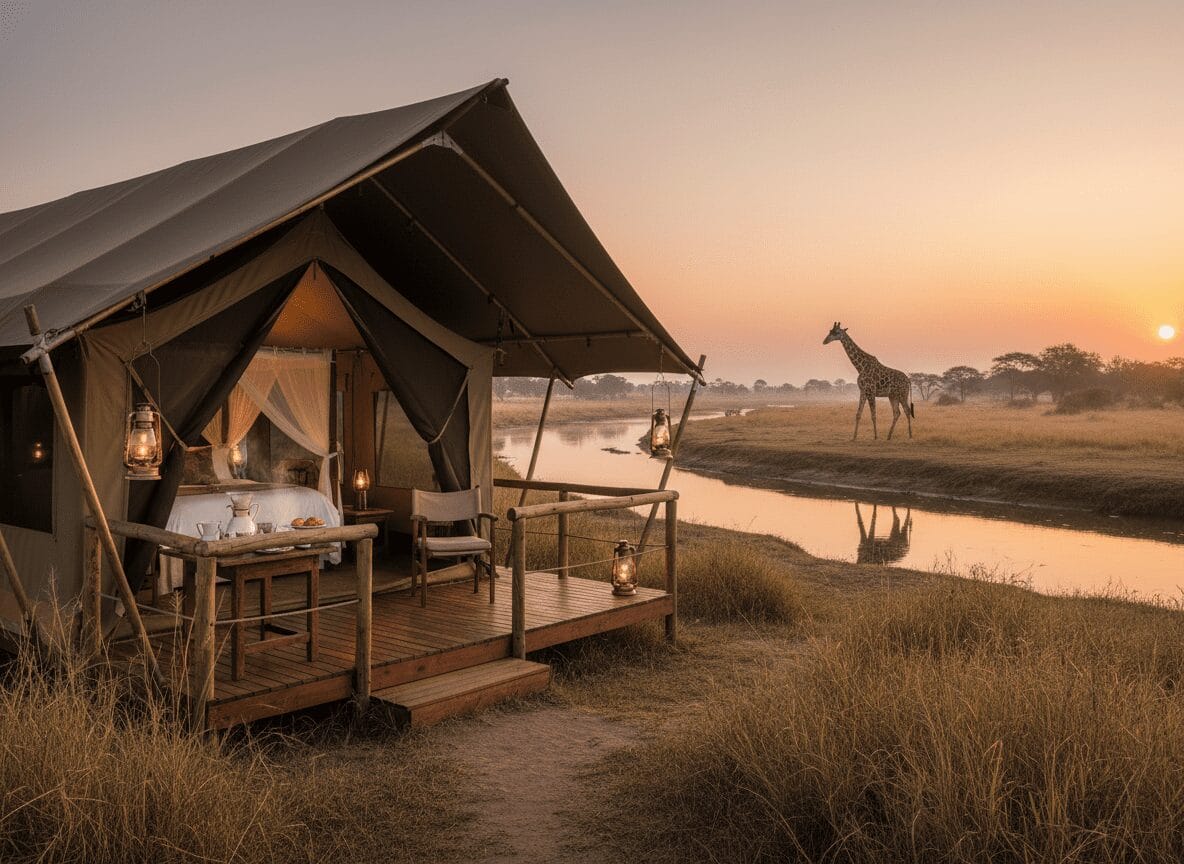 The classic Masai Mara safari experience is a luxury tented camp: individual canvas rooms on wooden platforms, positioned along a riverbank or on the plains’ edge, with en-suite bathrooms, a private veranda, and the sounds of the African bush as your constant companion.These camps tend to be small, boutique-style properties designed to merge seamlessly into their natural surroundings. They operate to the highest eco-friendly standards, reflecting an underlying idea: offer genuine comfort and luxury while remaining as close to nature as possible. This approach recreates the sense of adventure from decades ago, when just a canvas tent separated guests from the elements and the wild animals beyond.The defining quality of a ground-level tented camp is proximity. Animals pass through the camp at night: elephants move between tents, hippos graze the riverbank outside your bathroom, hyenas investigate the kitchen area after dark. You are on the ground. The wildlife is on the ground. The separation between you and the ecosystem is canvas, not timber platforms.This blend of intimacy and authenticity is what continues to draw travelers to tented camps throughout the Masai Mara.