Rhino Sanctuary Lewa Downs Kenya: How Loisaba Conservancy Is Bringing Back the Big Five
The rhino sanctuary Lewa Downs Kenya built more than forty years ago did something few conservation projects manage. It proved black rhinos could recover in the wild if a landscape gave them enough protected space and enough patrols. That proof became the blueprint for Loisaba Conservancy, a neighboring Laikipia landscape that welcomed rhinos back in September 2023 after roughly fifty years without them. For the first time in decades, Loisaba can now call itself a genuine Big Five destination, and Trunktrails Safaris has been watching this comeback closely because it changes what a Laikipia safari itinerary can include.
This guide walks through what happened at Loisaba, why Lewa Wildlife Conservancy’s rhino sanctuary model made it possible, and how travelers booking tours and safaris in Laikipia can now build a rhino-focused route between the two conservancies.
Why Rhino Reintroduction in Laikipia Matters
Kenya’s black rhino population fell from an estimated 20,000 animals in the 1970s to fewer than 300 by the early 1990s, largely from poaching. Recovery since then has depended on a small number of intensively guarded sanctuaries rather than open, unprotected rangeland. Lewa Wildlife Conservancy became one of the earliest of these strongholds, and Ol Pejeta Conservancy further south grew into the largest black rhino sanctuary in East Africa. Loisaba’s 2023 reintroduction added a third major rhino landscape to this Laikipia cluster, which matters because more connected, well-managed sanctuary space gives Kenya’s rhino population more room to grow beyond the ceiling any single conservancy can support.
Reintroducing rhino to a landscape that has gone fifty years without them is not a decision one organization makes alone. Loisaba’s 2023 translocation was coordinated with the Kenya Wildlife Service, which oversees every rhino movement in the country, alongside The Nature Conservancy and San Diego Zoo Wildlife Alliance, both of which supported the sanctuary infrastructure and veterinary planning. Lewa Wildlife Conservancy has run a similar multi-partner model since the 1980s, working with neighboring community conservancies under the wider Northern Kenya conservation network so that rhino protection also translates into jobs, schools, and healthcare funding for the people living alongside the sanctuary boundary. That community link is part of why both sanctuaries have held their rhino populations without major poaching losses in recent years, and Loisaba is now building the same community revenue structure Lewa proved out decades earlier.
Loisaba Conservancy’s Rhino Return: The Story So Far
Loisaba Conservancy sits in northern Laikipia along the Ewaso Ng’iro River, roughly 230 square kilometers of savanna, riverine forest, and rocky escarpment. Rhinos had not lived there since the 1970s, when poaching pushed the species out of most of Laikipia. In September 2023, Loisaba Conservancy partnered with the Kenya Wildlife Service, The Nature Conservancy, and San Diego Zoo Wildlife Alliance to translocate founder black rhinos into a newly built, intensively guarded sanctuary zone inside the conservancy.
That sanctuary zone runs on the same principles Lewa pioneered: an electrified perimeter fence, a dedicated ranger and tracking team, and rhino monitoring built into daily conservancy operations. Loisaba’s rangers now track each rhino’s movements and health individually, the same protocol Lewa Wildlife Conservancy has run for decades. Completing this reintroduction gave Loisaba its full Big Five, joining lion, leopard, elephant, and buffalo, a milestone that had eluded the conservancy for half a century.
Lewa Downs: The Rhino Sanctuary Kenya Built First
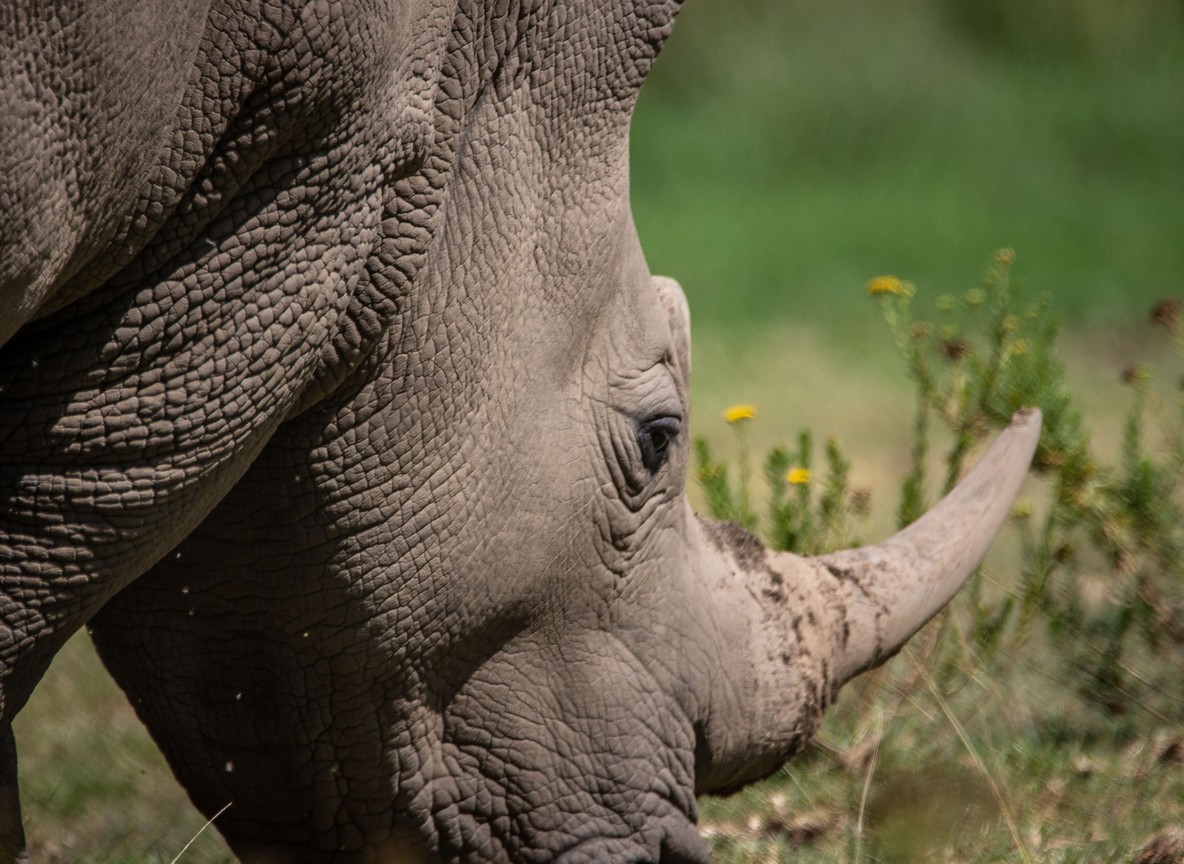
Long before Loisaba’s reintroduction, Lewa Downs was already showing what a dedicated rhino sanctuary could achieve. Lewa Wildlife Conservancy, a UNESCO World Heritage Site as part of the greater Mount Kenya ecosystem, covers approximately 250 square kilometers and now holds one of Kenya’s largest single rhino populations, including both black and white rhinos. Lewa’s model combined fenced sanctuary zones, community revenue sharing with neighboring group ranches, and round-the-clock ranger patrols, and it has been copied across Kenya’s private and community conservancies ever since.
Loisaba’s conservation team drew directly on Lewa’s methods when designing its own sanctuary, from fence specifications to ranger deployment ratios. That continuity is why travelers researching a rhino sanctuary Lewa Downs Kenya style safari now have two connected options in the same region rather than one isolated destination.
Laikipia’s Big Five: What Changed at Loisaba
Before 2023, a Loisaba safari already delivered strong lion, leopard, elephant, and buffalo sightings, plus activities most Laikipia conservancies do not offer, including camel treks and night game drives. What it lacked was rhino, which meant guests chasing a genuine Big Five checklist had to add a second conservancy to their itinerary. The 2023 reintroduction closed that gap. Guests staying at Loisaba can now realistically see all five animals without leaving the conservancy, provided their guide can access the sanctuary zone during their stay.
Trunktrails Safaris has updated its Laikipia itineraries to reflect this shift, since a single-base Big Five stay at Loisaba now competes directly with the traditional Lewa or Ol Pejeta routing that guests have booked for years.
Loisaba vs Lewa Downs: Comparing Kenya’s Rhino Sanctuaries
| Detail | Loisaba Conservancy | Lewa Wildlife Conservancy |
|---|---|---|
| Rhino sanctuary established | September 2023 | 1983 (formalized as Lewa Downs rhino sanctuary) |
| Conservancy size | Approx. 230 km2 | Approx. 250 km2 |
| Rhino species present | Black rhino | Black rhino and white rhino |
| Big Five status | Achieved 2023 | Established for decades |
| UNESCO recognition | No | Yes, part of Mount Kenya World Heritage Site |
| Known for | Camel treks, night drives, riverine scenery | Rhino density, community conservation model |
Best Time and Way to See Rhinos in Laikipia
Rhino sightings in both conservancies are strongest during the dry seasons, roughly June through October and again in January and February, when thinner bush cover and concentrated water sources make tracking easier. Because rhinos in both sanctuaries are monitored individually, guides typically know a rhino’s last confirmed location before a game drive even begins, which shortens search time considerably compared to unmonitored parks.
Morning game drives, generally departing around 6:00 a.m., give the best light and the coolest tracking conditions before rhinos move into shade. Both conservancies also allow walking safaris with armed rangers in designated zones, an experience Lewa has offered for years and that Loisaba has begun introducing around its own sanctuary.
Where to Stay Near Loisaba and Lewa Downs
Loisaba offers a small set of camps inside the conservancy itself, including Loisaba Tented Camp above the Ewaso Ng’iro River and the open-air Loisaba Star Beds, both positioned for easy access to the new rhino sanctuary zone. Lewa Wildlife Conservancy has a longer-established camp network, including Lewa Safari Camp and Lewa Wilderness, both run in close partnership with the conservancy’s rhino monitoring team. Guests who want to compare both rhino sanctuary models on one trip typically fly between the two rather than drive, since the conservancies sit roughly two to three hours apart by road across rougher Laikipia tracks.
Laikipia Rhino Safari Quick Facts
| Detail | Figure |
|---|---|
| Nairobi to Nanyuki, Laikipia gateway town (road) | Approx. 200 km, 3.5-4 hours |
| Nairobi (Wilson Airport) to Loisaba Airstrip (flight) | Approx. 35-40 minutes |
| Nairobi to Lewa Downs airstrip (flight) | Approx. 40 minutes |
| Nairobi to Lewa Wildlife Conservancy (road) | Approx. 280 km, 4.5-5 hours |
| Loisaba Conservancy size | Approx. 230 km2 |
| Lewa Wildlife Conservancy size | Approx. 250 km2 |
| Ol Pejeta Conservancy size (regional comparison) | Approx. 364 km2 |
| Loisaba conservation fee (indicative) | USD 100 per person per night |
| Lewa Wildlife Conservancy entry fee (indicative) | USD 100 per person per day |
| Ol Pejeta Conservancy entry fee (indicative) | USD 90 per person per day |
Fees above are indicative ranges that change by season and camp package, so always confirm current rates before booking.
The Trunktrails Advantage
Trunktrails Safaris builds Laikipia itineraries around what has actually changed on the ground, not outdated checklists. Our guides track which conservancy has the strongest current rhino activity, whether that means a morning at Loisaba’s new sanctuary zone or an afternoon with Lewa’s long-established rhino monitoring team. We work directly with camps at both Loisaba and Lewa Wildlife Conservancy, so guests booking tours and safaris with us can combine the two in a single Laikipia routing instead of choosing between them.
Every Trunktrails Safaris itinerary in this region includes a briefing on the conservation story behind each sighting, because guests consistently tell us that knowing how a rhino got there matters as much as seeing it. Our tours and safaris are built for travelers who want their trip to double as a real look at what conservation recovery looks like on the ground. 🦏
Plan Your Laikipia Rhino Safari
Further reading
More safari planning resources
- Ol Pejeta and Sweetwaters safari package from Valley Safaris
- Big Five safari parks guide on Touring Insights
- Big Five safari collection on FindMySafari
- Nairobi to Maasai Mara route guide from Valley Safaris
If you want to see Kenya’s rhino recovery story firsthand, from the original rhino sanctuary Lewa Downs Kenya built decades ago to Loisaba Conservancy’s newly completed Big Five, Trunktrails Safaris can build the route. Message us on WhatsApp at +254 113 208888 or email info@trunktrailssafaris.com to start planning a Laikipia rhino safari with tours and safaris tailored around current rhino activity at both conservancies. Visit trunktrailssafaris.com to see camps and conservancies we work with directly. 🌍