
Mount Kenya & Nanyuki — Trekking, Wildlife & Safari Guide
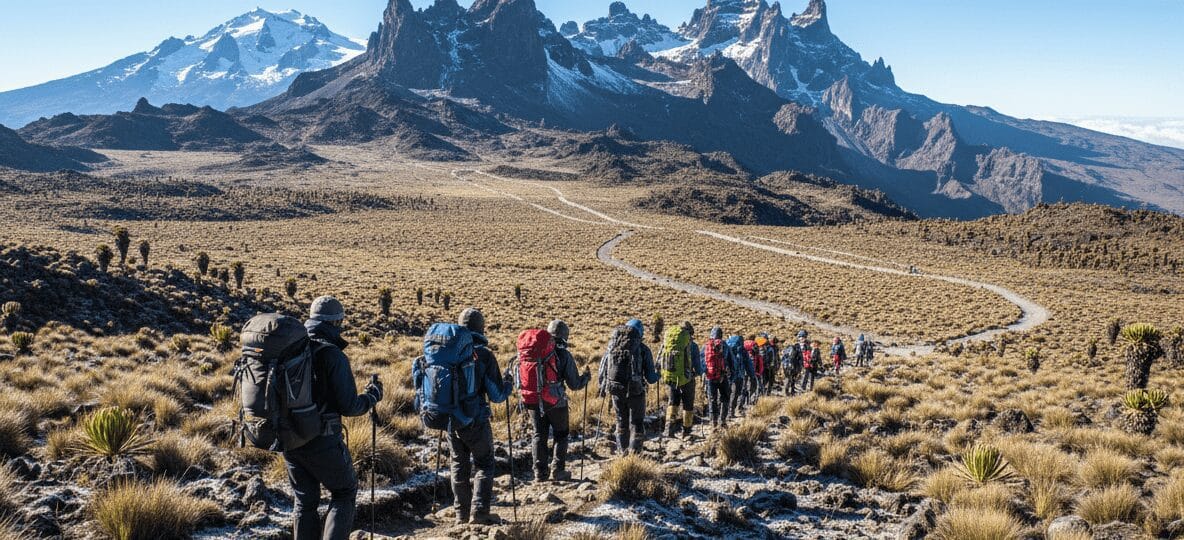
Mount Kenya stands at 5,199 meters above sea level. Its snow-capped peaks command the skyline of Central Kenya. This majestic mountain is Africa’s second-highest peak and a UNESCO World Heritage Site. It offers adventurers a rare mix of high-altitude trekking, diverse wildlife, and authentic safari experiences.
Are you planning to summit Point Lenana? Or perhaps track elephants through montane forests? Either way, this Mount Kenya safari and trekking guide covers everything you need. Use it to plan the adventure of a lifetime.
At Trunktrails Safaris, we have guided travelers through Mount Kenya National Park for years. Our local expertise and safety standards combine to deliver unforgettable mountain experiences.
Why Mount Kenya Should Be on Your Bucket List
Mount Kenya is not just another mountain. It is a complete ecosystem. It rises from savannah grasslands, through bamboo forests, all the way to alpine moorlands and glacial peaks. Here is why this destination belongs on your East African itinerary:
- UNESCO World Heritage Status: Recognised globally for its outstanding natural beauty and ecological value
- Africa’s Second-Highest Peak: At 5,199m (Point Batian), it challenges you without the crowds of Kilimanjaro
- Unique Wildlife: Home to rare species like the Mount Kenya mouse shrew and endemic plants found nowhere else
- Multiple Trekking Routes: From beginner-friendly trails to technical climbs, every fitness level is catered for
- Year-Round Access: Unlike many high-altitude destinations, Mount Kenya can be trekked throughout the year
- Cultural Significance: Sacred to the Kikuyu people, who call it Kirinyaga – Place of Light
The mountain’s altitude zones create distinct habitats. Each zone supports different wildlife communities. According to Kenya Wildlife Service, the park protects over 882 square kilometres of pristine mountain wilderness.
Mount Kenya Trekking Routes: Choose Your Adventure
Three main routes lead trekkers toward the summit. Each route offers unique landscapes and its own challenges. We match you to the right route based on your experience and time available.
Sirimon Route (Northwest)
The Sirimon route is our top pick for first-time Mount Kenya trekkers. It starts on the drier northwest side. As a result, it gives you more time to acclimatise gradually. Key features include:
- Gradual altitude gain for better acclimatisation
- Stunning scenery through moorlands with giant lobelias and groundsels
- Wildlife sightings including buffalo, elephants, and various antelope species
- Duration: 4-5 days to Point Lenana (4,985m) and back
- Difficulty: Moderate
Chogoria Route (East)
Many climbers call the Chogoria route the most beautiful path up Mount Kenya. It approaches from the east through lush bamboo forests. Along the way, you pass pristine mountain lakes and dramatic valley views.
- Spectacular views of Gorges Valley and Lake Michaelson
- Diverse vegetation zones from forest to alpine desert
- Longer approach allows excellent acclimatisation
- Duration: 5-6 days
- Difficulty: Moderate to challenging
Naro Moru Route (West)
The Naro Moru route is the fastest path to Point Lenana. It is popular but demanding. Be prepared for a steep climb and rapid altitude gain.
- Shortest route to the summit
- Steeper ascent with less time for acclimatisation
- Vertical Bog section can be tricky in wet conditions
- Duration: 3-4 days
- Difficulty: Challenging
Pro Tip: We often combine routes – ascending via Sirimon and descending via Chogoria. This way, you experience the best of both worlds. Visit trunktrailssafaris.com/contact to plan your custom itinerary.
Wildlife in Mount Kenya National Park
Many visitors come to Mount Kenya for the peaks. However, the national park also offers exceptional wildlife viewing. Its biodiversity spans multiple altitude zones – from lowland forests to high alpine conditions.
Large Mammals
- Elephants: Forest elephants roam the lower slopes, especially in the bamboo zone
- Buffalo: Cape buffalo herds frequent the moorlands and forest edges
- Bongo Antelope: This rare forest antelope is one of Mount Kenya’s most prized sightings
- Black and White Colobus Monkeys: These acrobatic primates swing through the forest canopy
- Leopards: Rarely seen, but present throughout the park
- Hyenas and Jackals: Spotted at higher elevations
Birdlife
Mount Kenya is a birder’s paradise. The park records over 130 species, including:
- Scarlet-tufted malachite sunbird
- Alpine chat
- Augur buzzard
- Lammergeier (bearded vulture)
- Jackson’s francolin
The best wildlife viewing happens in the forest and bamboo zones between 2,000-3,500 metres. Go out early in the morning or late in the afternoon for the highest chance of sightings.
Nanyuki: Your Gateway to Mount Kenya Adventures
Nanyuki sits on the equator at 1,949 metres. It is the main base camp for Mount Kenya expeditions. The town started as a colonial-era ranching centre. Today, it has grown into a modern adventure hub. Importantly, it still keeps its frontier charm.
What to Do in Nanyuki Kenya
- Stand on the Equator: Visit the equator markers and watch water demonstrations of the Coriolis effect
- Nanyuki Airfield: Watch military and civilian aircraft at this busy highland airfield
- Local Markets: Browse fresh produce and crafts at the bustling town market
- Restaurants and Cafes: Enjoy great coffee and international cuisine at Dormans and Trout Tree Restaurant
- Gear Shopping: Stock up on last-minute trekking supplies at local outfitters
Nanyuki’s altitude makes it ideal for acclimatisation before your trek. We therefore recommend spending at least one night here before you ascend Mount Kenya.
Day Trip to Ol Pejeta Conservancy from Nanyuki
Ol Pejeta Conservancy is just 25 kilometres from Nanyuki. It is East Africa’s largest black rhino sanctuary. Furthermore, it is home to the last two northern white rhinos on Earth. Adding it to your Mount Kenya itinerary is an easy and rewarding choice.
Ol Pejeta Highlights
- Rhino Sanctuary: See both black and white rhinos in their natural habitat
- Chimpanzee Sanctuary: Visit rescued chimps at the Sweetwaters Chimpanzee Sanctuary
- Big Five Viewing: Spot lions, leopards, elephants, buffalo, and rhinos
- Mount Kenya Backdrop: Photograph wildlife with the mountain behind you
- Night Game Drives: Experience nocturnal wildlife on special evening safaris
A full-day Ol Pejeta safari includes morning and afternoon game drives. Lunch is served at the Sweetwaters Serena Camp. Our team arranges seamless day trips that complement your Mount Kenya trekking adventure. Email us to add Ol Pejeta to your itinerary.
Best Mount Kenya Lodges and Accommodation Near Nanyuki
Your choice of accommodation shapes your Mount Kenya experience. We work with a range of properties to suit different budgets and preferences.
Luxury Options
- Fairmont Mount Kenya Safari Club: Historic luxury resort with a golf course, animal orphanage, and mountain views
- Serena Mountain Lodge: Tree-lodge style property with waterhole viewing and forest walks
- Ol Pejeta Bush Camp: Intimate tented camp inside Ol Pejeta Conservancy
Mid-Range Lodges
- Mountain Rock Lodge: Comfortable banda-style accommodation near Naro Moru Gate
- Nanyuki Sportsman’s Arms: Colonial-era hotel in the heart of Nanyuki town
- Kongoni Camp: Eco-friendly camp on the northern slopes
Mountain Huts (Trekking)
During your trek, you will stay in mountain huts run by Kenya Wildlife Service:
- Old Moses Camp (3,300m): First night on the Sirimon route
- Shipton’s Camp (4,200m): High-altitude base camp
- Mackinder’s Camp (4,200m): Alternative high camp on the Naro Moru route
All our Mount Kenya trekking packages include accommodation, meals, and experienced mountain guides. Visit trunktrailssafaris.com/contact to explore package options.
Best Time to Visit Mount Kenya and Nanyuki
Mount Kenya can be trekked year-round. However, weather patterns greatly affect your experience. Here is what to expect in each season:
Dry Seasons (Best for Trekking)
January to February
- Clear skies and excellent visibility
- Cold nights at altitude – below freezing above 4,000m
- Peak season, so expect more trekkers on the trails
June to October
- Driest months with stable weather
- Best wildlife viewing in surrounding areas
- Cooler temperatures, especially in July and August
Wet Seasons
March to May (Long Rains)
- Afternoon showers are common, especially on eastern slopes
- Lush vegetation and fewer crowds make for a peaceful experience
- Trails can be muddy, particularly the Vertical Bog section
November to December (Short Rains)
- Brief afternoon showers are typical during this period
- Good visibility opens up between rain systems
- Excellent for photography, with dramatic cloud formations
Our Recommendation: Plan your visit from January to February or July to September. These months offer the most stable weather for trekking Mount Kenya.
Frequently Asked Questions About Mount Kenya and Nanyuki
How difficult is trekking Mount Kenya?
Trekking to Point Lenana (4,985m) requires good fitness. However, you do not need technical climbing skills. The main challenge is altitude. Proper acclimatisation is essential. We recommend at least 4-5 days on the mountain to allow your body to adjust. The true summits – Batian and Nelion – are a different matter. They require technical climbing skills and specialised equipment.
Do I need a guide to trek Mount Kenya?
Yes. Kenya Wildlife Service requires all trekkers to use a registered guide. Our mountain guides know every route in detail. They monitor your health at altitude and handle all logistics – permits, porters, and meals. This means you can focus entirely on enjoying the experience.
What wildlife will I see on Mount Kenya?
Wildlife sightings vary by altitude and route. In the forest and bamboo zones (2,000-3,500m), you may see elephants, buffalo, antelope, and primates. Above the tree line, look for rock hyrax, eland, and unique bird species. The rare bongo antelope lives in dense forest areas but is seldom spotted.
How far is Nanyuki from Nairobi?
Nanyuki is approximately 200 kilometres north of Nairobi. The drive takes 3-4 hours on good tarmac roads. Alternatively, many visitors fly from Nairobi’s Wilson Airport to Nanyuki Airfield. The flight takes just 45 minutes. We can arrange this as part of your package.
Can I combine Mount Kenya trekking with a traditional safari?
Absolutely! We specialise in combination itineraries. For example, you can pair Mount Kenya trekking with Ol Pejeta Conservancy, Samburu National Reserve, or the Masai Mara. These combinations give you the best of both worlds – mountain adventure and Big Five game viewing.
Start Planning Your Mount Kenya Adventure
Mount Kenya and Nanyuki offer a fresh alternative to Kenya’s traditional safari circuit. Whether you are drawn by high-altitude trekking, rare wildlife, or equatorial mountain culture, this region delivers authentic adventure in spectacular settings.
At Trunktrails Safaris, we have guided hundreds of travelers safely to Point Lenana and beyond. Our Mount Kenya safari and trekking guide expertise means you are well-prepared, properly equipped, and supported every step of the way. As operators, we maintain the highest standards of safety and environmental responsibility.
Ready to summit Africa’s second-highest peak? Contact our team today:
- Phone: – Email:
- Website: trunktrailssafaris.com
Let us craft your perfect Mount Kenya adventure – where snow-capped peaks meet equatorial sun, and every trail leads to unforgettable memories.
Further reading
More safari planning resources
- Ol Pejeta and Sweetwaters safari package from Valley Safaris
- Big Five safari parks guide on Touring Insights
- Compare Kenya safari packages on FindMySafari
- Kenya tour packages from Valley Safaris
Contact Trunktrails Safaris
WhatsApp: +254 113 208888 Email: info@trunktrailssafaris.com Website: https://trunktrailssafaris.com