
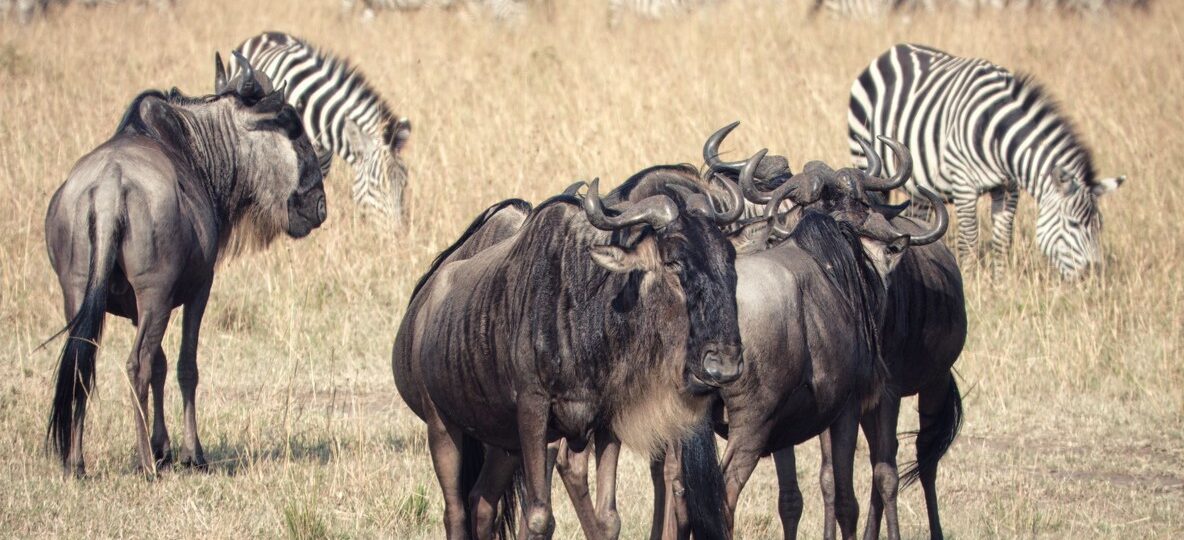
Mara River Crossing July 2026: When to Expect the First Big Wildebeest Crossing
The drumbeat of hooves before a Mara River crossing is something that stays with you long after the flight home. Thousands of wildebeest stacking at the bank, hesitating, retreating, then suddenly committing. The water churns. Crocodiles wait. And somewhere in your chest, you feel the weight of something ancient and wild playing out exactly as it has for thousands of years. 🌍
July 2026 marks the opening chapter of this season’s crossing drama in Kenya’s Masai Mara. At Trunktrails Safaris, our guides have been tracking the herd movement since May, and this guide gives you the intelligence you need to position yourself correctly for the first big mara river crossing july 2026. We cover the key crossing points, the week-by-week timing window, which camps put you riverfront, and what the 2026 conditions look like so far.
What Triggers the First Mara River Crossings Each July?
The wildebeest do not cross the Mara River on a fixed calendar date. They cross when the grass on the Kenyan side runs greener than the Tanzanian Serengeti they have already grazed down. Three factors drive that trigger each year.
Grass depletion in the Serengeti: By late June, approximately 1.5 million wildebeest, 200,000 zebra, and 350,000 Thomson’s gazelles have grazed the southern and central Serengeti down to bare soil. The pressure to move north builds.
Rainfall patterns in Kenya: If the long rains (March-May) in the Masai Mara were good, the Kenyan short grass plains will be lush and green in July. A well-rained 2026 long season means the pull north is strong earlier.
River levels: The Mara River rises after Kenyan and Tanzanian highland rains. A river running too high discourages crossings. Too low and the crocodiles concentrate. The sweet spot is a moderate flow, and in July 2026 the Mara River is tracking at seasonal average levels. 📸
The first crossings are rarely mass events. Scouts cross in groups of 50 to 500, test the banks, and retreat. This “false start” behaviour can repeat several times before the first true big crossing of hundreds of thousands. Most years, the first significant crossing happens between July 5 and July 20.
Where Are the Main Mara River Crossing Points?
The Mara River runs for approximately 395 km from the Mau Forest to Lake Victoria. Inside the Masai Mara ecosystem, there are five established crossing hotspots that our guides position vehicles at for tours and safaris.
| Crossing Point | Location | Best Access Camp | Distance from Sekenani Gate | Notes |
|---|---|---|---|---|
| Musiara / Governors’ Crossing | Northern Reserve, Musiara Marsh | Governors’ Camp (riverbank) | ~30 km | Famous for large herds; steep banks here |
| Purungat Bridge Crossing | Upper Mara Reserve | Mara River Camp (Oloololo) | ~35 km | Calmer banks; crocodiles very active |
| Sand River Crossing | Southern Mara Triangle, near Tanzania border | Serena Safari Lodge (Mara Triangle) | ~45 km via Mara Triangle gate | Early July herds often probe here first |
| Talek / Fig Tree Crossing | Central Reserve near Talek River | Entim Camp, Ashnil Mara Camp | ~20 km | Most accessible; busiest with vehicles |
| Mara Triangle Central Crossing | Mara Triangle (west of Mara River) | Mara River Camp, Mara Crossings Camp | ~40 km | Managed by Mara Conservancy; less crowded |
For mara river crossing july 2026, the Sand River crossing and the Musiara area are your highest-probability early-July positions. The herd typically enters Kenya from the southeast (near Tanzania’s Serengeti corridor) and moves toward the Mara Triangle before spreading into the main reserve.
What Should You Expect Week-by-Week in July 2026?
Timing your arrival right is the single most important planning decision. Here is a realistic week-by-week breakdown based on historical patterns and 2026 conditions.
| July Week | Crossing Likelihood | What You Are Likely to See | Crowds |
|---|---|---|---|
| Week 1 (Jul 1-7) | Low-Medium (30%) | Scout groups of 200-2,000; herd massing on Tanzania side | Moderate |
| Week 2 (Jul 8-14) | Medium (50%) | First probing crossings; 2-5 attempts per day at multiple points | Building |
| Week 3 (Jul 15-21) | Medium-High (65%) | First large crossing likely this window; 5,000-50,000 in one wave | High |
| Week 4 (Jul 22-31) | High (75%) | Sustained crossing activity; multiple daily events possible | Peak July |
Our advice for tours and safaris seeking the first big crossing: target arrival between July 8 and July 14. You will witness the build-up, the false starts, and the first major event when it comes, rather than arriving after the fact or too early when the herds have not yet reached the river. 🦁
Which Camps Put You Closest to the Crossing Action?
Where you sleep matters enormously. Being 5 km from a crossing point means 10 to 15 minutes more drive time, and crossings can begin and end in under 20 minutes. River-positioned camps allow you to respond fast.
For the Musiara crossing area: Governors’ Camp sits directly on the Mara River bank near Musiara Marsh and is one of the most historically productive positions in the ecosystem. Trunktrails Safaris can arrange stays here with same-day crossing response protocols built into your itinerary.
For the Mara Triangle crossings: The Mara Triangle side of the river is managed by the Mara Conservancy and has strict vehicle limits. Mara River Camp (Oloololo Escarpment) and Mara Crossings Camp offer privileged positioning with far fewer vehicles at any given crossing than the reserve side.
For accessibility (good for first-timers): The Talek area camps, including Entim Camp and Ashnil Mara Camp, sit near the Talek River confluence and offer the most road-accessible crossing points. Great for guests who want reliability over exclusivity.
For our Masai Mara in July tours and safaris, we pair clients with camps based on exactly which crossing window they are targeting and how much flexibility they have in their schedule.
How Many Wildebeest Actually Cross the Mara River?
The scale of the Great Migration is hard to grasp until you see it. The annual column includes approximately 1.5 million wildebeest, making it one of the largest overland migrations of any mammal on the planet. During a single large crossing event, anywhere from 10,000 to 200,000 animals can enter the water within an hour.
The Mara River crossing is also genuinely dangerous for the wildebeest. Nile crocodiles in the Mara River are some of the largest on the continent, with adult bulls reaching up to 5 metres. Drowning and crush injuries claim thousands of wildebeest each season. The banks scatter with carcasses that, in turn, feed vultures, hyenas, and the big cats that track the crossing points throughout July and August.
If witnessing the ecological chain reaction matters to you (and for most wildlife enthusiasts, it does), position yourself near a crossing point in the second or third week of July. You are not just watching wildebeest cross. You are watching the entire Mara ecosystem spring into predatory action. For deeper context on the ecology, our guide to planning a Kenya migration safari covers the full food chain story.
How Do You Position Yourself for a Crossing Without Wasting Days?
This is the question every client asks. The honest answer: you cannot guarantee a crossing on any specific date. But you can dramatically improve your odds with smart positioning.
Stay at least 4 nights: Crossings are unpredictable within a 6-hour window but quite predictable within a 4-day window. Four nights gives you 8+ game drives and real odds of being on the bank when it happens.
Be on the river by 7:00 AM: Most crossings happen in the first 3 hours after dawn. Wildebeest are braver in the cool morning light and the crocodiles are slower.
Watch the bank behaviour, not just the water: When wildebeest begin massing 200 metres above the crossing point and stop moving, a crossing is imminent. Our guides read these signals with precision built from years of Mara River game drives.
Do not move camps mid-stay: Every time you relocate during a crossing window, you lose response time. Pick your camp and commit for the block.
For more on building the right schedule, see our best time to see the wildebeest migration in Kenya guide and the 5-day Masai Mara migration safari itinerary we use most often in July.
What Are the Masai Mara Park Fees for July 2026?
Budget correctly. The Masai Mara National Reserve entry fee for non-resident adults in July 2026 is $200 per person per day (the high season rate, which applies July through December). Children aged 9 to 17 pay $100 per day. Children under 8 are free. Ticket validity is 12 hours (roughly 6 AM to 6 PM), not 24 hours. If your game drive runs past 6 PM, you owe the next day’s fee.
The Mara Triangle, administered separately by the Mara Conservancy, charges the same $200 daily rate. Private conservancies bordering the reserve (such as Naboisho, Ol Kinyei, and Olare Motorogi) run their own fee structures and are typically bundled into camp rates.
For our tours and safaris clients on full-board packages, park fees are itemised transparently in your booking confirmation. No hidden extras at the gate.
For a full breakdown of what a July crossing safari costs, our Kenya migration safari cost guide has indicative pricing for mid-range and premium camps.
What Do the 2026 Conditions Look Like So Far?
The 2026 long rains (March-May) in Kenya were above average across the Mara ecosystem, which means the grass on the Kenyan side is in excellent condition entering July. This is a strong pull factor. Rainfall in the Serengeti during May and June was near-average, which means the southern Serengeti grass is depleted on schedule. Both signals point to on-time or slightly early herd arrival at the Mara River for July 2026. 🌅
Our guides on the ground have reported the vanguard columns of wildebeest reaching the Mara River’s southern banks as of early July 2026. Crossing activity is expected to intensify through the second and third weeks of the month. For clients already booked: position on the river from July 10 onward.
For live field updates during your trip, our guides send real-time WhatsApp scouting reports every morning. This means you are never waiting for a crossing at the wrong point.
See also our guide to what Masai Mara is like in July for a full picture of wildlife, weather, and road conditions this month.
What Is the Trunktrails Advantage for a Mara River Crossing Safari?
Trunktrails Safaris is a native Kenyan-owned operator based in Nairobi. We do not resell through agencies or use fixed group packages. Every client books directly with us, and every itinerary is built around your dates, budget, and crossing objectives.
Here is what that means for a mara river crossing july 2026 safari:
- Daily guide-to-guide intelligence: Our Mara-based field guides share crossing data across a network of camps every morning. You will be at the right crossing point on the right morning.
- Tailor-made camp selection: We match you to the riverbank camp that fits your budget and your crossing-window dates, not whichever property earns us the highest commission.
- No crossing guarantees, full transparency: We tell you the real odds. If July 10-24 gives you a 70% chance of a major crossing, we say exactly that. No hype.
- Conservation commitment: Five percent of every Trunktrails Safaris booking goes directly to wildlife conservation in the Mara ecosystem, including support for anti-poaching patrols that keep the migration corridor safe.
- 24/7 direct support: Bond and the Nairobi team are reachable on WhatsApp throughout your safari. No call centres, no middlemen.
We have run migration tours and safaris in the Mara for years, and July is the month that reminds us why we do this work. There is nothing else on Earth quite like watching the first wildebeest test the river while crocodiles rise like logs from the water. We want you there for it.
Ready to See the Mara River Crossing in July 2026?
July fills fast and the best riverbank camps are booked months ahead. If you are targeting the first big crossing of the 2026 season, now is the time to confirm your dates.
At Trunktrails Safaris, we design every mara river crossing safari around the actual herd position, your available nights, and the crossing hotspot that gives you the best shot. No cookie-cutter packages. Just a Kenyan-owned team that reads the Mara like a second language.
Further reading
More safari planning resources
- Wildebeest migration route map from Valley Safaris
- Mara River crossing guide on Touring Insights
- Great Migration safari collection on FindMySafari
- Best time to visit Kenya month-by-month map from Valley Safaris
📞 WhatsApp: +254 113 208888 📧 Email: info@trunktrailssafaris.com 🌐 Website: https://trunktrailssafaris.com