Kenya’s 2026 Wildlife Census: What the Numbers Mean for Your Safari
Kenya’s National Wildlife Census, covering the period through late 2025 and published in early 2026, is the most comprehensive population survey the country has conducted across its protected areas and community conservancies. The headline numbers — 41,952 elephants and 2,102 black rhino — represent genuine conservation achievements in a region that has seen catastrophic wildlife losses elsewhere in Africa.
But read past the press release and the picture is more complicated. Several species show population trends that conservation biologists describe as collapse warnings. Understanding what the census actually found, and where, changes how you should think about your safari and which ecosystems you choose to support with your visit. 🌍
The Headline Numbers: Genuine Progress
Let’s start with what is genuinely good news.
Elephants: 41,952 Kenya’s elephant population has grown from approximately 16,000 in the 1980s at the height of the ivory poaching crisis to nearly 42,000 today. That recovery is the result of the 1989 ivory trade ban, sustained anti-poaching investment, community conservancy models, and ecosystem protection across the Amboseli, Tsavo, Laikipia, and Mara-Meru landscapes.
The census confirms that the largest concentrations remain in the Tsavo ecosystem (east and west combined), Amboseli, and Laikipia. Elephant ranges have expanded into areas where they were locally absent 20 years ago.
Black Rhino: 2,102 Kenya holds the third-largest black rhino population in Africa, after South Africa and Namibia. At 2,102 individuals, the census records a population that was below 400 in the mid-1980s. The recovery reflects the work of sanctuaries like Ol Pejeta, Lewa, Borana, and Solio — all in the Laikipia region — which have functioned as breeding and reintroduction centres for the critically endangered eastern black rhino subspecies.
| Species | Census Count | Population Trend | Status |
|---|---|---|---|
| African elephant | 41,952 | Increasing | Near Threatened (IUCN) |
| Black rhino (eastern) | 2,102 | Stable-increasing | Critically Endangered |
| Lion | ~2,500 (est.) | Declining | Vulnerable |
| Wild dog | ~780 (est.) | Fragile | Endangered |
| Grevy’s zebra | ~2,600 | Stable | Endangered |
| Hirola (Hunter’s hartebeest) | ~500 | Declining | Critically Endangered |
The Collapse Warnings You Should Know About
The census also surfaced numbers that conservation scientists are treating as urgent.
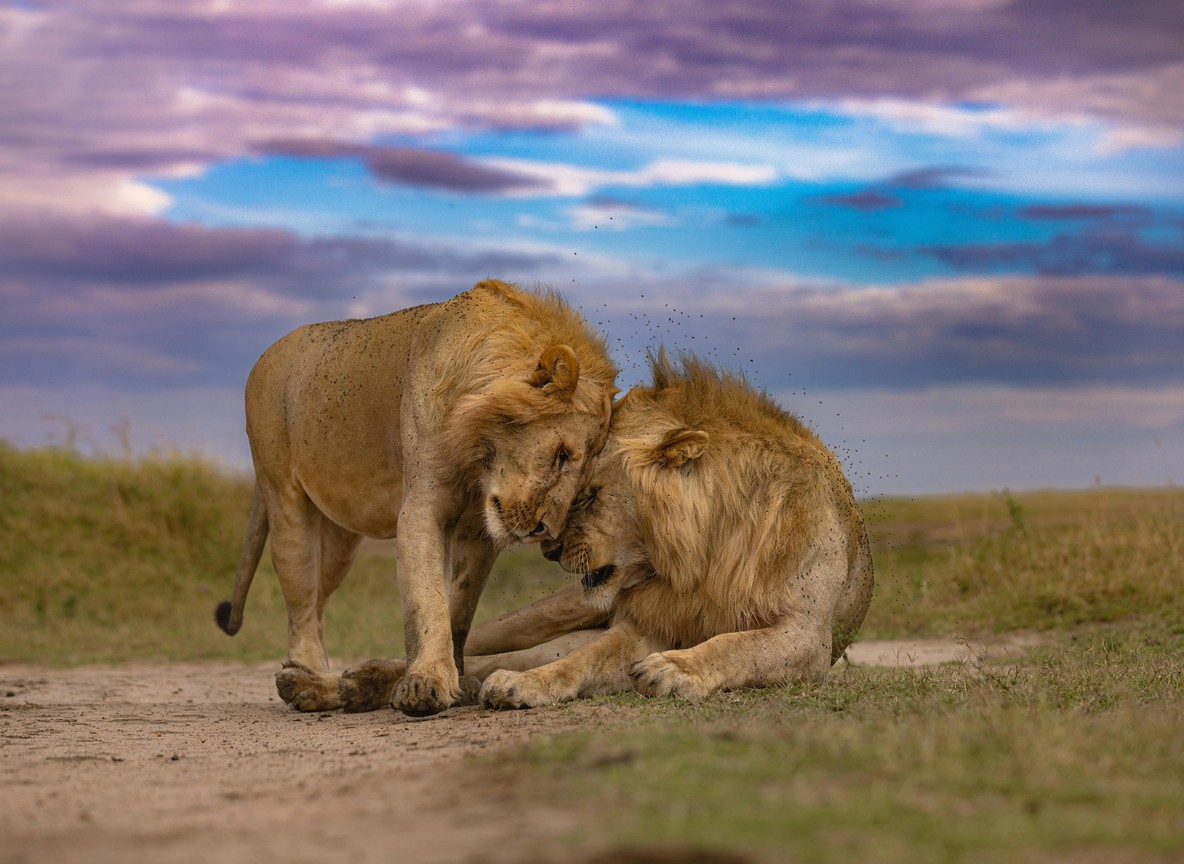
Lions Kenya’s lion population estimate of approximately 2,500 represents a significant decline from historical baselines. Lions are not counted as precisely as elephants (they are harder to census from the air), but the trend lines across multiple survey methodologies point in the same direction: retaliatory killing by herders protecting livestock, habitat fragmentation, and prey base reduction are combining to push lion populations downward in nearly every landscape outside the core reserves.
The Masai Mara remains Kenya’s strongest lion landscape, but even there, populations are not growing. Human-wildlife conflict at the reserve boundaries — especially as livestock grazing pressure increases on the buffer zones — is identified as the primary management challenge.
Hirola The hirola, or Hunter’s hartebeest, is one of the world’s rarest antelopes and is found only in a narrow band of arid land along the Kenya-Somalia border in Garissa County. The census puts the population at approximately 500. Several wildlife biologists have publicly stated that the hirola is functionally on a trajectory toward extinction in the wild without urgent intervention.
Wild Dog Kenya’s wild dog population of approximately 780 is fragmented across several populations in Laikipia, Tsavo, and Meru. Disease, road mortality, and habitat fragmentation keep this population precarious.
What This Means for Safari Planning
The census data has direct implications for where you go and when.
Go to Laikipia for rhino The Laikipia plateau — Ol Pejeta, Lewa, Borana — is where you have the highest density of black and white rhino in Kenya, and where the conservation story is most active. The landscape is also where the JW Marriott Mount Kenya Rhino Reserve and other new premium camps are betting on growing wildlife tourism to fund continued conservation.
The Mara remains the lion and migration anchor Despite decline concerns, the Masai Mara ecosystem still offers the best lion-per-km2 density in Kenya. The 2026 fee increase is partly justified by the conservation funding pressure that lion protection requires.
Amboseli for elephants in large groups The Amboseli basin, with its permanent swamps fed by Kilimanjaro snowmelt, produces the highest-density elephant viewing in Kenya. Family groups of 50-100 individuals are not unusual in the dry season. The census confirms this as Kenya’s strongest elephant landscape.
Support conservancy models The communities that run Naboisho, Olare Motorogi, and Mara North conservancies are directly credited in the census notes for maintaining wildlife populations outside formal protected areas. Staying in conservancy camps is the single most direct way a safari visitor contributes to the ongoing recovery trend.
The Trunktrails Advantage
Trunktrails Safaris is a native Kenyan-owned tours and safaris company, and the census numbers inform how we build itineraries. We do not design safaris purely around what is easiest to sell — we design around where wildlife is doing well, where conservation investment is producing results, and where your visit contributes to the ecosystem rather than just extracting from it.
Our tours and safaris recommendations for 2026 put particular emphasis on the Laikipia rhino circuit, the Amboseli elephant landscape, and the Mara conservancy network — the three ecosystems where the census shows the most encouraging trends and where visitor spending is most directly linked to conservation outcomes.
We will also be honest with you about where wildlife is under pressure. A safari that tells you only the good news is not doing its job. ✨
How Kenya’s Conservation Model Works — and Where It Falls Short
Understanding the census numbers requires understanding what Kenya’s conservation system actually does and does not do.
Kenya’s protected area network covers approximately 8% of the country’s total land area. The national parks (managed by KWS) hold another 12% if game reserves and conservancies are included. That is a respectable coverage figure by African standards, but it means 80% of Kenya’s wildlife habitat sits outside formal protection — on community land, group ranches, and private farms.
The census data confirms what field conservationists have argued for years: the animals in the best shape are the ones that range across private conservancy land where communities receive direct economic benefit from wildlife. The Laikipia plateau, which is mostly private and community-owned land with no formal national park status, hosts the second-highest wildlife biomass in Kenya.
Conversely, the species under most pressure — lions, wild dogs, hirola — are the ones that either range widely across unprotected land (lions, wild dogs) or are restricted to small, non-tourism-priority areas (hirola in Garissa).
The census also highlights the cost of Kenya’s wildlife recovery success: elephant range expansion is creating new human-wildlife conflict in the Laikipia and Meru regions as growing populations press against agricultural boundaries. The 2026 census includes incident data showing a 15-20% increase in elephant crop-raiding events compared to the 2021 survey. This is not a problem that conservation organisations can solve without direct economic support to farming communities that bear the costs of living alongside recovering wildlife.
For safari visitors, this context matters. The camps and conservancies that contribute most to Kenya’s conservation system are the ones that channel visitor revenue directly to the communities that tolerate and protect wildlife. When you choose a camp that pays a community conservation levy, you are contributing to the economic system that makes a positive census number possible.
Key Conservation Organisations Working in Kenya
These are the organisations whose field data fed into the 2026 census:
- Kenya Wildlife Service (KWS) — national parks and protected area management
- Ol Pejeta Conservancy — black and white rhino conservation, Laikipia
- Lewa Wildlife Conservancy — black rhino, Grevy’s zebra, northern Kenya
- African Wildlife Foundation (AWF) — community conservancy capacity building
- Save the Elephants — elephant research and corridor protection, Samburu/Laikipia
- Hirola Conservation Programme — sole focused effort on hirola conservation
Plan a Safari That Counts
The 2026 census tells you where Kenya’s wildlife is winning and where it needs help. Trunktrails Safaris will build you an itinerary that puts you in the right landscapes at the right time — and ensures that your safari contributes to the conservation outcomes that make future safaris possible.
Trunktrails Safaris is a, native Kenyan-owned tours and safaris company. We design our itineraries around where conservation investment is producing real results — not around which destinations are easiest to sell. Our tours and safaris recommendations for 2026 are built directly from the census data and from the ground-level intelligence of our local partners in Laikipia, Amboseli, and the Mara.
The numbers are not just statistics. They are the reason to go now, and to go deliberately. 🦁
Contact Trunktrails Safaris:
Further reading
More safari planning resources
- Ol Pejeta and Sweetwaters safari package from Valley Safaris
- Big Five safari parks guide on Touring Insights
- Big Five safari collection on FindMySafari
- Map of Amboseli from Valley Safaris
- WhatsApp: +254 113 208888
- Email: info@trunktrailssafaris.com
- Website: https://trunktrailssafaris.com
- Operator
Image credits: Photo by Zebari Visuals on Pexels; Photo by Bharath Kumar Venkatesh on Pexels; Photo by Hugo Sykes on Pexels; Photo by Shakir Mohamed on Pexels