Kenya Safari for Beginners: Your Complete First-Timer’s Guide 🌍
You’ve seen the documentaries. You’ve scrolled past those golden-light photos of elephants crossing dusty plains. And now you’re wondering whether a Kenya safari is something you could actually do — not as a seasoned traveller with a decade of bush camps behind you, but as someone who has never done anything like this before.
The answer is yes, and this guide is where you start. A kenya safari for beginners doesn’t need to be overwhelming. Kenya is, in fact, one of the most beginner-friendly safari destinations on the continent — well-developed park infrastructure, year-round wildlife, English widely spoken, and a range of options that fit every budget and travel style.
This is the pillar guide: which parks to choose, how much to budget, when to go, what a game drive day looks like, group vs. private, and the most common first-timer mistakes. For deep dives on packing, costs, and visas, we link to the dedicated posts throughout.
Trunktrails Safaris has built this guide from years of taking first-time visitors into the Kenyan bush. 🐘
What Is a Safari, Really?
The word “safari” is Swahili for “journey.” In practice, it means game drives — morning and evening vehicle excursions into national parks and conservancies to observe wildlife in their natural habitat.
A typical safari day is not a theme park experience. You drive through wild land watching for animals. Some mornings you will see a lion kill. Other mornings you will see birds and a sunrise. That variability is the point.
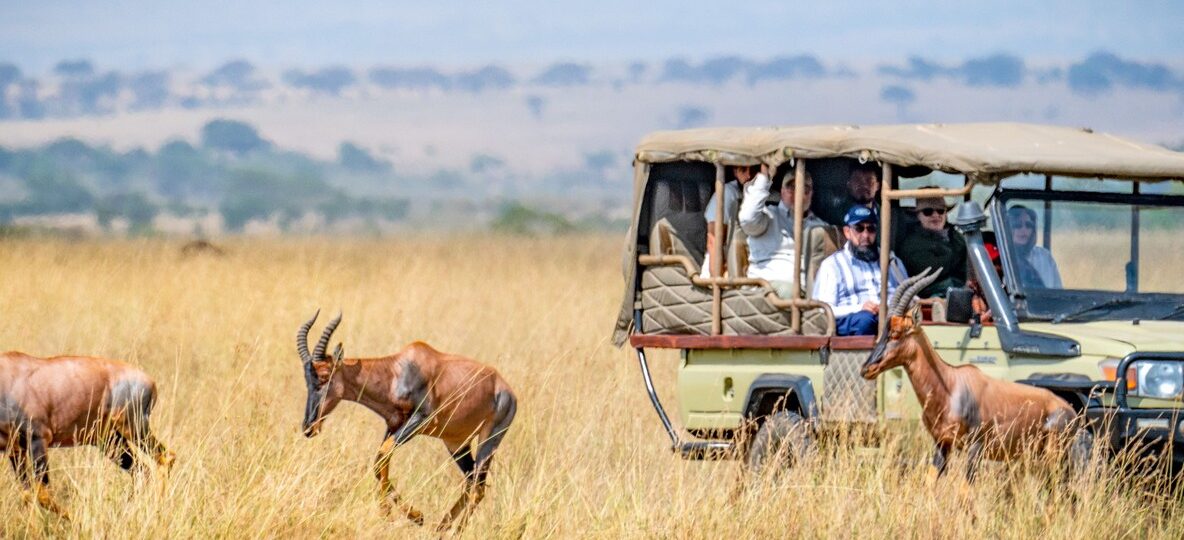
Most safari vehicles in Kenya are modified 4WD Land Cruisers with a pop-up roof hatch. You travel with a guide who knows animal behaviour, tracks, and the terrain — either shared with a group or privately assigned.
The experience varies by park, season, and accommodation tier. All of that is covered below.
Which Parks Should a First-Timer Choose?
Kenya has more than 50 national parks and conservancies. For a first-timer, the choice can feel paralysing. It doesn’t need to be. Here is a shortlist based on wildlife density, accessibility, and beginner-friendliness.
| Park | Best For | Drive Time from Nairobi | Peak Season |
|---|---|---|---|
| Masai Mara National Reserve | Great Migration, big cats, Big Five | 5-6 hrs or 45 min by air | Jul-Oct |
| Amboseli National Park | Elephants with Kilimanjaro backdrop | 4-5 hrs | Year-round |
| Tsavo East + West | Red elephants, wilderness feel, value | 4-5 hrs | Jan-Feb, Jun-Oct |
| Nakuru National Park | Flamingos, rhino, leopard | 3-4 hrs | Year-round |
| Nairobi National Park | Quick, affordable day option near airport | 20 min from CBD | Year-round |
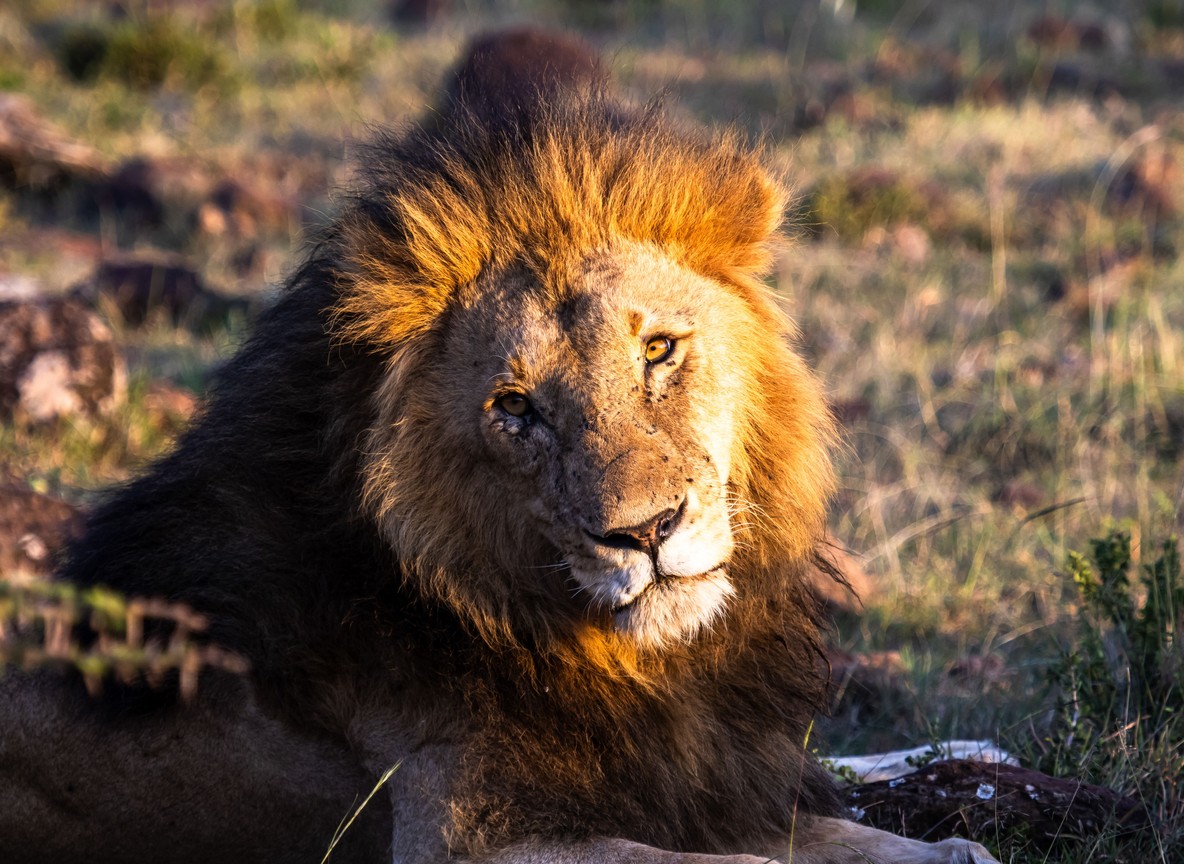
Masai Mara is where most first-timers start, and for good reason. Wildlife density is exceptional year-round, not just during the famous Great Migration (July to October). Big cats — lion, leopard, cheetah — are reliably sighted. The camps and lodges range from budget tented camps to world-class luxury properties.
Amboseli is the choice if elephants are your priority. Large herds move freely across the open plains, and on a clear day the view of Mount Kilimanjaro rising behind them is genuinely unforgettable.
Tsavo is Kenya’s largest park and offers a wilder, less-crowded experience at a lower price point. Good for first-timers who want to avoid the busier Mara circuit.
Trunktrails Safaris runs tours and safaris to all of these parks. We typically recommend pairing two parks — Masai Mara plus Amboseli, or Masai Mara plus Nakuru — for a 5-7 night first trip that gives you real variety without travel fatigue.
How Much Does a Kenya Safari Cost?
Cost is the question we hear most from first-timers, and the honest answer is that it depends on three variables: accommodation tier, group vs. private, and time of year.
As a rough guide:
| Safari Tier | Per Person Per Day | What You Get |
|---|---|---|
| Budget | $150-250 | Shared camping or basic tented camp, group vehicle, meals included |
| Mid-Range | $350-600 | Comfortable lodge or fixed tented camp, small group (4-7 pax), all meals |
| Luxury | $700-1,500+ | Premium lodge or private camp, private vehicle, exclusive experiences |
| Ultra-Luxury | $1,500+ | Owner-run camps, private conservancy access, bespoke itineraries |
Park fees are separate from lodge/camp costs and typically run $70-100 per person per day in major parks. These are included in most packaged tours.
For a 5-night trip at mid-range level, budget approximately $2,500-3,500 per person all-inclusive from Nairobi. Budget-tier trips can come in lower; luxury trips go well above this.
We have a detailed cost breakdown post covering every line item — accommodation, park fees, transfers, flights, tips, and what fuel surcharges mean — at our safari cost guide (linked). If you’re comparing costs across countries, our Africa safari cost comparison post is a useful read.
When Is the Best Time for a Kenya Safari?
Kenya has two distinct dry seasons and two wet seasons. Wildlife is present year-round, but timing affects visibility, crowd levels, and pricing.
July to October — Peak Season. The long dry season. Vegetation is sparse, animals concentrate around water sources, and the Great Migration wildebeest crossing happens in the Masai Mara. This is the best time for game viewing, but also the most expensive and most crowded period. Book 6-12 months ahead for top camps.
January to March — Second Peak. The short dry season. Excellent game viewing, calving season in the Mara (February), lower prices, and fewer tourists than the July-October peak. Often the best value window for a high-quality first-timer trip.
April to June — Long Rains. Heavy rains, especially April-May. Many camps close or reduce rates significantly. Game drives are possible and some operators offer deep discounts, but expect muddy roads and overcast skies. Not recommended for first-timers.
November — Short Rains. Brief and unpredictable. Rates drop, parks are quiet, and some excellent deals are available for flexible travellers.
For most first-timers, we recommend January-March or July-October. The Great Migration is spectacular but not the only reason to go; even outside peak season, Kenya’s wildlife is extraordinary.
Group Safari vs. Private Safari: Which Is Right for You?
This is one of the most important decisions you’ll make, and it’s worth spending a few minutes on.
Group safaris place you in a shared vehicle with other travellers — typically 4-7 people. They are significantly cheaper (often 40-60% less than private) and work well if you’re comfortable sharing the experience, have a flexible schedule, and are travelling solo or as a couple.
The tradeoffs: you drive to what the majority wants to see, you leave when others are ready, and you share the vehicle’s limited window space. In peak season, group vehicles from multiple operators can cluster at the same sighting.
Private safaris give you the vehicle, guide, and schedule entirely to your group. You can spend 90 minutes watching a leopard feed if you want to. You can request an early start or a sundowner stop. For families, the cost per person is often comparable to mid-range group rates when split across four or more people.
Trunktrails Safaris runs both group and private tours and safaris. For first-timers travelling as a couple or a family with young children, we almost always recommend private — the flexibility transforms the experience, and the ability to ask your guide questions freely without holding up a group makes a real difference to how much you learn.
Health, Visas, and Vaccinations: What You Actually Need
This section covers the non-negotiables before you travel.
Visa. Kenya now operates an eTA (Electronic Travel Authorisation) system for most nationalities. You apply online before travel at the official portal, pay $30, and receive approval within 3 business days in most cases. We have a dedicated Kenya eTA and visa guide post that walks through the full process step by step.
Vaccinations. Yellow fever vaccination is required if you are arriving from a yellow fever endemic country. Typhoid, hepatitis A, and tetanus are strongly recommended. Malaria prophylaxis is advised for all visitors to game parks — consult your travel health clinic 6-8 weeks before departure to allow time for courses like Malarone or Doxycycline.
Travel insurance. Non-negotiable. Ensure your policy covers medical evacuation (medevac), since the nearest major hospital to most safari parks is in Nairobi — a long road or air transfer away.
Health on safari. Most lodges and camps have basic first aid. Sun protection, insect repellent (DEET-based), and hydration are the daily essentials. Mornings and evenings in the parks can be surprisingly cold — more on that in the packing section below.
For a complete kit list, see our Kenya safari packing list post, which covers clothing layers, camera gear, medications, and everything else to bring (and what to leave home).
What a Game Drive Day Actually Looks Like
First-timers often arrive without a clear picture of the daily rhythm. Here is what a standard safari day looks like on a Trunktrails Safaris tour.
5:30 AM — Wake-up call. Early starts are where the best sightings happen. Predators are most active at dawn, the light is extraordinary, and the park is quiet.
6:00 AM — Morning game drive. Drive until mid-morning. Your guide scans terrain, reads tracks, and coordinates with other guides via radio. You will cover 60-100 km over 4-5 hours.
11:00 AM — Brunch at camp. Rest, swim, or take a bush walk (where permitted) in the midday heat.
4:00 PM — Afternoon game drive. The golden light of late afternoon is ideal for photography. Evening drives often end at a sundowner stop — your guide pulls over, pours drinks from the cool box, and you watch the sun drop over the savannah. 🌅
7:00 PM — Dinner and sleep. Two game drives per day is standard. Night drives are available in private conservancies.
What to Pack for a Kenya Safari
The short version: neutral colours (khaki, olive, tan), warm layers for early drives, binoculars (8×42 minimum), DEET repellent, and high-SPF sunscreen. Mornings in the Mara can sit at 12-15C even in July; afternoons reach 28-32C.
Full detail by park and season is in our Kenya safari packing list. For families travelling with children, the Kenya family safari packing list covers age-specific kit.
Common First-Timer Mistakes to Avoid
A few things catch new safari travellers off-guard. Knowing them in advance saves both money and disappointment.
Booking too late. The best camps in the Masai Mara during July-October sell out 6-12 months ahead. First-timers who try to book 8 weeks out for peak season will find limited options at elevated prices.
Chasing one park for too long. Five nights in a single park is too much for most first-timers. Two parks across 6-8 nights gives you variety in landscape, wildlife mix, and experience.
Underestimating the cold. Kenya’s parks sit at elevation (the Mara is at 1,500m+). Dawn game drives in June or July without a warm jacket are genuinely unpleasant.
Expecting to see the Big Five every day. Wildlife is wild. Some days you will sit with a family of elephants for an hour. Other days the cats are hiding. That unpredictability is what makes each sighting meaningful.
Ignoring park fee structures. Some parks charge differently for peak and off-peak periods. Factor park fees into your budget from the start — they are real numbers, not trivial add-ons.
Not tipping your guide. Your guide’s knowledge is what drives your experience. $15-20 per day for a private guide is standard and genuinely appreciated.
The Trunktrails Advantage
Trunktrails Safaris is a Kenyan-owned operator. We are not a booking aggregator reselling third-party packages — we build and run our own tours and safaris with our own vehicles and guides.
For first-timers, that matters for three specific reasons.
First, local ownership means real accountability. When something goes wrong in the field — a vehicle breakdown, a camp issue, a weather change — our guides have the relationships and the authority to fix it, not a call centre 8,000 km away.
Second, we set our own standards. Every guide on a Trunktrails Safaris tour is trained, tested, and personally known to us. We do not send guests out with contract drivers we haven’t worked with before.
Third, we know the parks from the inside. Our team has spent years in the Masai Mara, Amboseli, Tsavo, and beyond — not as tourists, but as guides and naturalists. The insider knowledge in our briefings before each drive, and the way our guides read animal behaviour in the moment, is the difference between seeing wildlife and understanding it. 🦁
We run group tours and safaris and private custom packages for all budgets. We welcome first-timers, families, solo travellers, and returning guests who trusted us the first time.
A kenya safari for beginners is genuinely one of the most accessible and rewarding travel experiences available. Kenya’s infrastructure is strong, English is widely spoken, and the wildlife is extraordinary in every season. The keys are choosing the right parks, timing your trip well, and travelling with guides who know the land.
Tell us your travel dates, who you’re travelling with, and what you most want to see. We’ll come back to you within 24 hours with options. 📸
Further reading
More safari planning resources
- Best time to visit Kenya month-by-month map from Valley Safaris
- Best time to visit Kenya on Touring Insights
- Budget safari collection on FindMySafari
- Nairobi to Maasai Mara route guide from Valley Safaris
- WhatsApp: +254 113 208888
- Email: info@trunktrailssafaris.com
- Website: https://trunktrailssafaris.com