Masai Mara in January: Calving Season, Big Cats and the Mara With Almost No Tourists
January is Kenya’s low season for international tourism. The holiday travelers have gone, school groups are at home, and the migration spectacle is months away. The Masai Mara in January has some of the lowest occupancy rates of any month in the year.
It also has calving season.
In the Serengeti-Mara ecosystem, the main wildebeest calving occurs in late January through February on the southern Serengeti plains at Ndutu. But the Masai Mara holds its own resident wildebeest population, and January’s dry-season concentration of prey around the remaining water brings every predator in the ecosystem to predictable hunting ground. The ratio of predators to tourists in January is almost inverted from August.
This guide covers what January actually delivers in the Masai Mara and who it is right for.
January Weather in the Masai Mara
January falls in Kenya’s short dry season, the period between the short rains (November-December) and the long rains (March-May). Conditions in January are:
- Dry and warm: Daytime temperatures 24-30°C, clear skies most days
- Cold mornings: Night temperatures drop to 10-14°C. Pre-dawn game drives require warm layers
- Low grass: The post-rain grass begins drying and shortening in January, improving visibility for wildlife spotting
- Dust: Later in January and into February, dust builds on the open plains. Sunrise light has a golden-amber quality that photographers value
January is dry-season comfortable. No mud, reliable driving surfaces across the park, and sunrise drives with clear sky rather than the rain risk of November.
Wildlife in the Masai Mara in January: What Makes This Month Special
January’s wildlife dynamic is driven by two factors: dry-season water concentration and the arrival of Tanzania-origin wildebeest calves dispersing north after calving. The Mara’s resident prey population consolidates around permanent water, which pulls predator territories into tighter overlap.
Predator activity in January:
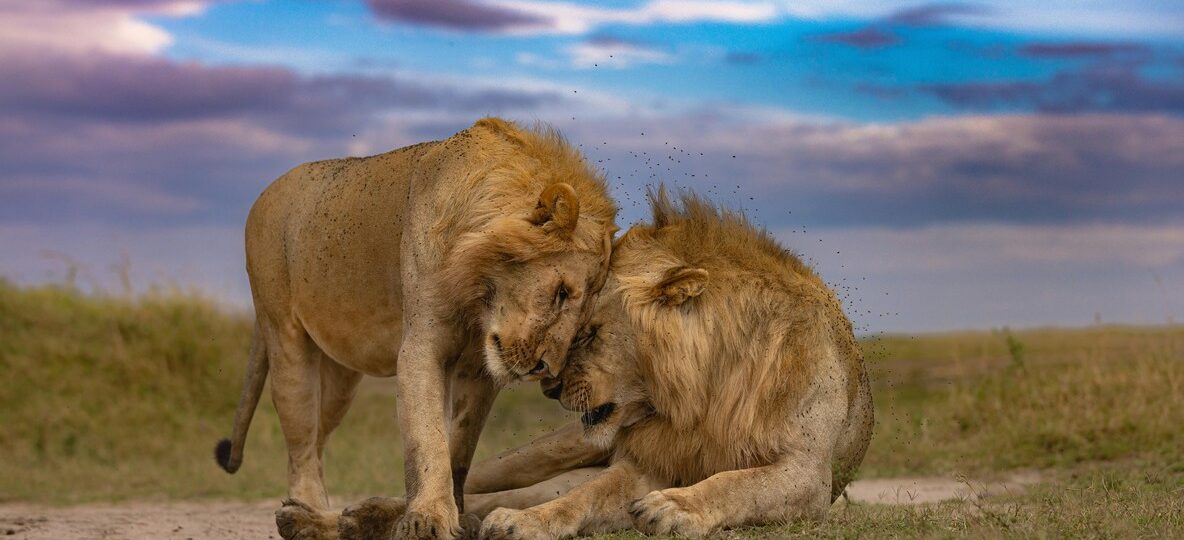
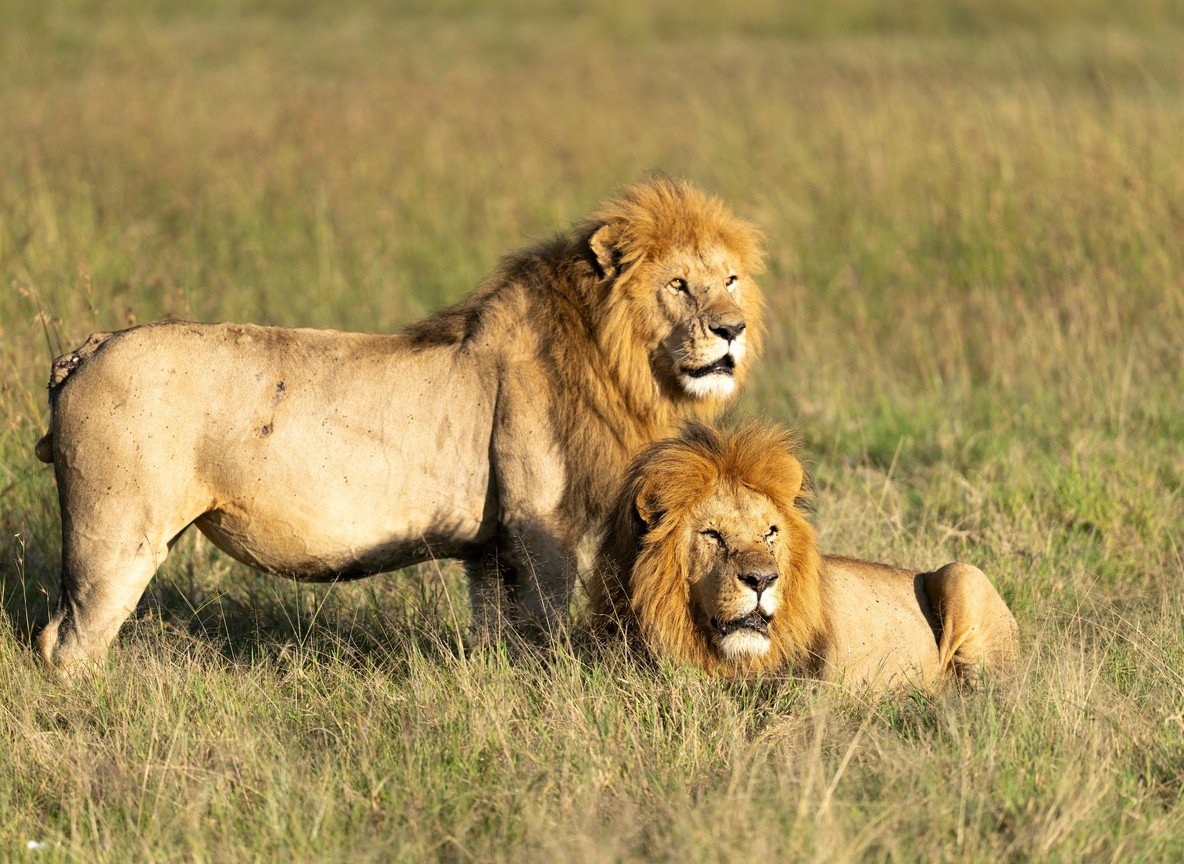
- Lion: The Masai Mara’s lion prides hunt largest prey in January. Resident wildebeest, zebra and topi concentrate near the Mara River and luggas. Hunt frequency is high and hunts often occur in daylight. January is arguably the best month in the year for witnessing lion hunts in the Mara.
- Cheetah: January is the peak month for cheetah cub visibility. Cubs born in October-November are now 3-4 months old — old enough to accompany their mother on hunts but still highly visible in family groups. The short January grass gives open sightlines for watching cheetah maneuvers.
- Leopard: Dry January conditions concentrate leopard activity around the Talek River and Sand River tributaries. Leopard sightings, while never guaranteed, run at above-average frequency in January compared to the wet green months.
- Hyena: The resident spotted hyena clans are in territorial competition in January. Morning drives near den sites produce excellent behavioral observation — including cubs at the den entrance.
Prey and other wildlife:
Elephant herds consolidate near permanent water in January. Large breeding herds of 20-40 individuals are common along the Mara River banks. Buffalo bulls are abundant, and the open grass plains host multiple large mixed herds that attract lion and hyena attention.
Resident wildebeest remain in the Mara year-round. In January, these herds tend to be less mobile — they have concentrated around water, which means game drive vehicle positioning for predator sightings is more predictable than in the wet months when animals are dispersed across the greened plains.
Calving Season: What to Expect in January
The main calving event for the migratory wildebeest happens at Ndutu in the southern Serengeti (late January-February), not in the Masai Mara. However, early calves from the Mara’s resident wildebeest population arrive in December-January, and these attract intense predator interest. 🦁
Watching a cheetah mother teach her cubs to hunt a week-old calf is one of the most ethologically rich wildlife interactions available anywhere in Africa. It is not comfortable viewing — the calving and predation dynamic is vivid. But for wildlife-enthusiast travelers who want to understand the Mara ecosystem rather than simply witness its spectacle, January offers behavioral depth that the crossing season does not.
Calving at Ndutu option: Trunktrails Safaris builds combined itineraries that capture Ndutu calving (late January-February, Tanzania) plus a Masai Mara predator-focused stay. A 10-12 day circuit covering both is achievable and represents the most complete migration story available to a single traveler.
January Rates and Availability
| Camp Category | Peak Rate (Jul-Sep) | January Rate | Saving |
|---|---|---|---|
| Top conservancy camps | USD 900-1,500 pppn | USD 500-750 pppn | 40-50% |
| Mid-range tented camps | USD 400-700 pppn | USD 250-400 pppn | 35-45% |
| Budget camps | USD 80-150 pppn | USD 60-110 pppn | 20-30% |
January is low-season pricing with dry-season conditions. The combination of clear weather, reduced rates and top predator activity makes it one of the best-value months in the Mara calendar.
Availability is strong in January — most camps have open inventory without the 6-9 month advance booking required for peak August. A 4-6 week booking lead time is usually sufficient.
January vs Other Low-Season Months: Comparison
| Month | Rain | Grass Height | Predator Activity | Rates | Calves |
|---|---|---|---|---|---|
| January | Dry | Short-medium | Very high | Low | Resident wildebeest calves |
| February | Dry | Short | High | Low | Serengeti calving peak |
| November | Wet | Tall | High | Low | No calves |
| April | Heavy rain | Very tall | Moderate | Lowest | No calves |
January wins on the combination of dry conditions, short grass (visibility), predator density and calving prey concentration. February is similar but grass is shorter still. November has better skies for photography but tall grass limits visibility.
Practical January Planning
Warm layers are mandatory. The Mara plateau sits at 1,600-1,800 metres altitude. January nights reach 10-12°C and pre-dawn game drive departures at 0600 are genuinely cold before the sun rises. A fleece mid-layer and a light windproof are essential regardless of the daytime temperature.
Park fees: USD 200/day per person applies from July 2026 onwards (including for January 2027). This is per day within the national reserve — conservancy fees are charged separately by each conservancy. Factor the new fee structure into budget calculations.
Flight booking: January has easy seat availability on Safarilink and AirKenya. No advance pressure. Book 3-4 weeks ahead without difficulty. 📸
Camp selection for predators: Camps bordering the Mara River and the Talek River produce the most consistent predator sightings in January. Olare Motorogi Conservancy and Mara North Conservancy camps are the top picks for January predator observation with night drive access.
The Trunktrails Advantage
Trunktrails Safaris recommends January without hesitation for the right traveler. Our guides who work the Mara year-round will tell you that some of their most intense wildlife days happen in January — hunts watched from start to finish, cheetah cubs learning on a kill, lion prides working a buffalo herd for two hours without another vehicle in sight.
The Mara in January is not the secondary Mara. It is the full ecosystem in a different mode — quieter, drier, and with a predator-prey dynamic that the crossing season crowds actively disrupt.
Our tours and safaris in January are deliberately small — groups of 2-6 travelers maximum in private vehicles. That scale is what makes the behavioral observation possible. If you want the wildlife without the machinery, January is your month.
The Masai Mara in January offers a simpler trade: fewer tourists, better predator sightings, lower cost. If that sounds right for your travel window, it is.
Further reading
More safari planning resources
- Best time to visit Kenya month-by-month map from Valley Safaris
- Best time to visit Kenya on Touring Insights
- Masai Mara destination guide on FindMySafari
- Interactive Maasai Mara map from Valley Safaris
Contact Trunktrails Safaris for a January Mara itinerary: WhatsApp: +254 113 208888 Email: info@trunktrailssafaris.com Website: https://trunktrailssafaris.com
| Nairobi-based | Year-round tours and safaris in the Masai Mara for wildlife-first travelers.
Image credits: Photo by Bharath Kumar Venkatesh on Pexels; Photo by Hugo Sykes on Pexels; Photo by Zebari Visuals on Pexels; Photo by Gary M. Cohen on Pexels