Masai Mara in April: The Long Rains Photography Guide for Value Seekers
Most safari brochures tell you to go to the Masai Mara in July for the wildebeest river crossings. But if you are a photographer, a value-conscious traveler, or someone who wants to see East Africa’s greatest wildlife canvas without sharing it with thirty other vehicles, the Masai Mara in April is a secret worth knowing.
April falls in the heart of the long rains season. The reserve shimmers emerald green, storm clouds pile up on the horizon at golden hour, and the resident wildlife, lions, leopards, cheetahs, elephants, hippos and more than 450 recorded bird species, stays put year-round. Park fees are $100 per adult per day (rising to $200 from July), lodge rates are 25 to 45 percent lower than peak season, and the game drives are yours. This guide from Trunktrails Safaris covers everything you need to plan a rewarding April safari in the Mara.
Masai Mara April Weather: What the Long Rains Actually Mean
The Masai Mara sits roughly 1,500 to 1,650 metres above sea level across the Oloololo escarpment and the open plains. Its masai mara april weather pattern is defined by the long rains (locally called _masika_), which typically run from mid-March through May.
In April you can expect:
- Rainfall: 150-280 mm across the month, usually arriving in heavy afternoon and evening showers lasting 1-3 hours rather than all-day drizzle
- Morning temperatures: 14-18°C (bring a fleece for the 6 AM game drive)
- Afternoon temperatures: 24-28°C, warm and humid after rain
- Cloud cover: Mixed, with spectacular cumulus build-up from noon onward
- Sunrise light: Near-perfect; clean, cool air after overnight rain + low-angle light = razor-sharp photography conditions
The critical insight for wildlife: the grass is long and the vegetation lush, which concentrates game near rivers and short-grass corridors. You will not get the open savanna views of the dry season, but you will get green-on-gold light, rain-washed skies and colour saturation that September simply cannot match.
Why April Is the Masai Mara Photography Safari’s Best-Kept Secret
Photographers who book a masai mara photography safari in April often say they produce their most dramatic images outside peak migration. Here is why:
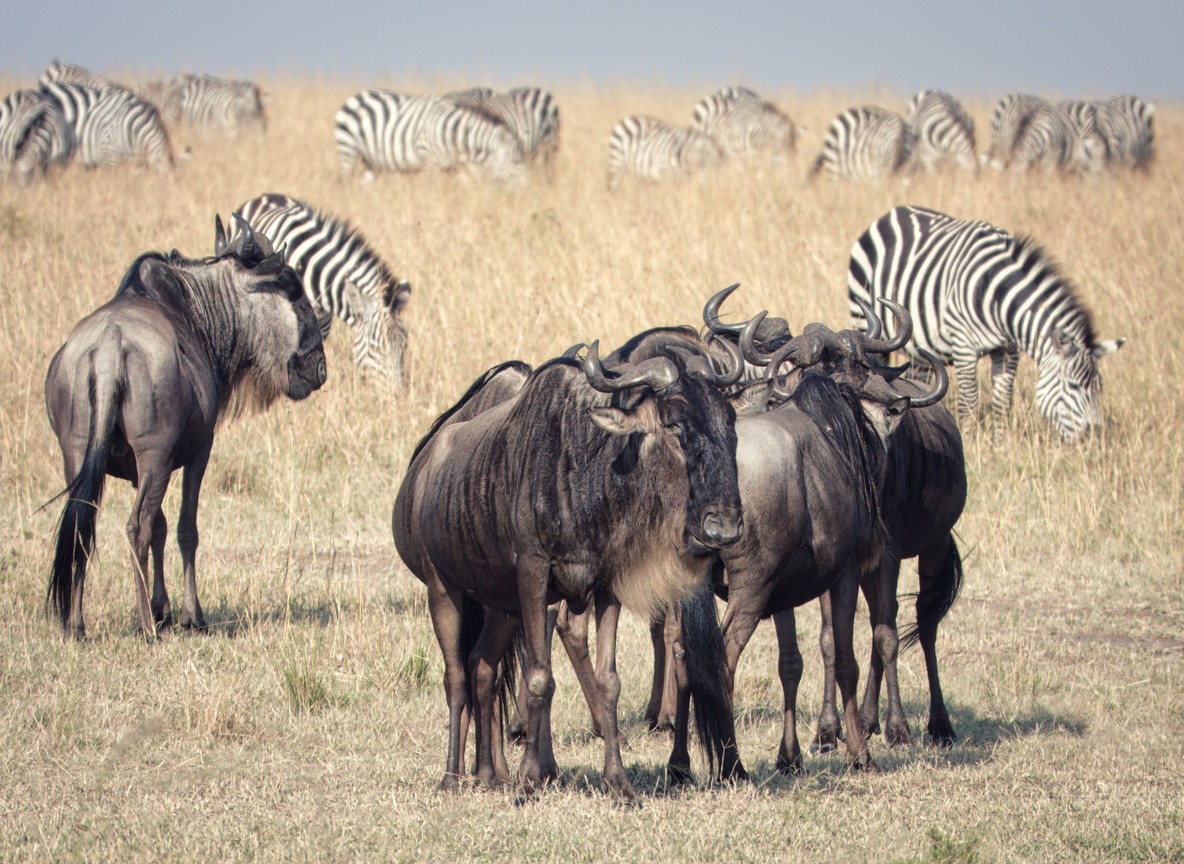
Storm light and golden hour. Afternoon storms clear by late afternoon, leaving the sky layered with burnt orange and violet. A lion on a termite mound against those clouds is worth more than fifty dusty migration shots.
Green-season colour palette. Lush grass, wildflowers on the plains and full watercourses change the visual grammar entirely. The Mara River runs fast and coppery, hippo pools brim over, and the Talek River spreads wide across the northern circuit.
Nesting and birthing season. April is peak lambing and fawning for Thomson’s gazelle, topi and impala. Predators know this. Big-cat action, particularly cheetah hunts, is exceptional. Lionesses also den in long grass with small cubs during April and May.
Bird spectacle. More than 50 migratory species are present or passing through in April, including European rollers, European bee-eaters, storks and a range of raptors. The Mara’s resident bird list stands at 452 species; April adds another layer of activity. 📸
Fewer vehicles. On any given morning in July you may count 40 vehicles at a crossing. In April you may share a leopard sighting with one other car, or none.
April vs Peak Season: The Numbers That Change the Decision
| Park fee, adult non-resident | $100 / day | $200 / day |
|---|---|---|
| Child fee (9-17 years) | ~$50 / day | ~$100 / day |
| Mid-range camp (pp / night, approx) | ~$350-600 | ~$600-1,200 |
| Luxury fly-in camp (pp / night) | ~$700-1,200 | ~$1,200-2,500+ |
| Average vehicles per sighting | 1-5 | 20-50+ |
| Wildebeest in reserve | Resident herds + stragglers | 1.2-1.5 million during peak |
| Grass height | Long (good cover for cubs) | Short (wide open views) |
| Photography: sky conditions | Dramatic, layered, variable | Mostly clear blue |
| Photography: light quality | Moody, saturated post-rain | Bright, high contrast |
On a 5-day Masai Mara circuit in April, a mid-range couple saves roughly $500-1,000 on park fees alone versus July to September. That is a flight upgrade, a conservancy night drive, or a balloon safari over the open plains at dawn. 🌅
Masai Mara Long Rains and Wildlife: What You Will Actually See
The masai mara long rains do not empty the reserve. The Masai Mara National Reserve covers 1,510 km2 and is bordered by private conservancies adding another 1,500+ km2, including Mara North (~289 km2), Mara Naboisho (~356 km2) and Olare Motorogi (~263 km2). Resident wildlife does not leave because it rains.
In April you can reliably expect:
- Big cats: Lion prides with cubs, cheetah mothers with sub-adults on the Mara Triangle plains, leopards along the Talek and Sand rivers
- Elephants: Family herds moving between the Mara forest and open plains following fresh growth
- Hippos: Pools are full; hippos are highly visible at Mara River launch sites near Governors’ Camp
- Buffalos: Large herds graze the green plains daily
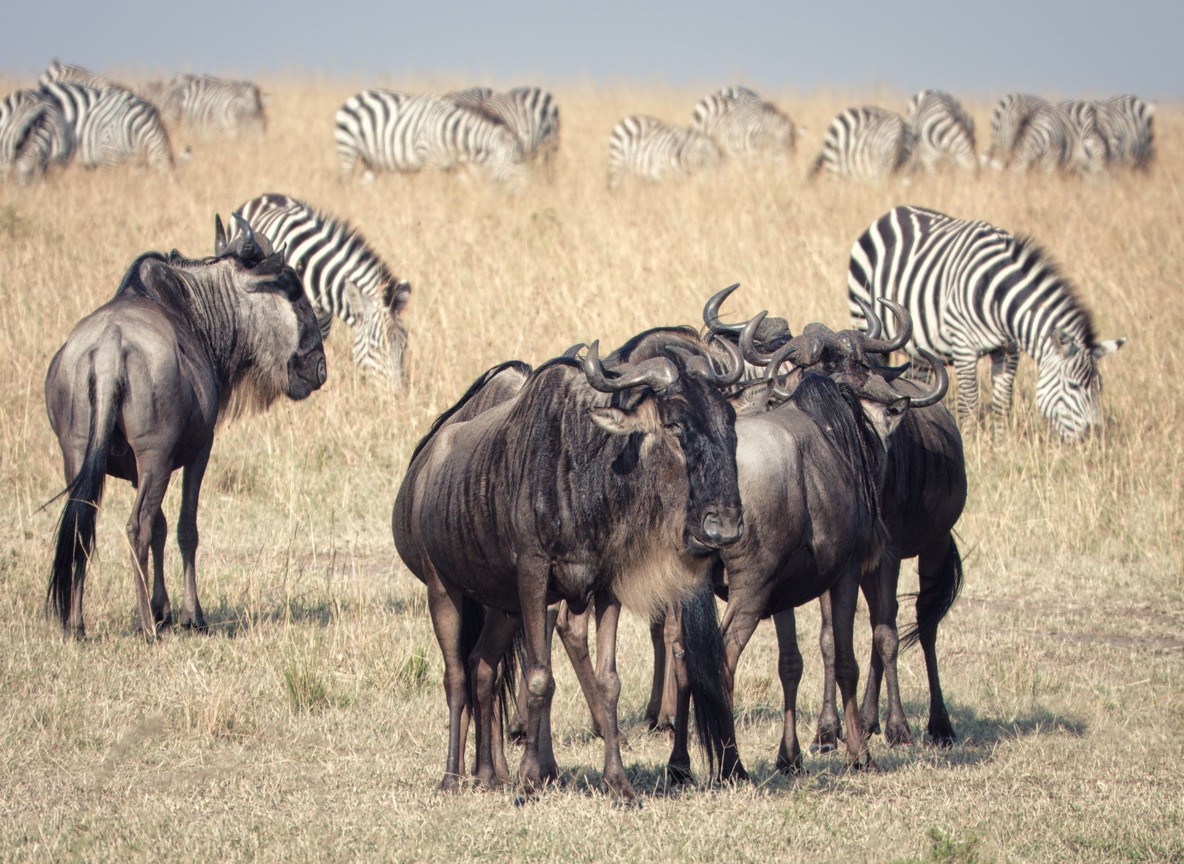
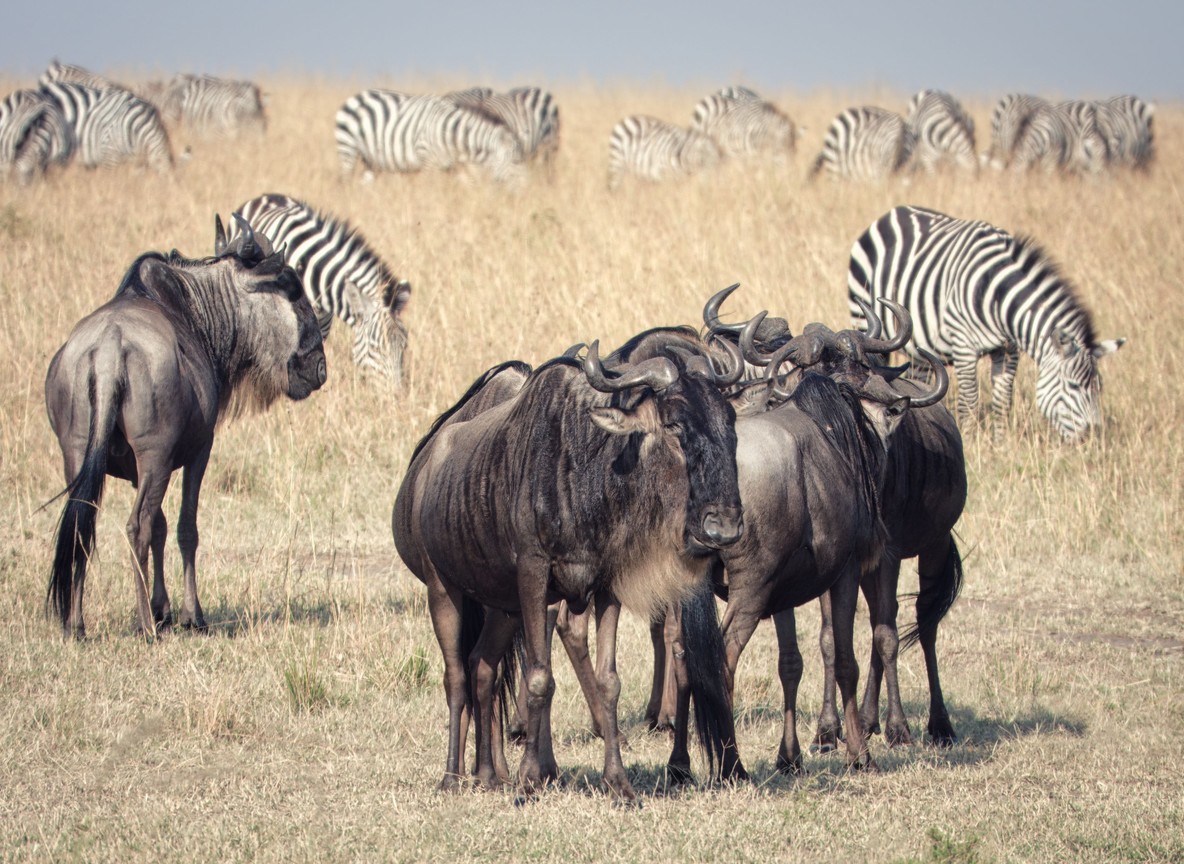
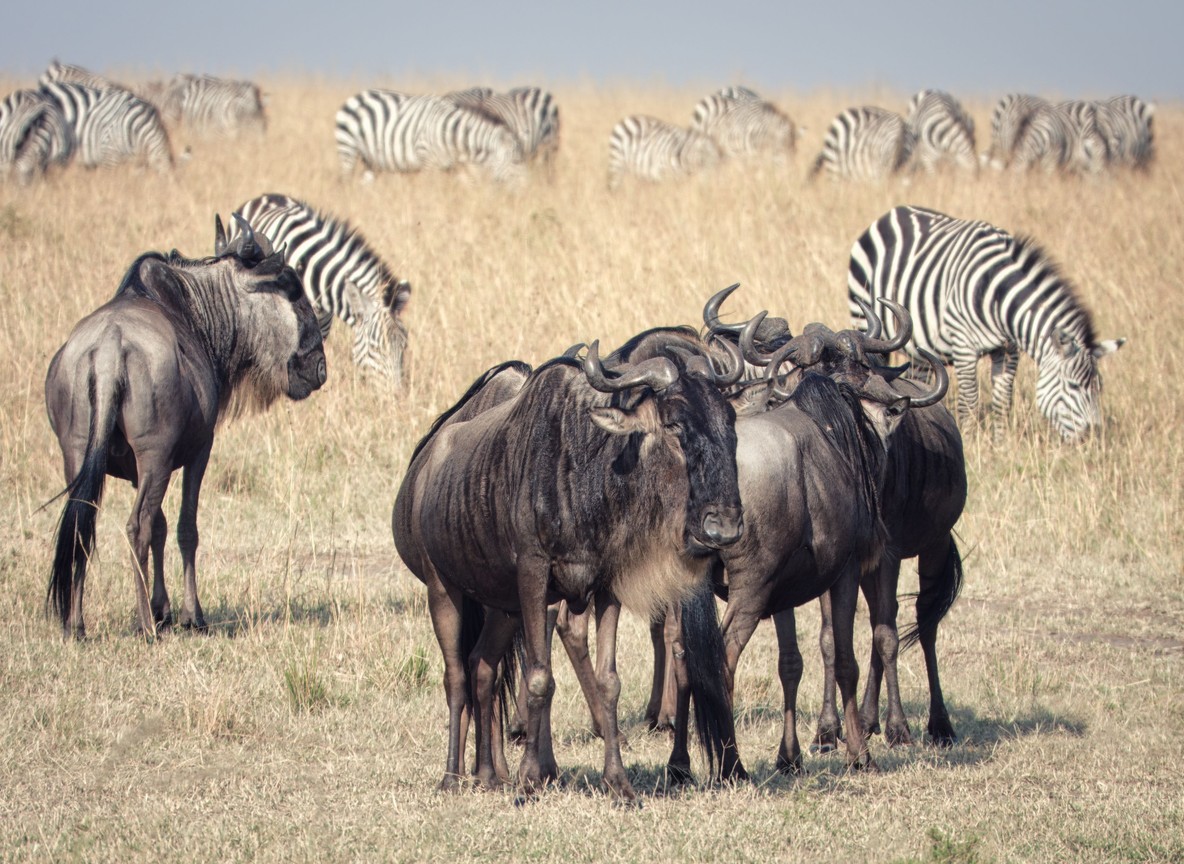
- Wildebeest: Several resident herds of 10,000-50,000 remain in the Mara year-round; the main 1.5-million-strong migration is still assembling in Tanzania’s Serengeti in April
- Rare sightings: April’s long grass is prime serval and African wildcat habitat. Bat-eared foxes are out in force on the Mara Triangle escarpment
What you will NOT see in April: mass Mara River crossings (those happen late July through October). If the Great Migration crossing is your primary goal, April is the wrong month. If everything else the Mara offers is the goal, April delivers at a fraction of the cost. 🦁
Best Camps for a Masai Mara April Safari
Choosing the right camp matters more in April because location determines your access to short-grass corridors and the coverage of wet-season game drives. Private conservancies allow night drives and bush walks, which are banned inside the national reserve itself.
| Camp | Location | Approx. April Rate (pp / night) | Photography Edge |
|---|---|---|---|
| Governors’ Camp | Mara River, main reserve | $450-700 | River frontage; hippo pools at doorstep; classic 1920s camp |
| Little Governors’ Camp | Mara River (boat access only) | $550-800 | Exclusive island feel; exceptional birding on the oxbow |
| Kichwa Tembo | Mara Triangle, Oloololo base | $350-550 | Escarpment backdrop; great cheetah and lion territory |
| Angama Mara | Oloololo escarpment, 400m above Mara floor | $800-1,200 | Panoramic 35 km views; iconic Out of Africa location |
| Mahali Mzuri | Olare Motorogi Conservancy | $900-1,400 | Richard Branson’s villa camp; night drives; cheetah territory |
| Lemala Mara | Mara North Conservancy | $500-800 | Night drives + bush walks; remote northern circuit |
| Entim Mara Camp | Talek area, main reserve | $350-500 | Reliable big-cat sightings; strong value pick |
| Saruni Mara | Motorogi Conservancy | $700-1,100 | Hilltop site; 360-degree Mara views; walking safaris |
All rates are indicative and per person sharing; single supplements apply. Trunktrails Safaris arranges competitive group and custom rates across all camps.
Getting to the Masai Mara in April: Roads, Flights and Gates
By air (recommended in April): Wilson Airport in Nairobi connects to the Mara via Airkenya and Safarilink. The 45-minute flight costs roughly $200-300 per person one way and drops you at one of four airstrips: Keekorok, Ngerende, Ol Kiombo or Mara Serena. Flying in April avoids the notoriously rough B3 road between Narok and the Mara, which deteriorates significantly in wet season.
By road (4WD only in April): The drive from Nairobi is approximately 265 km via the Narok route, taking 5-7 hours depending on road conditions. In April, the final 70 km from Narok to the reserve becomes heavily potholed and muddy. Allow extra time and ensure your vehicle is a genuine 4WD. The main entry points are:
- Sekenani Gate (most common; Narok side)
- Talek Gate (eastern approach; closer to Talek River camps)
- Sand River Gate (southern tip; remote access)
- Oloololo Gate (western Mara Triangle; requires extra distance)
Trunktrails Safaris tours and safaris include all road and flight logistics as part of our tailor-made Mara packages.
Practical Tips for the Masai Mara Long Rains Season
Packing smart matters in April. Our tours and safaris team recommends:
- Waterproofs and gaiters: A packable rain jacket is non-negotiable. Gaiters are useful for early-morning walks at conservancy camps.
- Camera gear: Bring lens cloths and a rain cover for your camera body. April humidity can fog rear elements quickly. A polarising filter reduces reflections on wet vegetation.
- Shooting windows: First light (6:00-8:30 AM) and the 90 minutes before sunset (4:30-6:00 PM) produce the best April light. The midday window (11 AM-2 PM) is best used for camp rest or birding.
- Flexible itinerary: Build 1-2 flex days into a Mara itinerary for days when heavy rain limits safe off-road driving. Use those afternoons for guide conversations, camp birding and macro photography.
- Safari clothing: Khaki and olive green; avoid bright colours. Mornings are cold enough for a warm mid-layer at 1,500m altitude.
- Health: April is peak malaria month in the Mara ecosystem. Confirm your antimalarial regime with a travel health clinic before departure. Long sleeves and DEET spray for dusk.
The Trunktrails Advantage in the Masai Mara
Trunktrails Safaris is a native Kenyan-owned operator with deep roots in the Mara ecosystem. Our guides hold Kenya Professional Safari Guide Association (KPSGA) credentials and know the Mara’s April terrain intimately: which crossing points stay passable after heavy rain, which kopjes produce the best storm-sky silhouettes, and which conservancies offer the most reliable cheetah sightings in the green season.
We run our Masai Mara tours and safaris in purpose-built 4WD Land Cruisers with pop-top roofs, rear photography seats and USB charging. April is when we keep group sizes tight at a maximum of four photographers per vehicle, giving every seat a clean shooting angle.
We also build honest April itineraries. If a section of the access road is flooded, we reroute and add conservancy time rather than drag guests through impassable mud. That local knowledge is the difference between a frustrating trip and one that fills your hard drive with images you will still print ten years from now. 🌍
Book Your Masai Mara in April Safari
April dates fill quickly because photographers book them a year in advance once the word is out. The combination of $100 park fees, uncrowded game drives and the Mara’s most photogenic light makes this the most underpriced month on the safari calendar.
Contact Trunktrails Safaris to plan your Masai Mara in April:
Further reading
More safari planning resources
- Interactive Maasai Mara map from Valley Safaris
- Maasai Mara National Reserve guide on Touring Insights
- Masai Mara destination guide on FindMySafari
- Best time to visit Kenya month-by-month map from Valley Safaris
- WhatsApp: +254 113 208888
- Email: info@trunktrailssafaris.com
- Website: https://trunktrailssafaris.com
Our Masai Mara tours and safaris team will match you to the right camp, the right vehicle and the right itinerary for the kind of April safari you are actually after. Message us today and let’s get your Mara dates locked in. ✨