Maasai Culture and Traditions: The Complete 2026 Guide
Stand still in the middle of the Masai Mara at dawn, and you begin to understand it.
The immensity of the landscape. The silence beneath the bird calls. The sense that this land has been watched, tended, and understood for a very long time. That understanding belongs to the Maasai, a people whose maasai culture and traditions are not relics of a distant past but a living daily practice. These traditions have survived colonialism, modernisation, climate change, and the constant pressure of a world that moves too fast to look closely. They survive because they are rooted in something essential: a coherent philosophy about how people should live with each other, with cattle, and with the land.
This complete guide covers every major dimension of Maasai cultural life, from the age-grade system and warrior ceremonies to beadwork, cattle economy, and oral tradition. Whether you are preparing for tours and safaris through the Mara region or simply want to understand one of Africa’s most celebrated peoples, this is the guide for you. 🌍
The Core Values That Drive Maasai Society
Before examining specific maasai traditions, it helps to understand the values that underpin all of them. In fact, these values are not abstract principles. They are practical rules that govern daily interactions from the homestead to the cattle trail.
- Enkiama (respect): Respect for elders, age-mates, and the land is the foundation of Maasai social life. Decisions flow through elder consensus. Young men defer publicly, even when they disagree in private.
- Ilkisongo (courage): Maasai cultural identity prizes bravery above almost everything else. Warriors are expected to be fearless. Elders lead with moral courage. Children are raised with a strong sense of personal accountability.
- Enkiama nabo (hospitality): Guests are sacred. A visitor to a Maasai homestead will not leave hungry. Hospitality is a social obligation and a source of communal pride.
- Cattle as the centre of everything: The Maasai way of life revolves around cattle. They represent wealth, status, spiritual connection, and social obligation. The rhythms of daily life follow cattle herding schedules.
The Maasai Age-Grade System: Life Organised in Stages
The most important structural feature of maasai culture and traditions is the age-grade system. Every Maasai man moves through a sequence of recognised life stages, each with its own name, responsibilities, privileges, and ceremonies. Understanding this system is essential for any visitor who wants to engage respectfully with the communities they encounter on Masai Mara safaris.
The main stages are:
- Boyhood (Layiok): Boys herd calves and goats close to the homestead. This is the learning phase, where the fundamentals of cattle care and community responsibility are absorbed.
- Junior warrior (Il-Murran): After circumcision, young men enter this phase. They protect the community, herd cattle over vast distances, and develop the bonds with age-mates that will define their friendships for life. This phase can last up to 15 years.
- Senior warrior: After the Eunoto ceremony, warriors transition to senior status. They become eligible to marry and begin moving toward elderhood.
- Junior elder (Ilpiron): Men in this stage mediate disputes, make decisions about cattle movements, and take on formal leadership responsibilities.
- Senior elder (Ilkiama): The highest stage. Senior elders hold ultimate authority over community decisions, ceremonies, and the allocation of land and resources.
Each age-grade cohort shares a name given at birth into that group. That collective identity lasts a lifetime. It is the closest thing the Maasai have to a social security system: if you need help, your age-mates are obligated to provide it.
Maasai Rites of Passage: The Ceremonies That Define a Life 🦁
No dimension of maasai traditions is more significant than the rites of passage that move individuals from one life stage to the next. These ceremonies are public, communal, and deeply meaningful. According to Kenya Wildlife Service, cultural tourism centred on Maasai communities is one of the fastest-growing segments of Kenyan tourism precisely because visitors recognise the depth and authenticity of these living traditions.
| Life Stage | Ceremony | Key Marker |
|---|---|---|
| Initiation into adulthood | Circumcision | Endured in silence; black clothing worn beforehand |
| End of junior warrior phase | Eunoto | Mother shaves son’s warrior hair; eligible to marry |
| Warrior purification | Olpul | Meat feast held in the bush; strength and bonds renewed |
| Marriage | Wedding ceremony | Bride price paid in cattle; multi-day celebration |
| Entry to elderhood | Retirement ceremony | Ochre removed; elder’s staff received |
Circumcision: The Gateway to Adulthood
For Maasai men, circumcision marks the beginning of the Moran (warrior) phase. The ceremony requires the initiate to endure the procedure in complete silence. Any sound or flinching is considered deeply shameful and reflects on the entire family. In the days before circumcision, initiates wear black clothing and travel through neighbouring communities to collect gifts. On the morning of the ceremony, they are bathed in cold water. The community gathers. This is never a private event.
Eunoto: Leaving the Warrior Behind
The Eunoto ceremony marks the end of the Moran phase. Mothers shave their sons’ long warrior hair in a deeply emotional public moment. The young men transition to senior warrior status, become eligible to marry, and begin the long arc toward elderhood. This is one of the most photographed and emotionally resonant ceremonies in all of Maasai cultural life. Guests on a Masai Mara cultural safari who time their visit well may witness community preparations for this ceremony in the villages surrounding the reserve.
Olpul: The Warrior Purification Feast
Less known outside Maasai communities, the Olpul is a meat feast held in the bush, away from women and children. Warriors from the same age-grade gather to eat meat, drink blood mixed with milk, and renew the physical and spiritual bonds between age-mates. It is a ceremony of restoration. After a period of hardship, sickness in the herd, or community conflict, the Olpul resets the balance. The isolation from the main village is intentional: this is warrior time, governed by warrior rules.
Maasai Beadwork: A Language Worn on the Body
Maasai beadwork is not decoration. It is a visual language, and every combination of colour and pattern carries specific meaning. Furthermore, learning to read this language changes how you see the people you meet on safari – every necklace, bracelet, and collar becomes a sentence.
The colour symbolism works roughly like this:
- Red: Bravery, strength, and the blood of cattle
- Blue: Water, sky, and the energy that sustains life
- White: Purity, peace, and cattle’s milk
- Orange/yellow: Warmth, friendship, and the generosity of hospitality
- Green: Health, land, and the growth that cattle need to thrive
- Black: The hardship and challenges that community members endure together
Women create beadwork and wear it to communicate life stage, marital status, and community belonging. A married woman wears a large, flat beaded collar (enkiama) that she received from her husband. Warriors wear specific beaded patterns during the Moran phase that they retire when they reach elderhood. Children’s beadwork changes at each rite of passage. Learning to read Maasai beadwork is like learning to read a social map. As Visit Kenya notes, Maasai beadwork cooperatives also provide a sustainable income stream for women’s groups across the Mara and Amboseli regions.
The Cattle Economy: Wealth You Can Count in Four Legs
The Maasai cattle economy is one of the most sophisticated pastoral systems in East Africa. Cattle are not simply livestock. They are the primary unit of wealth, the mechanism for social obligation, and the medium through which relationships between families are formalised. Moreover, the entire social structure of Maasai culture and traditions is calibrated around the health and movement of the herd.
Key facts about the Maasai cattle economy:
- Bride price: A man pays his future wife’s family an agreed number of cattle and goats. This is not a transaction but a bond between families that creates mutual obligation.
- Social capital: Gifting cattle to age-mates or neighbours builds the network of reciprocity that supports a family through drought, illness, or conflict.
- Spiritual significance: Cattle are believed to have been given to the Maasai directly by Enkai (God). Raiding cattle from other groups was, historically, seen as recovering what was rightfully Maasai property.
- Diet: The traditional Maasai diet is built around cattle products: milk, blood, and meat (meat eaten mainly at ceremonies). The blood and milk combination, called enkiroret, is drunk for strength during the warrior phase.
The health of a family’s herd is the health of the family itself. Drought and disease are existential threats, not inconveniences. Climate change has made this relationship more precarious, and many Maasai communities are navigating how to maintain pastoral traditions while adapting to a shifting landscape. For more on how Kenya’s wildlife areas intersect with Maasai pastoralism, see our guide to wildlife conservation in the Mara ecosystem.
Oral Tradition: The Library That Lives in Memory
The Maasai have no traditional written language. Their history, laws, genealogies, and values are carried entirely in oral tradition: in songs, proverbs, riddles, stories, and the formal speeches of elders at community gatherings.
Maasai music is purely vocal. There are no traditional instruments. Songs are layered vocal compositions, often performed in call-and-response style between a lead singer (olaranyani) and the group. Each major ceremony has its own song repertoire. Warriors develop a singing style that is specific to their age-grade cohort, creating a sonic fingerprint for each generation. ✨
Proverbs carry accumulated wisdom in compressed form. Elders deploy them in disputes to signal what the community’s established position is on a given question. A well-placed proverb can end an argument without anyone losing face.
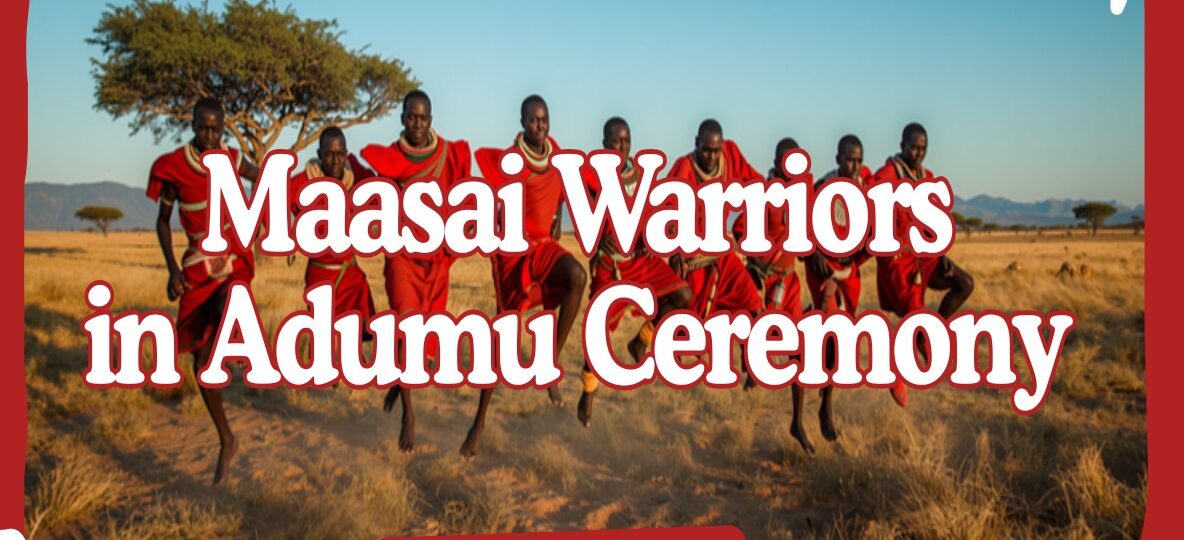
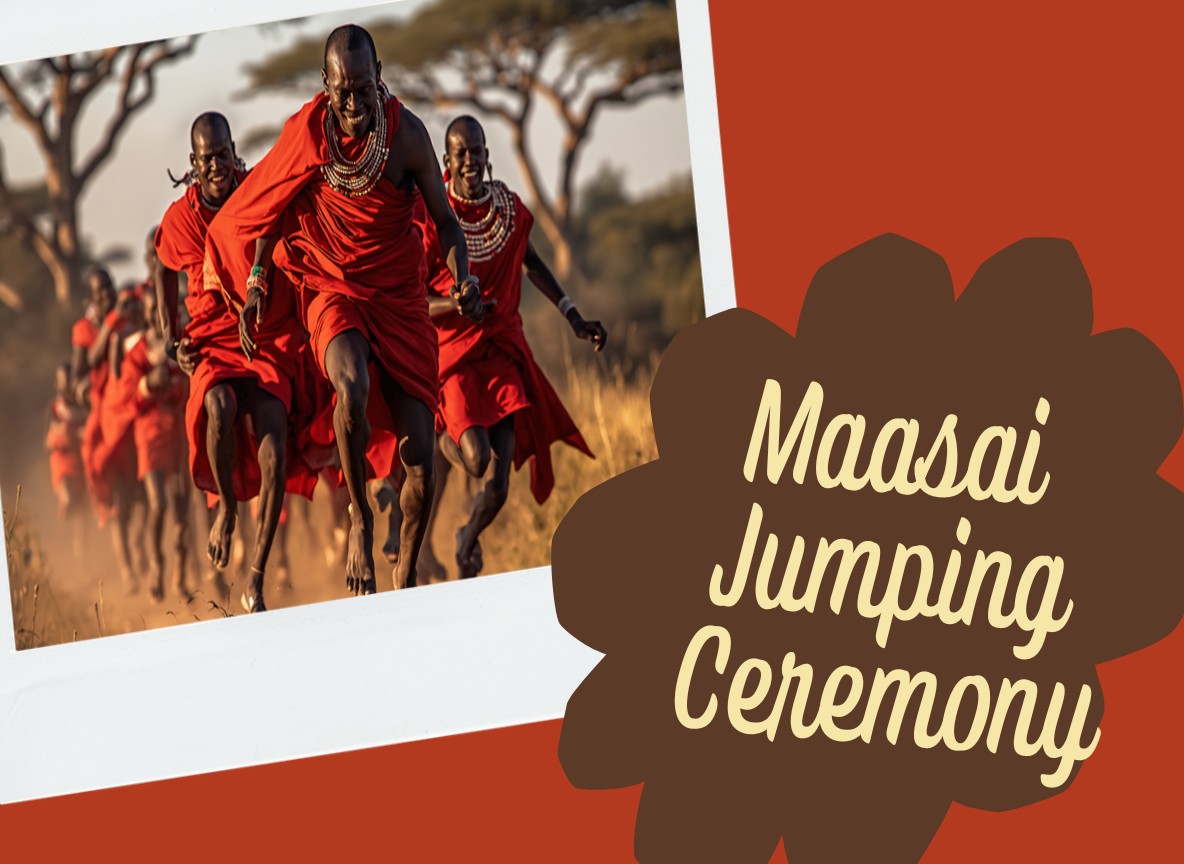
The Adumu, the Maasai jumping dance, is also a form of oral-physical tradition. Warriors take turns jumping as high as possible while the group sings. The chanting deepens, the jumping height increases, and the collective energy builds into something that visitors almost always describe as electric. As a result, the Adumu is one of the most memorable moments in any cultural safari. It is performed at weddings, warrior celebrations, and on significant community occasions.
Maasai Land, Conservation, and Life in the Modern Era
The name “Maasai” comes from the community’s own language, Maa; it translates roughly to “people who speak Maa,” a marker of shared language and identity rather than a single bloodline or clan. That land, and the vast stretches of it, is not incidental to the culture. Maasai pastoralism depends on moving cattle across large distances to follow seasonal grass and water, the same rain-driven cycle that shapes the Great Migration itself. Much of Kenya’s most important wildlife corridors, including the conservancies bordering the Masai Mara, sit on land that has been managed communally by Maasai families for generations. That communal ownership model, land held and decided on collectively rather than parcelled into individual titles, is precisely what has kept these corridors open for wildlife. Where that land has been fenced or subdivided, both cattle movement and wildlife migration suffer.
The pressure on that land is not new. British colonial administration displaced Maasai communities from large portions of their traditional grazing land in both Kenya and Tanzania in the early twentieth century, pushing pastoral groups into smaller, drier reserves to make way for settler agriculture and, later, national parks and game reserves. Much of what is now protected wildlife land was Maasai grazing land first. That history still shapes land politics today: population growth, subdivision of communal land into private plots, and competition from agriculture continue to squeeze the space available for both cattle and wildlife.
One of the sharpest modern tensions is between Maasai livestock and predators, lions in particular. A lion that kills cattle represents a genuine financial loss to a family, and retaliatory killing was historically common. East Africa’s lion population has declined significantly over the past few decades, and habitat loss and conflict with livestock are among the leading causes. Conservation organisations working in the Mara ecosystem have had real success addressing this directly: predator-proof bomas (livestock enclosures reinforced with chain-link rather than traditional thorn fencing), compensation programmes for confirmed livestock losses, and lion-tracking collar programmes that alert herders when a pride is nearby. None of these solutions work without Maasai participation, and the most effective ones are the ones designed with communities rather than imposed on them.
Conservation tourism has become one of the more effective tools for making this balance work. Community-owned conservancies bordering the Mara lease grazing land to tourism operators, which gives Maasai landowners a direct income from keeping the land open and wildlife-friendly rather than converting it to farmland. That income increasingly funds education bursaries, healthcare clinics, and employment as guides, rangers, and camp staff: work that keeps young Maasai connected to the land rather than migrating to cities for income. International recognition, from cultural heritage discussions to global conservation funding, has helped channel resources into these community-led models. The honest picture is one of adaptation, not disappearance: Maasai communities are working to hold onto land, language, and ceremony while building an economy around them that didn’t exist a generation ago. That is the future most communities we work with are building toward: not a choice between tradition and modernity, but a version of both.
The Trunktrails Advantage: Experience Maasai Culture and Traditions the Right Way
Understanding maasai culture and traditions on a page is one thing. Standing inside it, invited and welcomed, is something else entirely.
Trunktrails Safaris is a native Kenyan-owned operator based in Nairobi. Our guides grew up with the Masai Mara as their backyard. Several of our senior guides have personal relationships with Maasai community leaders spanning decades. That means when Trunktrails Safaris arranges a cultural visit, you are not watching a performance put on for tourists. You are a guest, and the difference is felt immediately.
Here is what sets our tours and safaris apart:
- Tailor-made itineraries built around your interests and budget, from budget to premium (starting at $650 for shorter tours)
- Direct operator access: No agencies, no middlemen. You speak to us directly, and we handle everything from permits to logistics.
- 24/7 support throughout your safari, from arrival in Nairobi to your last game drive
- Conservation commitment: 5% of every booking with Trunktrails Safaris goes directly to wildlife and community conservation programs in the areas we operate
- -certified and: Full regulatory credentials, so you book with confidence
For guests who want to go deeper into Maasai cultural life, we build specific cultural immersion days into Masai Mara tours and safaris: boma visits, beadwork sessions with women’s cooperatives, and evenings with elder storytellers. These experiences are arranged with community consent and benefit the community directly.
Plan Your Cultural Safari With Trunktrails Safaris 📸
The Maasai are not background scenery. They are the living authors of the landscape you have come to see. Any safari that ignores this is an incomplete safari.
Trunktrails Safaris can build a Masai Mara itinerary that puts maasai culture and traditions at the centre of your experience, alongside the wildlife, the migration, and the dramatic Mara landscape.
Book your Masai Mara cultural safari today:
Further reading
More safari planning resources
- Interactive Maasai Mara map from Valley Safaris
- Maasai Mara National Reserve guide on Touring Insights
- Family safari collection on FindMySafari
- Masai Mara destination guide on FindMySafari
📞 WhatsApp: +254 113 208888 📧 Email: info@trunktrailssafaris.com 🌍 Website: trunktrailssafaris.com ✅