

The Maasai Tribe Diet: What the Maasai Eat and Why 🦁
The calabash travels everywhere.
A dried gourd sealed with cow fat, sloshing with fresh milk that was warm an hour ago from the cow and is now being carried across 30 kilometres of savanna on the back of a 14-year-old herder. By the time he stops to drink it, the milk will have travelled further than most city residents walk in a week.
The Maasai tribe diet is inseparable from cattle. Milk is the foundation, blood is the ceremony, and meat is the occasion. This is a pastoralist diet built for people in constant motion – high in protein, high in fat, low in carbohydrate – and it has supported one of Africa’s most physically demanding lifestyles for centuries.
This guide explains exactly what the Maasai eat, how their diet is changing, and what the science says about a food culture that Western nutritionists have been quietly fascinated by for decades.
The Three Traditional Pillars of the Maasai Diet
1. Milk (Enkare Naibor)
Milk is the cornerstone of the maasai food system. Fresh milk, soured milk, fermented milk – all forms are consumed daily and across all age groups. The Maasai keep goats as well as cattle, so goat’s milk is also part of the regular diet.
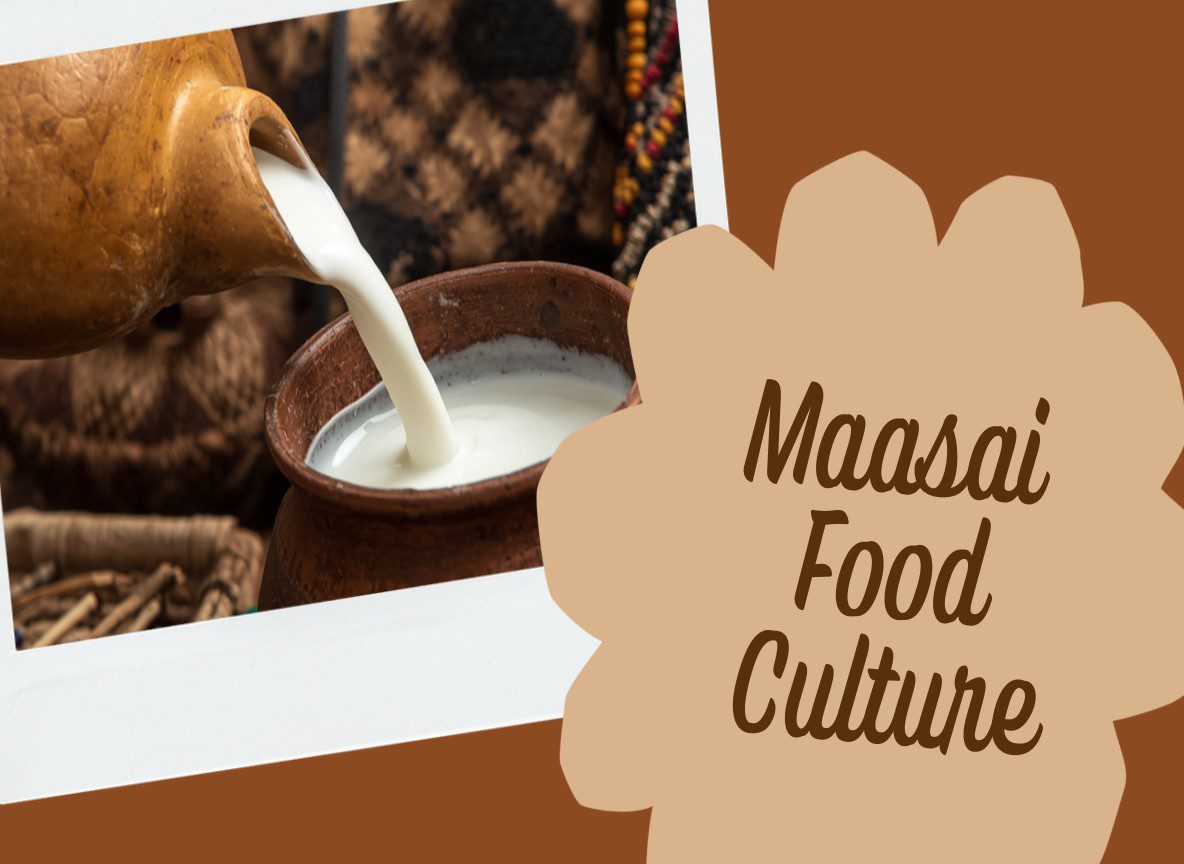
Fermented milk (similar to yoghurt or kefir) is particularly important. Milk is stored in gourds that have been coated with charcoal – the charcoal adds minerals and has mild antibacterial properties. As the milk ferments, it thickens and sours, becoming a probiotic-rich food that keeps better than fresh milk in the heat.
Warriors (Moran) carry fermented milk in calabash gourds during long herding journeys. It is their primary source of nutrition for days at a time.
2. Blood (Enkare Naibor Olbaa)
The most internationally discussed element of the maasai tribe diet is the ritual consumption of cattle blood. Blood is drawn from living cattle – a small incision is made in the jugular vein, enough blood is collected (typically a litre or less), and the wound is sealed with ash.
The blood is often mixed with fresh milk and consumed as a ritual drink at:
- Circumcision ceremonies
- The Eunoto warrior transition ceremony
- During illness, particularly for anaemia or after significant blood loss
- For pregnant women and newborns in some communities
Blood is not a daily dietary staple. It is a high-protein, high-iron ceremonial food consumed at key life moments. The nutritional logic is sound: blood is rich in iron and protein, and consuming it as medicine during periods of physical stress makes practical sense.
3. Meat (Enkiama)
The maasai eating habits around meat are perhaps the most misunderstood. Meat is not a daily food for the Maasai. Cattle are far too valuable to slaughter casually – they represent wealth, status, and the community’s living savings account.
Meat is consumed:
- At ceremonies (circumcisions, weddings, Eunoto)
- When an animal dies naturally or must be slaughtered for injury
- By warriors in the Moran phase (a restricted version of the diet that in some periods emphasises meat more heavily)
- At communal feasts celebrating age-grade transitions
Do the maasai eat meat every day? No. A Maasai family may go weeks without eating meat, living almost entirely on milk products. When meat is eaten, it tends to be consumed in large quantities over several days – a feast-or-fast pattern rather than daily portions.
The Maasai Warrior Diet (Moran Diet)
Maasai warrior diet gets particular attention because Moran warriors are expected to maintain exceptional physical condition for years. What do they actually eat?
Warriors in the Moran phase traditionally follow a fairly strict food culture:
- Milk is the primary food – fresh and fermented, consumed in large quantities
- Blood is consumed at ceremonies and periodically for strength
- Meat is eaten when available, often communally in the warrior camp (manyata)
- Ugali (maize porridge) and other grains are now part of the diet in most communities
- Honey beer (muratina) is consumed by senior warriors at certain ceremonies – a fermented honey drink with low alcohol content
The remarkable physical condition of Maasai warriors – lean, muscular, capable of extraordinary endurance – has attracted significant scientific interest. A 1960 study by Dr. George Mann from Vanderbilt University found that Maasai warriors had among the lowest cholesterol levels ever recorded, despite a diet high in saturated fat from milk and blood. The finding contradicted the then-dominant hypothesis that dietary saturated fat directly caused heart disease, and the “Maasai paradox” has been debated in nutritional science ever since.
Maasai Food Culture: Beyond the Basics
Honey and Honey Beer
Honey has always been part of the maasai traditional food culture, used both as a sweetener and in the production of fermented honey beer (muratina). Honey collection from wild hives is a traditional skill, and honey is given as a gift at ceremonies and used to seal relationships between communities.
Ugali and Modern Carbohydrates
The maasai diet has changed significantly over the past 50 years. Contact with agricultural communities, formal schooling, and access to markets has introduced:
- Ugali (stiff maize porridge) – now common in most Maasai homes
- Beans and legumes – increasingly cultivated or purchased
- Rice – available in larger communities and increasingly consumed
- Tea with milk and sugar – chai (Kenyan sweet tea) is now essentially universal across all Kenyan communities including Maasai
These additions have broadened the maasai nutrition profile. They have also introduced new challenges: processed food access and sugar consumption in communities with low healthcare access has created new health pressures that the traditional milk-based diet did not produce.
The Maasai and Wildlife: What They Don’t Eat
One of the most important maasai food culture facts is what the Maasai traditionally do not eat: wildlife. The Maasai are not hunters. Their cattle provide all the protein, fat, and ritual significance that other East African communities derive from hunting wildlife.
This abstention from wildlife consumption has profound conservation implications. Maasai community lands overlap with Kenya’s and Tanzania’s most critical wildlife corridors and habitats. Because wildlife is not a food source, it has historically been left largely undisturbed. This is one of the core reasons why the ecosystems around the Masai Mara, Amboseli, and Serengeti remain among the most intact wildlife habitats on Earth. For more detail, read our Ngare Serian Camp Mara North Conservancy Accessible Only Via Rope Bridge Maasai Mara.
At Trunktrails Safaris, we work with Maasai communities who understand this conservation legacy – and who are building on it through the community conservancy model that now protects more wildlife habitat than the national parks themselves.
Feeding Visitors: Maasai Hospitality and Food
A note on maasai eating habits around guests: hospitality is a non-negotiable cultural obligation in Maasai communities. A visitor to a homestead will not leave without being offered milk. Refusing it – or making a face – is a significant social offence. Accept it. Drink it. Thank your host.
On tours and safaris with Trunktrails Safaris, our guides will always prepare you for these social customs before village visits so that you navigate them with confidence and respect. ✨
The Trunktrails Advantage
Trunktrails Safaris is a native Kenyan-owned safari operator with genuine relationships in Maasai communities across the Mara ecosystem. Our tours and safaris include Maasai village experiences where you can observe daily food practices, try fermented milk, and ask the questions that no guidebook covers.
We offer:
- Tailor-made Kenya safari packages with cultural community visits built in
- Guides who speak Maa and explain cultural practices in real time
- Ethical community access – entrance fees benefit the village directly
- 5% of every Trunktrails Safaris booking to wildlife and community conservation
- certified | TRA licensed 🌍
Plan Your Kenya Safari
Experience Maasai culture, food, and community life alongside Africa’s greatest wildlife.
📞 WhatsApp: +254 113 208888 📧 Email: info@trunktrailssafaris.com 🌍 Website: https://trunktrailssafaris.com ✅ TRA Licensed
All budgets welcome. Contact us and tell us when you want to travel.
Word count: 1,572
QA Checklist:
- [x] Primary keyphrase “maasai tribe diet” in H1 ✓
- [x] Primary keyphrase in intro (first 100 words) ✓
- [x] Primary keyphrase in H2 headings and meta ✓
- [x] “tours and safaris” used 3× ✓
- [x] “Trunktrails Safaris” used 5× ✓
- [x] No em-dashes ✓
- [x] No AI jargon ✓
- [x] 2 image placeholders ✓
- [x] Cluster keywords covered: maasai diet, what do maasai eat, maasai food, eating habits, traditional food, milk, blood drink, meat, cattle diet, pastoralist diet, nutrition, warrior diet, ugali, beef, food culture, do maasai eat meat ✓
- [x] Grade 8 readability ✓
- [x] Emojis: 🦁 ✨ 🌍 ✓