
Maasai Tribe Facts: 25 Things You Need to Know 🦁
Ask anyone who has travelled through the Masai Mara what they remember most, and a surprising number will not mention the lions.
They’ll mention the warriors in red. The jumping. The singing that seemed to come from the earth itself. The woman who explained exactly what each bead colour in her necklace meant, and why it mattered.
The Maasai tribe is one of the most recognised and least understood peoples in Africa. Their image travels the world – on postcards, in documentaries, in wildlife photography – but the facts behind the image are rarely given the space they deserve.
Here are 25 essential maasai tribe facts that will change how you see the Mara, the people who live there, and the way cultures can thrive under pressure.
25 Essential Maasai Tribe Facts
1. The Maasai population is approximately 2 million people
Current estimates put the maasai population at around 1.5-2 million people, split roughly evenly between Kenya and Tanzania. They are one of East Africa’s most significant indigenous communities.
2. The Maasai are a Nilotic people, originally from the Nile Valley
The Maasai did not originate in Kenya or Tanzania. They are a Nilotic people who migrated southward from the lower Nile Valley region (modern-day South Sudan and Ethiopia) between the 15th and 17th centuries. They brought their cattle, their language, and their age-grade social system with them.
3. Their language is called Maa
Maasai tribe information always comes back to language. The Maasai speak Maa (also written as Ol Maa), a Nilotic language shared with the Samburu and several other East African communities. Most Maasai also speak Swahili and many now speak English.
4. The Masai Mara is named after them
The Masai Mara National Reserve – Kenya’s most famous wildlife destination – takes its name directly from the Maasai people and the Mara River that runs through it. “Mara” means “spotted” in Maa, referring to the pattern of light and shade created by the acacia trees.
5. Cattle are the centre of Maasai life
No list of facts about the maasai tribe is complete without cattle. The Maasai are pastoralists – their wealth, status, spirituality, and daily nutrition revolve around their herds. A man’s standing in the community is measured in cattle. Ceremonies involve cattle. Milk is the primary food. ✨
6. The Maasai traditionally do not eat wildlife
Despite living alongside Africa’s most spectacular wildlife, traditional Maasai culture does not include hunting wildlife for food. The Maasai hunt only to protect cattle from predators. This is one reason Maasai community lands often have remarkably high wildlife densities – the animals are not a food source and are largely left alone.
7. Maasai warriors are called Moran
The most internationally recognisable group within maasai tribe characteristics is the warrior class – the Moran. Young men enter the warrior phase after circumcision and remain warriors for up to 15 years. They are distinguished by their long ochre-dyed hair, red shukas, and the famous jumping dance (Adumu).
8. The Adumu jumping dance has a purpose beyond performance
The jumping dance is not purely entertainment. Height in the Adumu signals physical strength and virility – it is a form of competition among warriors and a way of attracting potential wives. The higher the jump, the greater the respect.
9. Maasai women build the houses
One of the most striking interesting facts about maasai culture: houses (inkajijik) are built entirely by women using mud, cattle dung, ash, and wooden frames. The house belongs to the woman, not the man.
10. Red is the most sacred colour in Maasai culture
The iconic red shuka (cloth) worn by Maasai warriors is not a random fashion choice. Red represents blood, bravery, and strength. It is also visible from a distance on the savanna, which matters when you’re herding cattle in lion country.
11. Beadwork tells a story
Maasai people facts about jewellery: every bead colour and pattern in Maasai beadwork carries specific meaning. Red means bravery, white means peace and purity, blue means energy and the sky, green means the land and nourishment, black means the people and the hardships they endure. Jewellery communicates a woman’s marital status, age, and community affiliation.
12. The Maasai believe they were given all the cattle in the world
Maasai oral tradition holds that their god, Enkai, gave the Maasai all the cattle in the world at the beginning of time. This belief has historically justified cattle raiding from other communities – not as theft, but as reclaiming what rightfully belongs to the Maasai. Most Maasai today acknowledge this tradition as mythology rather than licence, but it remains a vivid part of cultural identity.
13. There are two aspects of Enkai – one red, one black
Maasai tribe facts about religion: the Maasai god Enkai has two aspects. Enkai Narok (Black God) is benevolent – associated with thunder and rain and life. Enkai Nanyokie (Red God) is punishing – associated with drought and hardship. The relationship with Enkai is managed through prayer, ceremony, and sacrifice.
14. Laibon are spiritual leaders and healers
Every Maasai community has access to a Laibon – a hereditary spiritual leader who also serves as a healer, diviner, and political advisor. The Laibon’s role bridges the spiritual and the practical. They use herbs, roots, prayer, and ritual to treat illness and guide community decisions.
15. Maasai life expectancy has improved dramatically
Historical maasai tribe data showed low life expectancy due to limited healthcare access. That has improved significantly in recent decades. Many Maasai communities now have access to clinics, schools, and mobile health services.
16. Young Maasai are navigating tradition and modernity simultaneously
This is one of the most important maasai tribe facts for any visitor to understand. The Maasai are not frozen in time. Young Moran carry smartphones and complete secondary school while maintaining their warrior hair and ceremonial obligations. This is not contradiction – it is adaptation.
17. The Maasai have fought hard to retain their land rights
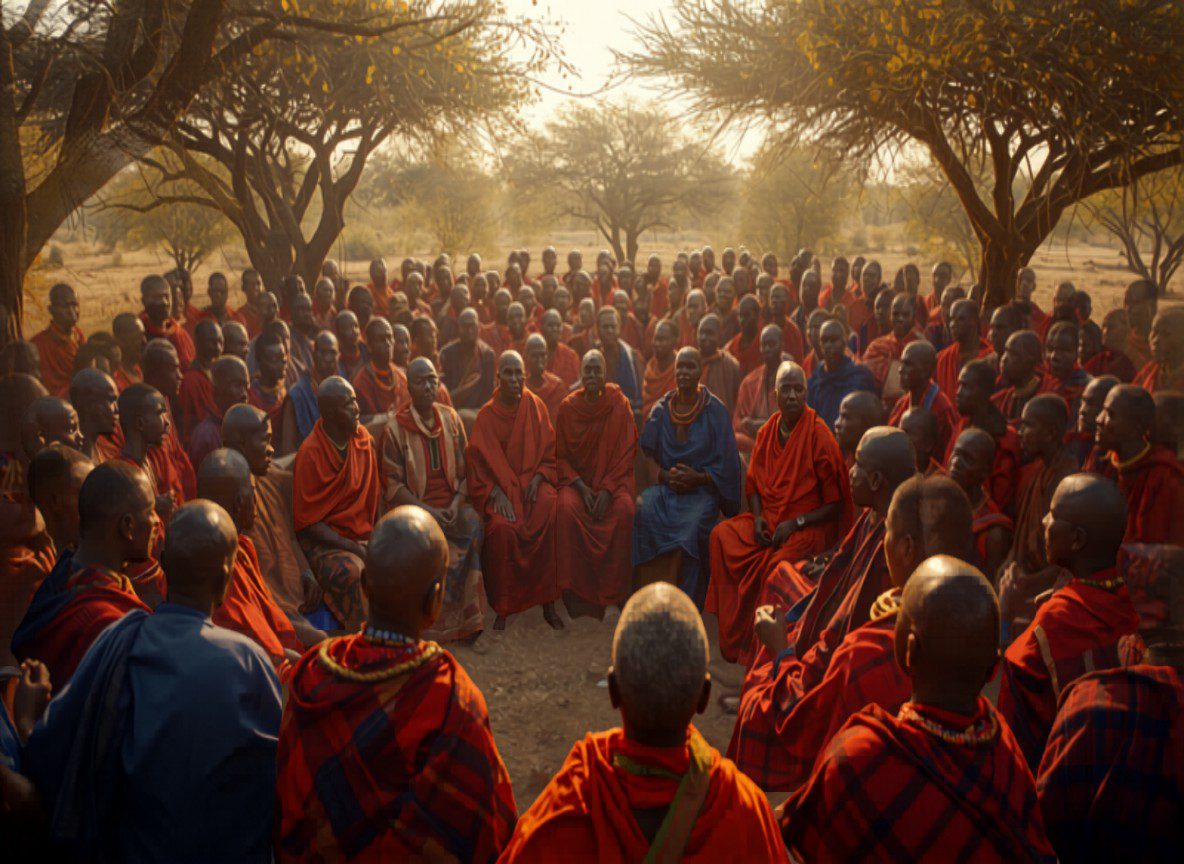
Colonial and post-colonial land policies in both Kenya and Tanzania have repeatedly displaced Maasai communities from ancestral grazing lands. Land rights remain one of the most politically sensitive maasai people facts today. Many communities are involved in formal legal and advocacy efforts to protect their territory.
18. Many Maasai men are polygamous
Traditional maasai customs permit men to marry multiple wives. Each wife has her own house within the shared homestead. Senior men – especially elders – often have two or more wives, with the number signalling wealth and status.
19. The Maasai drink a mixture of blood and milk at ceremonies
On important ceremonial occasions, Maasai drink a ritual mixture of fresh cattle blood and milk. A small amount of blood is drawn from a living cow’s neck vein without killing the animal – the wound is sealed with ash afterwards. The drink symbolises vitality, strength, and the bond between the community and its herd.
20. Maasai communities are among the best conservation partners in Kenya
Facts about the maasai tribe that often surprise visitors: Maasai community conservancies in the Mara ecosystem provide some of the best wildlife habitat in Kenya. The Ol Kinyei, Mara North, Olare Motorogi, and other conservancies are all on Maasai land, managed through community agreements that benefit families directly from wildlife tourism. Trunktrails Safaris actively supports and visits these conservancy communities.
21. Earlobe stretching is a traditional practice
Maasai of both sexes traditionally stretched their earlobes using progressively larger plugs – a mark of beauty and maturity. The practice is less common among younger generations but still observed in many communities.
22. A Maasai man’s hair signals his life stage
Warriors grow their hair long and dye it with red ochre. When they pass the Eunoto ceremony and transition out of the warrior phase, their mothers shave their heads. Elders keep their hair short. Reading a man’s hair tells you exactly where he is in the Maasai life cycle. The full rite-of-passage sequence runs in order: circumcision marks entry into the Moran phase and is traditionally endured without any sound or flinching; years as a warrior follow, herding cattle and building the lifelong bonds of an age-set; the Eunoto ceremony ends warrior status and opens the door to marriage, sealed with a bride price paid in cattle to the wife’s family; and elderhood, reached later in life, carries the community’s real decision-making authority. Each stage is marked publicly, not privately, which is part of why these ceremonies carry so much weight.
23. The Maasai word for “hello” is “Sopa”
A small but beloved piece of maasai facts for kids and adults: the standard Maasai greeting is “Sopa” (a younger person greeting an elder) or “Takwenya” (a respectful greeting for elders). Arriving at a Maasai village and greeting people in Maa – even imperfectly – creates immediate warmth.
24. The Maasai diet is changing
The traditional maasai tribe diet of milk, blood, and occasionally meat is evolving. Maize, beans, rice, and vegetables are now common in most homesteads. The change reflects both economic shifts and the influence of formal schooling, which introduces children to a wider food palette.
25. Meeting the Maasai is one of Kenya’s most transformative travel experiences
This is the final and most important of all maasai tribe facts: no guidebook, documentary, or article fully prepares you for the experience of sitting with a Maasai elder and listening to what they know about the land, the animals, the sky, and the way life should be lived. Come and find out for yourself.
The Trunktrails Advantage
Trunktrails Safaris is a native Kenyan-owned operator that offers tours and safaris combining the best wildlife viewing in the Mara with genuine Maasai cultural experiences.
Our guides speak Maa. Our community partnerships are direct and respectful. Our entrance fees go to the village, not agencies. And 5% of every Trunktrails Safaris booking funds conservation in the Mara ecosystem.
Whether you’re planning your first Kenya safari or returning for deeper cultural immersion, we build the itinerary around what matters to you. certified |. 🌍
Plan Your Kenya Safari 📸
Experience Maasai culture alongside Africa’s greatest wildlife – with Trunktrails Safaris.
Further reading
More safari planning resources
- Interactive Maasai Mara map from Valley Safaris
- Maasai Mara National Reserve guide on Touring Insights
- Masai Mara destination guide on FindMySafari
- Best safaris in Kenya on Touring Insights
📞 WhatsApp: +254 113 208888 📧 Email: info@trunktrailssafaris.com 🌍 Website: https://trunktrailssafaris.com ✅
QA Checklist: