

The Wildebeest Migration Route: From Serengeti to Masai Mara and Back 🌍
Pull up a satellite image of the Serengeti-Mara ecosystem and look at it for a moment. What you are looking at is not empty land – it is a 30,000-square-kilometre treadmill that 1.5 million wildebeest have been walking in circles for hundreds of thousands of years.
The wildebeest migration route is one of the most studied animal movement patterns on Earth, and still one of the least fully understood. The broad circuit is predictable. The precise timing within it is not. And the specific crossing points – where the animals commit to swimming the Mara River under crocodile attack – are different every time.
This guide traces the full route, explains what drives each stage of the movement, and identifies where to position yourself on the circuit to witness the most dramatic moments.
The Full Migration Circuit: Overview
The wildebeest migration follows a broadly clockwise loop across the Serengeti National Park in Tanzania and the Masai Mara National Reserve in Kenya. The circuit covers approximately 1,800 kilometres in a year – though individual animals often cover considerably more, moving back and forth within sections of the route. For more detail, read our Marsabit National Park Guide Forest Crater Lakes And Northern Corridor Safaris. For more detail, read our Mara Toto Tree Camp Maasai Mara National Reserve Ntiakitiak River Maasai Mara.
The five stages of the circuit:
- Southern Serengeti (January-March) – Calving grounds
- Central Serengeti (April-May) – Northward movement through long rains
- Northern Serengeti / Lobo area (June) – Approach to Kenya
- Masai Mara, Kenya (July-October) – River crossings and peak grazing
- Return south (November-December) – Short rains trigger the return
The wildebeest do not move as a single block. They travel in columns and clusters that can extend for dozens of kilometres. The leading edge and the trailing edge of the herd can be weeks apart on the calendar.
Stage 1: The Calving Grounds – Southern Serengeti
Where: Ndutu plains, southern Serengeti, Tanzania When: January to March
The migration cycle begins in the southern Serengeti, where approximately 500,000 wildebeest calves are born within a concentrated six-week window. This mass calving strategy – predator swamping – means so many calves are born simultaneously that the predators cannot take them all. Individual calves are at extreme risk; the species survives through sheer numbers.
The calving grounds are the most fertile part of the Serengeti ecosystem – short-grass plains fed by volcanic soils and reliable short rains. Wildebeest congregate here to give birth precisely because the grass is nutritious enough for lactating females and their newborns.
Wildebeest distance travelled at this stage: minimal. The herds are relatively stationary during peak calving.
Stage 2: Northward Movement – Central Serengeti
Where: Central Serengeti corridor, Tanzania When: April to May
As the long rains arrive and the southern plains grass is eaten out, the herds begin their northward push through the central Serengeti. This is the least-visited phase of the migration – the long rains make roads difficult and tourism infrastructure sparse. But for guests willing to navigate the wet-season conditions, the predator action around moving columns of calves is extraordinary.
The Grumeti River – a smaller, less famous cousin to the Mara River – provides the first crocodile crossing of the annual cycle, typically in May or June. Grumeti River crossings are less dramatic in scale than the Mara crossings but equally intense in close encounters.
Stage 3: Approach to Kenya – Northern Serengeti
Where: Northern Serengeti, Lobo area, Tanzania When: June
By June, the leading edges of the migration are pushing into the northern Serengeti – the Lobo and Klein’s Gate area. The Mara River forms the boundary between Tanzania and Kenya at this point, and the first crossing attempts into Kenya begin in mid to late June.
The northern Serengeti in June offers an increasingly popular alternative to the Masai Mara – lower visitor numbers, competitive camp pricing, and the drama of the first crossings before the peak season crowds arrive.
Stage 4: The Masai Mara – The Kenya Chapter
Where: Masai Mara National Reserve and surrounding community conservancies, Kenya When: July to October
This is the stage that defines the africa great migration route in popular imagination. The wildebeest arrive in Kenya and encounter the Mara River running across their path. They must cross.
The Mara River Crossing Points
The Masai Mara river has multiple crossing points where the wildebeest concentrate. The most active sites shift from year to year and even week to week depending on herd density, river levels, and bank conditions. The primary crossings used by Trunktrails Safaris guides include:
Crossing 1 / Purungat Bridge area: The most frequently used crossing in the central Mara. Easy road access, multiple viewing angles, can become crowded during August peak.
Sand River crossing: On the Kenya-Tanzania border, used when herds are moving in large columns between the two countries. Often less visited than central crossings.
Lookout Hill / Ol Kiombo area: Northern Mara crossing points used when herds are deep in the conservancy sections. Often the most exclusive viewing – conservancy vehicle limits apply.
Mara Triangle crossings: The western section of the Mara, managed separately by the Mara Conservancy. The Triangle is renowned for high predator density and excellent crossing viewpoints.
The Maasai Mara River: What You Need to Know
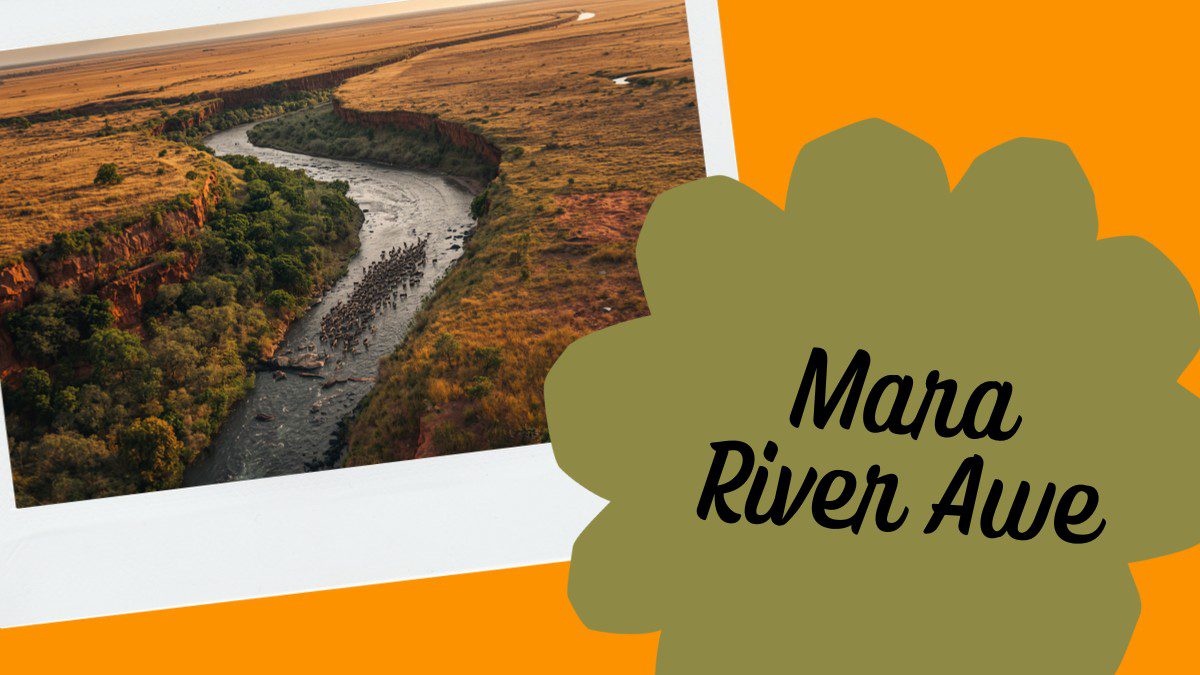
The maasai mara river – properly called the Mara River – originates in Kenya’s Mau Forest and flows west through the Mara Triangle before turning south and crossing into Tanzania. It is approximately 395 kilometres long. At the crossing points, it ranges from 20 to 80 metres wide, with depths varying seasonally from 1 to 4 metres.
The Nile crocodile population in the Mara River is one of the densest in Africa – large individuals can reach 5-6 metres. They congregate at known crossing points in advance of the migration, and their predatory success rate during crossings is estimated at 3-5% of animals attempting a crossing – low enough to be survived by the population, high enough to be dramatic for observers.
Stage 5: The Return – South Through Tanzania
Where: Migration reverses through northern Serengeti back to the south When: November to December
As the short rains arrive in November, fresh grass regenerates in the southern Serengeti. The herds begin returning south, reversing the direction of their circuit. The return crossings across the Mara River receive less attention than the northward crossings – but they are equally dramatic for guests in Kenya during October and early November.
The Migration Route and Conservation
The wildebeest migration route only functions because the entire 30,000-square-kilometre ecosystem remains intact. Remove any section – fence it, farm it, or fragment it – and the circuit breaks.
This is precisely why the Maasai community conservancies surrounding the Masai Mara are so critical. The migration route passes directly through Maasai community land. If those communities converted their land to agriculture, the northern portion of the route – the most dramatic phase – would be severed.
Trunktrails Safaris supports the community conservancy model directly: we operate in conservancy areas on our migration safari tours and safaris, and 5% of every booking funds conservation projects in the Mara ecosystem. The migration exists partly because Maasai landowners have chosen to keep it alive. ✨
The Trunktrails Advantage
Trunktrails Safaris is a native Kenyan-owned operator whose guides know the Mara River crossing points, the seasonal patterns, and the conditions that make one crossing point more productive than another on any given day.
We build tailor-made Kenya safari tours and safaris for every budget – with conservancy access, expert positioning, and the local knowledge that turns a migration safari from a good experience into an extraordinary one.
Further reading
More safari planning resources
- Wildebeest migration route map from Valley Safaris
- Mara River crossing guide on Touring Insights
- Great Migration safari collection on FindMySafari
- Interactive Maasai Mara map from Valley Safaris
📞 WhatsApp: +254 113 208888 📧 Email: info@trunktrailssafaris.com 🌍 Website: https://trunktrailssafaris.com ✅
Ready to plan your migration safari? Contact us today.
QA Checklist:

