
Wildebeest Migration Safari Kenya: The Complete Planning Guide 🌍
There is a sound that no video has ever properly captured.
It starts as a low tremor in the ground – something you feel in your chest before you hear it. Then the dust rises. Then the noise: a wall of hooves, grunts, and snorts as 1.5 million wildebeest push toward the Mara River. And then the first animal goes over the bank, and everything changes.
A wildebeest migration safari in Kenya is not simply a wildlife experience. It is one of the few remaining moments on Earth where nature operates at a scale that makes humans feel genuinely small. No amount of research fully prepares you for it. But the right preparation makes the difference between witnessing it and just being nearby when it happens.
This is the complete guide to planning your wildebeest migration safari kenya – timing, positioning, camps, pricing, and why booking with a local operator changes everything about what you actually see.
What Is the Great Wildebeest Migration?
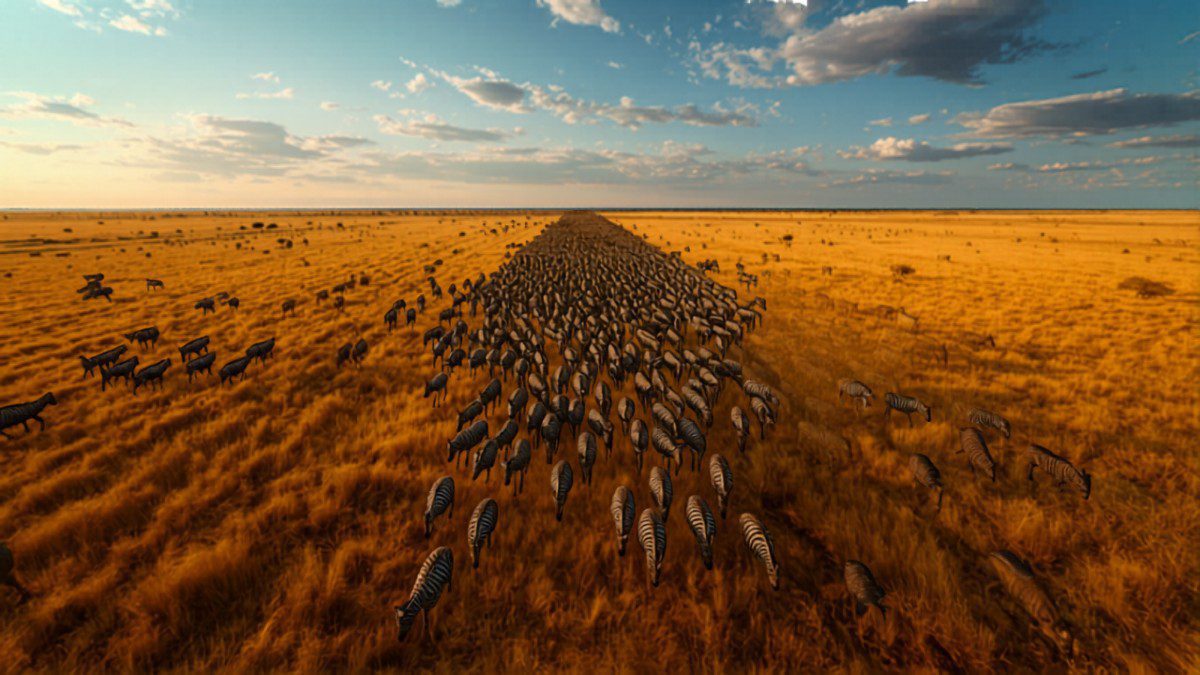
The great wildebeest migration is the largest overland animal movement on Earth. Every year, approximately 1.5 million wildebeest, 200,000 zebra, and 350,000 gazelle complete a circular journey of roughly 1,800 kilometres across the Serengeti-Mara ecosystem – driven entirely by the search for fresh grass and water.
The migration is not a single event on a single date. It is a continuous, year-round cycle. But it has a peak moment – and that peak moment happens in Kenya, in the Masai Mara National Reserve, between July and October, when the herds cross the Mara River.
The Mara River crossing is what most visitors mean when they say “the migration.” It is the dramatic, violent, crocodile-watched moment when columns of wildebeest hurl themselves down river banks, swim through churning water, and scramble up the far side – or don’t. It is extraordinary, unpredictable, and unlike anything else in wildlife.
Why Kenya for Your Migration Safari?
The great migration kenya experience is different from the Tanzania side, and most experienced safari-goers will tell you Kenya is the more dramatic destination for a single reason: the Mara River crossings.
The Serengeti offers calving season (January-March) and the long build-up as herds move north. But if you want to watch a river crossing – the moment that defines the migration in every documentary you have ever seen – you want to be on the Kenya side, in the Masai Mara, from July through October.
Why the Masai Mara specifically:
- The Mara River has multiple crossing points within a compact area – you can see several crossings in a single day if conditions are right
- Community conservancies surrounding the reserve give you exclusive access with far fewer vehicles than inside the national reserve
- Kenya’s weather window (July-October) is dry season – clear skies, excellent photography conditions
- The Mara ecosystem has the highest lion and cheetah density in Africa – even waiting for a crossing, every game drive delivers
- Trunktrails Safaris has guides who have spent years learning the specific crossing points and can position you correctly when activity begins
When to Book Your Wildebeest Migration Safari
Timing is the single most important decision in migration wildebeest kenya planning. Here is the honest breakdown by month:
July – The Arrival
The first herds begin crossing into Kenya in late June and July. July is the best month for first-time migration visitors – the crossings are beginning, the crowds are building but not yet at peak, and the weather is consistently dry. Expect crossings at multiple Mara River points. Camps at this time of year are heavily booked; reserve 6-9 months in advance.
August – Peak Season
August is peak migration month in the Masai Mara. The largest concentrations of wildebeest are in the Mara, crossings are happening regularly across multiple river points, and the predator action that follows the herds is at its most intense. This is the highest-demand, highest-cost window. Book 9-12 months ahead for premium camp placements. Worth every shilling.
September – The Sweet Spot
Our guides at Trunktrails Safaris consistently recommend September as the single best migration safari month. The peak crowds have thinned slightly, prices ease from August highs, but the herds are still in the Mara in large numbers. Crossings continue. The light in September is extraordinary – golden, clear, perfect for photography. 📸
October – The Return
By late October, the herds begin moving south again as the short rains approach. Early October still offers crossings and large concentrations. By the end of the month, numbers are thinning. A good budget-conscious option if late October is your only window.
Off-Peak Months in the Mara
The migration is the headline act, but the Masai Mara is a world-class destination year-round. The Big Five are resident. Cheetah densities are among the highest in Africa. If migration timing doesn’t work for your schedule, a non-migration Mara safari with Trunktrails Safaris still delivers exceptional wildlife.
How to Position Yourself: Conservancy vs. National Reserve
This is the decision that separates a good migration safari from a great one.
Inside the Masai Mara National Reserve
The national reserve is where the majority of vehicles concentrate, particularly during peak crossings. On a busy day at a popular crossing point, you can find 50-80 vehicles lined up on the bank. The wildlife is undeniably there. The experience can feel crowded.
Mara Community Conservancies – The Better Option
The community conservancies surrounding the reserve – Mara North, Olare Motorogi, Ol Kinyei, Naboisho – cover more than 500,000 acres of Maasai community land. They operate strict vehicle number limits (typically 6-10 vehicles per conservancy at any time). The wildlife moves freely between reserve and conservancy. The crossings happen on conservancy land too. For more detail, read our Kicheche Bush Camp Olare Motorogi Conservancy Maasai Mara.
What you get in the conservancies:
- Exclusive access – you may be the only vehicle at a crossing
- Off-road driving allowed – you can position properly for photography
- Night game drives – not permitted inside the national reserve
- Walking safaris – extraordinary in the migration season
- A Maasai community cultural experience alongside the wildlife
Trunktrails Safaris specifically operates in the conservancy areas for migration safaris. If you book the national reserve, you get the migration. If you book a conservancy camp, you get the migration plus everything the reserve can’t offer.
Choosing the Right Camp for Your Migration Safari
Camp placement on a masai mara wildebeest migration safari matters more than almost any other variable. Being 30 minutes from a crossing point when the activity starts is the difference between witnessing it and hearing about it from other guests at dinner.
What to Look For in a Migration Camp
Proximity to the Mara River: The best migration camps are within a 15-20 minute drive of multiple crossing points. Ask your operator specifically – not just “near the Mara” but “how far from the Purungat Bridge/Crossing 1/Sand River?”
Vehicle-to-guest ratio: In conservancies, this is regulated. In the national reserve, it varies. A camp with its own private vehicles means your guide is focused entirely on your group, not splitting time between guests.
Guide expertise: A river crossing can start and end in 20 minutes. A guide who knows the signs – the wildebeest stacking on the far bank, the pace of the lead animals, the time of day crossings typically begin – gives you the best chance of being there when it matters.
Trunktrails Safaris handles camp selection for every migration package we offer. We know which camps are positioned correctly for the current season, which conservancy sections the herds are using, and how to adapt your itinerary if the migration shifts.
Migration Safari Itineraries and Pricing
Trunktrails Safaris offers tailor-made Kenya safari tours and safaris across all budgets. Here are typical migration safari structures:
4-Day Migration Safari (Budget to Mid-Range)
- Day 1: Nairobi to Masai Mara (road or fly-in)
- Days 2-3: Full-day game drives focused on crossing points + evening and morning drives
- Day 4: Morning drive, depart for Nairobi
- Pricing: from USD 1,100 per person (shared vehicle, mid-range camp)
- Best for: First-time safari visitors, budget-conscious travellers
6-Day Migration Immersion
- Days 1-2: Transfer and settling in
- Days 3-5: Full-day dedicated migration game drives, Maasai village visit, walking safari
- Day 6: Departure
- Pricing: from USD 2,200 per person (private vehicle, conservancy camp)
- Best for: Returning safari guests, photographers, couples
8-10 Day Kenya Circuit with Migration
- Masai Mara (4 nights) + Amboseli or Lake Nakuru (2-3 nights) + optional coast extension
- Pricing: from USD 2,800 per person (full circuit, mixed accommodation levels)
- Best for: First-time Kenya visitors who want the full picture
All prices are per person based on double occupancy and include park fees, all meals at camp, and professional guiding. All budgets welcome – contact us and we will build the right package.
The Mara River Crossing: What to Expect
No description fully prepares you – but knowing what to watch for helps you understand what you are seeing.
Before the crossing: Wildebeest stack on the far bank in their thousands. They pace. They turn back. They approach the edge and retreat. This can last 20 minutes or three hours. The tension is extraordinary even before anything happens.
The trigger: One animal goes. It is rarely the largest. Often it is a mid-herd animal that reaches the tipping point before the leaders do. When it goes, hundreds follow within seconds.
In the water: Crocodiles – some of the largest in Africa – wait in the deeper sections. They take a percentage. The wildebeest keep coming regardless.
The scramble up: The far bank is steep, slippery, and churned to mud within minutes. Animals fall back. Some are trampled. The survivors push up and run – and within moments the whole column is moving and the crossing is over.
After: Silence. Then the next column begins stacking on the bank.
A typical crossing lasts 15-45 minutes. In a good week during August, you may witness 3-5 crossings. Some days there are none. That unpredictability is part of what makes the wildebeest great migration safari what it is – it cannot be scheduled or guaranteed, only positioned for.
The Trunktrails Advantage
Trunktrails Safaris is a native Kenyan-owned safari operator with deep local knowledge and direct relationships in the Masai Mara conservancy communities. We have been positioning migration safari guests at river crossings for years – and we know the difference between a camp that sounds close and a camp that is actually close.
Here is what you get when you book your wildebeest migration safari with us:
- Native knowledge. Our guides grew up in Kenya. They know the Mara River crossing points, the seasonal patterns, the signs that a crossing is imminent, and the roads that get you there fastest.
- Conservancy access. We work primarily in the Mara conservancies – not just the national reserve – giving you exclusive positioning with far fewer vehicles.
- Tailor-made itineraries. We do not sell fixed packages. We build the right safari for your dates, budget, group size, and priorities.
- 24/7 direct operator support. No booking platforms, no middlemen. You deal directly with us throughout – before, during, and after your safari.
- Conservation commitment. 5% of every Trunktrails Safaris booking goes to wildlife and community conservation in the Mara ecosystem.
- certified |. Full accountability, professional standards, your safety guaranteed. ✨
Frequently Asked Questions
Can the river crossings be predicted? Not precisely – but experienced guides read the signs well. The time of day (crossings peak in mid-morning), the behaviour of the leading animals, the density of the stacking herd, and weather conditions all inform an experienced guide’s positioning decisions. We have a strong success rate in placing guests at crossings. We will never guarantee a crossing, but we will give you the best possible chance.
How far in advance should I book a migration safari? For July and August, book at least 9-12 months in advance. For September, 6-9 months. The best conservancy camps sell out early and do not hold space. If you are reading this in January for an August trip, contact us immediately.
Is the migration safari suitable for children? Yes – the migration is one of the most spectacular family safari experiences available. We recommend children aged 5+ for game drive safaris. The wildebeest crossing is intense but not inappropriate for children who are prepared for natural predation. Our guides are excellent at reading children’s energy and adjusting the experience accordingly.
What is the difference between a migration safari and a regular Mara safari? A regular Masai Mara safari targets the Big Five and resident wildlife year-round. A wildebeest migration safari specifically times your visit to coincide with the river crossings (July-October) and positions you in camps and conservancy sections where crossing activity is highest. The wildlife outside the migration season is exceptional; the migration adds an entirely different scale and drama.
Do I need to fly into the Mara or can I drive? Both work. A fly-in from Nairobi (45-minute charter flight) maximises your time in the bush and is strongly recommended for 4-day itineraries. Road transfers (5-6 hours) are a more affordable option and can be excellent for guests who want to experience the journey through Kenya’s landscape. Trunktrails Safaris handles both – we’ll recommend the right option for your itinerary.
What should I pack for a migration safari? Neutral-coloured clothing (khaki, olive, tan), layers for cold mornings, a quality camera with a zoom lens of at least 300mm, binoculars, sunscreen, and a dust cover for electronics. We send a full packing list at the time of booking.
Wildebeest Migration Safari: Key Facts
The migration is roughly 1.5 million wildebeest plus hundreds of thousands of zebra and gazelle moving in a year-round loop between the Serengeti and the Mara.
| Fact | Detail |
|---|---|
| In Kenya (the Mara) | About Jul-Oct |
| Star event | Mara River crossings (Aug-Sep) |
| Reserve fee in season | $200/day non-resident |
| Ideal nights for crossings | 4 to 5 |
| Book ahead | 6-12 months for peak |
Because the herds follow the rains, not a calendar, give the trip enough days and a flexible guide so a stalled crossing does not cost you the whole spectacle.
Ready to Book Your Wildebeest Migration Safari? 🦁
The 2026 migration season is filling fast. July and August conservancy camps are already partially booked.
Trunktrails Safaris builds tailor-made Kenya safari tours and safaris for every budget – from first-time visitors to experienced safari guests returning for the crossing they have always wanted to witness. Tell us your dates, your group, and your priorities. We will do the rest.
Further reading
More safari planning resources
- Wildebeest migration route map from Valley Safaris
- Mara River crossing guide on Touring Insights
- Great Migration safari collection on FindMySafari
- Best time to visit Kenya month-by-month map from Valley Safaris
📞 WhatsApp: +254 113 208888 📧 Email: info@trunktrailssafaris.com 🌍 Website: https://trunktrailssafaris.com ✅
All budgets welcome. Contact us today – your migration safari starts with a single message.
QA Checklist: