

What to Expect on a Migration Safari in Kenya
- Guests using binoculars while guide watches wildebeest movement.
- Packed breakfast on the hood of a safari vehicle.
- Campfire scene at a Mara camp after evening drive.
A migration safari is not a staged show.
If you are wondering what to expect on a migration safari, start with this: the wildlife is real, the timing is wild, and patience is part of the experience. You may watch thousands of wildebeest gather near the Mara River for three hours, only for them to turn away. Then, just when everyone relaxes, another herd may cross in 20 minutes.
That uncertainty is not a problem. It is the reason the Great Migration feels alive. Trunktrails Safaris prepares guests for the real rhythm of migration tours and safaris so the trip feels exciting, not confusing.
Your Days Start Early
Most migration safari days begin before sunrise. Your guide wants you out before the light hardens and before vehicle traffic builds. The Mara is cold in the morning, especially from July to September, so you will usually leave camp in layers. For more detail, read our Zebra Plains Mara Camp Open Plains Maasai Mara.
A typical morning includes:
- Wake-up call around 5:15-5:45 am
- Tea, coffee or a light snack
- Departure before sunrise
- Slow tracking of herd movement
- Packed breakfast in the bush
- Midday rest or continued river watch
The best wildlife often happens before the day feels fully awake. Lions return from hunting. hyenas move along the tracks. Wildebeest begin to gather. Cheetahs use the cool morning to scan the plains.
Game Drives During the Masai Mara Migration
Game drives Masai Mara migration season are different from normal safari drives. A regular game drive may move from one sighting to another: lions, elephants, giraffes, cheetahs, then back to camp. A migration drive may focus on positioning.
Your guide may choose to wait near a river crossing point even when nothing appears to be happening. This can feel strange for first-time guests, but it is often the right call. Crossings build slowly. The signs are subtle:
- Wildebeest stacking tightly on one bank
- Animals walking down then pulling back
- Dust clouds behind the lead herds
- Zebra pushing into the group
- Crocodiles moving into position
- Other vehicles starting to gather too quickly
Good guiding is partly knowing when to wait and when to leave.
River Crossings Are Powerful, Not Predictable
The wildebeest river crossing experience is intense. It is beautiful, loud, dusty and sometimes hard to watch. Some animals make it easily. Some struggle. Crocodiles may attack. Calves may get separated. This is nature without editing.
No operator can guarantee a crossing on a specific day. The best operator can only improve your chances through month selection, camp placement, guide skill and enough nights in the Mara.
Trunktrails Safaris explains this clearly before booking. We want guests to feel prepared for the truth: a migration safari is not about controlling nature. It is about being close enough, patient enough and guided well enough when nature moves.
What Happens Between Crossings?
The migration is the headline, but it is not the whole safari. The Masai Mara remains one of Africa’s best wildlife areas even when you are waiting for herds.
Between crossing attempts, you may see:
- Lion prides resting near wildebeest corridors
- Cheetahs hunting Thomson’s gazelles
- Elephants moving along riverine woodland
- Hyenas trailing weak animals
- Secretary birds and raptors in open plains
- Giraffes and buffalo near camp roads
For many guests, the surprise is that “waiting for the migration” still feels like a complete safari.
Camp Life During Migration Season
Camp days are built around wildlife timing. You may return late for lunch. You may eat breakfast in the vehicle. You may leave again after a short rest if a guide gets news of herd movement.
Strong camps understand this. They prepare flexible meals, keep communication open and support early starts without making guests feel rushed.
The safari experience Kenya migration guests remember is often a mix of big scenes and small comfort:
- A hot drink before dawn
- Dust on your boots after a long drive
- Guide stories around the fire
- Fresh meals after a cold morning
- Silence when the herd begins to move
Optional Activities
Hot Air Balloon Safari
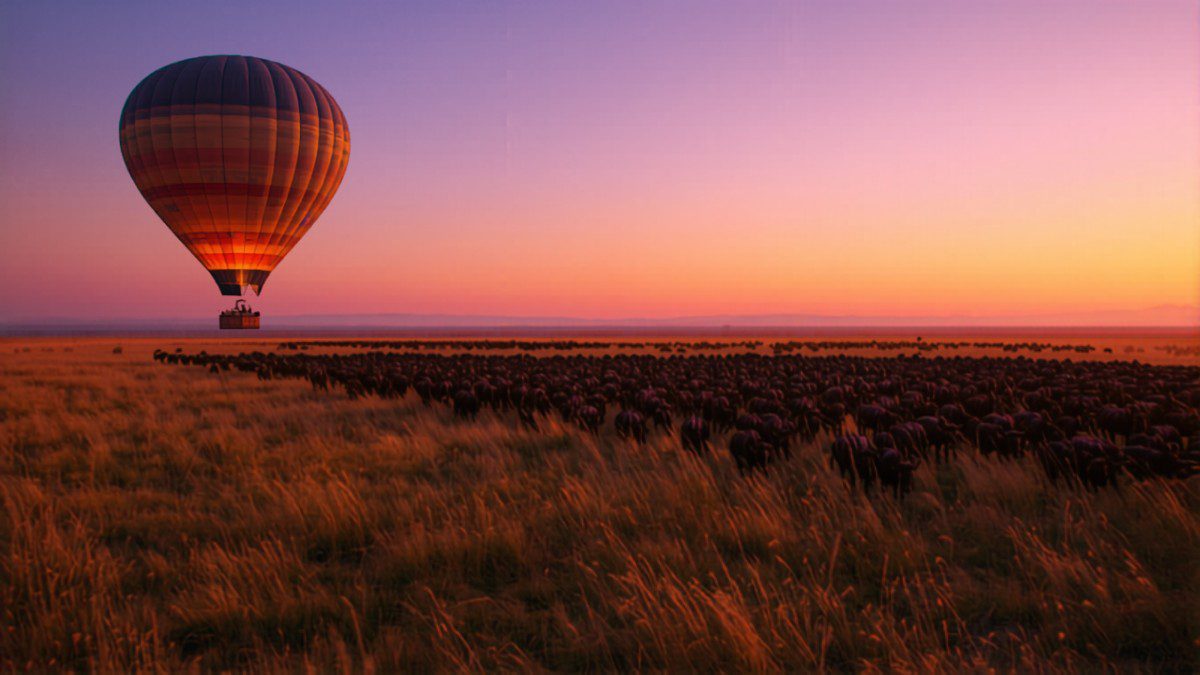
A hot air balloon safari Kenya migration morning gives a broad view of the Mara. You will not chase a crossing from the air, but you may see herd patterns, river lines and predator movement in a way a vehicle cannot show.
Balloon safaris are best for guests with enough nights in the Mara. If your trip is very short, do not sacrifice your only prime crossing morning unless the balloon is a must-do experience.
Maasai Village Visit
A Maasai village visit migration add-on can give cultural depth when done respectfully. The point is not a quick photo stop. It should help guests understand Maasai land, conservancies, livestock culture and why wildlife corridors still exist.
Trunktrails Safaris prefers visits that respect the host community and connect clearly to conservation.
Is a Migration Safari Good for First-Time Travellers?
Yes, a first time migration safari can be excellent. It gives scale, drama and classic Kenya wildlife in one trip. The key is expectation setting.
It works best for travellers who:
- Can handle early mornings
- Are patient during quiet stretches
- Understand that crossings cannot be guaranteed
- Want real nature, not a controlled attraction
- Can stay at least 3 nights in the Mara
Families, honeymooners and solo travellers can all enjoy it with the right camp and guide style.
A few practical numbers help with planning. Most migration itineraries run five to seven days total, with three to four nights based in the Mara itself: enough time to ride out a few quiet mornings and still catch a crossing. Vehicles typically carry four to six guests on a shared departure, or you can book a private 4×4 for your own group; either way, ask who else is in the vehicle, since a photographer wanting to sit still for hours pairs badly with guests who want to keep moving. July through October is peak crossing season, when the herds are consistently on the Mara side of the river. Outside that window you’ll still find resident wildlife and fewer vehicles, just without the crossing drama itself.
How the Experience Changes by Traveller Type
For families, the best plan usually includes a camp with patient staff, flexible meal times and enough space between drives. Children often love the scale of the herds, but long waiting periods at a riverbank can be tiring. A good guide will mix river strategy with shorter, more active sightings when needed.
For honeymooners, a conservancy camp can make the trip feel more private. The migration is intense, but the evenings can still feel quiet and romantic if the camp is chosen well.
For solo travellers, joining a small shared departure can reduce cost while still giving a strong safari experience. The key is joining a trip where the group has similar goals. A guest who wants photography patience should not be matched with guests who want quick sightings only.
This is why Trunktrails Safaris asks about travel style before recommending camps or vehicles. Migration tours and safaris work best when the daily rhythm fits the people inside the vehicle.
The Trunktrails Safaris Experience
Trunktrails Safaris builds migration tours and safaris with a clear rhythm: strong camp placement, enough time, qualified guiding, honest advice and direct support. We help guests choose whether they need a private vehicle, whether a balloon safari fits, and how much comfort they should budget for.
We also explain what not to expect. No fixed crossing time. No guaranteed kill. No promise that every day will be dramatic. The promise is better: careful planning, local guide knowledge, and a safari built around the real movement of the Mara.
Plan Your Migration Safari With Real Expectations
The migration rewards travellers who arrive prepared. Trunktrails Safaris can help you choose dates, camps and activities that fit your expectations and budget.
Further reading
More safari planning resources
- Wildebeest migration route map from Valley Safaris
- Mara River crossing guide on Touring Insights
- Great Migration safari collection on FindMySafari
- Interactive Maasai Mara map from Valley Safaris
WhatsApp: +254 113 208888 Email: info@trunktrailssafaris.com Website: https://trunktrailssafaris.com

