
Wildebeest Migration Photography Kenya: How to Plan the Shot
- Camera with telephoto lens resting safely on a safari beanbag.
- Guide positioning a vehicle beside a river crossing area.
- Golden-hour wildebeest herd with dust and backlight.
The Great Migration is not easy to photograph.
The scale is huge. The dust is heavy. The light changes fast. The river crossings can begin without warning and end before you have adjusted your settings. Good wildebeest migration photography Kenya planning starts before you arrive in the Masai Mara.
This guide explains gear, timing, vehicle setup, guide strategy and shot planning for a Kenya photo safari migration trip. Trunktrails Safaris builds photography-focused tours and safaris for guests who care about angle, patience and light.
What Makes Migration Photography Different?
A normal safari gives you many chances to photograph individual animals. Migration photography adds scale, movement and pressure.
You are often working with:
- Dust and heat shimmer
- Backlit herds
- Fast action near river banks
- Multiple vehicles
- Long waits followed by sudden movement
- Animals at different distances
- Emotional scenes that are difficult to frame calmly
The best images often come from preparation, not luck. You need the right lens ready, the right seat in the vehicle, and a guide who understands photography.
Best Time for Migration Photography
For wildlife photography Kenya migration trips, July to October is the core window. The best month depends on the image you want.
| Month | Photography Strength |
|---|---|
| July | First herds, lower early-season pressure |
| August | Peak crossings, high drama, more vehicles |
| September | Excellent light, strong herds, slightly calmer feel |
| October | Dust, return movement, warmer tones |
September is often the strongest balance for photographers. The light is clean, crowds are usually lighter than August, and the herds can still be active in the Mara.
Camera Gear for Migration Safari
You do not need the most expensive kit, but you need enough reach and backup.
Recommended camera gear for migration safari:
Avoid changing lenses during dusty crossing moments. If you have two bodies, keep one long lens and one mid-range lens ready.
Best Camera Settings Safari Kenya
There is no single perfect setting, but these starting points work well:
| Situation | Suggested Starting Point |
|---|---|
| Running wildebeest | Shutter 1/1600 or faster |
| River crossing splash | Shutter 1/2000 if light allows |
| Dusty backlight | Slight underexposure to protect highlights |
| Portraits at rest | Aperture f/4-f/6.3 |
| Herd landscapes | Aperture f/8-f/11 |
| Low light dawn | Raise ISO before losing shutter speed |
The best camera settings safari Kenya advice is simple: protect shutter speed first. A slightly noisy sharp image is better than a clean blurry image.
Vehicle Positioning Matters
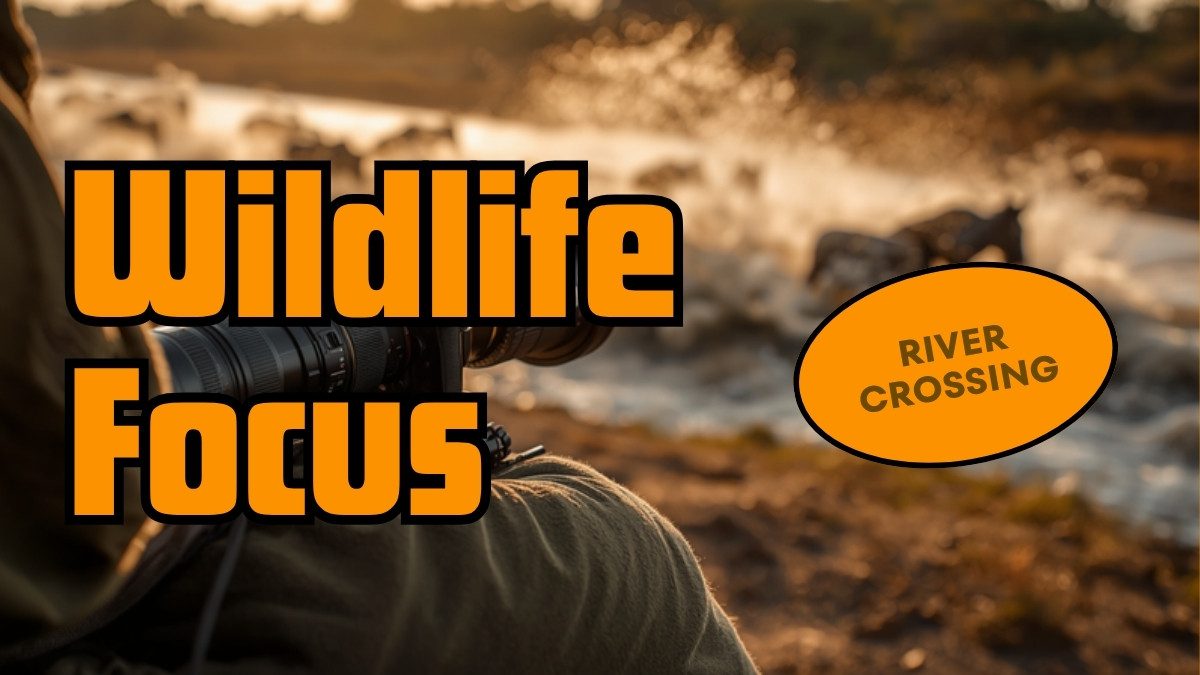
For mara river crossing photography, the vehicle position can decide the image. You need safe distance, a clear line, and a guide who will not block wildlife movement.
A photography-aware guide thinks about:
- Sun angle
- Dust direction
- Bank shape
- Vehicle spacing
- Escape routes for animals
- Lens reach
- Guest seating position
Trunktrails Safaris does not crowd the bank. Ethical positioning protects the animals and often creates cleaner images because the scene feels natural.
Private Vehicle or Shared Vehicle?
A migration photography safari works best with a private vehicle. Shared vehicles can still be good, but they create compromises.
Private vehicle benefits:
- You choose when to wait
- You can stay longer at one scene
- You can reposition for light
- You can keep equipment spread safely
- You avoid rushing other guests
- You can request low-angle vehicle setup where available
If photography is the reason for your trip, invest in vehicle control before adding luxury extras.
Best Shots to Plan For
Do not only chase the crossing. Build a shot list:
- Herds stretching to the horizon
- Zebra mixed into wildebeest columns
- Dust backlit by sunrise
- Lions watching migration corridors
- Crocodile eyes in the river
- Hooves entering water
- Wildebeest climbing muddy banks
- Guide portraits and camp life
- Maasai community landscapes
- Quiet post-crossing scenes
The strongest migration story includes tension, context, people, place and aftermath.
Mistakes to Avoid
The most common mistake is chasing only close-up action. Tight shots of wildebeest entering water are powerful, but they are not the whole story. Wide images often explain the migration better because they show scale, dust, river shape and the number of animals waiting behind the lead herd.
Another mistake is shooting too many frames too early. River crossings can last longer than expected, but the most important moment may happen after the first rush. Save battery and card space. Watch the far bank. Some of the strongest images happen when exhausted animals climb out of the river, shake off water and rejoin the moving herd.
Avoid standing suddenly in the vehicle or leaning outside the safe viewing position. It can disturb other guests, reduce vehicle stability and distract the guide. A clean photography setup starts with calm body movement.
Editing and Delivery Tips
Back up your photos every evening if possible. Keep one copy on memory cards and another on a drive. Dust can damage equipment, so clean carefully in camp and avoid opening camera bodies outside. If you are travelling with heavy gear, tell Trunktrails Safaris early so vehicle and luggage planning match your needs. For more detail, read our Zebra Plains Mara Camp Open Plains Maasai Mara.
Photography Ethics
No image is worth stressing wildlife. Responsible photographers avoid shouting, blocking paths, pushing vehicles too close or pressuring guides to break rules.
Trunktrails Safaris designs photography tours and safaris around patience. We want strong images, but we also protect the Mara ecosystem that makes those images possible.
The Trunktrails Photography Setup
Trunktrails Safaris can build a custom Masai Mara photo safari migration plan with:
- Private vehicle options
- Camp selection near key zones
- Guide briefing for photography priorities
- Longer drives when needed
- Early starts and packed breakfasts
- Optional balloon safari advice
- Camera-friendly pacing
We also help non-professional photographers. You do not need to be an expert. You need honest planning and the right field support.
Book a Kenya Migration Photo Safari
Tell Trunktrails Safaris your camera setup, travel dates and photography goals. We will match the camp, vehicle and guide strategy to the images you want.
Further reading
More safari planning resources
- Wildebeest migration route map from Valley Safaris
- Mara River crossing guide on Touring Insights
- Great Migration safari collection on FindMySafari
- Best time to visit Kenya month-by-month map from Valley Safaris
WhatsApp: +254 113 208888 Email: info@trunktrailssafaris.com Website: https://trunktrailssafaris.com