
Kenya Walking Safaris: Loita Hills, Chyulu and the Slow Way to See the Bush
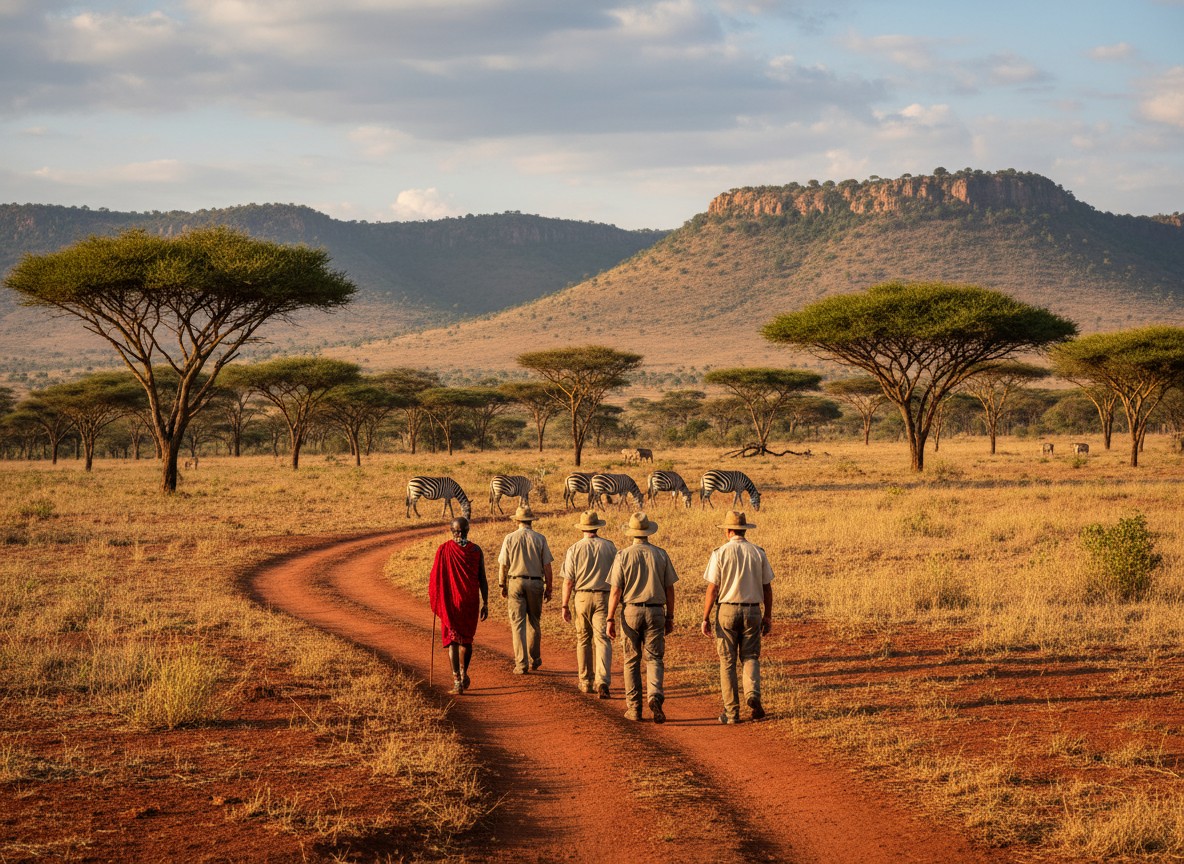
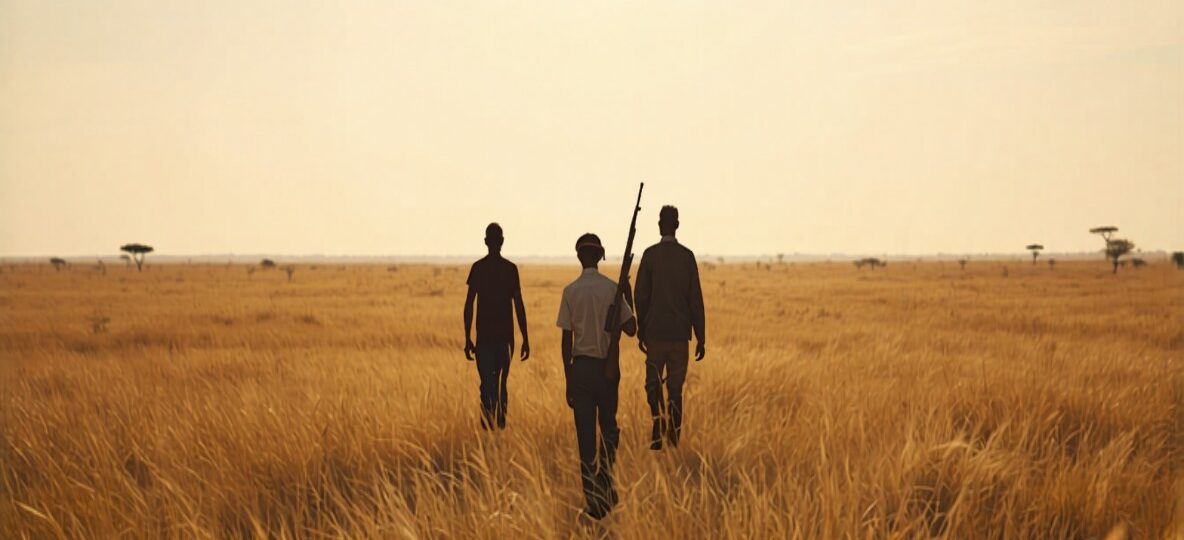
A vehicle gives you distance. A walk takes it away. On kenya walking safaris, you track a lion’s pawprint in damp soil, smell the acacia resin before you see the tree, and understand for the first time why experienced guides call the bush “loud.” It is loud with information. You just need to slow down enough to hear it.
This guide is written for travelers who have already done the vehicle safari. You have sat in a Land Cruiser at Mara River, watched the crossing, ticked the Big Five. Now you want the next layer. Kenya walking safaris deliver exactly that: a re-education in the ecosystem from two feet above ground level.
What Makes a Walking Safari Different
The most important difference is not the absence of a vehicle. It is the shift in your perceptual frame.
On foot, the guide reads the landscape for you in real time. A broken twig tells you which direction an elephant moved and roughly when. Scattered dung beetles signal a fresh predator kill nearby. The angle of a zebra’s ears tells your guide whether the animal has already clocked you or is still processing the wind.
None of that granular reading happens at speed from a vehicle. You move at two kilometers per hour instead of forty. The ecosystem stops being a backdrop and becomes the subject.
Kenya walking safaris are also physically different from what most travelers expect. You are not trekking. You are not hiking. You are moving slowly, stopping often, and spending significant time standing still. The guide does most of the tracking work. Your job is to follow, observe, and stay quiet.
The Loita Hills: Kenya’s Best-Kept Walking Country 🌍
The Loita Hills in Narok County sit southeast of the Masai Mara ecosystem and north of the Tanzania border. They are largely unknown to international visitors, which is precisely why experienced safari travelers seek them out.
The Loita are a forested highland block rising to around 2,600 metres, inhabited by the Loita Maasai and managed as community-owned land under a group ranch system. There are no tarmac roads into the core area. No permanent lodges. No safari vehicles.
Walking here means multi-day foot journeys with Maasai guides who have walked this landscape since childhood. You move between temporary fly-camps: a mess tent, sleeping tents, a camp chair and a fire. Wildlife is abundant because human footfall is low. Buffalo, eland, bushbuck and leopard are all resident. Elephant move through seasonally.
The Loita hills walking safari model runs on a community tourism basis. Your guiding fees go directly to the Loita group ranch. The operator provides the logistics; the community provides the knowledge and the land.
Loita Hills key facts:
| Factor | Detail |
|---|---|
| Best season | June to October (dry, cool, clear tracks) |
| Walk duration | 3 to 7 days fully mobile |
| Terrain | Mixed montane forest, open grassland, seasonal stream crossings |
| Wildlife | Buffalo, leopard, eland, colobus monkey, hyena, elephant (seasonal) |
| Big Five presence | Leopard confirmed; lion, elephant (seasonal); buffalo resident |
| Nearest airstrip | Keekorok (45-60 min drive) |
| Guide type | Maasai community guide + armed KWS ranger |
Chyulu Hills: Volcanic Walking Country in Southern Kenya 🐘
The Chyulu Hills are a young volcanic range between Amboseli and Tsavo West. At less than 500 years old by geological estimate, they are among the youngest mountain ranges on Earth. The soil is black lava gravel in some sections, red volcanic loam in others, and the walking terrain is unlike anywhere else in Kenya.
Chyulu Hills National Park is managed jointly by Kenya Wildlife Service and the adjacent Ol Donyo and Campi ya Kanzi concessions. This is where kenya walking safaris gain access to Big Five country on foot.
The wildlife density here is high. The Chyulu corridor connects Amboseli to Tsavo and serves as a major elephant migration route: herds of 40 to 80 animals pass through regularly from August to November. Walking safari operators time their programs around this movement.
Guided walks in the Chyulu operate from fixed camps on private concessions. The standard format is a morning walk of two to four hours, returning to camp for the midday heat, with a late afternoon walk or game drive before dark. Multi-day wilderness walks that move camp are also available for experienced groups.
The black-soil lava fields are the signature Chyulu landscape. Open, surreal, slightly other-worldly. Walking on fresh lava terrain is a completely different sensory experience from the red Mara grassland or the Loita forest.
Chyulu Hills walking safari key facts:
| Factor | Detail |
|---|---|
| Best season | June to October; also January to February (short dry) |
| Walk format | Half-day walks from fixed camp, or 3-5 day mobile walks |
| Terrain | Volcanic lava fields, montane forest, open savanna, stream valleys |
| Wildlife | Elephant, lion, leopard, cheetah, buffalo, lesser kudu, rhino (nearby Ol Pejeta circuit) |
| Camp style | Semi-permanent luxury tents (Ol Donyo, Campi ya Kanzi) or mobile camps |
| Access | Fly to Amboseli or Tsavo West, 1.5-2 hour transfer |
Tsavo West: Walking Safari With a Desert Edge
Tsavo West National Park is Kenya’s largest park by area and one of its least walked. The Chyulu corridor bleeds into western Tsavo, and several operators run specialist walking safaris in the Ngulia Hills and Mzima Springs areas.
Walking near Mzima Springs gives you something rare on kenya walking safaris: interaction with aquatic wildlife from ground level. Hippo pools, crocodile basking sites, and the eerie clarity of the spring-fed water all become accessible on foot with a qualified guide.
The Ngulia Hills section is used primarily during November and December for the Ngulia Bird Ringing Station operations — over 40,000 migrant birds have been ringed here during the northeast monsoon passage. Birdwatching walking safaris in Ngulia during this window are exceptional value for travelers who have already covered the big mammal circuits.
Laikipia: Walking Safari With Predator Density
The Laikipia Plateau in central Kenya offers kenya walking safaris with the highest predator diversity in the country. Lion, leopard, cheetah, wild dog and hyena are all present in numbers that rival the Mara. The plateau’s private conservancies — Ol Pejeta, Borana, Lewa, Mugie, Ol Jogi — manage their walking safari programs under strict safety protocols.
Walking in Laikipia means an armed KWS ranger leads every group. Group size is capped at six. Pre-walk briefings cover lion country protocols, what to do if a buffalo charges, and how to move as a unit.
The rhino tracking walks at Ol Pejeta and Borana are the most requested activity. On foot, approaching a black rhino to within 30 metres while the guide reads the wind is a category of experience that no vehicle-based game drive can replicate. See also our guide to Ol Pejeta’s northern white rhino programme.
Kenya Walking Safari Rules You Need to Know
Walking safaris in Kenya operate under Kenya Wildlife Service regulations and park-specific concession rules. The following apply across all areas:
- Armed KWS ranger mandatory for all walks in park or conservancy land
- Maximum group size: 8 (most operators cap at 6)
- Minimum age: typically 12 to 14 depending on operator and terrain
- Walks permitted during daylight hours only (no night walks in most parks)
- Firearms carried are defensive: guides do not hunt
- You follow the guide’s instructions without question — no debate, no hesitation
Physical fitness requirements are generally moderate. You should be comfortable walking for two to three hours at an easy pace. No trekking poles, no trail running shoes required. Closed footwear and long pants are standard.
Walking Safari vs Vehicle Game Drive: An Honest Comparison
| Factor | Walking Safari | Vehicle Game Drive |
|---|---|---|
| Wildlife interaction | Intimate, sensory, slow | Broad, panoramic, fast |
| Big Five guarantee | Lower (you approach on foot) | Higher (can cover more ground) |
| Ecosystem understanding | Deep — guide reads every sign | Surface — visual identification focus |
| Physical demand | Low to moderate | Minimal |
| Group size | 4 to 8 maximum | 6 to 8 in vehicle |
| Best for | Repeat visitors, wildlife literate | First-timers, Big Five seekers |
| Cost premium | 30 to 50% above standard drive rate | Baseline |
| Exclusive conservancy required? | Usually yes | No |
Best Time for Kenya Walking Safaris
The dry seasons produce the best walking conditions:
Long dry season (June to October): Grass is short, tracks are clear and readable, water is concentrated at predictable points. Wildlife viewing and tracking are at their best. This is the recommended window for Loita Hills and Chyulu Hills walking programs.
Short dry season (January to February): Good conditions with fewer tourists. Works well for Chyulu and Laikipia. Loita Hills can be marginal (some forest trails slippery after December rains).
Long rains (March to May): Most operators suspend walking programs. Tracks are washed out, vegetation is dense, and wildlife disperses. Not recommended.
Short rains (November): Variable. Tsavo West’s Ngulia bird ringing walks peak in November — a specialist exception to the standard advice.
Kenya Walking Safari Cost: What to Budget
Walking safari costs vary significantly by area and operator model:
| Area | Format | Cost Range (USD per person per day) |
|---|---|---|
| Loita Hills | Mobile community walk, 3-7 days | $350 to $550 |
| Chyulu Hills | Fixed luxury camp, half-day walks | $450 to $800 |
| Laikipia (Ol Pejeta/Borana) | Rhino tracking walk, day activity | $80 to $150 add-on |
| Tsavo West | Half-day walk from fixed camp | $400 to $650 |
| Laikipia multi-day | Wilderness walk, mobile camp | $500 to $900 |
The premium over standard vehicle-based safaris reflects the higher guide-to-guest ratio, armed ranger costs, KWS walk permit fees, and the logistical complexity of mobile camp operations.
The Trunktrails Advantage on Walking Safaris
Trunktrails Safaris has been guiding Kenya tours and safaris for over a decade, and our walking safari programs are built around one principle: the walk itself is never the product. The walk is the delivery mechanism for a specific quality of understanding that no vehicle can provide.
Our guides for walking programs hold Kenya Professional Safari Guides Association (KPSGA) certification and have completed additional specialist training in tracker ecology and wilderness first aid. We operate walking safaris in the Chyulu Hills, Loita Hills, Laikipia, and Tsavo West circuits, and we design each program around your existing safari experience.
If you have done the Mara three times and Amboseli twice, we do not start your walking safari with a Big Five checklist. We start it with a question from your guide: “What have you not understood yet?”
That is the Trunktrails Safaris difference on kenya walking safaris. We are a operator. Every walking program is vetted for safety, community benefit, and ecological integrity before we put a client on it.
Internal links for your planning: Samburu National Reserve guide | Meru National Park for repeat visitors | Masai Mara reserve vs conservancy decision
Book Your Kenya Walking Safari
Trunktrails Safaris designs custom walking programs for experienced safari travelers. Whether you want three days in the Loita Hills with Maasai guides, a Chyulu wilderness walk with elephant corridor access, or a specialist rhino tracking day at Borana, we build the itinerary around what you already know and what you want to discover next.
Contact us to start planning:
Further reading
More safari planning resources
- Ol Pejeta and Sweetwaters safari package from Valley Safaris
- Big Five safari parks guide on Touring Insights
- Big Five safari collection on FindMySafari
- Map of Tsavo from Valley Safaris
WhatsApp: +254 113 208888 Email: info@trunktrailssafaris.com Website: https://trunktrailssafaris.com
| Kenya tours and safaris since 2013

