Kenya vs South Africa Safari: Which Delivers the Better Wildlife Trip in 2026?
The Kenya vs South Africa safari question is one of the most searched decisions in African travel, and for good reason. Both countries sit at the very top of the continent’s wildlife rankings. Both offer the Big Five. Both have world-class camps and lodges. Yet the actual experience on the ground is different enough that choosing the wrong one for your travel style can cost you the trip you were dreaming of.
This comparison is built on real operational knowledge from running tours and safaris across East Africa, plus first-hand time in South Africa’s reserves. Trunktrails Safaris operates primarily in Kenya, so where we hold a preference we will say so and explain the reasoning. The goal here is not to sell you Kenya. It is to help you book the right safari. 🐘
The Key Facts First
| Factor | Kenya (Maasai Mara) | South Africa (Kruger) |
|---|---|---|
| Flagship park | Maasai Mara (1,510 km2 reserve) | Kruger National Park (19,485 km2) |
| Signature event | Great Migration (Jul-Oct) | Year-round Big Five + rhino density |
| Non-resident park fee | USD 200/person/day (from 1 Jul 2026) | ZAR 535 (~USD 29)/person/day |
| Main gateway airport | JKIA, Nairobi | OR Tambo, Johannesburg |
| Gateway to flagship park | 45-min bush flight from Wilson | 1-hr flight to Skukuza or MQP |
| Road distance to park | ~270 km, 5-6 hr drive | ~450 km, 5-6 hr drive |
| Malaria risk | Present (low in Mara highlands) | Present in Kruger; malaria-free reserves exist |
| Self-drive safaris | Rare, guide-led is standard | Extensive (SANParks self-drive network) |
| Night and walking safaris | Yes, in private conservancies | Yes, in private reserves (Sabi Sands) |
| Rhino sightings | Scarce (Lewa, Ol Pejeta) | Excellent (white and black rhino) |
| Indicative 5-day cost | USD 2,500-5,500 pp | USD 2,000-4,500 pp |
Wildlife: What You Actually See
Both countries deliver the Big Five, but the headline attractions differ.
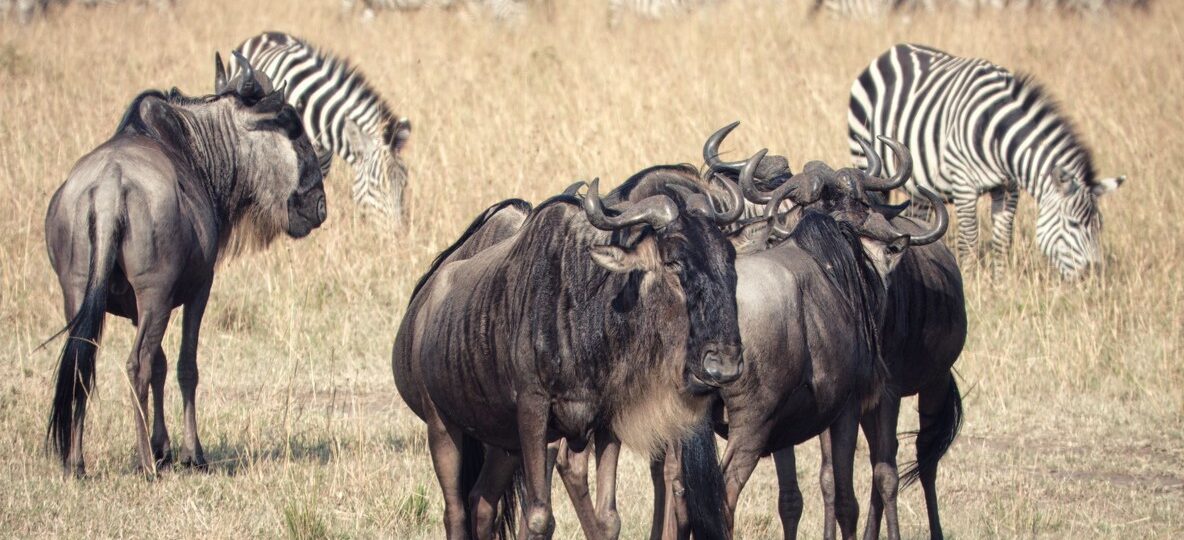
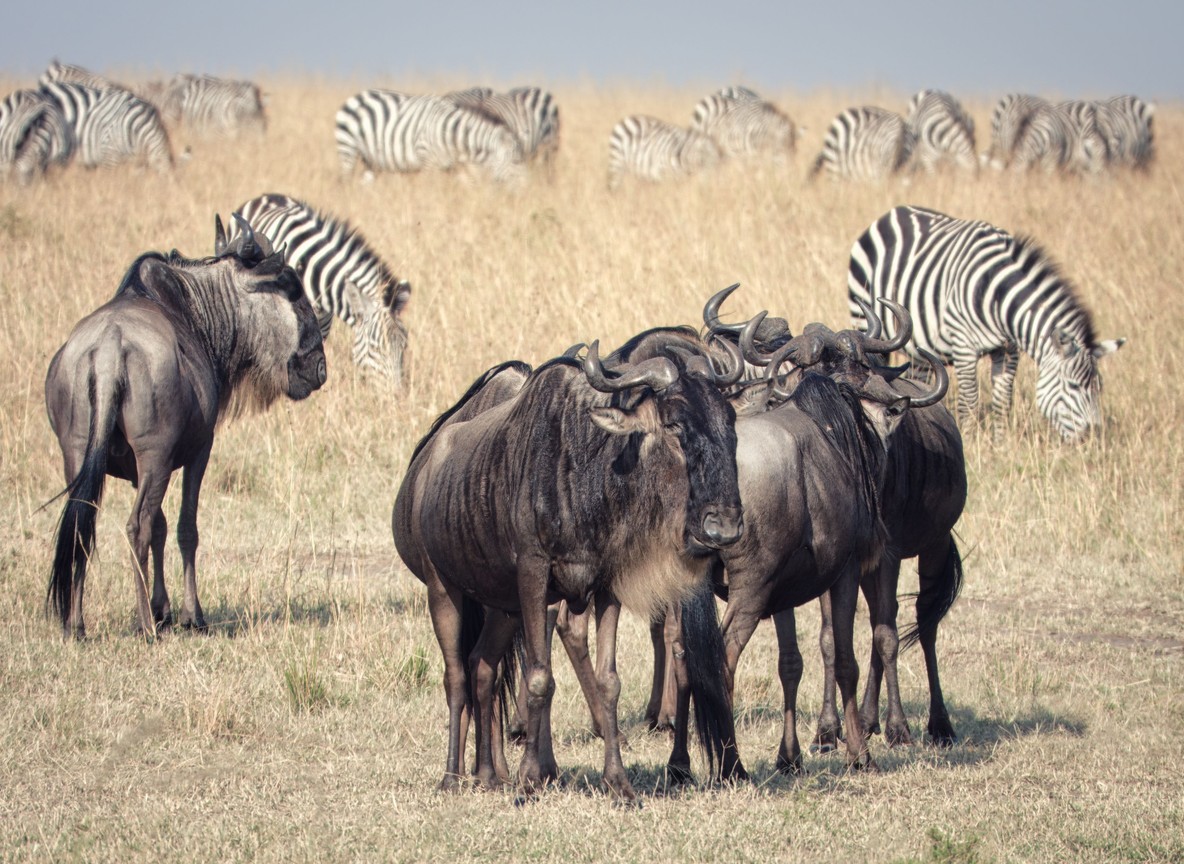
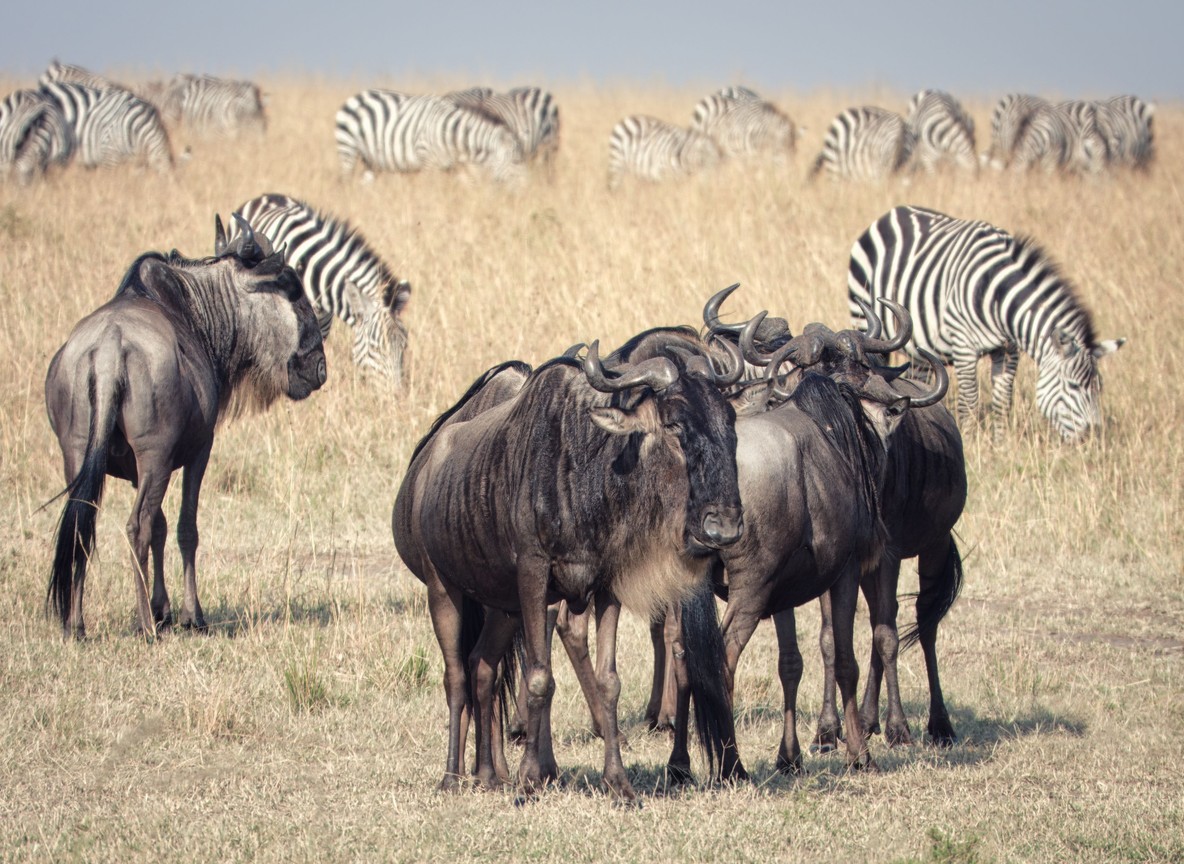
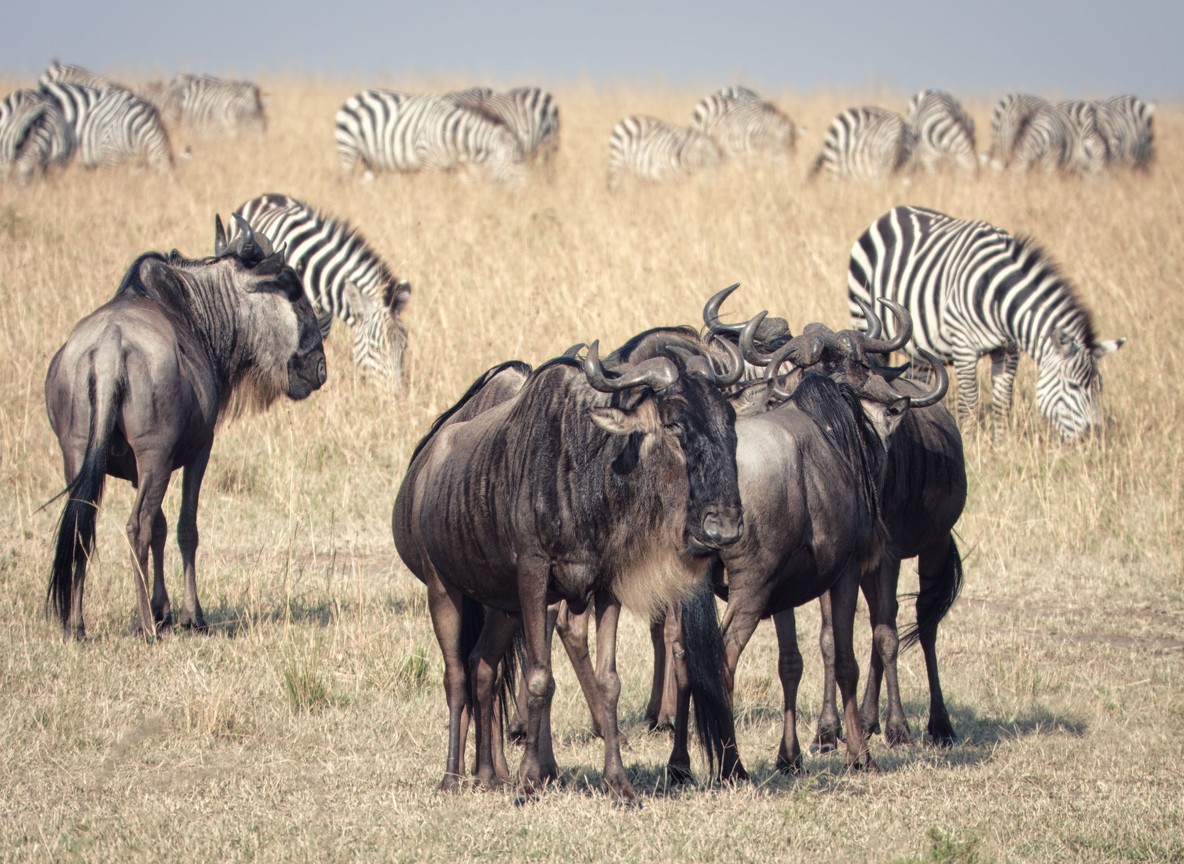
Where Kenya wins: The Great Migration. From July to October, roughly 1.5 million wildebeest and 200,000 zebra cross the Mara River in the single most dramatic wildlife spectacle on Earth. No park in South Africa produces anything at this scale. Kenya also owns the elephant-and-Kilimanjaro postcard at Amboseli National Park, and the Maasai Mara conservancies hold some of the highest lion densities in Africa. Olare Motorogi and Mara Naboisho conservancies regularly record prides of 20-plus lions.
Where South Africa wins: Rhino. Kruger and the private reserves of the Sabi Sands hold the densest, most reliable rhino populations you can visit, both white and black. If seeing rhino is high on your list, South Africa is the safer bet by a wide margin. The Sabi Sands is also globally famous for relaxed, habituated leopards that allow close, unhurried sightings that are harder to guarantee elsewhere.
The honest verdict: For sheer spectacle and density during migration months, Kenya edges ahead. For guaranteed rhino and dependable leopard viewing in a compact area, South Africa leads.
Cost: Kenya vs South Africa Safari Budgets
South Africa is generally the more affordable safari country in 2026, and the gap has widened. The main driver is park fees. From 1 July 2026, Kenya’s Narok County raised Maasai Mara non-resident fees to USD 200 per person per 24-hour period. A 3-night Mara stay now carries USD 600 in park fees alone. Kruger, by contrast, charges a daily conservation fee of about ZAR 535 (roughly USD 29) per person.
The favourable rand exchange rate also stretches a South Africa budget further on meals, transfers, and mid-range lodges. That said, top-tier private reserves like the Sabi Sands close the gap fast. All-inclusive luxury lodges there run USD 700-1,800 per person per night, on par with Kenya’s finest conservancy camps.
Indicative camp rates (per person, per night, all-inclusive):
| Tier | Kenya | South Africa |
|---|---|---|
| Mid-range | USD 250-450 | USD 200-400 |
| Luxury tented | USD 500-1,500 | USD 700-1,800 |
| SANParks rest camp (self-catering) | Not applicable | USD 60-150 |
If budget is the single deciding factor and you are happy to self-drive, South Africa wins clearly. For a fully guided, all-inclusive trip at the luxury tier, the two are broadly comparable.
Malaria and Family Safety
This is where South Africa holds a genuine, practical advantage. Kruger sits in a malaria zone, but South Africa also offers a network of malaria-free reserves, which Kenya cannot match. Madikwe Game Reserve, Pilanesberg National Park, and the Eastern Cape reserves such as Addo Elephant National Park and Shamwari all offer Big Five viewing with no malaria risk. For families with young children or travellers who cannot take antimalarial medication, this is often the deciding factor.
Kenya’s parks, including the Maasai Mara, sit in low-to-moderate malaria zones. Prophylaxis is recommended. The risk is manageable with the right precautions, but it exists, and the Adventure Family persona should weigh it seriously.
Getting There and Getting Around
Both countries move you from a major airport to the bush in about an hour by light aircraft. In Kenya, you fly from Wilson Airport in Nairobi to a Mara airstrip in around 45 minutes. In South Africa, you fly from OR Tambo in Johannesburg to Skukuza Airport or Mpumalanga (MQP) in about an hour, then transfer by road.
The biggest structural difference is self-drive. South Africa built its safari model around it. Kruger has hundreds of kilometres of tarred and gravel roads, well-signed gates, and SANParks rest camps where you book your own chalet and drive yourself. Kenya is almost entirely guided. On a Trunktrails Safaris trip you ride with a professional driver-guide who knows the territory, reads animal behaviour, and positions the vehicle for the sighting. Self-drive is cheaper and independent. Guided is richer in interpretation and far more likely to find the leopard.
Crowds, Exclusivity, and the Feel of the Bush
Volume matters more than most travellers expect. Kruger’s main southern circuit, especially around Skukuza and Lower Sabie, can feel busy in peak season, with self-drive traffic clustering at popular sightings. A single leopard beside the road can draw a dozen vehicles within minutes. The trade-off for South Africa’s affordability and access is that the flagship park is genuinely popular.
Kenya’s Maasai Mara national reserve also draws crowds at the famous river crossings in July and August. The difference is the conservancy system. The 30-plus private conservancies bordering the reserve enforce strict vehicle limits, often capping the number of cars at a single sighting at four or five. On a conservancy game drive with Trunktrails Safaris you can watch a lion pride hunt with no other vehicle in view. That sense of having the wilderness to yourself is harder to buy in Kruger’s public zones, though the Sabi Sands private reserves in South Africa deliver similar exclusivity at a similar premium.
For travellers who value quiet, uncrowded sightings above all, the answer in both countries is the same: pay for private land. In Kenya that means a conservancy stay. In South Africa it means Sabi Sands or Timbavati rather than the public Kruger sections.
Which Is Better for First-Time Safari-Goers?
First-timers often ask which country is more forgiving, and there is a real answer. South Africa is the easier country to arrive in cold. English is widely spoken, the road infrastructure is excellent, self-drive lowers the entry cost, and malaria-free reserves remove a health worry for families. A confident traveller can plan and run a Kruger self-drive with little help.
Kenya rewards a guided approach, which is exactly what makes it special. The value of a driver-guide who has tracked these animals for years shows up in every sighting you would otherwise have missed. First-timers who book fully guided tours and safaris in Kenya consistently report richer, more educational trips, because the interpretation of behaviour, tracks, and ecology is built into every drive. The country asks a little more planning and delivers a deeper payoff.
Best Time to Visit Each Country
- Kenya: July to October for the Great Migration and river crossings in the Maasai Mara. January to February is excellent for Amboseli elephants and green-season photography. The long rains (April-May) are quietest and cheapest.
- South Africa: May to September, the dry winter, is prime. Sparse vegetation and animals gathering at waterholes make Kruger and the Sabi Sands exceptional in these months. Summer (November-March) is lush but wetter, with thicker bush.
Peak seasons overlap heavily, so if you are choosing between the two for a July-September trip, both will be at their best.
The Trunktrails Advantage
Choosing between two great safari countries is easier with an operator who will tell you the truth, even when the truth points away from a booking. Trunktrails Safaris is a native Kenyan-owned company. We run our tours and safaris in the ecosystems we know intimately, with driver-guides who grew up reading this land.
For the Kenya side of your decision, we deliver value that a self-drive model cannot. Our guides know which Mara conservancy is holding lions this week, which crossing point the herds are favouring, and how to position for the light at dawn. We build private-conservancy stays into itineraries so you get night drives, walking safaris, and low vehicle numbers that the main reserve cannot offer. And because we specialise in one country rather than spreading thin across the continent, our knowledge runs deep rather than wide.
If your priorities genuinely point to a malaria-free family reserve or guaranteed rhino, we will say so. When Kenya is the right call, no one will plan your tours and safaris with more care or local insight. 🦁
So Which Should You Choose?
Pick Kenya if you want the Great Migration, the highest big-cat densities, the Amboseli elephant-and-Kilimanjaro views, and a fully guided experience with deep local storytelling.
Pick South Africa if you need a malaria-free option for young children, want guaranteed rhino sightings, prefer the freedom and lower cost of self-drive, or are travelling on a tighter budget.
For most first-time safari-goers chasing the definitive African wildlife spectacle, Kenya delivers the trip people picture when they close their eyes and imagine a safari. 🌍
Further reading
More safari planning resources
- Nairobi to Maasai Mara route guide from Valley Safaris
- Big Five safari parks guide on Touring Insights
- Big Five safari collection on FindMySafari
- Interactive Maasai Mara map from Valley Safaris
Ready to turn this decision into a real itinerary? Talk to the team that knows Kenya from the inside. Message Trunktrails Safaris on WhatsApp at +254 113 208888, email info@trunktrailssafaris.com, or visit trunktrailssafaris.com and let us build the safari you will still be talking about in twenty years. Your window seat on the migration is waiting. 📸