
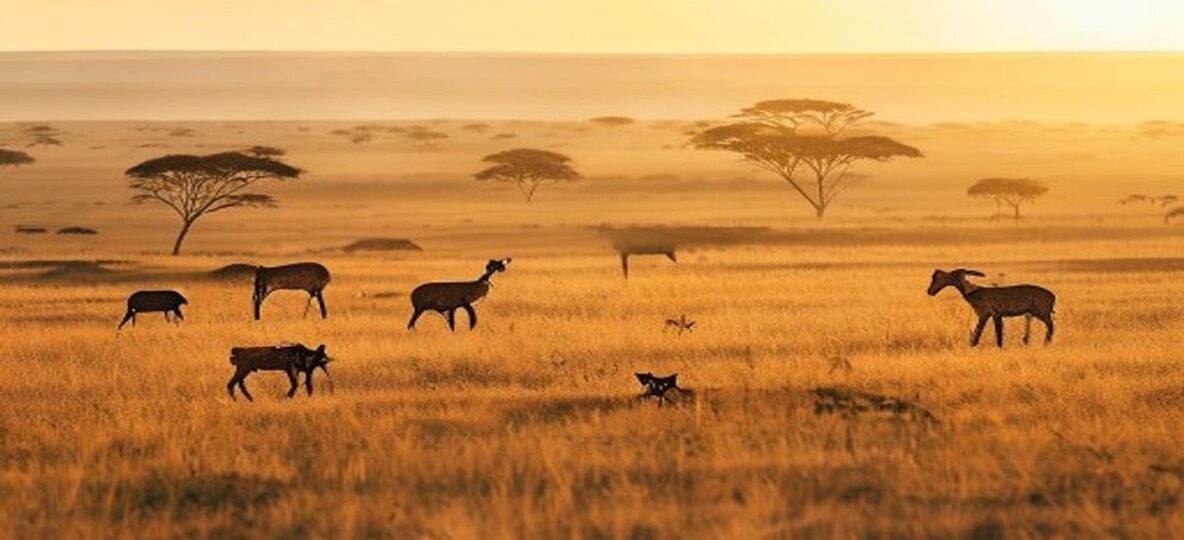
Kenya’s Safari Industry and Fuel Prices: How Operators, Lodges and Government Are Built to Last
Fuel prices rise. They fall. They rise again. If you have followed this series from Blog 1, you already know why they move, what they do to your safari invoice, how surcharges work, and what the numbers look like across every type of Kenya safari 🌍. Now it is time to step back and ask the bigger question: how are Kenya safari operators and the entire tourism sector responding, and what does that mean for the traveler who wants to book with confidence?
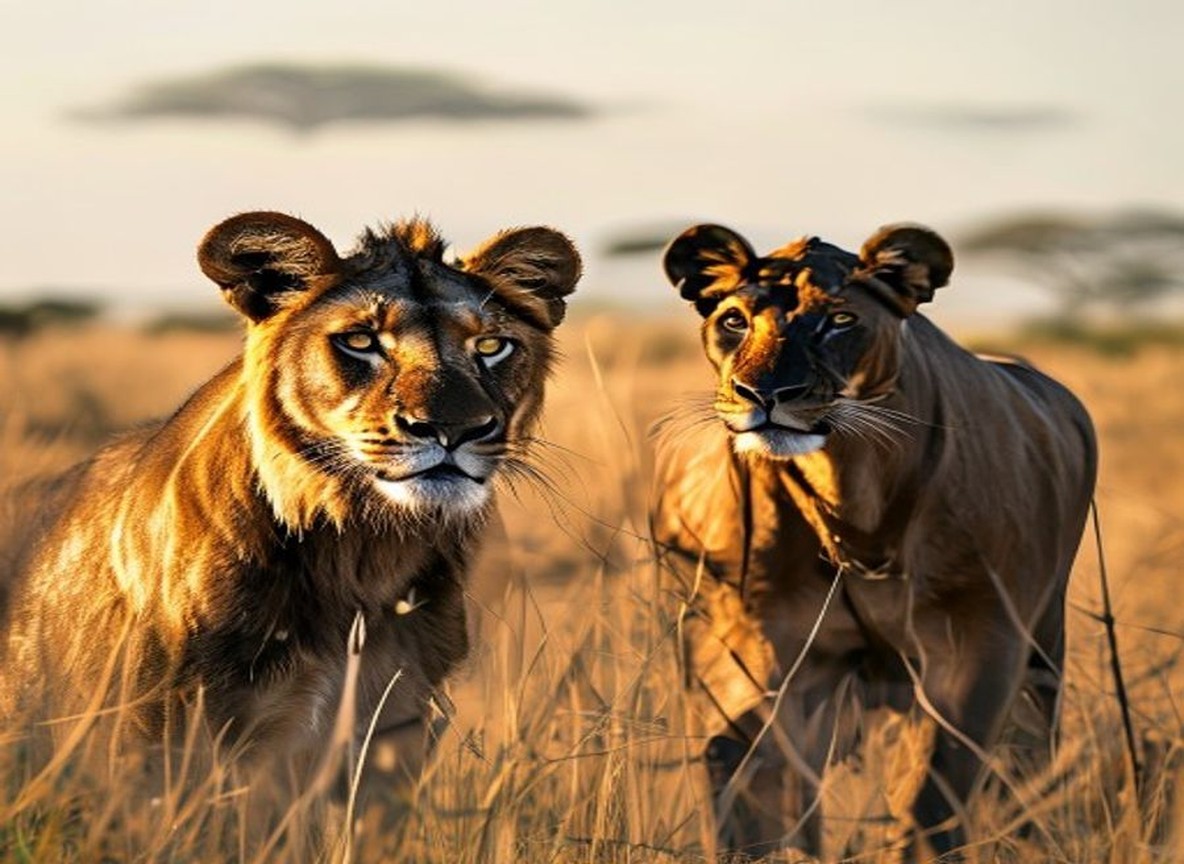
Kenya safari operators, lodge groups, industry associations like, and the government itself are all making structural changes in response to fuel price volatility. Some are cosmetic. Some are significant. The best operators, including Trunktrails Safaris, are building businesses that hold their value regardless of where the fuel pump lands on any given month.
This is the capstone blog in our 10-part series on fuel costs and Kenya tourism. It is written for every reader who wants to understand the full picture before committing to a booking.
Why Fuel Price Volatility Is the Defining Challenge for Kenya’s Tourism Industry Right Now
Kenya’s Energy and Petroleum Regulatory Authority (EPRA) publishes pump price adjustments every 15 days at epra.go.ke. In the last four years, Super Petrol in Nairobi has moved from Ksh 129 per litre to above Ksh 220, a 70 percent increase. Diesel, which powers most safari Land Cruisers and lodge generators, followed the same curve.
For any business where fuel is not a marginal cost but a core input, and that describes almost every Kenya safari tours and safaris operation, this is not background noise. It is a structural pressure that shows up in every budget line: game drive vehicles, staff transport, food supply logistics, generator fuel at off-grid camps, and charter flight Jet A-1 costs.
The impact of tourism industry on Kenya is enormous. Tourism is the country’s second-largest foreign exchange earner after remittances, contributing roughly 10.4 percent of GDP (Kenya Tourism Board data). When fuel costs squeeze Kenya safari operators below viable margins, the ripple effect hits community conservancies, ranger employment, and wildlife corridor funding. The fuel price problem is not just a traveler inconvenience. It is a conservation economics problem that affects the Kenya Wildlife Service and every conservancy it supports.
How the Government and EPRA Are Responding to Safari Industry Pressure
Kenya’s government has taken several steps to cushion the tourism sector from fuel price swings, with uneven results.
The petroleum price cap mechanism operated through EPRA is the most direct lever. EPRA’s monthly price bands set ceilings for petrol, diesel and kerosene, preventing sudden single-month spikes of the kind that destabilised operators in 2022. The mechanism does not stop prices from rising. It slows the rate of change, which gives tour operators enough lead time to reprice packages before the next booking cycle.
The government has also maintained a strategic fuel reserve through the Kenya Pipeline Company (KPC), which is designed to buffer supply shocks from global oil markets. When global Brent crude spiked above $100/barrel in 2022, the KPC reserve kept Kenya from the worst of the import disruption.
Tax relief specifically for safari vehicles has been discussed within the tourism ministry but has not translated into legislation. What has been implemented is a VAT zero-rating on certain tourism services, a measure that gives the sector partial relief without directly addressing the pump price itself.
The clearest government signal is the continued investment in safari-relevant infrastructure: the SGR Madaraka Express from Nairobi to Mombasa, the Naivasha inland container depot, and the ongoing upgrade of rural roads in tourism corridors. None of these directly cuts fuel costs, but they reduce fuel dependency for parts of the tourist journey. This is a structural response that compounds over years.
What and Kenya Tourism Board Are Doing to Protect Operators and Travelers
is the industry’s frontline advocacy body. Since 2022, has pushed for three things: standardised fuel surcharge disclosure frameworks (so travelers know what they are paying and why), preferential fuel pricing for registered operators (similar to airline fuel hedging structures), and government engagement on road infrastructure in key game corridors.
The standardised surcharge framework is the most traveler-relevant outcome. TRA-registered operators who display surcharges transparently, rather than hiding them in “taxes and fees” line items, are now the benchmark for responsible pricing. The operators who cannot or will not show their fuel surcharge breakdown are not typically. That is a useful signal when evaluating any booking.
Kenya Tourism Board (KTB) has focused its response at the demand side: international marketing campaigns that reinforce Kenya’s value-for-money positioning relative to Botswana, Rwanda, and Tanzania, destinations where fuel costs are embedded in even higher rack rates. The “Magical Kenya” campaign data suggests that price-conscious international travelers shifted toward Kenya in 2024 and 2025 as the continent’s best mid-range-to-luxury destination by cost per day of genuine wilderness access.
Kenya tourism industry statistics from KTB show international arrivals recovering through 2023 and 2025 past pre-COVID peaks, with revenue per visitor rising. Price-sensitive guests filtered out while higher-spending guests stayed. That is not an accident. It reflects a positioning strategy by both KTB and the operator community.
How Kenya Safari Operators Are Restructuring Packages to Absorb Fuel Shocks
Across the industry, Kenya safari operators are not waiting for the government to fix the problem. The intelligent response has been structural adaptation across three areas, and it is already visible in how itineraries are designed and priced.
Smarter routing. Operators are designing circuits that cover more game viewing per litre of diesel. In the Mara, this means pre-mapped game drive loops that avoid the most fuel-intensive crossings without sacrificing wildlife density. In northern Kenya, it means fly-in access to Samburu followed by overland circuits, reducing the 480km Nairobi-to-Samburu drive to a 45-minute flight, which changes the cost structure entirely.
Group efficiency. Private 4×4 vehicles for solo travelers and couples have always carried a fuel premium. The operators who have thrived through the 2022 to 2026 fuel cycle are the ones who built private pricing that accounts for vehicle fuel cost honestly, not the ones offering suspiciously low per-person rates that require a minimum group of eight to be viable.
Transparent pricing and locked quotes. The best kenya safari tour operators now offer quotes with a defined fuel surcharge clause and a price-lock window. You see the surcharge. You know when it resets. The quote holds for 90 days. This is not generosity. It is commercial discipline. Operators who do not lock quotes are either hedging against the client or cannot model their own costs. Neither is reassuring.
Conservancy and lodge partnerships. Direct partnerships with conservancies like Lewa, Il Ngwesi and Ol Pejeta allow operators to pre-negotiate fuel supply terms at scale. A solo operator buying 200 litres of diesel at the local pump pays a different effective rate than a conservancy partner who bulk-buys for 14 vehicle fleet movements per week.
How Lodges Are Cutting Fuel Dependency Without Cutting the Safari Experience
The lodge sector’s response to fuel price volatility has been faster and more decisive than the operator sector’s, because lodges carry more fixed infrastructure and cannot adjust pricing quarter-to-quarter the way tours and safaris operators can.
Solar transition is the most visible change. Camps across the Mara, Laikipia, and Samburu have invested in solar power systems that replace diesel generators for lighting, kitchen power, and water heating. Ol Pejeta’s camps were early movers. The Lewa conservancy network followed. In 2025, the majority of premium safari camps in Kenya drew less than 20 percent of their power from diesel generators, a dramatic shift from 2019 when diesel was the primary power source for most off-grid properties.
Gravity water systems, composting toilets, and solar heating reduce the lodge’s fuel consumption without reducing the guest experience by a single measurable unit. A guest sleeping under canvas with solar-powered lighting does not notice the absence of a diesel generator. They notice the silence, which is exactly what they came for.
Lodges have also rationalised food supply logistics. Local farm partnerships within 50km of camp, sourcing vegetables, eggs, and milk from community smallholders, cut both cost and fuel. The supply chain that used to run a refrigerated truck from Nairobi twice a week is being replaced by daily local collection in a small pickup. Less fuel. Fresher produce. Better connection to community.
The Trunktrails Advantage: A Kenya-First Company Built for Every Fuel Cycle
Trunktrails Safaris is a native Kenyan-owned company and one of the Kenya safari operators that has operated through every fuel price cycle of the last decade 📸. Every route we design, every camp we partner with, and every vehicle we put you in is chosen by people who live in this country and know this landscape.
That means a few things that matter when you are booking:
We price honestly. Your quote from Trunktrails Safaris shows you exactly what the fuel component looks like. There are no hidden surcharges added to your final invoice that were not in your initial quote. We are (License No. ). You can verify our credentials before you book.
We route efficiently. Our itineraries are built around game viewing density, not distance. We know which circuits deliver the wildlife experience you came for without burning unnecessary diesel. Every route is a product of field knowledge built over years, not a Google Maps calculation.
We work with lodges that have already made the solar transition. The camps we recommend are not on the wrong side of the fuel dependency curve. When you stay at a Trunktrails-recommended property, your camp’s fuel cost is structurally lower, which means the lodge is less exposed to the next fuel cycle, and your experience is less disrupted by operational pressures behind the scenes.
We are built for Kenya’s long game. Trunktrails tours and safaris are not priced to win the race to the bottom. They are priced to deliver every time, regardless of where global oil markets land this quarter.
What This Means for You as a Traveler: Planning with Confidence in 2026 and Beyond
The travelers who plan with the most confidence are not the ones who hunt for the lowest price. They are the ones who understand what the price includes and why it is what it is.
After ten blogs in this series, you now understand:
- Why fuel prices move and what drives them (Blog 1: Kenya Safari Cost Explained)
- How surcharges work and what a transparent invoice looks like (Blog 2: Fuel Surcharge Booking Guide)
- How fuel costs shape game drive operations (Blog 3)
- How to beat fuel cost cycles on a budget itinerary (Blog 4)
- Why fly-in safaris cost what they do, and when they are worth it (Blog 5)
- How domestic Kenyan travelers are adapting (Blog 6)
- Why Kenya beats competing destinations on value per day (Blog 7: Africa Safari Cost Comparison)
- How the eco-safari and EV transition changes the cost structure (Blog 8: Electric Game Drive Vehicles)
- How coast tourism absorbs fuel costs differently (Blog 9)
And now, from this capstone blog: how the whole industry, including Kenya safari operators, lodges, associations, and government, is restructuring for resilience.
The traveler who understands all of this is not afraid of fuel surcharges. They know what to look for, what to question, and which operators have built their businesses to hold value across every cycle. That traveler books with confidence. And they tend to have better safaris ✨.
The Series Recap: What Every Kenya Safari Traveler Now Knows About Fuel and Cost
| Blog | Topic | Key Takeaway |
|---|---|---|
| Blog 1 | Why fuel prices move | EPRA pricing, global oil, Kenya logistics all affect your quote |
| Blog 2 | Safari fuel surcharges | Transparent surcharges signal trustworthy operators |
| Blog 3 | Game drive operations | Drive frequency, vehicle type, and route are shaped by fuel economics |
| Blog 4 | Budget safari planning | Season, group size, and route choice beat fuel price rises |
| Blog 5 | Fly-in safari costs | Jet A-1 is real. Fly-in is worth it when it halves your road time |
| Blog 6 | Domestic tourism | Kenyan travelers are the resilience buffer for the safari economy |
| Blog 7 | Africa safari cost comparison | Kenya beats Tanzania, Botswana, Rwanda on value per day |
| Blog 8 | Eco-safari and EVs | The fuel crisis is accelerating Kenya’s sustainability transition |
| Blog 9 | Mombasa and Diani coast | Coast fuel costs are different. Plan around SGR and tuk-tuk strategy |
| Blog 10 | Industry response | Government, operators and lodges are all adapting structurally |
Plan Your Safari with the Operator Built for Long-Term Kenya Excellence
If this series has done its job, you are no longer guessing at what your Kenya safari costs or why. You have the framework to evaluate any operator, any quote, and any itinerary against the real cost structure that sits behind it 🌍.
Choosing from the right Kenya safari operators means choosing people who can show you their pricing logic, explain their surcharge structure, and route you with field knowledge rather than guesswork. That is the standard you should hold every operator to, and it is the standard Trunktrails Safaris is built on.
The next step is simple. Contact Trunktrails Safaris, tell us where you want to go, when you want to go, and what experience matters most to you. We will design an itinerary that delivers exactly that, with pricing that is honest, a surcharge structure that is transparent, and a team that is built for Kenya’s long game.
Further reading
More safari planning resources
- Nairobi to Maasai Mara route guide from Valley Safaris
- Best safaris in Kenya on Touring Insights
- Compare Kenya safari packages on FindMySafari
- Kenya tour packages from Valley Safaris
WhatsApp Micah directly on +254 113 208888, or email us at info@trunktrailssafaris.com. Visit our full range of Kenya safari tours and safaris at trunktrailssafaris.com.
Trunktrails Safaris. Kenya-first, always.
This is Blog 10 of 10 in the “Cost of Fuel and How It Affects Tourism in Kenya” series by Trunktrails Safaris. Start from the beginning at Kenya Safari Cost: Why Fuel Prices Move What You Pay or explore the full series on our blog.

