
Electric Game Drive Vehicles and Kenya’s Eco-Safari Revolution: What Rising Fuel Prices Are Really Doing to the Industry
There is a version of the Kenya safari story where high fuel prices are only bad news. Diesel climbs. Game drives cost more. Operators pass the surcharge on. Travelers hesitate. That version is real, and the rest of this series has documented it in detail.
But there is a second story running alongside it.
High fuel prices are doing something that decades of sustainability conferences failed to accomplish. They are making electric game drive vehicles, solar-powered lodges, and carbon offset programs economically rational. Not aspirational. Rational. The camps that invested early in off-grid energy infrastructure are now operating at a fraction of the fuel cost of competitors. The traveler who books with them gets something most safari brochures cannot deliver: a safari whose low-impact credentials are grounded in economics, not branding.
At Trunktrails Safaris, we track these numbers. This is what we are seeing on the ground in Kenya right now.
The Fuel Price Trigger: Why the Kenya Safari Industry Could Not Stay the Same
Kenya’s fuel prices have moved in a direction that makes long-term diesel dependency a serious business risk. The Energy and Petroleum Regulatory Authority (EPRA) publishes monthly pump price adjustments, and operators who have tracked those numbers since 2022 have watched the cost of a full Land Cruiser tank increase significantly, with no structural reason to expect long-term reversal.
For a safari camp running five vehicles on daily game drives, fuel is not a variable cost in the background. It is one of the largest line items in the operational budget. For a lodge running diesel generators around the clock to power guest cottages, kitchen refrigeration, and staff quarters, the arithmetic is even more stark.
The camps that responded to this pressure by modelling their energy costs over a five-to-ten year window arrived at the same conclusion. The upfront cost of solar infrastructure or an electric vehicle fleet, amortized over its operational life, compares favorably to diesel dependency in a volatile price environment. Not in ten years. Now.
That is the trigger. Not sustainability commitments (though those matter). Not traveler pressure (though that is growing). The trigger was a fuel price that made the status quo more expensive than the alternative. Today, the electric game drive vehicle is that alternative becoming standard infrastructure.
Electric Game Drive Vehicles: What They Are and Which Camps Are Leading
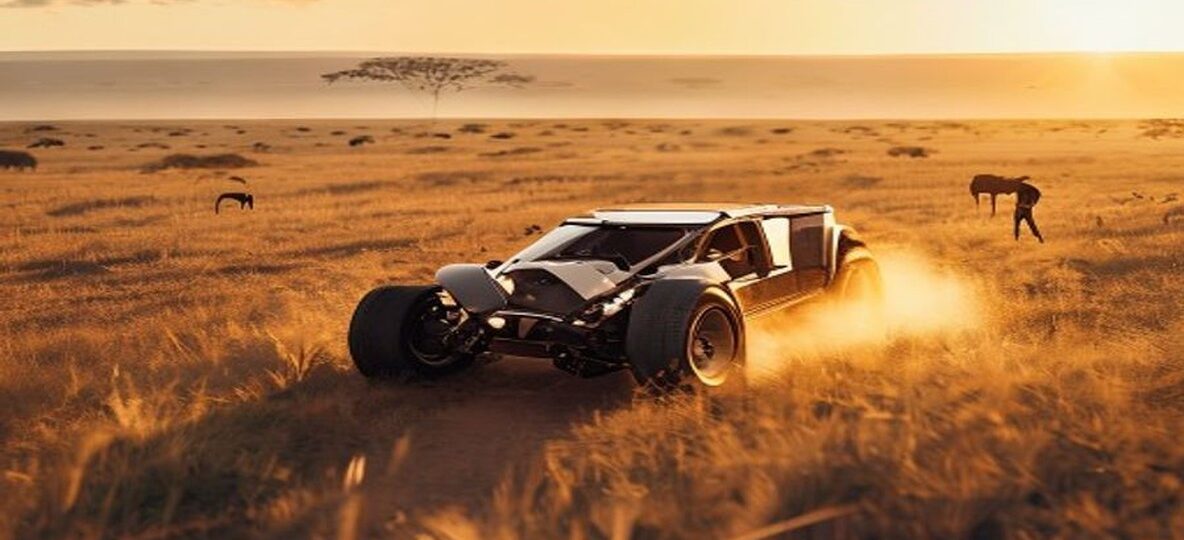
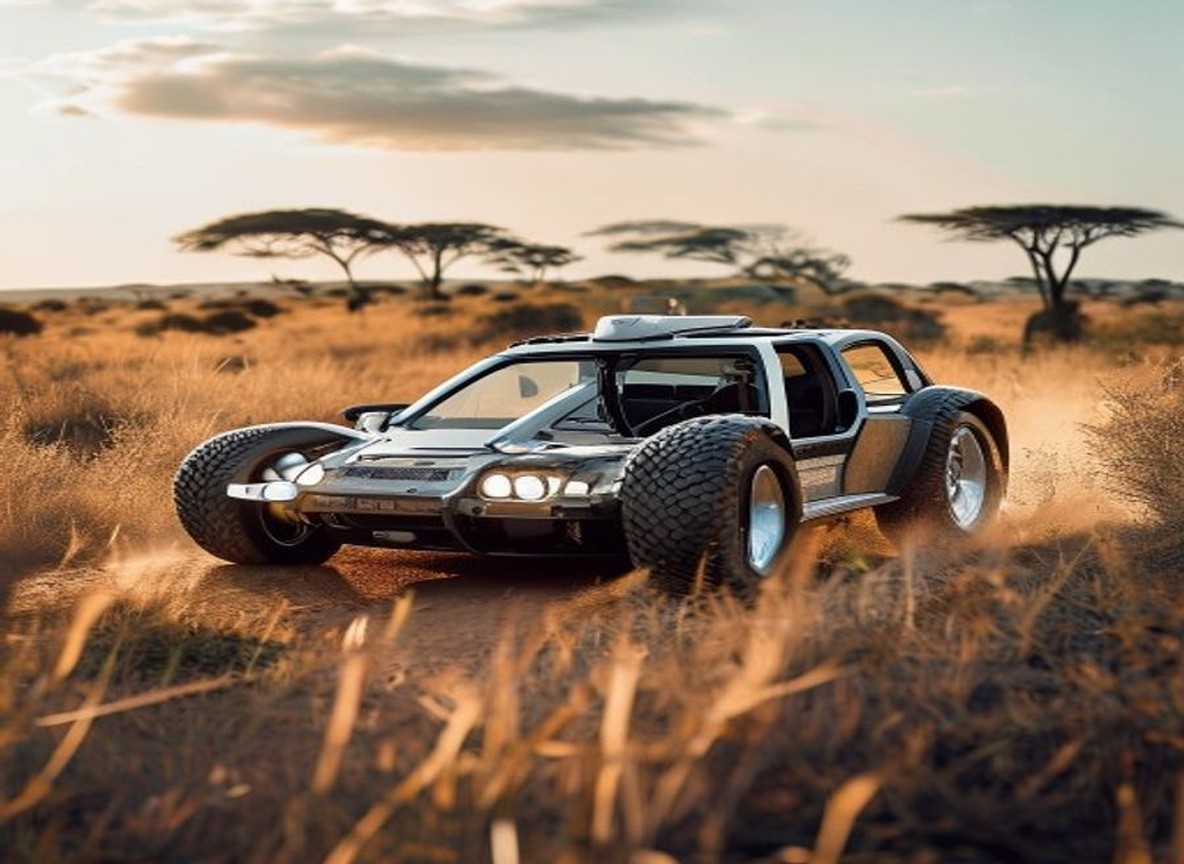
An electric game drive vehicle is a modified safari vehicle powered by an electric motor and battery pack rather than a diesel or petrol engine. For guests, the most immediate difference is the absence of engine noise. 🌍
This is not a minor detail on safari. Diesel engines mask animal behavior. Lions adjust their movements based on sound. Elephants communicate in frequencies that a running diesel drowns out. Leopards use road noise as a hunting signal. A silent electric vehicle operating at low speed does not announce its arrival. What passengers observe changes.
The first generation of electric game drive conversions in East Africa emerged primarily in South Africa’s private reserves, where shorter circuits and lodge-based charging infrastructure made the logistics more straightforward. Kenya’s terrain and longer inter-park distances created a more complex engineering challenge. But by 2025, a growing number of conservancies in the Laikipia plateau, Mara ecosystem, and Amboseli corridor had operational electric or hybrid game drive vehicles in their fleets.
Key characteristics of electric game drive vehicles currently operating in Kenya’s conservancy circuit:
- Charging via lodge solar arrays (zero additional fuel cost per game drive once infrastructure is installed)
- Range of 80-150km per charge, sufficient for most conservancy game drive circuits
- Near-silent operation below 20km/h (the speed at which most productive game viewing occurs)
- Reduced maintenance costs relative to diesel equivalents (fewer moving parts, no exhaust system)
- Qualifying for carbon credit verification under conservation carbon programs
The conservancies leading adoption in Kenya include operations in Laikipia (where the distances between points are compact enough to favor current battery technology), the Mara North and Ol Kinyei conservancies adjacent to the main Masai Mara reserve, and Ol Pejeta, which has been transparent about its sustainability infrastructure investments.
Solar-Powered Lodges and Camps: Kenya’s Off-Grid Safari Future
The shift to solar-powered lodge infrastructure is further advanced than the electric vehicle transition, and it is accelerating. A tented camp that fully committed to solar energy in 2022 is now operating its accommodation, kitchen, and water systems without diesel generator backup in most conditions.
For guests, the difference is immediate. The silence at dawn in a solar-powered camp is qualitatively different from a generator-backed operation. There is no 06:00 generator hum competing with the soundscape. For wildlife-focused travelers who have planned a safari around maximizing immersion, this distinction matters.
From a conservation finance perspective, the shift matters for a different reason. Diesel for lodge generators was purchased from supply chains that terminated outside Kenya’s conservation economy. Every litre consumed generated no conservation value. Solar infrastructure, by contrast, is a capital investment that stays in the ecosystem, requires local maintenance, and eliminates an ongoing extraction from conservation budgets.
Several Kenya camps now operate at or near 100% renewable energy. Solar arrays combined with lithium-ion battery storage can handle cooking, refrigeration, lighting, and phone charging across a full camp. The remaining diesel dependency in most cases is limited to game drive vehicles, which is precisely where the electric vehicle transition picks up the remaining thread.
How to Offset Your Safari Carbon Footprint: Kenya’s Carbon Programs
For travelers whose flights make the largest contribution to their safari’s carbon footprint, carbon offset programs provide a mechanism to direct conservation finance to Kenya’s ecosystems while accounting for unavoidable emissions. ✨
What is a legitimate carbon offset in the safari context? A verified carbon credit represents one tonne of CO2 equivalent either sequestered (stored in forest or grassland) or avoided (through community energy transitions or protected-area conservation). Kenya’s conservancy model generates carbon credits through two primary mechanisms: avoided deforestation (protecting forest and savanna from conversion to agriculture) and community development programs that reduce household charcoal burning.
The Northern Rangelands Trust, Lewa Wildlife Conservancy, and Il Ngwesi community conservancy are among the Kenya conservation operations that have developed verified carbon programs. Travelers who offset through these programs are directing finance directly to the conservancies where their safari wildlife lives.
The calculation for a long-haul safari traveler:
| Emissions Source | Approximate CO2 Equivalent |
|---|---|
| Return flight London to Nairobi | 1.8 tonnes per passenger |
| 7-day Kenya road safari (diesel vehicle) | 0.3 tonnes per person |
| 7-day Kenya fly-in safari (charter legs) | 0.5 tonnes per person |
| 7-day Kenya safari (electric vehicle, solar lodge) | 0.05 tonnes per person |
| Total without offset (road safari) | 2.1 tonnes |
| Offset cost (at $15/tonne Kenya carbon) | ~$32 per person |
At that scale, carbon offsetting is not a meaningful budget item for a traveler who has already committed to a multi-day safari. What it is, for a conservation-minded traveler, is a verifiable link between their booking and Kenya’s protected-area finance.
Trunktrails Safaris provides guidance on verified Kenya offset programs for guests who request it. We do not inflate the numbers or manufacture neutrality claims. We show you the calculation and the program, and you decide.
Is Kenya Now the Best Eco-Friendly Safari Destination in Africa?
The honest answer is: it depends on the operator you choose, not the country. But Kenya’s structural advantages for sustainable safari are real, and they are worth comparing clearly.
| Dimension | Kenya | Tanzania | Botswana | South Africa |
|---|---|---|---|---|
| Electric game drive vehicles (operational) | Growing: conservancy circuit leaders | Limited (Singita exceptions) | Very limited | Most advanced adoption |
| Solar lodge infrastructure | Advanced in Laikipia + Mara North conservancies | Mixed (luxury camps leading) | Strong in private concessions | Strong in private reserves |
| Carbon program maturity | High (NRT, Lewa, Il Ngwesi verified programs) | Moderate | Moderate | Moderate |
| Community conservancy model | Mature (15+ years, Northern Rangelands Trust) | Developing | Developing | Variable |
| Conservation-economy integration | High (conservancy leases fund ranger salaries directly) | Variable | Variable | Variable |
| Fuel price pressure on innovation | High (EPRA pricing drives adoption) | Moderate | Lower (government fuel subsidy) | Moderate |
Kenya’s advantage is not that every camp has gone electric. It is that the conservancy model that has governed Kenya’s community conservation areas for 15 years has created an infrastructure for channeling tourism revenue into conservation outcomes at a scale that most other African destinations are still developing. The fuel price pressure is accelerating adoption of the next generation of that model. 🐘
What Eco-Safari Actually Does for Wildlife: The Conservation Case for High Fuel Prices
When fuel prices rise and push operators toward solar and electric alternatives, the wildlife benefits are concrete.
Reduced soundscape disturbance. Diesel engines alter animal behavior in documented ways. Silent electric vehicles allow naturalist guides to position closer for longer without triggering avoidance. Over thousands of game drives per year, this compounds into meaningfully better observation conditions and lower stress loads for habituated wildlife.
Reduced emissions per safari. A full transition from diesel to electric and solar across Kenya’s conservancy circuit would eliminate tens of thousands of tonnes of CO2 equivalent annually.
Conservation finance reinvested. Every percentage of a lodge’s energy budget redirected from diesel to solar infrastructure is money retained within the conservation economy. The camp that eliminates its generator fuel bill frees that budget for ranger training, community payments, and trail infrastructure.
The case for high fuel prices as an accidental conservation policy is not that diesel is good. It is that the economic pressure forced the calculation that sustainability advocates had been urging for years. The industry moved when the math changed. That is exactly how large-scale behavioral shifts happen in any sector. Kenya Wildlife Service (kws.go.ke) continues to work with conservancy operators on sustainable game drive protocols as electric vehicle adoption scales across the national park system.
The Trunktrails Advantage: An Operator Aligned with Kenya’s Sustainable Safari Future
Trunktrails Safaris is a Kenyan safari operator. We are not a booking platform or an aggregator. We are a team built from within Kenya’s conservation landscape, and we route our tours and safaris through the camps, conservancies, and operators we have personally evaluated.
When we include a camp in a Trunktrails itinerary, we know its energy infrastructure. We know whether its game drive vehicles are diesel, hybrid, or electric. We know whether its solar array covers full lodge operations or only partial lighting. We know whether its community payments are structured through a conservancy lease.
Anyone can claim an eco-safari brand. Trunktrails Safaris can show you the route, the camp, the conservancy model, and the carbon program, and explain exactly how each element connects. Our tours and safaris include carbon offset guidance, electric and hybrid vehicle routing where available, and naturalist guides who work in the ecosystems they describe.
Further reading
More safari planning resources
- Nairobi to Maasai Mara route guide from Valley Safaris
- Best safaris in Kenya on Touring Insights
- Compare Kenya safari packages on FindMySafari
- Kenya tour packages from Valley Safaris
Contact us at info@trunktrailssafaris.com or on WhatsApp at +254 113 208888 to discuss a tailor-made low-carbon Kenya safari.
How to Identify a Genuine Eco-Safari Operator: 5 Questions to Ask Before You Book
The eco-safari label is unregulated. Any operator can claim it. The questions below cut through the marketing to the operational reality.
| Question | What a Genuine Answer Looks Like | Red Flag |
|---|---|---|
| What percentage of your lodge’s energy comes from solar? | A specific percentage, with an explanation of the battery storage system | “We are working toward renewables” (no number) |
| Are your game drive vehicles electric, hybrid, or diesel? | Names specific models or conversion programs, notes which circuits use which vehicles | “We use eco-friendly practices on game drives” (no vehicle specifics) |
| How do you route carbon offset revenue to Kenya’s ecosystems? | Names a specific verified program (NRT, Lewa, Il Ngwesi) with a tonne-per-booking calculation | “We plant trees” (no program specifics) |
| Are your conservancy stays structured through a formal community lease? | Describes the lease structure and how the daily conservancy fee is distributed to community members | “We support local communities” (no financial structure) |
| Can you show me the registration and any conservation certifications? | Provides registration number and details on any third-party assessments | Deflects or cannot provide the number |
Trunktrails Safaris passes all five of these questions. Ask us directly.
Frequently Asked Questions
What is an electric game drive vehicle and how does it work on safari? An electric game drive vehicle is a modified safari 4×4 powered by a battery-electric motor. It charges via lodge solar arrays overnight and operates silently at low speeds on game drives, reducing animal disturbance. Range is typically 80-150km per charge, sufficient for most conservancy circuits in Kenya.
Can solar-powered lodges in Kenya reliably power a full camp? Yes. Modern lithium-ion battery storage combined with properly sized solar arrays can power accommodation, refrigeration, kitchen equipment, and lighting through a 24-hour cycle in Kenya’s high-sunlight environment. Most camps retain a small backup generator for emergency use only.
Are carbon offsets for Kenya safaris verified and legitimate? The most credible Kenya carbon programs are third-party verified under international standards (Verified Carbon Standard or Gold Standard). The Northern Rangelands Trust, Lewa Wildlife Conservancy, and Il Ngwesi are among the established programs. Avoid operators who sell offsets without naming a specific verified program.
How does Kenya compare to Tanzania for eco-safari credentials? Kenya’s community conservancy network, developed under the Northern Rangelands Trust since 2004, gives it a structural advantage in conservation-economy integration. Tanzania has excellent luxury eco-camps but the community ownership model is less mature at scale. The specific camp matters more than the country.
How do I book eco-friendly tours and safaris with Trunktrails Safaris? Contact us on WhatsApp at +254 113 208888 or email info@trunktrailssafaris.com with your dates and any eco-certification requirements. We will design a tailor-made itinerary routed through our vetted conservancy partners, with a full carbon calculation for your trip. Trunktrails Safaris is.
More in This Series: Cost of Fuel and How It Affects Tourism in Kenya
- Blog 1: How Fuel Prices Shape What You Pay for a Kenya Safari
- Blog 2: Kenya Safari Fuel Surcharges Explained: What to Look For Before You Book
- Blog 3: Safari Game Drive Operations: How Fuel Costs Shape What You Experience
- Blog 4: Kenya Tour Budget Safari: How to Beat Fuel Prices and Still Get the Real Safari
- Blog 5: Fly-In Safari Kenya: What Fuel Prices Really Do to Your Charter Flight Cost
- Blog 6: Fuel Prices and Kenya Domestic Tourism: What Happens When Locals Hit the Road
- Blog 7: Africa Safari Cost Comparison: Why Kenya Beats Botswana, Tanzania, and Rwanda on Value Per Day
- Blog 8: Electric Game Drive Vehicles and Kenya’s Eco-Safari Revolution (you are here)
- Blog 9: Coming soon
- Blog 10: Coming soon
Plan Your Low-Carbon Kenya Safari with Trunktrails Safaris
The Kenya conservancies running electric game drive vehicles are filling peak-season dates ahead of diesel-dependent competitors. The trend is not coming. It is here.
If you want your safari to count for something beyond the experience itself, the route matters. The camp matters. The operator who can show you the conservancy model, the energy infrastructure, and the carbon program matters.
Reach out to Trunktrails Safaris and start designing a safari that fits both your expectations and your values.
WhatsApp: +254 113 208888 Email: info@trunktrailssafaris.com Website: trunktrailssafaris.com
| Nairobi, Kenya

