Kenya Safari in May: Shoulder-Season Bargains Across Every Park 🌍
May is the month most safari brochures skip over. Operators quietly lower their rates. The bush turns green and cinematic. The wildlife does not go anywhere. At Trunktrails Safaris, we run tours and safaris every month of the year, and May is one of our favourites to plan because savvy travellers get more for every dollar spent.
A kenya safari in may puts you in the parks when crowds thin out, landscapes saturate with colour, and animals concentrate in ways that make game drives surprisingly productive. The long rains fall mostly in afternoon showers, not all-day downpours. Morning drives are often clear, cool, and spectacular. Here is what every major park looks like in May, and how to lock in the best rates before peak season doubles the prices.
Is May a Good Month for a Kenya Safari?
Yes, with a clear picture of the conditions.
May sits inside Kenya’s long-rains season, which runs from April to mid-June. Rain typically arrives in afternoon or evening showers rather than sustained downpours. Mornings are usually clear and cool, which is exactly when game drives run. The landscape is deeply green, with wildflowers along watercourses and thick new grass that turns photography from good to extraordinary.
The real tradeoff: some bush roads become muddy and challenging, particularly in Masai Mara and Tsavo West. A few remote tented camps close for annual maintenance. Most parks remain fully operational, and Trunktrails Safaris uses 4×4 vehicles that handle wet-season tracks without difficulty. The reward is lodge and camp rates that sit 30 to 40 percent below what the same beds cost in July, August, or September.
What Are Kenya Safari Costs Like in May?
The Masai Mara park-entry fee tells the story clearly. Non-resident adult entry costs $100 per day from January through June, then jumps to $200 per day from July through December. That single change doubles the park-fee component of your package the moment Great Migration hype begins.
Lodge and tented-camp rates follow the same logic. Below are indicative ranges for 2026:
| Safari Tier | May Rate (indicative) | Peak Rate Jul-Sep (indicative) | Saving |
|---|---|---|---|
| Budget camping, 5 days | $650 – $900 pp | $950 – $1,250 pp | ~$300 |
| Mid-range lodge, 7 days | $1,200 – $1,700 pp | $1,800 – $2,400 pp | ~$600 |
| Premium tented camp, 7 days | $1,900 – $2,600 pp | $2,900 – $4,200 pp | ~$900+ |
| Luxury private conservancy, 7 days | $3,500 – $5,000 pp | $5,500 – $8,000 pp | ~$2,000+ |
pp = per person sharing. Indicative only. Contact Trunktrails Safaris for a tailored quote based on your group size and specific dates.
For families, the mid-range tier is the most compelling sweet spot in May. You can book a lodge that would normally be out of reach and spend the savings on an extra night in the bush.
What Wildlife Can You See on a Kenya Safari in May?
More than most people expect.
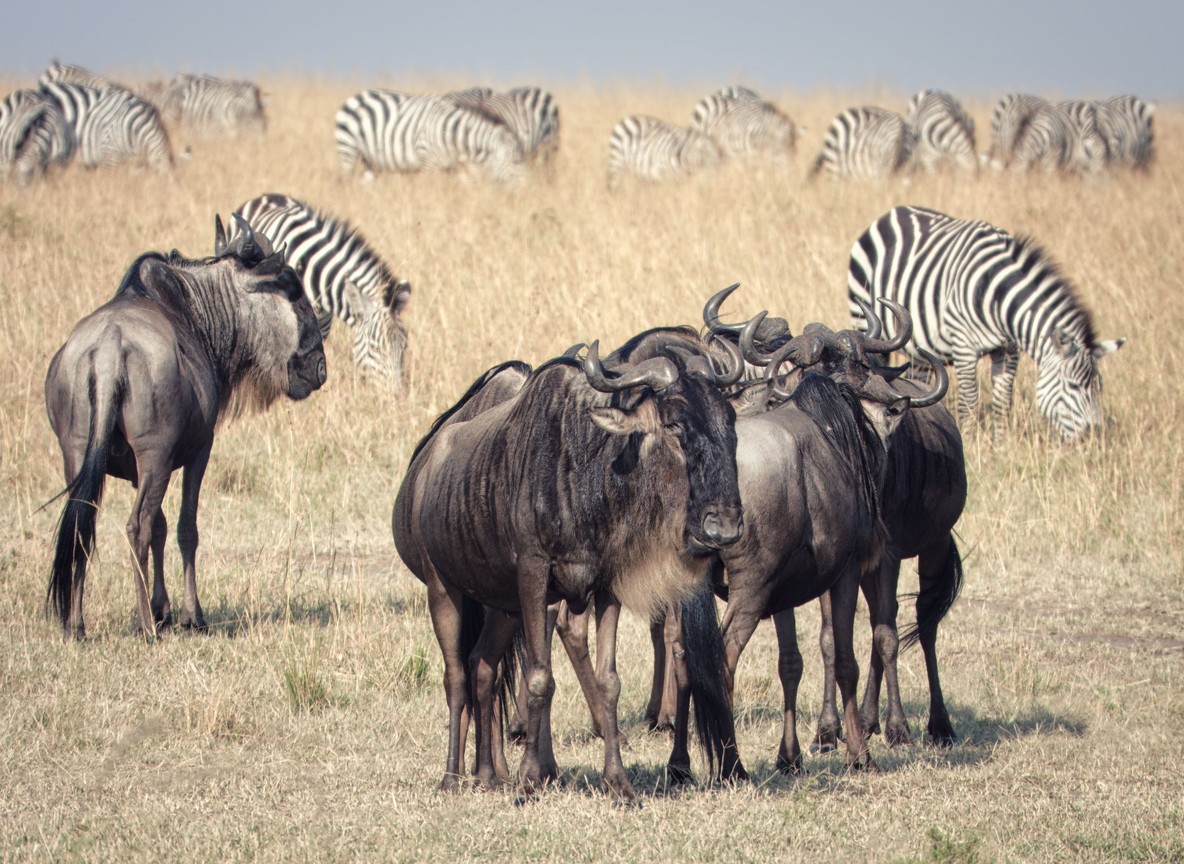
In the Masai Mara, the wildebeest herds are still moving northward through Tanzania’s Serengeti plains. By late May, the leading edge of the migration often reaches the Loita Plains, which border the Mara ecosystem. Resident wildlife in the Mara (lion prides, leopard, cheetah, elephant, buffalo) is active year-round and unaffected by season. The Mara ecosystem consistently records some of the highest lion densities in Africa.
In Amboseli, May is elephant-calf season. The rains trigger new grass, and breeding herds move out onto the open plains to feed. The Kilimanjaro backdrop can carry cloud, but sunrise windows on clear mornings are exceptional, when the mountain pushes above the cloud line and the elephants feed in the foreground.
Tsavo’s red elephants stand out dramatically against green-season vegetation. Mzima Springs in Tsavo West fills with hippo activity when the park’s river system is running full. In Samburu, the Ewaso Nyiro River is the permanent lifeline, and the northern ecosystem receives less rainfall than the south, making game viewing consistent and reliable even in the long-rains period.
How Does Each Park Compare for a May Safari?
| Park | Size | Nairobi Distance | May Conditions | Wildlife Highlight | Entry Fee (2026) |
|---|---|---|---|---|---|
| Masai Mara NR | 1,510 km² | 270 km / ~5-6 hr drive or 45 min flight | Lush, some muddy tracks | Lions, cheetah, elephant | $100/day non-resident adult (Jan-Jun) |
| Amboseli NP | 392 km² | 240 km / ~4 hr drive or 45 min charter | Green, Kilimanjaro views variable | Elephant herds, calves | KWS eCitizen current rates |
| Tsavo East + West | ~21,500 km² | 320 km / ~4-5 hr drive | Lush, rivers full | Red elephants, lion | KWS eCitizen current rates |
| Lake Nakuru NP | 188 km² | 156 km / ~2.5 hr drive | Green, high water levels | Flamingo, rhino, lion | KWS eCitizen current rates |
| Samburu NR | 165 km² | 350 km / ~6 hr drive or fly to Nanyuki | Drier, consistent | Special Five, crocodile | Samburu County rates |
KWS fees: confirm current figures on the KWS eCitizen portal before booking. Mara fees are official 2026 rates verified with KWS.
For a 5-day trip from Nairobi, we recommend a Masai Mara loop (3 nights Mara, 2 nights Nakuru) or an Amboseli and Tsavo circuit. For 7 days or more, a full southern circuit adds remarkable variety without backtracking on the same roads.
Is Masai Mara Worth Visiting in May?
Absolutely. The Mara in May is a photographer’s best-kept secret: no dust, deep green grass, clear morning air, and tented camps near the Mara River at their lowest annual rates.
You will not see the river crossings. The wildebeest do not reach the Mara River until late July at the earliest. But resident wildlife is exceptional. Leopard sightings are common near the Mara River forest belt. Elephant herds cross the reserve roads daily. Cheetah use the open floodplains year-round, and May’s green backdrop makes for images that peak-season visitors simply cannot get through the dust and vehicle noise.
Mara Naboisho Conservancy sits adjacent to the reserve at roughly 145 km² and allows off-road game drives and night drives, activities banned inside the national reserve. In May, with fewer vehicles sharing the conservancy, the experience feels genuinely private. For a full breakdown of the Mara’s seasonal patterns, see our best time to visit Masai Mara guide.
How Does Amboseli Safari Perform in May?
Amboseli rewards patience in May. The park covers 392 km² and concentrates around Lake Amboseli and the swamps fed by underground water from Kilimanjaro’s permanent ice cap. Rainfall does not reduce this water source, so the elephant herds that make Amboseli world-famous remain on the plains through the long-rains period.
Observation Hill, at the park’s centre, gives a panoramic view of the swamp and wetland edge. In May, that view is framed by green hills and, on clear days before 9 AM, Kilimanjaro’s crown rising above the cloud layer. Morning drives before 7 AM regularly catch elephant herds backlit against the mountain.
Baby elephants are the standout attraction in May. Breeding herds give birth during and just after the rains. The science behind it is remarkable: the Amboseli Elephant Research Project has tracked these families for over 50 years, building the longest-running elephant study in the world. Our Amboseli safari planning guide covers lodge options at every budget and what to expect month by month.
What About Tsavo and Lake Nakuru in May?
Tsavo East and West together form the largest protected area in Kenya at roughly 21,500 km². In May, the park is at peak green. The red elephants, coated in the park’s iron-rich laterite soil, contrast dramatically against the lush vegetation. Tsavo is accessible from Nairobi on the main Nairobi-Mombasa highway, making it easy to combine with a Diani Beach coastal extension. The Voi Gate serves Tsavo East; the Mtito Andei Gate sits on the junction between both sections.
Mzima Springs in Tsavo West is the hidden gem of the southern parks: a crystal-clear spring emerging from ancient lava rock and feeding a pool of hippo and crocodile. In May, with the park’s river systems running full, Mzima is exceptionally active.
Lake Nakuru is just 156 km from Nairobi on the A104 highway. In 2.5 hours, you are standing above a lake that holds flamingo, white pelican, rhino, lion, and leopard in one of the most compact and accessible parks in Africa. Flamingo numbers fluctuate with lake chemistry, but May’s water levels typically support strong concentrations. Nakuru is the best-value one- or two-night add-on in Kenya, and it pairs naturally with a Samburu circuit described in our 7-day northern Kenya safari itinerary.
What Safari Package Suits Kenya in May?
The right structure depends on your group, budget, and how much time you have. Here are Trunktrails Safaris’ most popular May blueprints:
5-Day Masai Mara and Nakuru Circuit (indicative from $900 per person sharing)
- Days 1-3: Masai Mara National Reserve (Sekenani Gate entry, full-board lodge)
- Day 4: Drive to Lake Nakuru via Narok (~3-hour transfer)
- Day 5: Nakuru morning game drive, afternoon return to Nairobi
7-Day Southern Kenya Circuit (indicative from $1,400 per person sharing)
- Days 1-2: Amboseli (45-minute charter flight from Wilson Airport, Nairobi)
- Days 3-4: Tsavo West (Mzima Springs, Chyulu Hills views)
- Days 5-7: Masai Mara (drive back via Narok, full-board lodge)
Budget tip: In May, mid-range lodges offer the same game-drive access as luxury camps at 30 to 40 percent lower room rates. Budget tours and safaris start from $650 for 5 days. Full pricing and itinerary options are on our affordable Kenya safari page. ✨
What Is the Trunktrails Advantage?
Trunktrails Safaris is Kenyan-owned and operated from Nairobi. Every itinerary is built by people who live in these landscapes, speak directly to lodge managers, and know which bush roads flood first after heavy rain.
When you plan a Kenya safari in may with us, you get:
- Tailor-made itineraries: no pre-packaged group tours; every trip is built around your family, your dates, and your priorities
- Direct operator pricing: no agency middleman adding commission layers between you and the camp
- Local weather intelligence: our team knows which parks drain fastest after rain, which conservancies stay open when others close, and which weeks of May carry the lightest rainfall on average
- 5% conservation contribution: every booking with Trunktrails Safaris directs five percent of our revenue to Kenya wildlife conservation programmes
- 24/7 in-Kenya support: if a road floods, we reroute. If a transfer is delayed, we are already on it. No overseas call centre, no automated responses
We do not outsource. We build trips we would take ourselves. 🌅
Ready to Book Your Kenya Safari in May with Trunktrails Safaris?
May is an 8-week window that closes fast. The best-value lodges fill earlier than most travellers expect, even in low season, because the people who know about shoulder-season pricing book months ahead. If you are planning a 2026 or 2027 May trip, contact Trunktrails Safaris now and we will hold your preferred dates while we build the itinerary.
Our tours and safaris cover every park, every budget, and every family configuration. Direct line to Nairobi. No middlemen. No surprises.
Further reading
More safari planning resources
- Best time to visit Kenya month-by-month map from Valley Safaris
- Tsavo complete guide on Touring Insights
- Big Five safari collection on FindMySafari
- Map of Tsavo from Valley Safaris
📞 WhatsApp: +254 113 208888 📧 Email: info@trunktrailssafaris.com 🌐 Website: https://trunktrailssafaris.com