Kenya Safari in January: Dry Season Wildlife and the Best Parks for Your New Year Trip
January is one of Kenya’s most underrated safari months. The short rains of November and December are behind you. The landscape glows with new green growth. The bush is shorter and more open than the wet-season tangle. And without the July-to-October peak crowds pushing against you, you get the same Big Five action at lower camp rates and with far more elbow room on the plains.
A kenya safari in january rewards patience and planning. Predators are active across every major ecosystem. Baby animals are everywhere. Kilimanjaro sits clear above the Amboseli plains with a clarity that the rainy months rarely offer. At Trunktrails Safaris, our guides have run tours and safaris here for years and January sits reliably among the top three months for wildlife density and visitor experience.
Here is exactly what you need to know before you go.
Why Is January an Excellent Time for a Kenya Safari?
Kenya straddles the equator, so its seasons are driven by rainfall rather than temperature. The short dry season runs from January through mid-March, bridging the gap between the December short rains and the long rains that arrive in March. 🌅
In January, a Kenya safari delivers several advantages that peak-season visitors often miss:
- Lower visitor numbers. Most international travelers book for July-October to catch the wildebeest migration. January sees far fewer vehicles at every park gate, which means a lion kill can be observed by two or three vehicles rather than thirty.
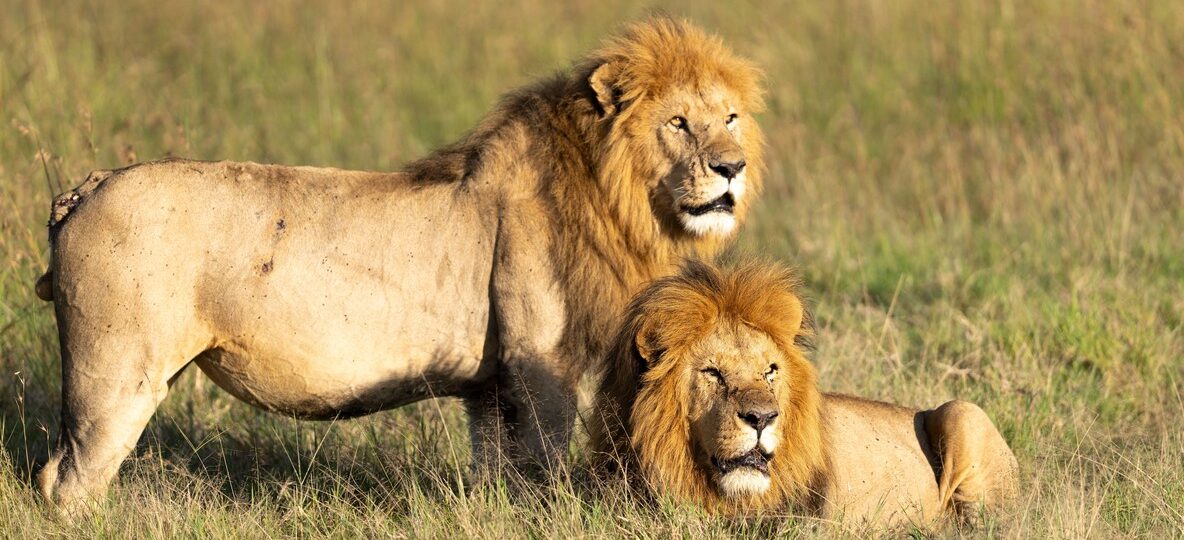
- Excellent predator visibility. Shorter post-rain grass makes spotting lions, leopards, and cheetahs far easier than during the long wet season in April and May. Amboseli and the Masai Mara are particularly reliable for big cat sightings in January.
- Newborn and young animals. The December rains triggered new grass, which brought in birthing herds. January means impala fawns, zebra foals, and wildebeest calves across the Mara ecosystem. Calves attract predators constantly.
- Clear Kilimanjaro views. January delivers some of the clearest atmospheric conditions of the year at Amboseli. On most mornings, Kilimanjaro at 5,895 m fills the southern horizon behind herds of over 200 elephants.
- Outstanding birding. Migratory birds from Eurasia and North Africa remain in Kenya through January, lifting the resident count of over 1,100 species to even higher numbers during peak passage.
For travelers looking for a quieter, more personal experience without sacrificing wildlife quality, January is consistently the most compelling answer.
What Wildlife Can You Expect on a January Kenya Safari?
January kenya safari wildlife is defined by the dry-season classic: large herds congregate near permanent water and predators follow. 🦁
Masai Mara National Reserve holds resident wildebeest numbering between 20,000 and 50,000 animals throughout the year, quite separate from the Serengeti migration herds that peak from July to October. In January, these resident herds graze across the Mara Triangle and the Sekenani Corridor while multiple lion prides hunt alongside them daily. The Mara River, which flows year-round near Talek, holds large pods of hippos and resident crocodiles. Leopards are most commonly spotted in the Mara Forest and along the Talek River corridor.
Amboseli National Park is at its visual best in January. The Amboseli Elephant Research Project, founded in 1972 by Dr. Cynthia Moss, has documented over 1,700 individually identified elephants using this ecosystem. January draws large family units to the Enkiama and Longinye swamp complex where permanent water is guaranteed. Clear skies mean you can see the detail of Kilimanjaro’s glaciers with the naked eye on most mornings before 9 AM.
Tsavo East and West shine in January for their red elephants. These animals roll in laterite-rich red soil, giving them their signature rust-red coat. Tsavo West’s Mzima Springs pumps an estimated 50 million litres of freshwater daily, sustaining resident hippos, Nile crocodiles, and year-round congregations of plains game.
Samburu National Reserve is best for the iconic Special Five: Grevy’s zebra, reticulated giraffe, Beisa oryx, gerenuk, and Somali ostrich. These northern specialists live only in Kenya’s arid north and cannot be found in the Mara or Amboseli. See our Amboseli animals month-by-month guide for a detailed seasonal comparison of what each park offers throughout the year.
Which Parks Are Best for a Kenya Safari in January?
The table below compares Kenya’s five top safari parks for January visits. All distances are road distances from Nairobi’s city centre. Masai Mara entry fees are verified for 2026. KWS park fees are labelled indicative: confirm current rates at kws.go.ke before travel.
| Park | Size (km²) | Road Distance from Nairobi | Drive Time | Flight Time (from Wilson Airport) | Entry Fee/Day (Non-Resident Adult) | Top January Wildlife |
|---|---|---|---|---|---|---|
| Masai Mara NR | 1,510 | ~270 km via B3/Narok | 5-6 hrs | ~45 min to Keekorok Airstrip | $100 (Jan-Jun verified) | Lions, cheetahs, leopards, resident wildebeest |
| Amboseli NP | 392 | ~240 km via A109/Emali | 4-5 hrs | ~45 min to Amboseli Airstrip | ~$60 (indicative) | Elephants, Kilimanjaro views, lions |
| Tsavo West NP | 9,065 | ~240 km via A109 | 3.5-4 hrs | ~50 min to Kilaguni/Tsavo | ~$52 (indicative) | Black rhinos, lions, Mzima Springs, red elephants |
| Lake Nakuru NP | 188 | ~160 km via A104 | 2.5-3 hrs | ~30 min to Nakuru Airstrip | ~$60 (indicative) | Flamingos, white rhinos, lions, leopards |
| Samburu NR | 165 | ~325 km via A2/Isiolo | 4-5 hrs | ~50 min to Samburu Airstrip | ~$52 (indicative) | Samburu Special Five, lions, elephants |
Best value for January: Tsavo West and Lake Nakuru deliver exceptional wildlife at the lowest entry fees in the group. They combine easily into a 4-5 day circuit from Nairobi without requiring a flight.
Best Big Five pick: Masai Mara. The reserve supports one of the highest lion densities in Africa outside a fenced sanctuary, and it consistently delivers leopard, elephant, buffalo, and spotted hyena alongside the cats.
Best exclusive pick: Samburu. Quality tours and safaris to this region are still rare among international operators, which keeps vehicle numbers genuinely low even in shoulder months.
How Does January Safari Weather Affect Game Viewing?
Kenya’s equatorial position means temperature changes between seasons are modest. January temperatures at the Masai Mara range from 13°C overnight to 28°C in the afternoon. Amboseli runs slightly warmer at 15°C to 32°C. Samburu, drier and further north, can reach 34°C by early afternoon.
The factor that matters most for game viewing is not temperature: it is grass height. January’s vegetation is at the pivot point between post-rain lushness and dry-season openness. By mid-January, grass is dropping to ankle height across the Mara plains, which means lions lying in cover become visible from 50 metres rather than 5. 📸
Brief afternoon showers do occur in January, particularly in the Mara ecosystem. They rarely last more than 30-45 minutes and often produce dramatic light for photography. A light waterproof jacket in your day bag is sensible.
Morning drives from 6:30 AM to 10:00 AM and late afternoon drives from 4:00 PM to 6:30 PM capture peak predator activity. The middle of the day, when temperatures peak, is best spent at camp or at a waterhole vigil where thirsty animals arrive in predictable succession.
How Much Does a Kenya Safari in January Cost?
January is Kenya’s low-to-shoulder season for most lodges and tented camps. Rates at the same camps that charge premium prices in August often drop by 20-40% in January, which gives you the same guides, vehicles, and ecosystems for less.
| Safari Category | Typical Daily Rate Per Person Sharing | What Is Typically Included |
|---|---|---|
| Budget tented camp | $150-$280 | Accommodation, full board, park fees |
| Mid-range lodge | $350-$600 | All-inclusive, scheduled game drives |
| Luxury tented camp | $700-$1,500+ | All-inclusive, private game drives, bush dinners |
5-day private January safari (indicative): $850-$1,400 per person sharing, depending on parks and accommodation tier, when booked direct with Trunktrails Safaris. No agent markup applies.
For a line-by-line breakdown of what drives Kenya safari pricing, including park fees, flights, and why fuel surcharges vary by route, see our Kenya safari cost guide for 2026.
What Is the Best Itinerary for a January Kenya Safari?
A 7-day circuit covers the widest range of habitats and wildlife for a first or returning Kenya visitor. A popular January routing:
- Days 1-3: Masai Mara National Reserve (fly in from Nairobi Wilson Airport, 45 minutes to Keekorok or Mara North Airstrip)
- Days 4-5: Amboseli National Park (fly south or road transfer via Narok, approximately 4 hours)
- Days 6-7: Lake Nakuru National Park or return to Nairobi
This circuit delivers predator-dense Mara, elephant-dominated Amboseli, and Nakuru’s rhino and flamingo spectacle across three distinct ecosystems. For a day-by-day breakdown of logistics, game drive timing, and accommodation options, see our 7-day Kenya safari itinerary.
Families and first-time visitors with a tighter window often start with a 5-day Masai Mara circuit. Our 5-day Masai Mara migration safari itinerary can be adapted for January’s resident wildlife with straightforward adjustments.
If Amboseli is your priority park, our Amboseli budget safari planning guide breaks down every accommodation tier inside and around the park with realistic cost estimates for all group sizes. 🦒
What Should You Pack for a January Kenya Safari?
January is warm, mostly dry, and dusty on game drive tracks. Packing well makes the difference between a comfortable trip and a frustrating one.
Essentials for a January safari:
- Neutral-colour clothing in khaki, olive, sand, or grey: there is no formal dress code in game vehicles, but bright colours spook wildlife at close range
- A lightweight fleece or down layer: open-vehicle morning drives at 6:30 AM feel cold even when the afternoon temperature hits 30°C
- Polarised sunglasses and a wide-brim hat: direct equatorial sun is intense for several hours a day
- Quality binoculars (8×42 or 10×42 at minimum): essential for reading distant cat behaviour and identifying the 300-plus bird species you will encounter
- A dust-proof camera bag or dry bag: red laterite dust on gravel roads gets into every seam and joint
- Reef-safe sunscreen and insect repellent with DEET: mosquitoes are present around water sources in January
Leave behind: heavy luggage. Most bush flights to Mara, Amboseli, and Samburu operate with a 15 kg total bag weight limit per person. Pack in a soft-sided duffle, not a hard-shell suitcase.
What Makes Trunktrails Safaris the Right Partner for a January Safari?
Trunktrails Safaris is a native Kenyan-owned operator based in Nairobi. Our guides have tracked the Mara’s lion prides, led elephant-watch mornings in Amboseli, and driven the Tsavo red dust routes through every month of the year. January is a month we genuinely love running tours and safaris here.
We design every itinerary around what we personally know, not around a booking form. We know which Amboseli guide camps sit closest to the swamp for elephant encounters at dawn. We know the gate wait times at Sekenani. We know which Tsavo West lodges skip the busy A109 corridor completely.
You book direct with us. No agency in the middle, no commission layers added to your final price. Just a Kenyan team that picks up the WhatsApp call and builds your trip from local knowledge.
Our conservation commitment is built into every booking. Five percent of every safari goes directly to wildlife conservation projects operating inside the parks where we guide. When you choose Trunktrails Safaris for your January trip, you are actively funding the protection of the wildlife you came to see.
Ready to Book Your January Kenya Safari with Trunktrails Safaris?
January 2026 bookings at top Masai Mara and Amboseli camps are already confirming. The properties that are quieter than peak season still fill steadily from guests who know the January advantage, and the best January dates at luxury properties often sell out months ahead.
Tell us your priority: elephants at Kilimanjaro, big cats in the Mara, the Samburu Special Five, or all three. At Trunktrails Safaris, we will build the circuit around what matters most to you and your travel dates. No fixed packages. No middlemen. Just direct access to a team that knows these parks from the inside.
Further reading
More safari planning resources
- Map of Amboseli from Valley Safaris
- Amboseli National Park guide on Touring Insights
- Amboseli destination guide on FindMySafari
- Best time to visit Kenya month-by-month map from Valley Safaris
📞 WhatsApp: +254 113 208888 📧 Email: info@trunktrailssafaris.com 🌐 Website: https://trunktrailssafaris.com