
David Sheldrick Elephant Orphanage: The Nairobi Experience Every Visitor Must Have
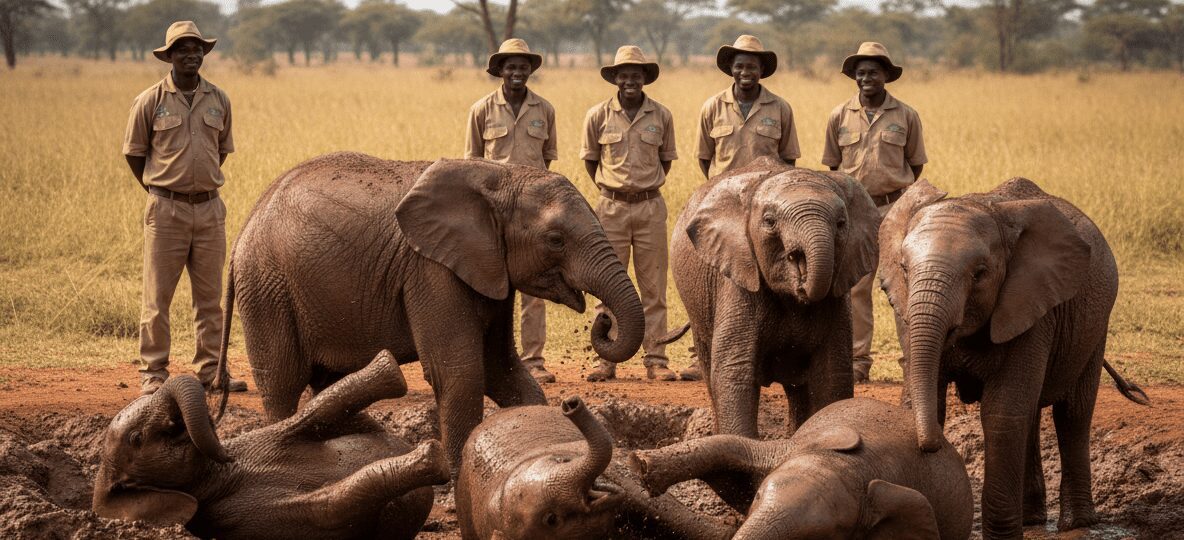
There is a moment – it lasts about an hour – when the gates of a small enclosure inside Nairobi National Park open, and a line of baby elephants comes tumbling out. They chase each other, crash into their keepers, roll in the mud and flick red earth over their backs with genuine joy. You will not say a word. You will just watch, and something will shift in how you think about elephants – and about the people who have dedicated their lives to saving them.
That moment happens every morning at the David Sheldrick elephant orphanage, and it is one of the most powerful experiences available to any visitor in Kenya. This guide tells you everything you need to know before you go: the extraordinary conservation story behind the Trust, exactly how the rescue and rehabilitation program works, how to visit, and how to adopt an orphan.
The David Sheldrick Elephant Orphanage: Nairobi’s Most Moving Experience
The elephant orphanage Nairobi visitors know today sits inside Nairobi National Park, about 15 minutes from the city centre. It is run by the David Sheldrick Wildlife Trust – a Kenyan conservation organisation that has become the world’s most successful elephant rescue programme. Since the Trust was formally established in 1977, it has hand-raised more than 270 orphaned elephants and returned the majority to the wild.
It is not a zoo. There are no enclosures designed for permanent viewing. Every animal here is in a temporary phase of a carefully managed journey back to the wilderness – and that distinction is what makes the Sheldrick elephant orphanage one of the most ethically grounded wildlife experiences anywhere in Africa.
The Story Behind Sheldrick: Dame Daphne and 50 Years of Elephant Rescue
The Sheldrick Wildlife Trust was built on a single, hard-won discovery made by Dame Daphne Sheldrick over more than two decades of trial and failure. David Sheldrick – the founding warden of Tsavo East National Park and Daphne’s husband – died in 1977. Daphne continued the work they had begun together: trying to save infant elephants whose mothers had been killed by poachers or drought.
The central problem was milk. Infant elephants cannot survive on any standard formula. Their digestive systems are entirely different from other mammals, and for years every attempt to hand-raise calves under six months old ended in failure. Dame Daphne spent more than 28 years refining the formula before she found a coconut-oil-based milk substitute that infant elephants could process without dying from digestive failure. That breakthrough – achieved through patient, scientific observation over decades – transformed elephant conservation globally.
Sheldrick wildlife work did not stop at milk. Daphne and her team recognised that elephants are deeply emotional, socially complex animals that suffer genuine psychological trauma when they witness the death of their mothers. The Trust developed a full behavioural rehabilitation model: orphans are assigned human keepers who sleep with them at night, stay with them through the day, and form the stable attachment that allows a traumatised calf to stabilise emotionally before the long process of reintegration into wild elephant society begins.
Dame Daphne received the Order of the British Empire in 1989, and was made a Dame in 2006. She continued leading the Trust until her death in 2018. Her daughter Angela Sheldrick now leads the organisation, and the mission has not changed by a single degree.
How the Orphanage Works: From Rescue to Release
The david sheldrick wildlife trust nairobi nursery is the first of three stages in a rescue program that can take up to ten years per elephant.
Step 1 – Rescue and Stabilisation
Orphaned elephants come to the Trust from across Kenya. Some fall into wells. Some are abandoned by herds after predator attacks. The majority arrive as victims of poaching – calves too young to survive without the protection of their mothers. The Trust operates a 24-hour rescue line and coordinates with Kenya Wildlife Service and partner rangers to reach stranded calves in the field. A calf in severe distress can be airlifted to Nairobi within hours.
The first weeks are the most critical. Keepers work in shifts to maintain constant contact, using physical warmth, the milk formula, and presence to stabilise a calf that may have witnessed its mother’s death and may be in clinical shock. Some calves do not survive. Those that do stabilise quickly under the keepers’ care.
Step 2 – The Nursery at Nairobi National Park
Once stable, orphans join the nursery herd at the elephant orphanage nairobi kenya site inside Nairobi National Park. Here they spend their formative years. Older orphans – those who have been at the nursery longer – act as role models for younger arrivals, forming natural social bonds that will later support reintegration. Keepers observe interactions carefully, managing the social dynamics of the herd with the same attention a field researcher would give to a wild family group.
Baby elephants nairobi visitors see at the daily mud bath are in this phase. They range in age from a few months to three or four years. Their behaviour – playful, demanding, confident – reflects what a healthy elephant upbringing should look like, even if the keepers are wearing green coats instead of elephant skin.
The nursery is a genuine scientific environment as much as a rescue facility. The Trust’s keepers maintain detailed records on each calf’s behavioural development, health status, and social integration progress. This longitudinal data has contributed to peer-reviewed research on elephant cognition, grief responses, and social learning – knowledge that informs elephant conservation practice far beyond Kenya’s borders.
Step 3 – Reintegration and Release
When nursery elephants reach four or five years of age, they are transferred to one of the Trust’s two reintegration centres: Ithumba in Tsavo East, or Umani Springs in the Kibwezi Forest on the edge of Tsavo West. At these centres, the elephants begin moving in small groups under the supervision of keepers into genuine wilderness, spending progressively longer periods with wild elephant herds. The process is gradual and entirely led by the elephants themselves – they return to the stockades when they want company, and venture further afield as their confidence builds. Full release – when an elephant no longer returns to the stockade at all – can take between three and eight years from the point of transfer.
More than 270 sheldrick elephants have completed this journey. Many have returned to the reintegration centres as fully wild adults, bringing their own calves – born free – to show their former keepers.
Visiting the Sheldrick: What to Expect at the Mud Bath
Visiting Hours and Booking
The public viewing window at the nairobi elephant orphanage visit is 11:00am to noon, seven days a week. Visiting outside this window is not permitted – the routine is structured to protect the elephants, not accommodate tourism schedules. The orphanage is inside Nairobi National Park, so visitors pay the standard park entry fee plus an orphanage entry fee at the gate. No advance booking is required for individual visitors, though arriving early (by 10:30am) secures the best position.
Foster parents – those who have adopted an orphan through the Trust’s adoption program – gain access to a private visit window at 5:00pm on weekdays. This is a significant benefit for those who choose to support the program.
The Best Spot to Stand
The mud bath viewing area is a roped enclosure. Arrive early and position yourself at the front, closest to the mud wallow. The keepers will bring the elephants directly into the wallow, which sits about three metres from the rope line. You will be close enough to hear the elephants breathing, to see the mud settle on their eyelashes, and to watch the exact moment a calf realises it has been outrun by a slightly larger orphan and decides that falling over dramatically is the best response. Bring a camera with a fast shutter speed. The light is good from 11:00am onwards.
During the viewing, keepers introduce each calf by name and share the story of how that animal arrived at the Trust. These brief histories – a calf rescued from a well in Laikipia, another airlifted from Tsavo after its family was poached – give each interaction a weight that no game park encounter can replicate. You are not watching anonymous wildlife. You are meeting individuals with documented histories, known personalities, and futures that the Trust is actively shaping.
A few etiquette points worth knowing before you go: photography is welcome and encouraged, but keep flash off and stay behind the rope line at all times, both for your safety and the elephants’. Phones on silent, please, and hold off on smoking anywhere near the viewing area. You won’t be invited to touch or feed the elephants during the public viewing; that kind of contact is reserved for the keepers who know each calf individually. None of this gets in the way of the experience. If anything, watching from a respectful distance is what keeps it feeling like conservation rather than a photo op.
On what to wear and bring: closed shoes are worth it, since the viewing area is open ground that can get dusty or muddy depending on the season. Bring sun protection, since the Nairobi sun is already strong by 11:00am, and dress in something you don’t mind getting a little dirty. You’re standing close enough to a mud bath that a stray splash isn’t impossible.
The Adoption Program: How You Can Support an Orphan Elephant
The sheldrick trust adoption program is one of the most well-constructed conservation engagement mechanisms in Africa. Through the Trust’s official website at sheldrickwildlifetrust.org, supporters can foster a specific named elephant for a monthly or annual fee. In return, adopters receive a full profile of their orphan, monthly keeper field updates, and exclusive content about that elephant’s progress through the rehabilitation pipeline.
One clarification worth making up front: adoption happens entirely online, not at the gate. There’s no in-person sign-up during the mud bath visit, so if you want the adoption certificate and updates started before your trip, do it through the website in advance. Nothing about the standard 11:00am visit requires you to have adopted anything first.
The adoption is not symbolic. The funds directly support the cost of milk, keeper salaries, veterinary care, and the infrastructure at the reintegration centres. The Trust publishes detailed financial accounts; the money is traceable and the conservation outcomes are documented.
For conservation-minded travelers, adopting an orphan in the weeks before a Trunktrails Safaris trip adds a layer of personal connection to the journey. If your adopted elephant has been transferred to Ithumba in Tsavo East, there is a chance – not guaranteed, but real – that you will encounter that animal in the wild during your safari. That is not a gimmick. It is the logical outcome of a program that works.
Where Do the Elephants Go? The Tsavo and Amboseli Connection
The link between the elephant orphanage nairobi and Kenya’s wildlife parks is direct and verifiable. The Trust’s primary reintegration centre, Ithumba, sits in the north of Tsavo East National Park. A second centre, Umani Springs, is located in the Kibwezi Forest adjacent to Tsavo West. A third unit operates in collaboration with Amboseli Trust for Elephants in the Amboseli ecosystem.
This means that the red-dusted elephants you will see at sunrise on a Tsavo East game drive with Trunktrails include former orphans – animals that arrived at the Nairobi nursery as traumatised calves and now move through the Tsavo landscape as fully wild adults. The Trust’s Tsavo reintegration units have produced several multi-generational success stories, with ex-orphans returning to the stockade as adults with wild-born calves that have never been touched by a human hand.
The geographic scope of the Trust’s reintegration work also illustrates the scale of the conservation challenge facing Kenya’s elephant population. Orphans arrive from Laikipia, from the northern rangelands, from the coast, and from deep inside Tsavo. Each rescue represents a human-wildlife conflict event, a poaching incident, or a drought crisis somewhere in the ecosystem. The distribution of origin stories maps directly onto the pressures bearing down on Kenya’s wild elephant corridors – and the reintegration programme represents a long-term, evidence-based response to those pressures that has no parallel on the continent.
When guests visit the Sheldrick in the morning before departing for Tsavo or Amboseli, the parks they drive into that afternoon are not abstract wilderness. They are the destination those calves are being prepared for – the place where the conservation story witnessed at 11am is still being written.
Micah’s Nairobi Day Plan: Sheldrick, Giraffe Centre and Safari Departure
For guests beginning a Trunktrails safari from Nairobi, Micah recommends the following half-day itinerary before the afternoon drive to the first park:
8:00am – Check out of Nairobi accommodation. Pack safari gear into the Trunktrails vehicle.
8:30am – Giraffe Centre, Langata. The African Fund for Wildlife Conservation’s giraffe sanctuary is 15 minutes from the Sheldrick. Spend 45-60 minutes hand-feeding endangered Rothschild giraffes from an elevated platform. The giraffes take pellets directly from your lips if you are feeling brave. The Giraffe Centre opens at 9:00am; arriving at opening means no crowds.
10:30am – Drive to Nairobi National Park gate. Pay entry and make your way to the orphanage.
11:00am-12:00 noon – Mud bath viewing at the David Sheldrick elephant orphanage. One hour, no rushing.
12:30pm – Lunch at one of the Langata Road restaurants near the park gate.
2:00pm – Depart Nairobi for Tsavo West, Tsavo East or Amboseli. Drive times from Nairobi: Tsavo West (Mtito Andei Gate) approximately 3.5 hours; Amboseli approximately 4 hours; Tsavo East (Voi Gate) approximately 4.5 hours.
Evening – Arrive at first Trunktrails camp in time for sundowners and a night game drive briefing.
The itinerary requires no compromise on safari time. It adds roughly four hours to the departure day and delivers two of the most memorable conservation experiences in Nairobi – both of which are directly relevant to what guests will see in the parks that follow.
Frequently Asked Questions About the David Sheldrick Elephant Orphanage
Q: What are the visiting hours for the David Sheldrick elephant orphanage? A: The public viewing window is 11:00am to noon, seven days a week, inside Nairobi National Park. Foster parents have an additional private visit at 5:00pm on weekdays. To plan a visit as part of your Trunktrails Safaris Nairobi day, contact us.
Q: How much does it cost to visit the elephant orphanage in Nairobi? A: Visitors pay standard Nairobi National Park entry fees plus an additional orphanage entry fee, payable at the gate. Fees are subject to change; check the current rates with the Trust or ask your Trunktrails guide when booking your itinerary.
Q: How does the Sheldrick trust adoption program work? A: You choose a named orphan on the Sheldrick Wildlife Trust website, pay a monthly or annual foster fee, and receive field updates, photos and keeper reports on your elephant’s progress. Visit sheldrickwildlifetrust.org to browse current orphans available for adoption.
Q: Can I see Sheldrick elephants in the wild on a Trunktrails safari? A: Yes – the Trust’s primary reintegration centre is at Ithumba in Tsavo East National Park. Trunktrails Safaris routes through Tsavo East pass near the Ithumba area. Micah can advise on timing and proximity when designing your safari itinerary. Call.
Q: Is the Sheldrick orphanage suitable for children? A: Absolutely. The mud bath viewing is entirely safe, accessible and one of the most memorable wildlife experiences available to children in Kenya. The keepers often explain the story of individual elephants during the visit, which makes it educational as well as exciting.